TotalCon 40 is an annual gaming convention that is held in Marlborough, MA at the Best Western Conference Center. There are events for miniature games, board games, RPG’s, and much more. Attendance is well over 1,000.
This year it was held between February 19th and 22nd of 2026. I usually run several tabletop miniatures games there. This year was no exception. I ran eight 4-hour games across the 4 days.
Several players who participated in my games are eager to see some game shots. Not to disappoint, his post will be picture heavy and text light!
On Thursday of every TotalCon, there is a large flea market in an adjoining room to the main hall. From Friday to Sunday, I get a very big table in that room. Because of the flea market’s need for space, I settle for a smaller footprint on Thursday. That smaller table was fine for two games (afternoon and evening).
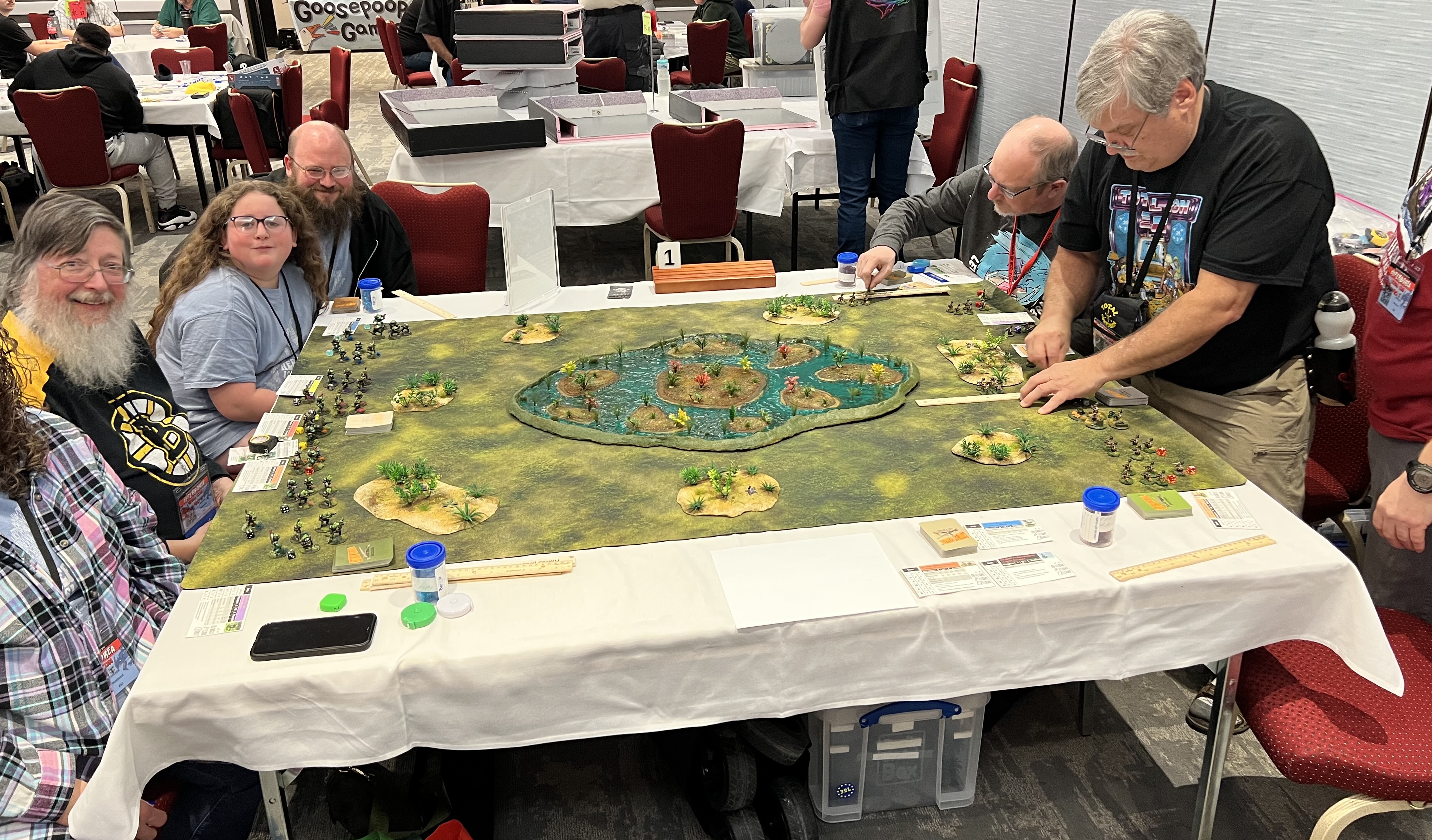
Battle for the Pond
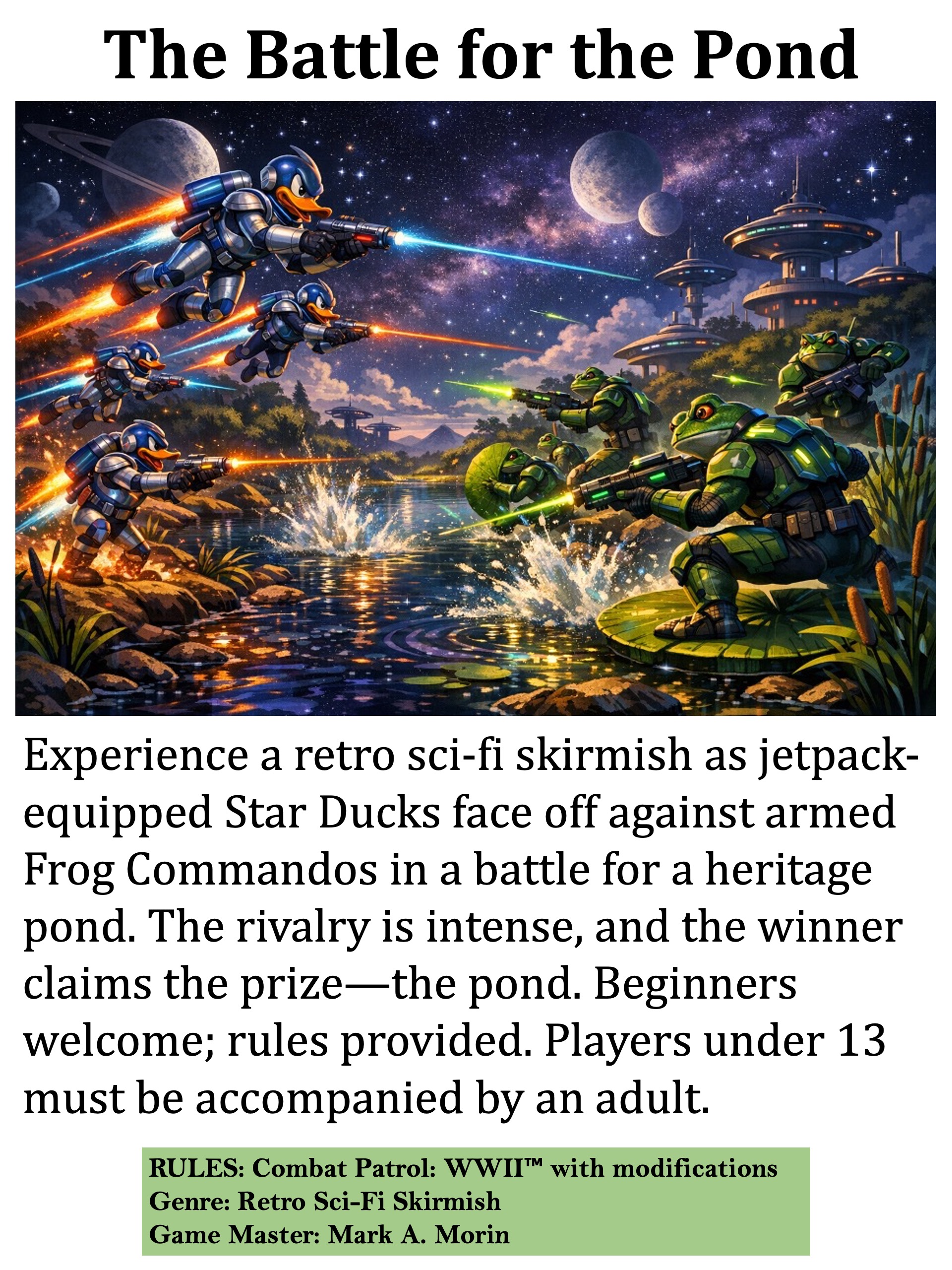
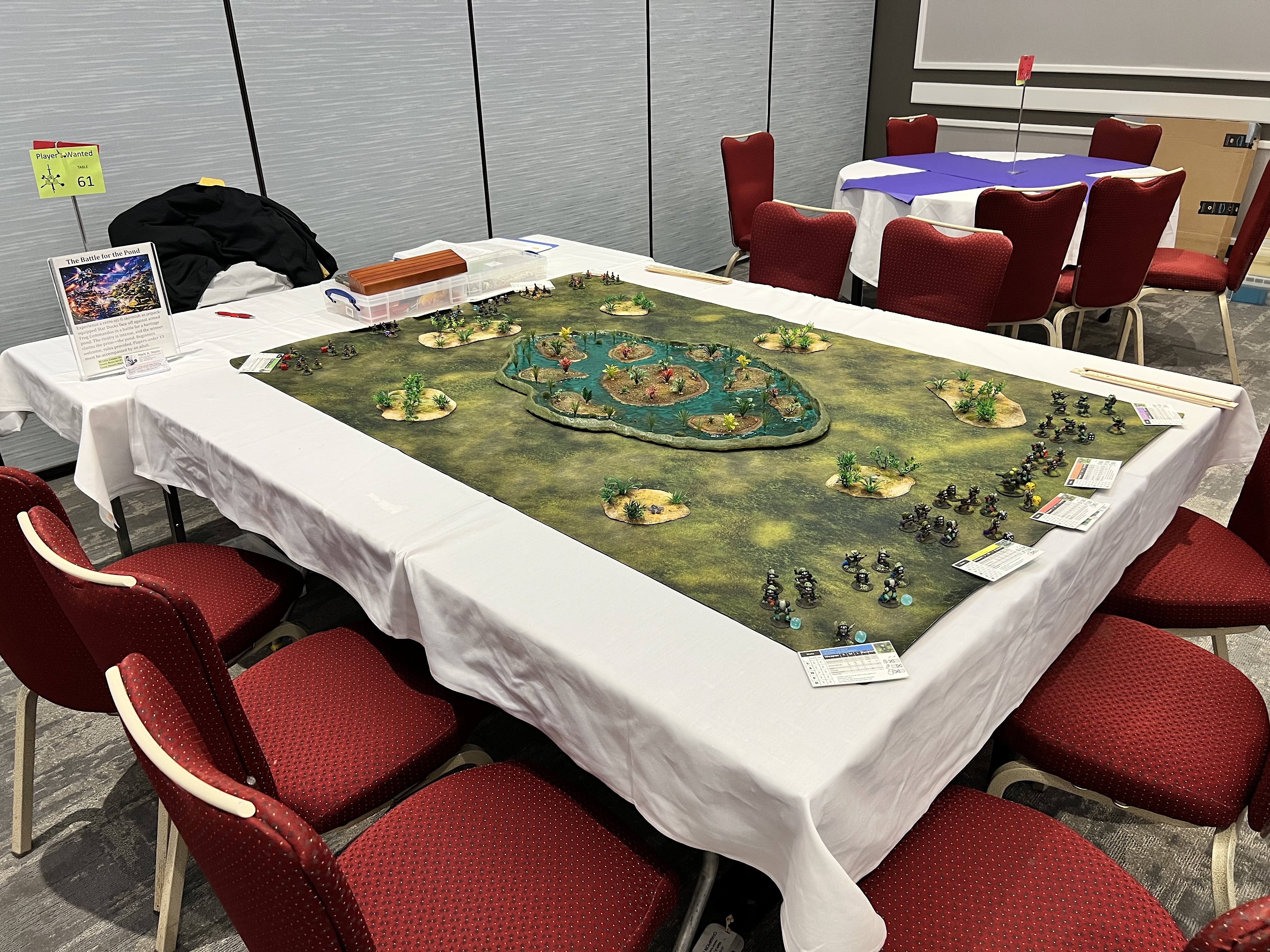
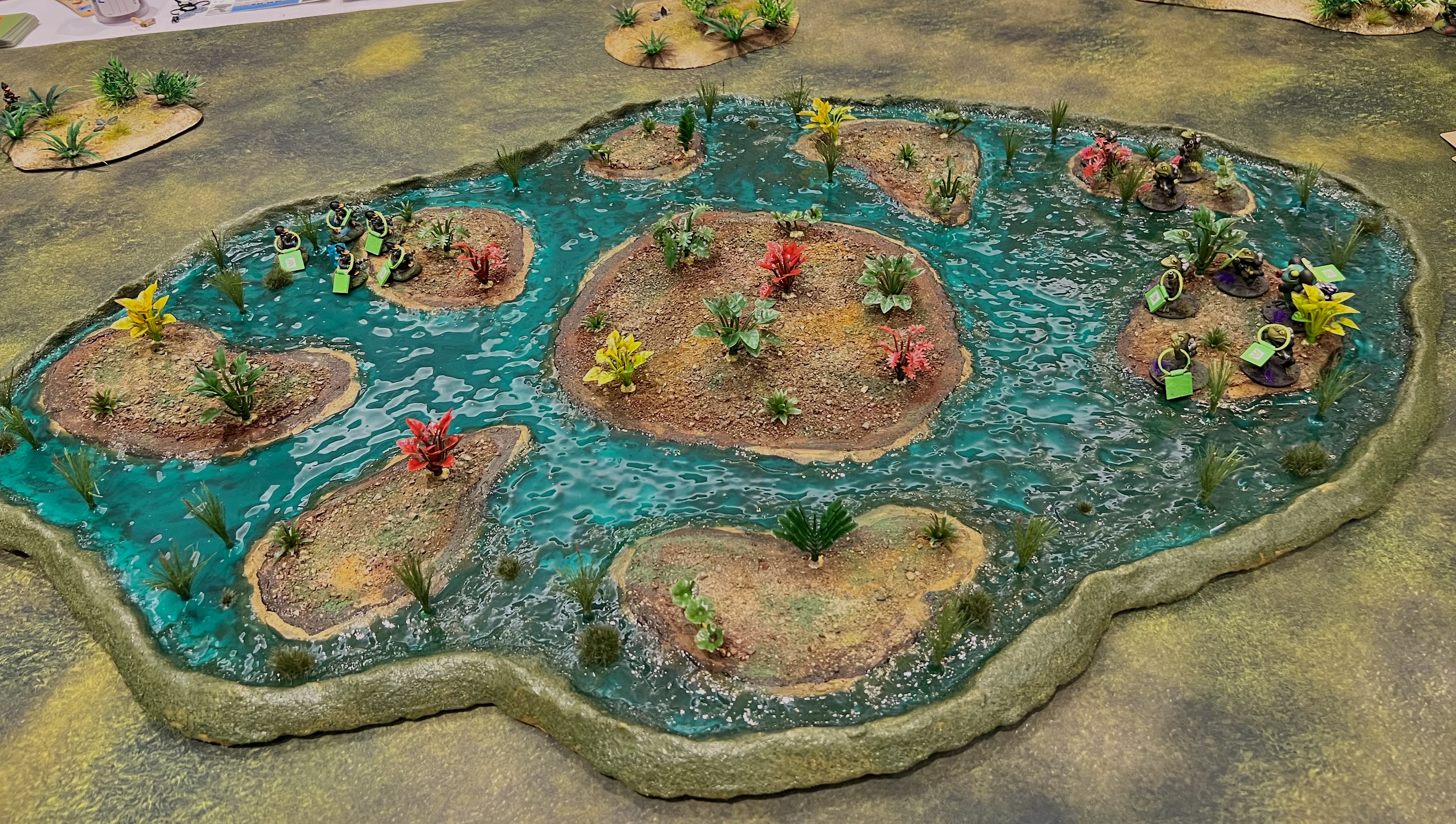
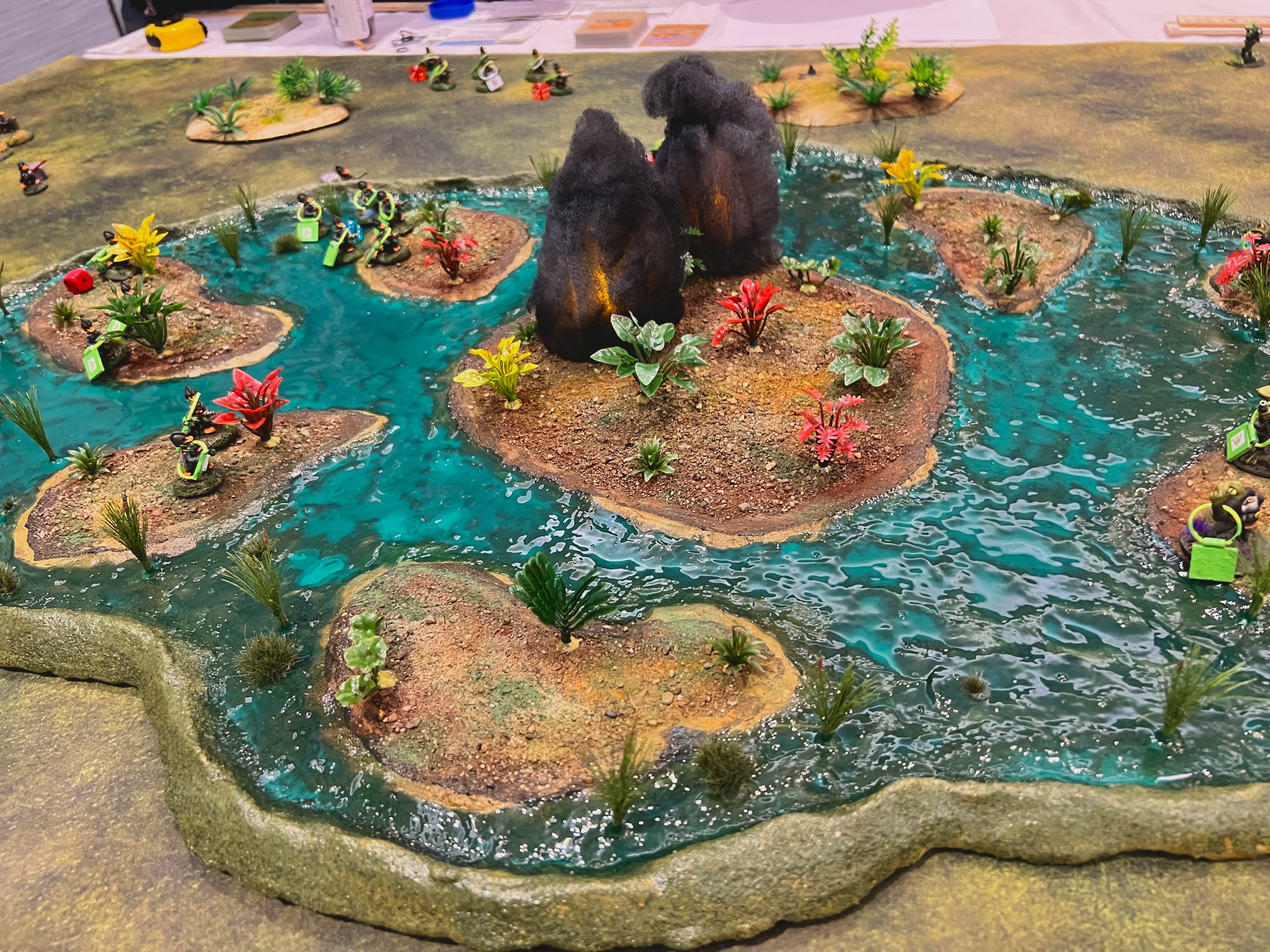
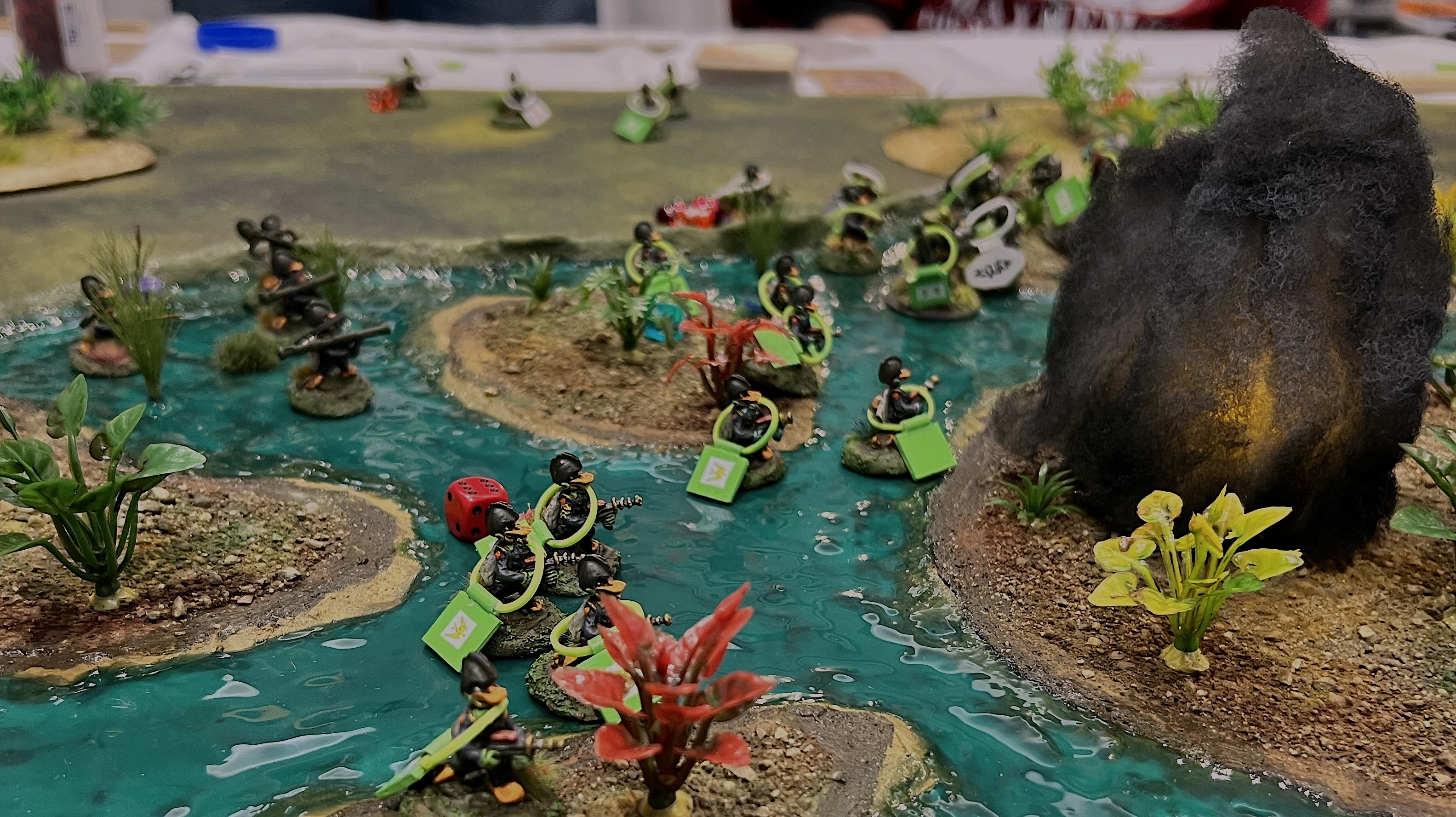
This was a Combat Patrol:WWII retro sci-fi game using the pond that I described in my last post.
My game flyer.The tabletop set up for action. The F.R.O.G. Commandos are on the near side, with the Star Ducks on the far end. The Star Ducks are Archive Miniatures Star Rovers figures from the late ’70’s/early 80’s. The Frogs are Critter Commandos figures from the early 1990’s.The Star Duck players move up.The Star Ducks use one of their two jet pack moves to occupy islands. In the game, control of the smaller islands was worth 5 points. Controlling the largest island earned players 10 points.The Frogs were also jet packing. The Star Ducks used mortars to lay down a protective smoke screen against their automatic weapons fire.In the end, the luck of the cards deserted the Frogs, with almost every island in Star Duck control.
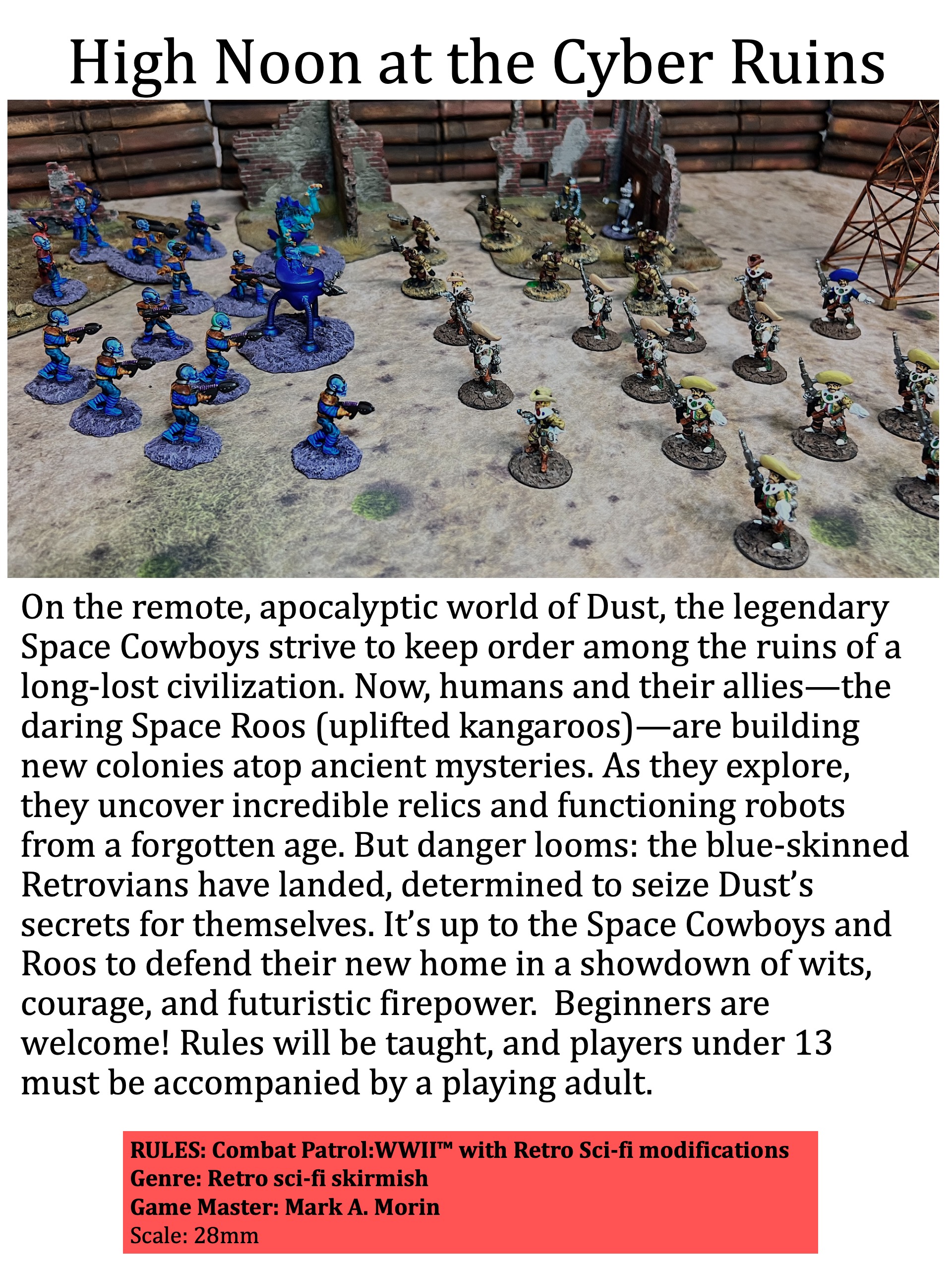
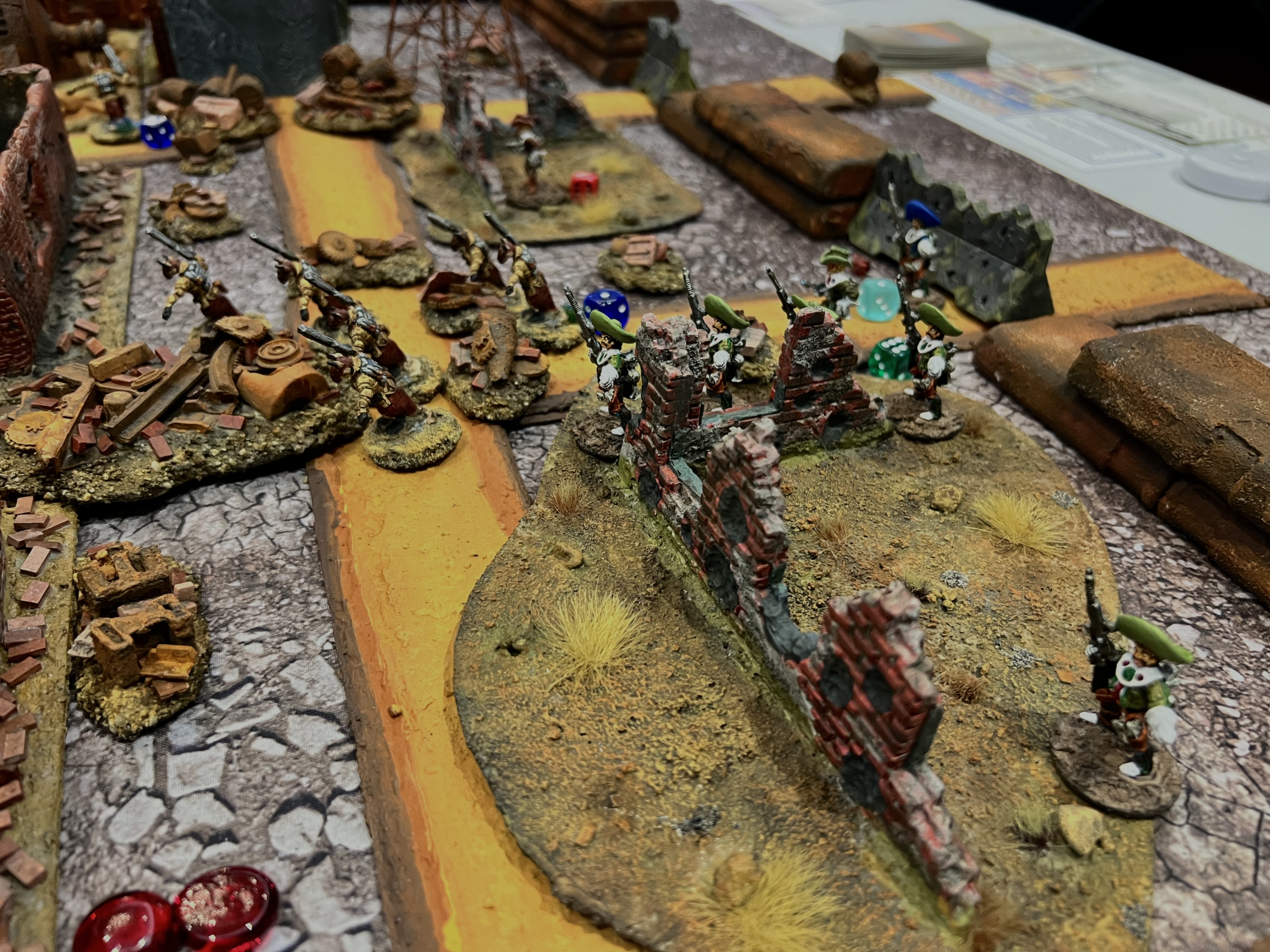
High Noon at the Cyber Ruins
I ran this Combat Patrol retro sci-fi game at Cold Wars, but on a bigger table. I used a different mat and adapted the game to a smaller footprint.
Game flyer.
To win the game, both sides get credit (victory points) for inflicting enemy casualties and finding hidden ancient robots.
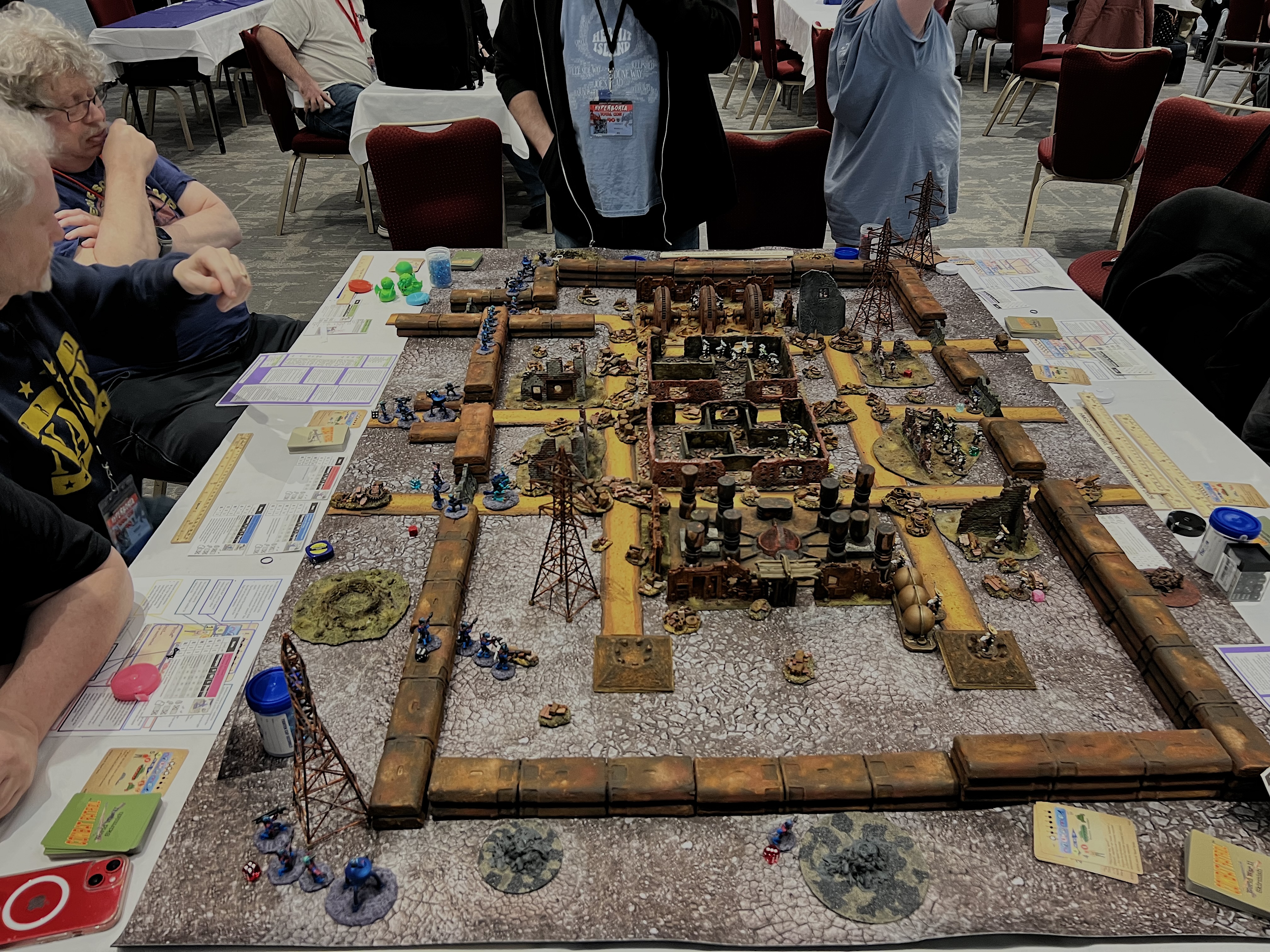
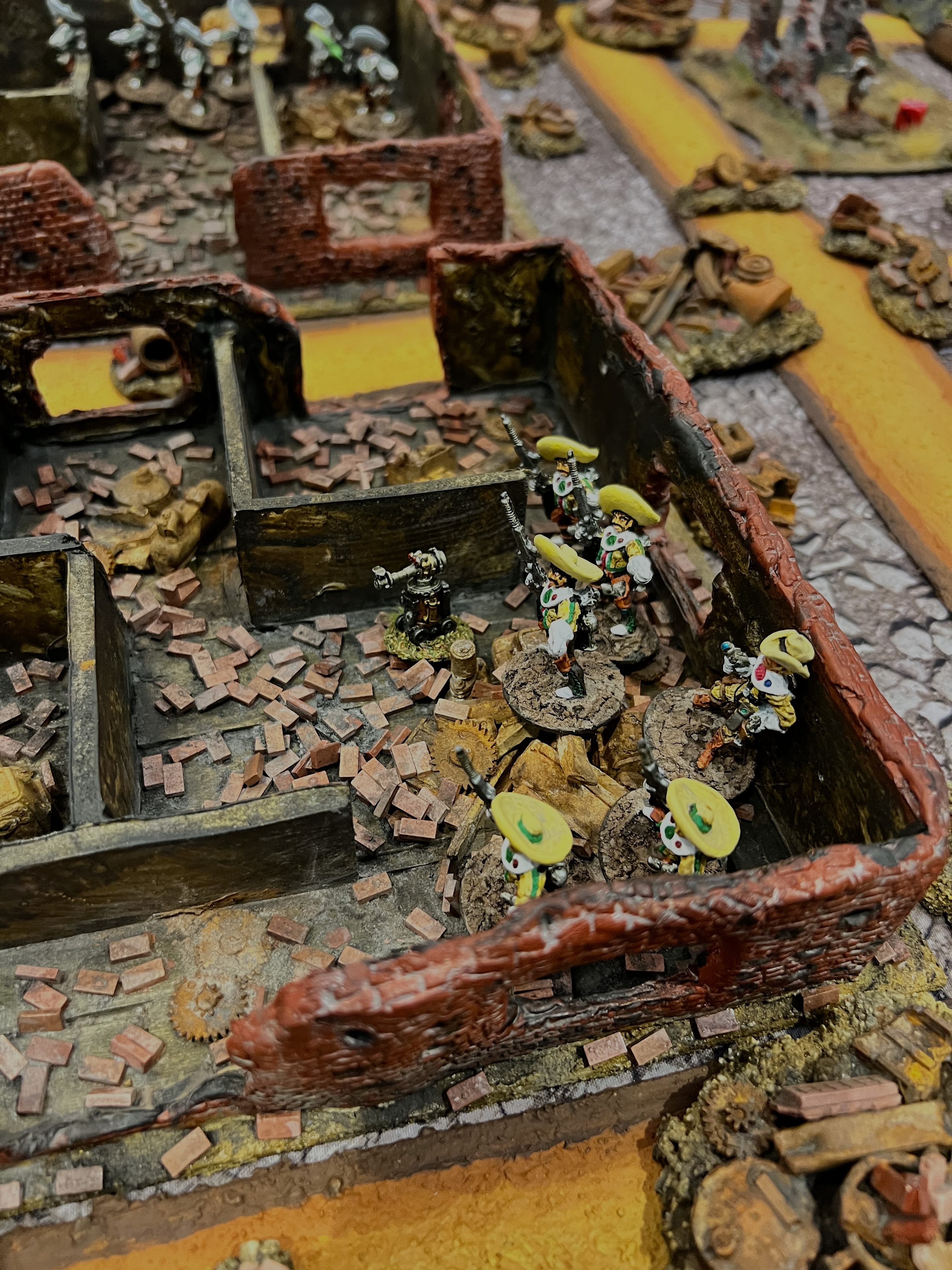
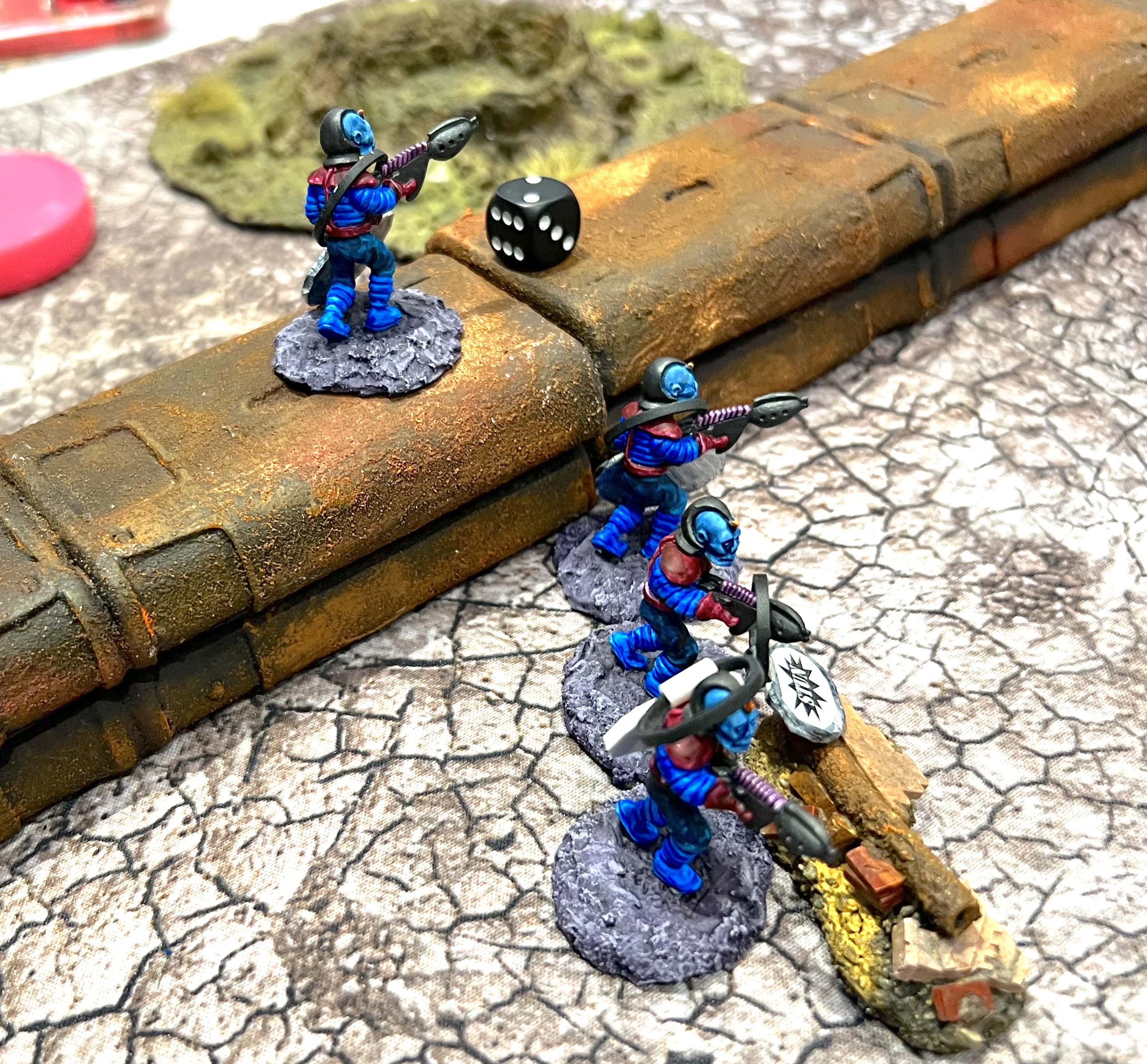
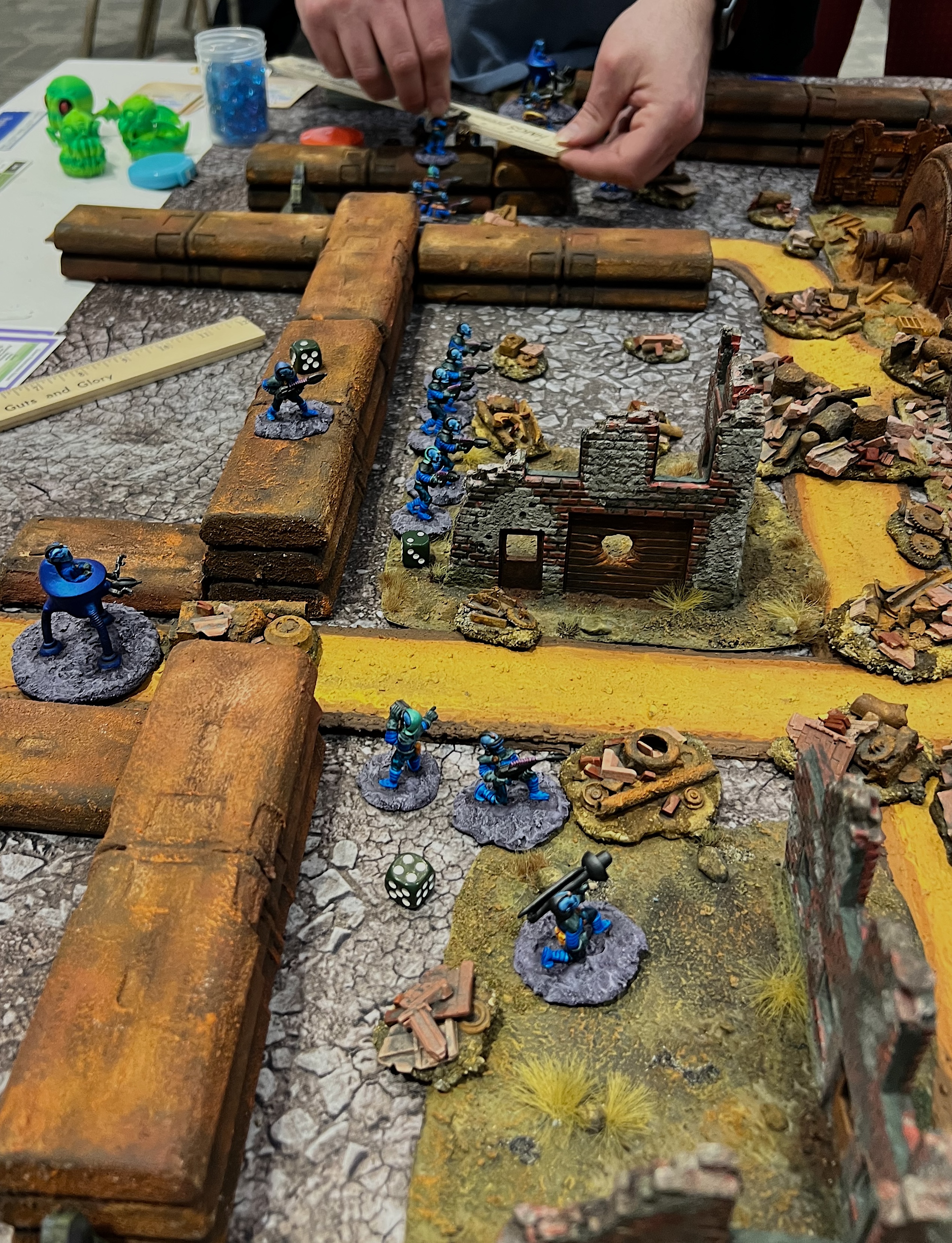
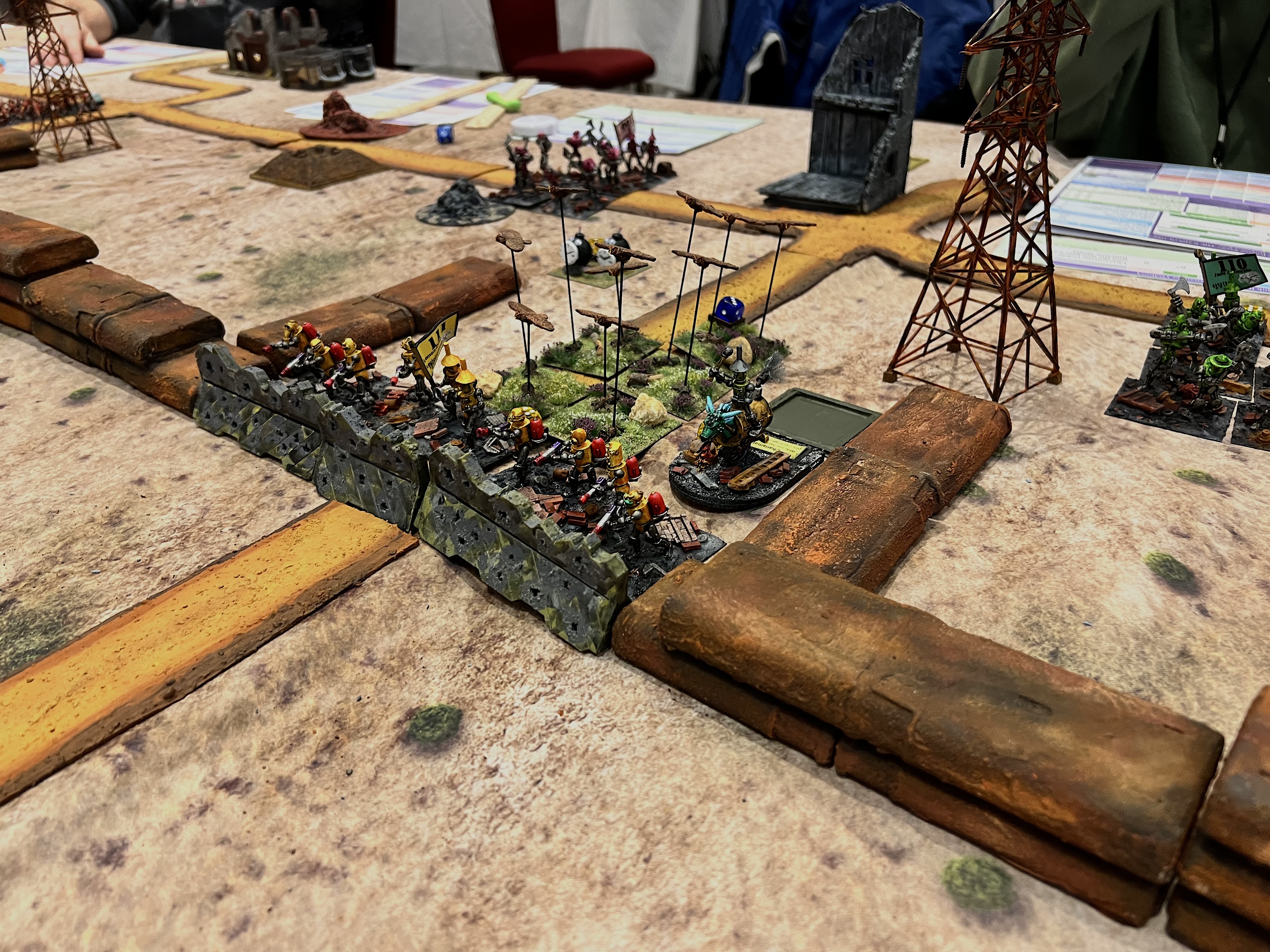
The game was definitely full!Retrovians and Space Cowboys move into the ruined city.The Space Cowboys find a robot (an Archive Robot Cook) and get it to join their side.Reinforcements arrive! Here come the Space Roos.Retrovians take cover under fire while trying to clear the walls.Retrovian infantry move into the city.
In the end, the casualties on both sides were high. But, the Space Cowboys possession of robots allowed them a narrow 15-10 victory. That wrapped up Thursday’s games.
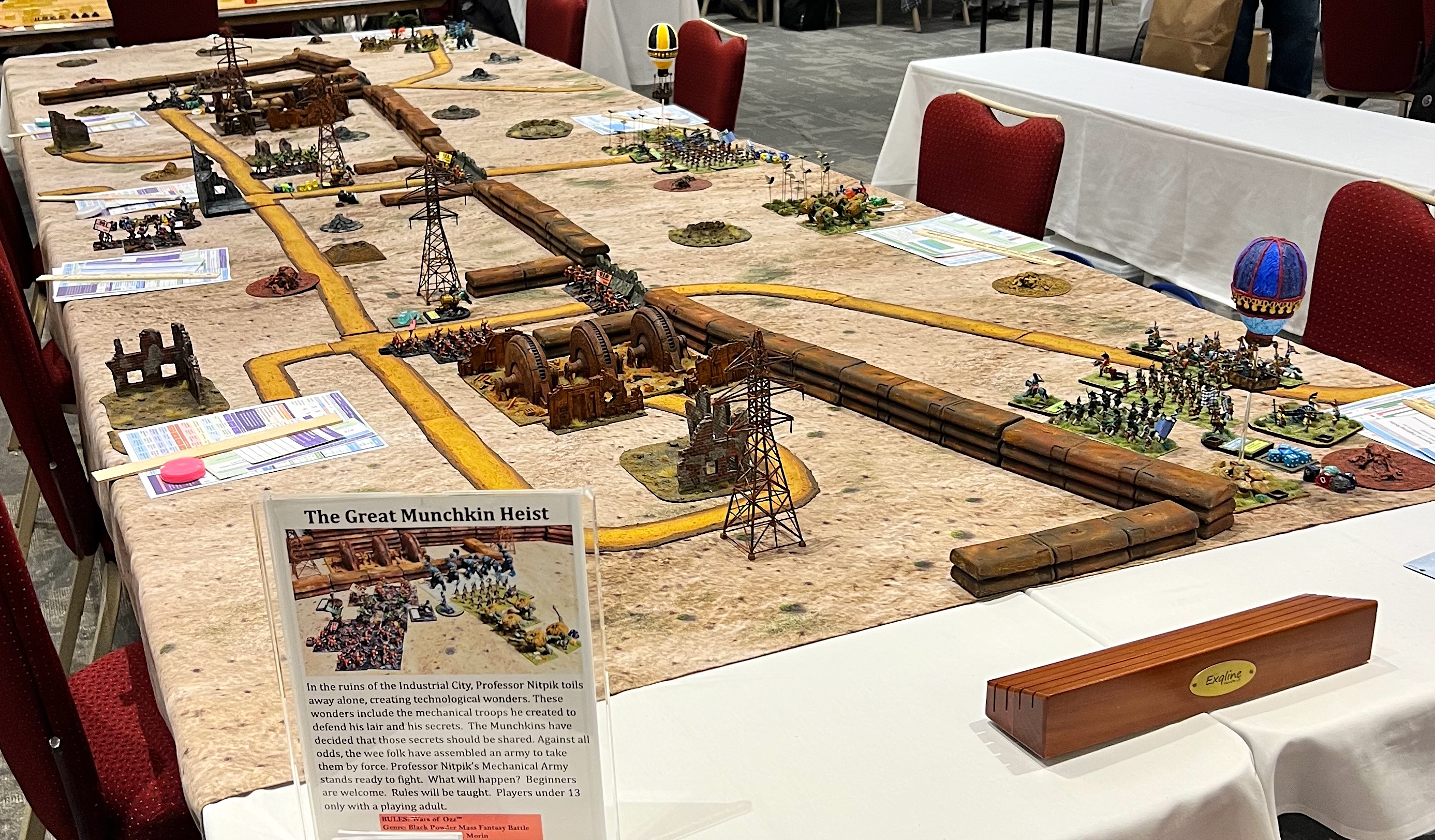
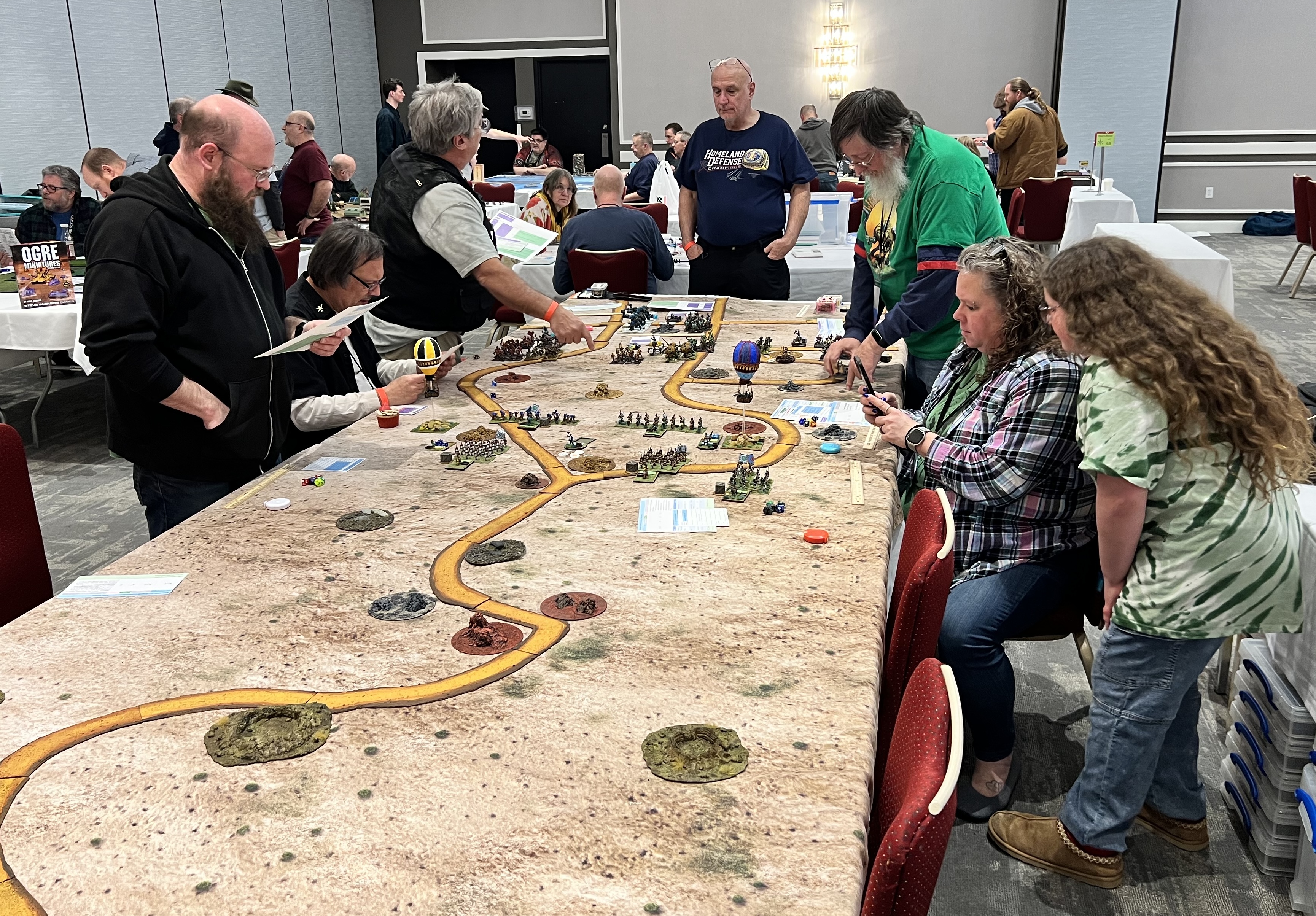
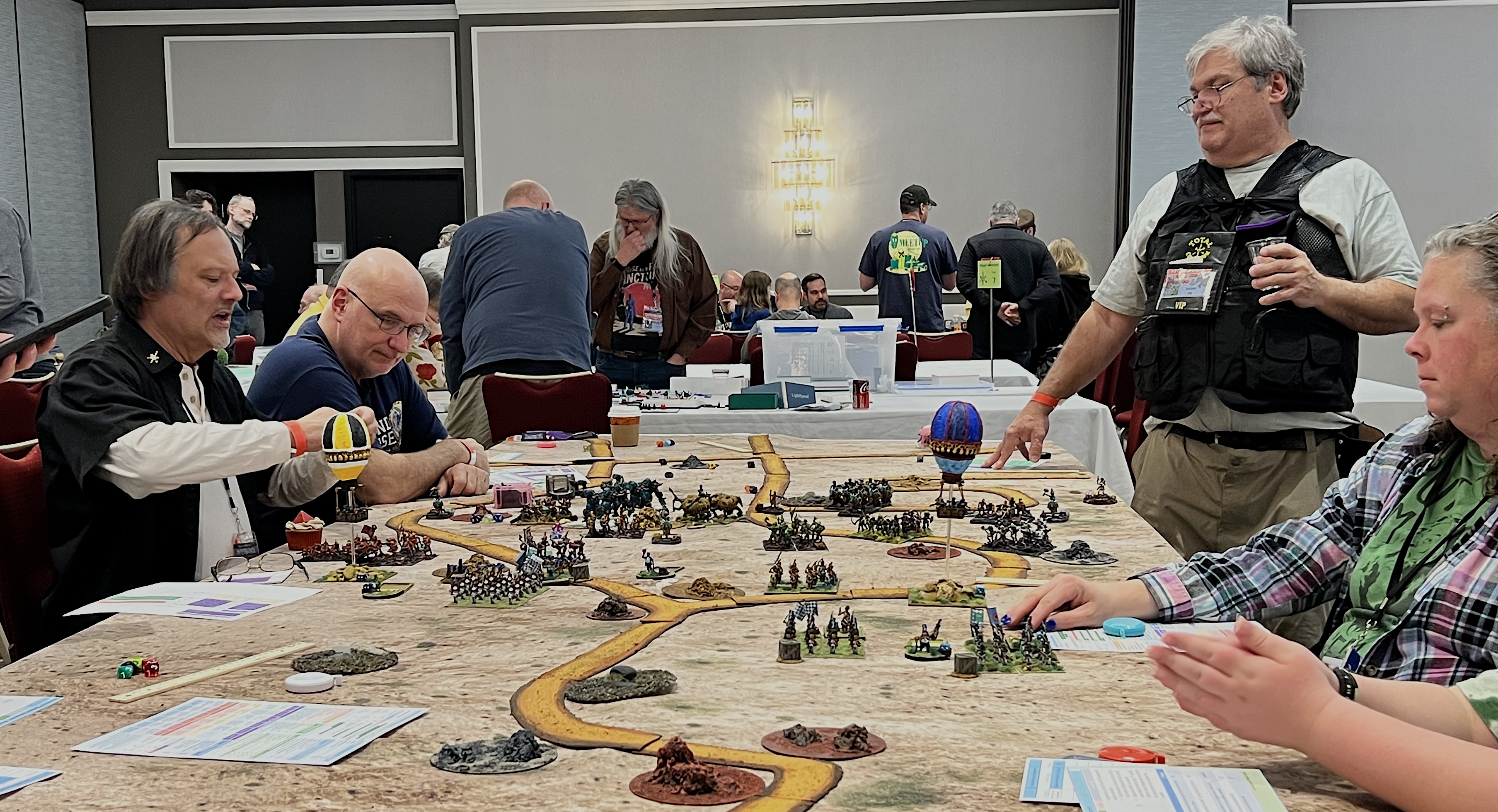
I decided not to run a Friday morning game this year. Last year, resetting the flea market room took too much time. It interfered with my morning game setup. Instead, I had plenty of time to move everything into the “big room” and set up on the “big table”. My first game was a Wars of Ozz game. It was titled “The Great Munchkin Heist”. I had also run it at Cold Wars. This time I had an even bigger table than I had there!
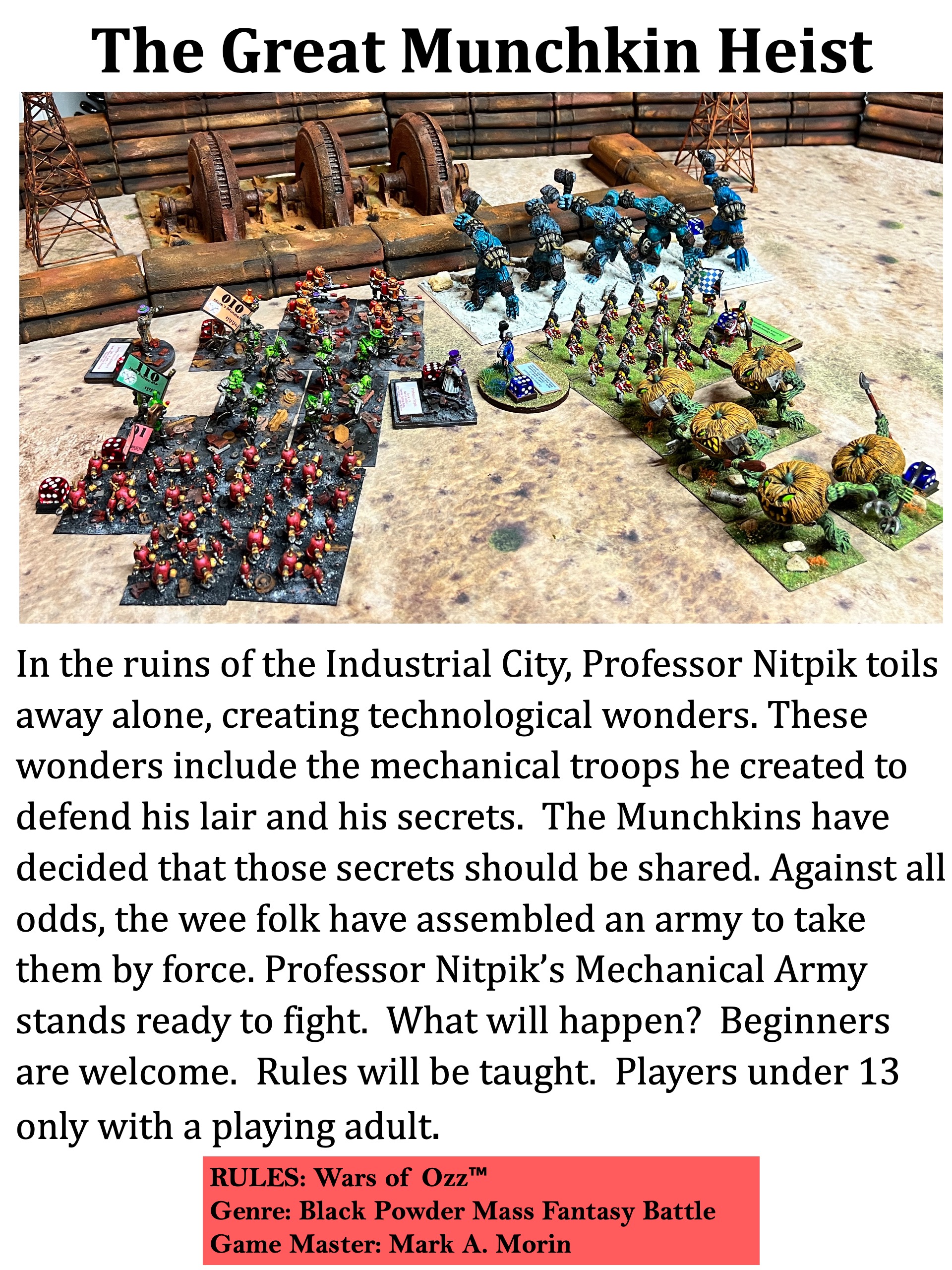
The Great Munchkin Heist
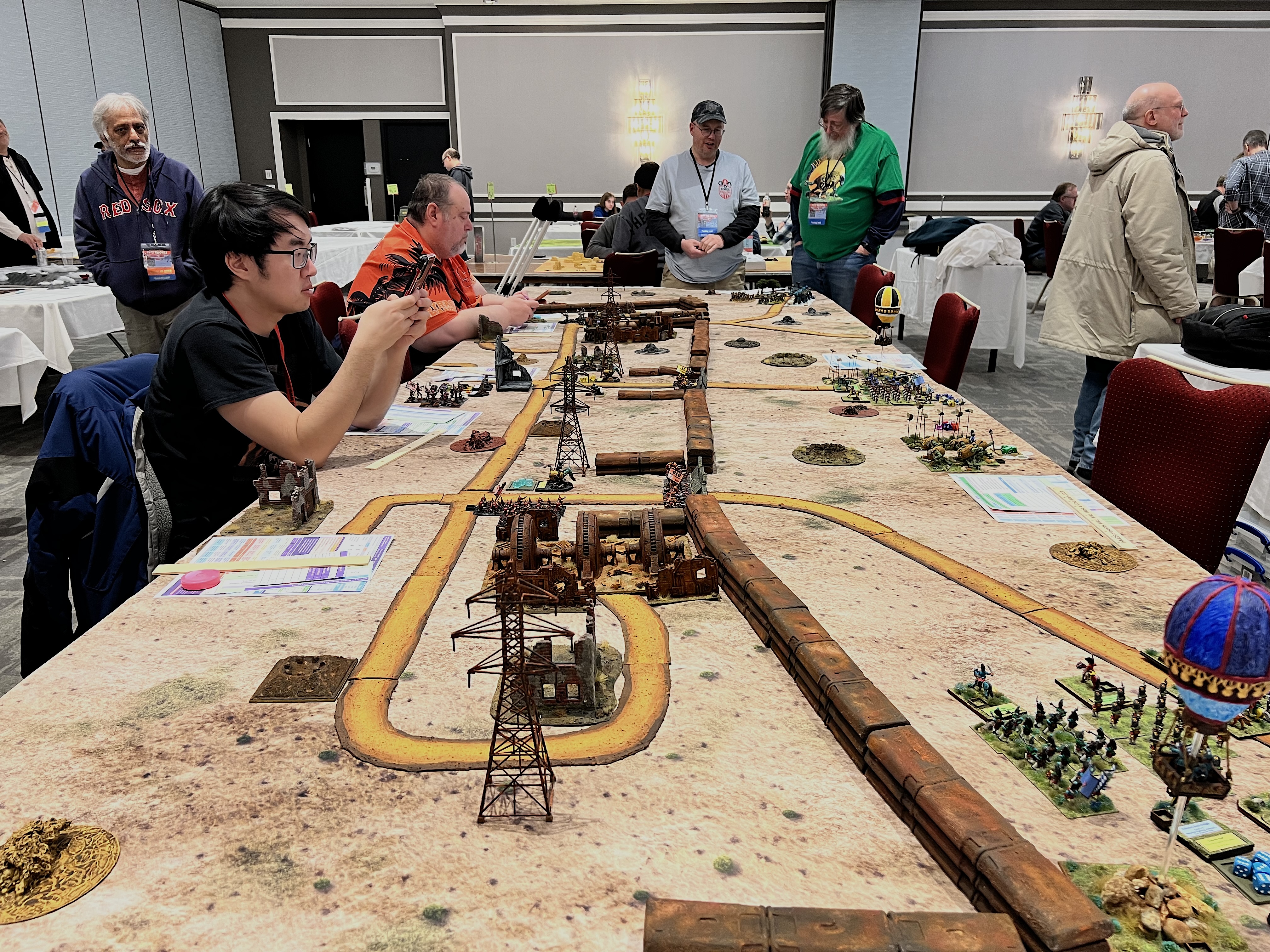
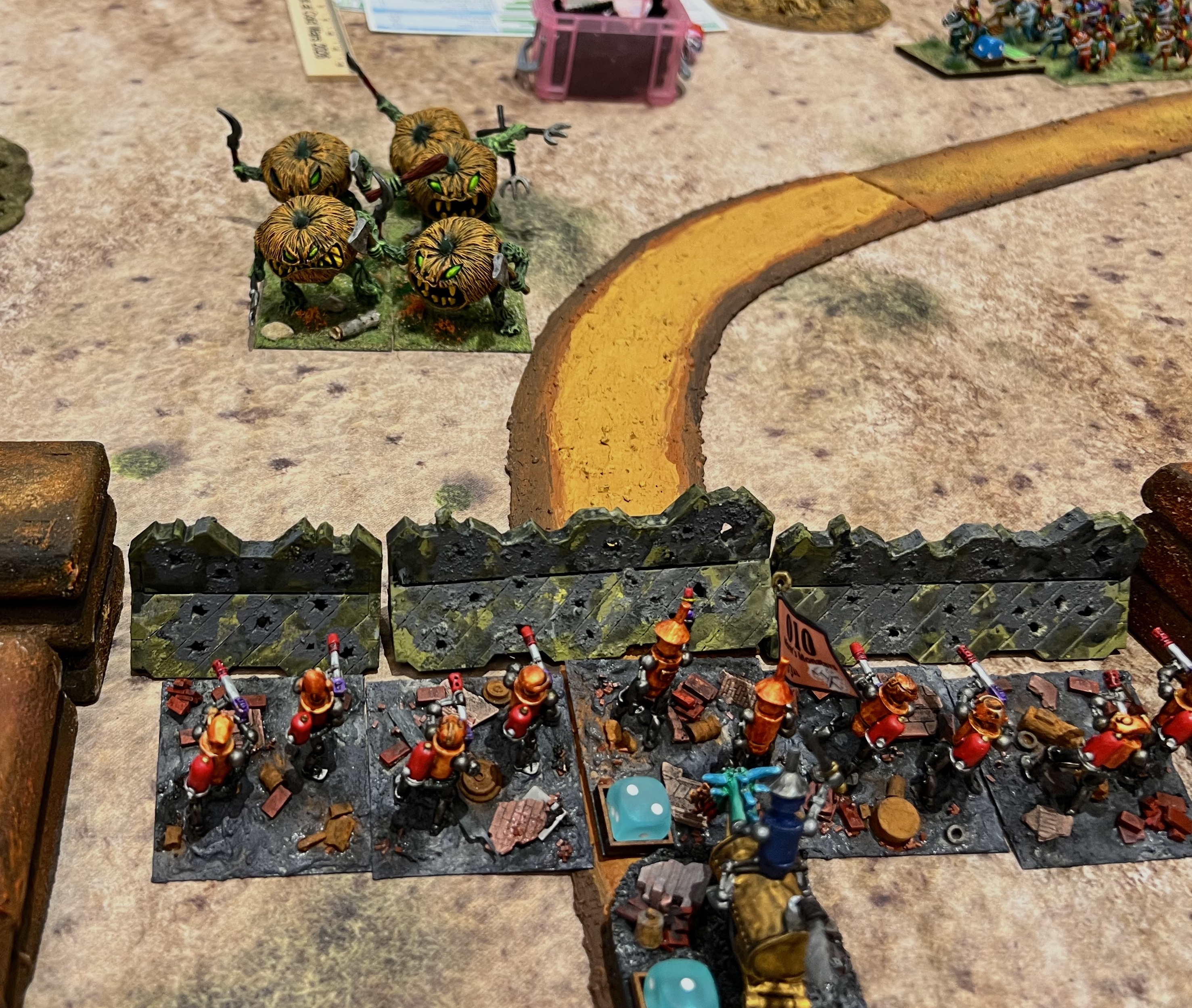
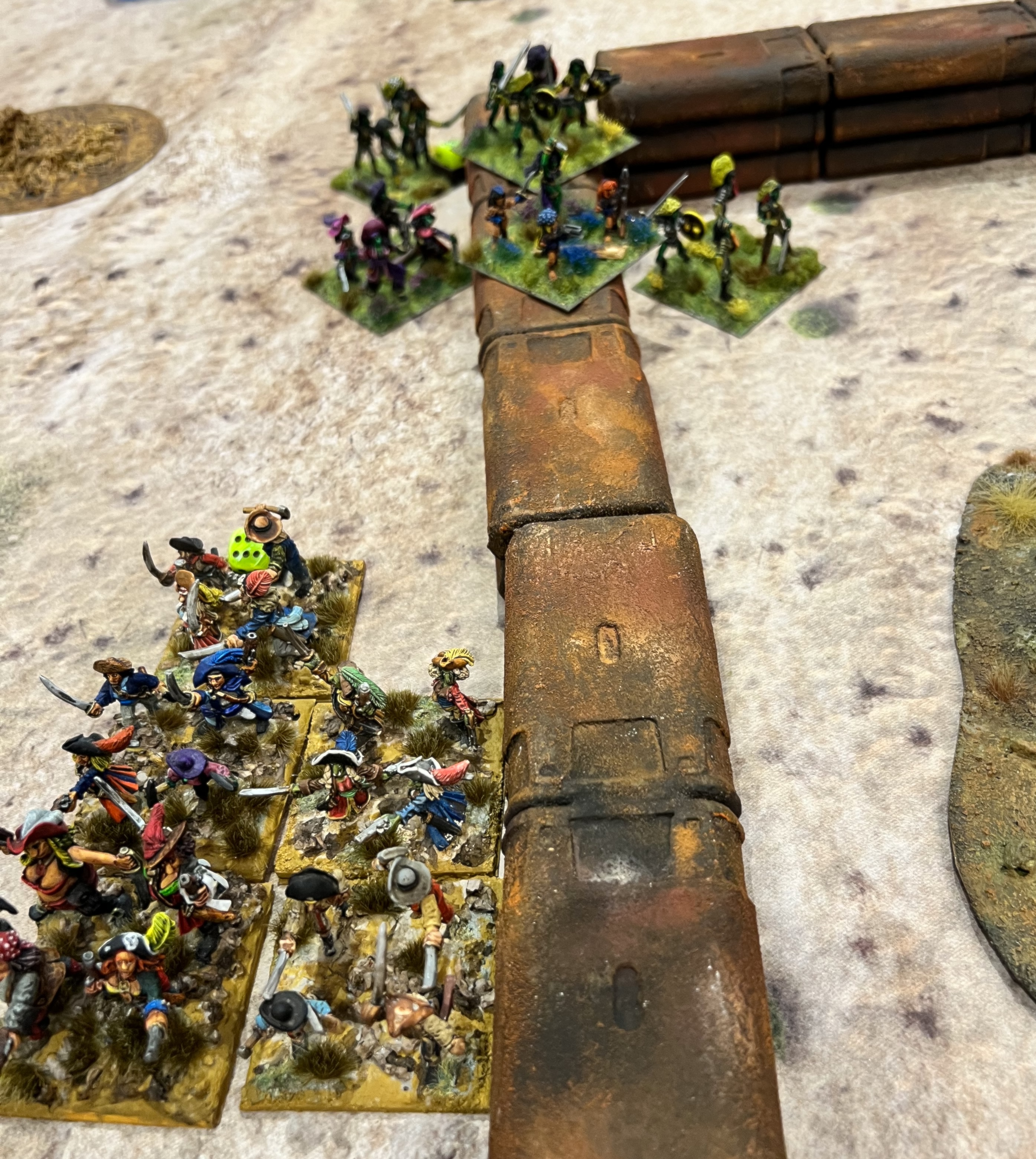
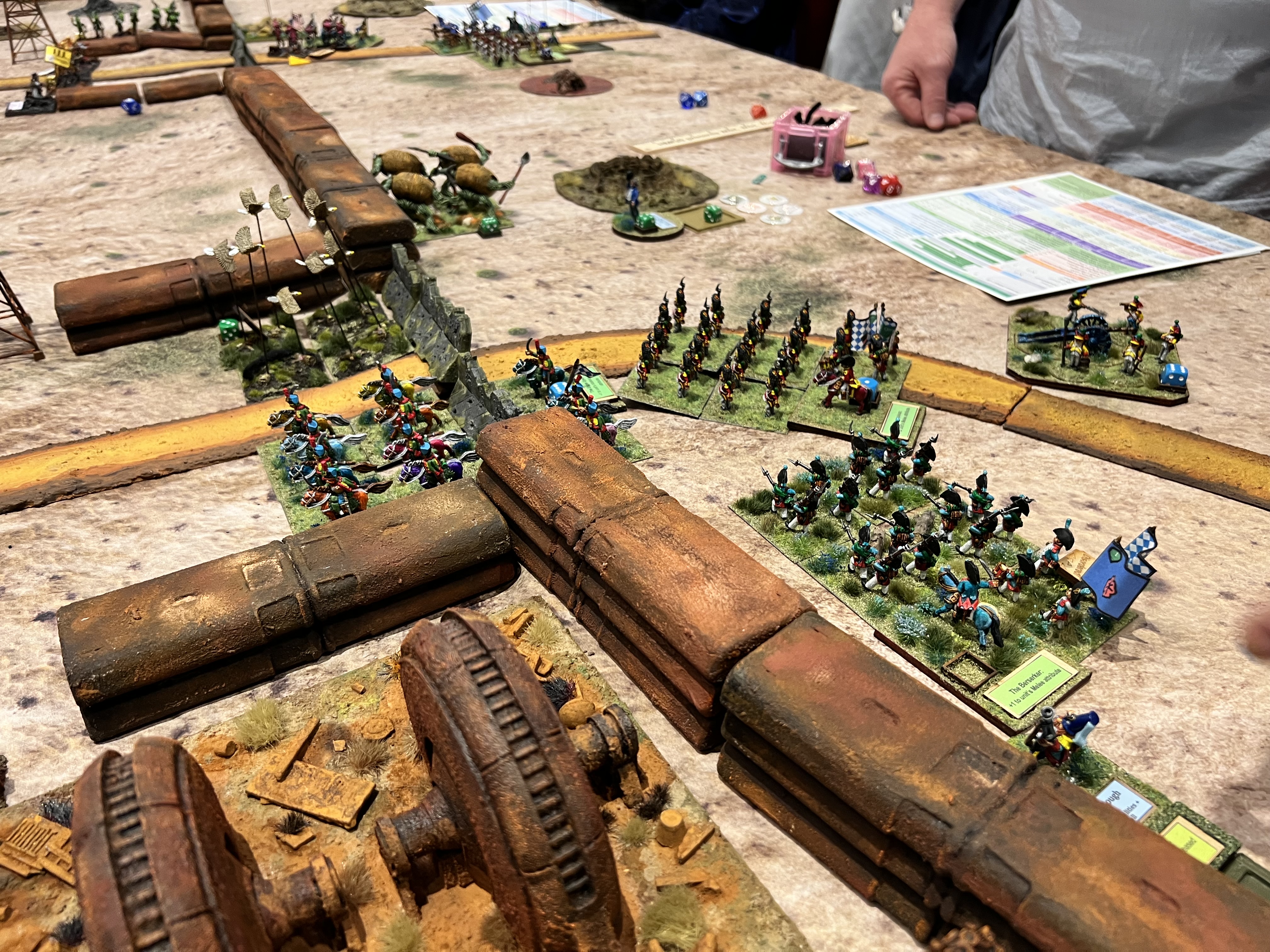
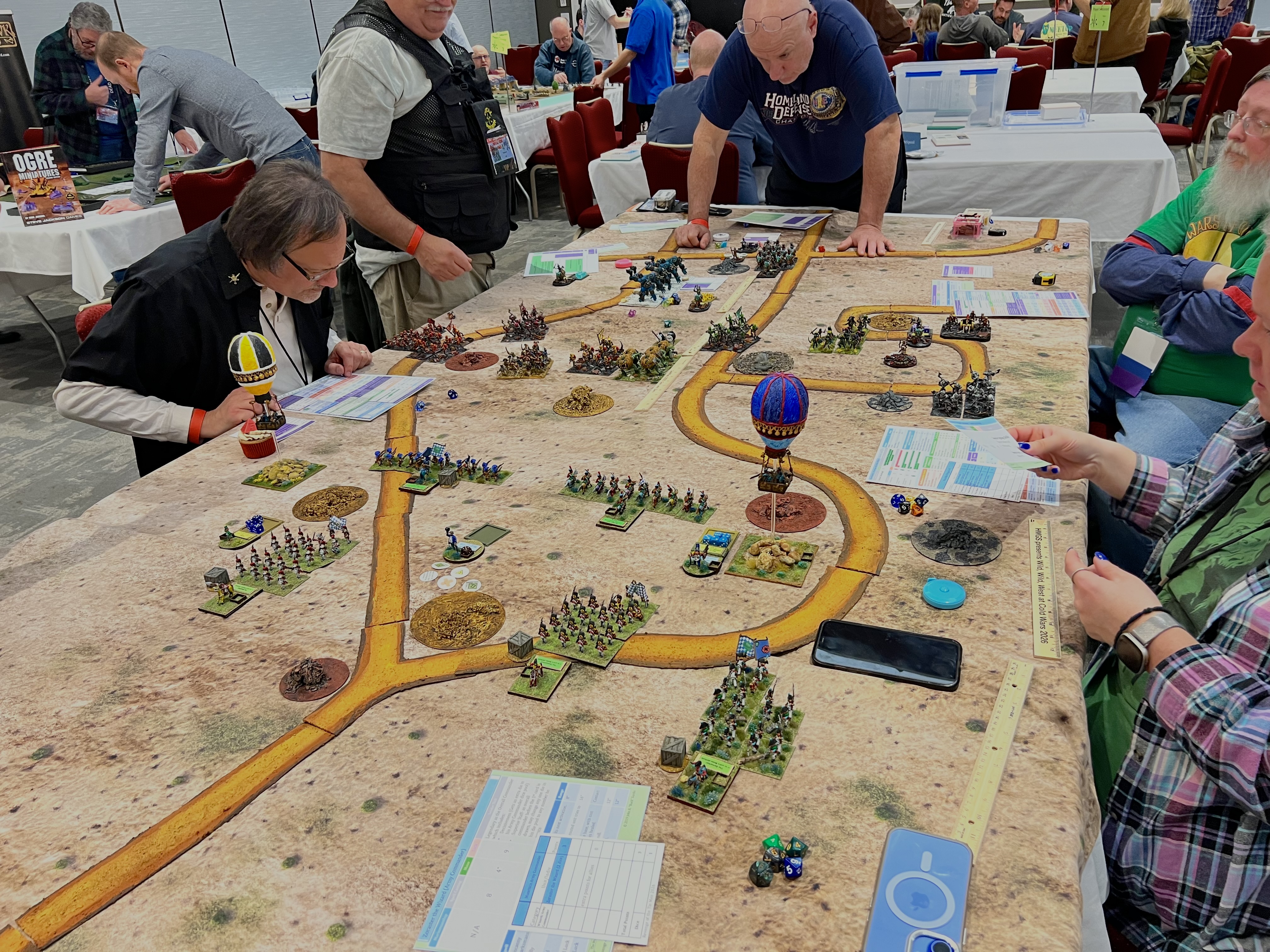
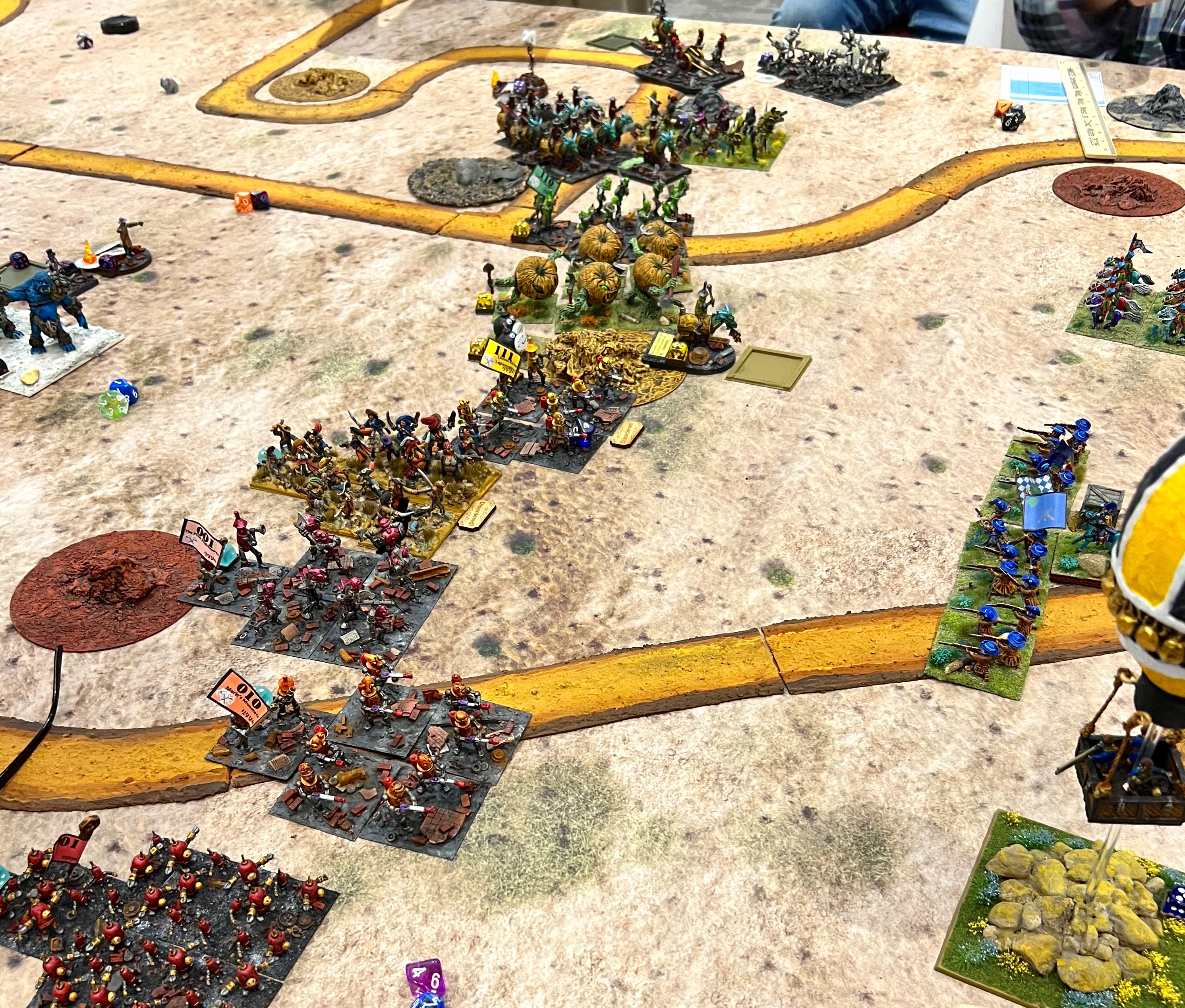
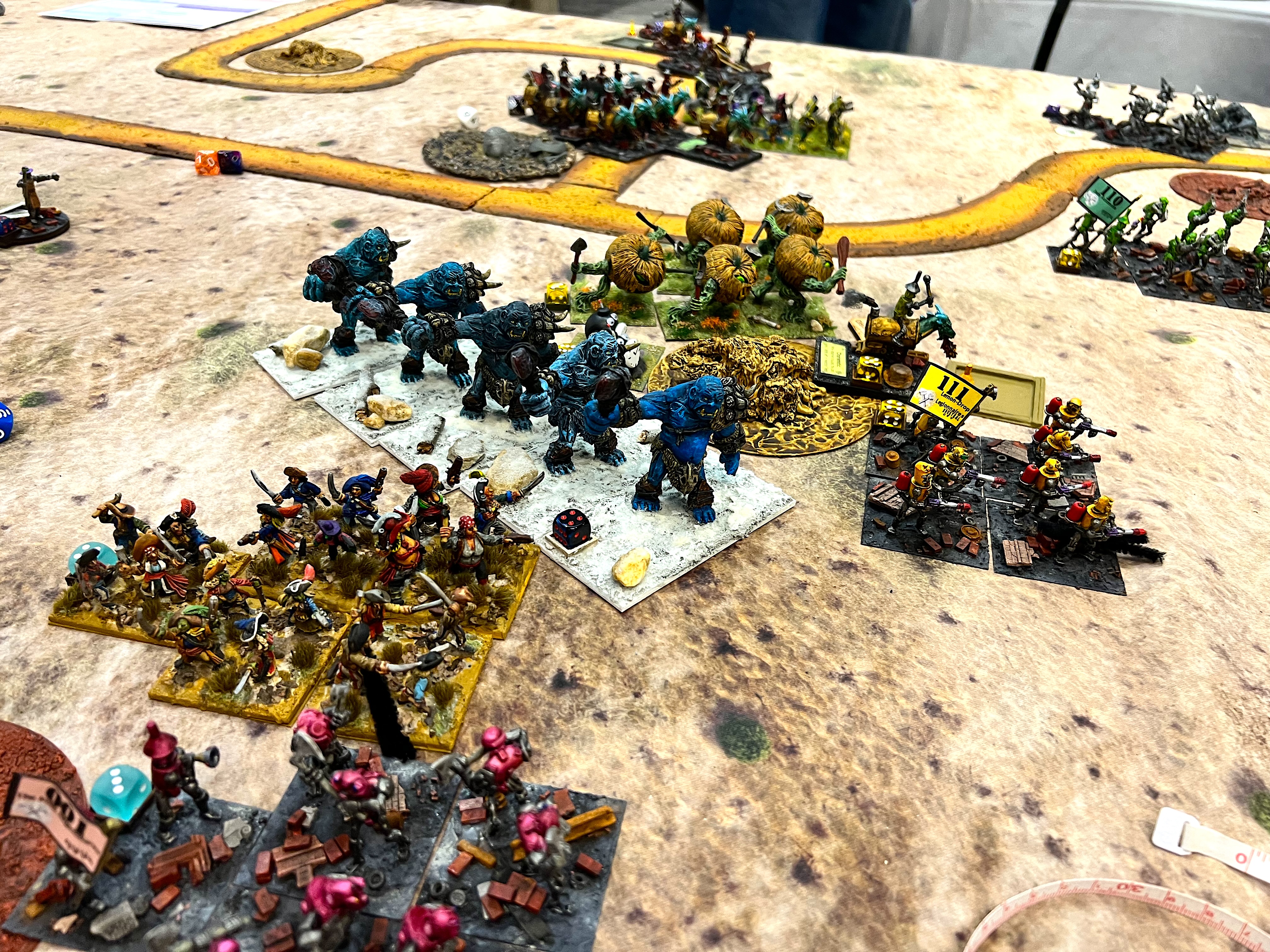
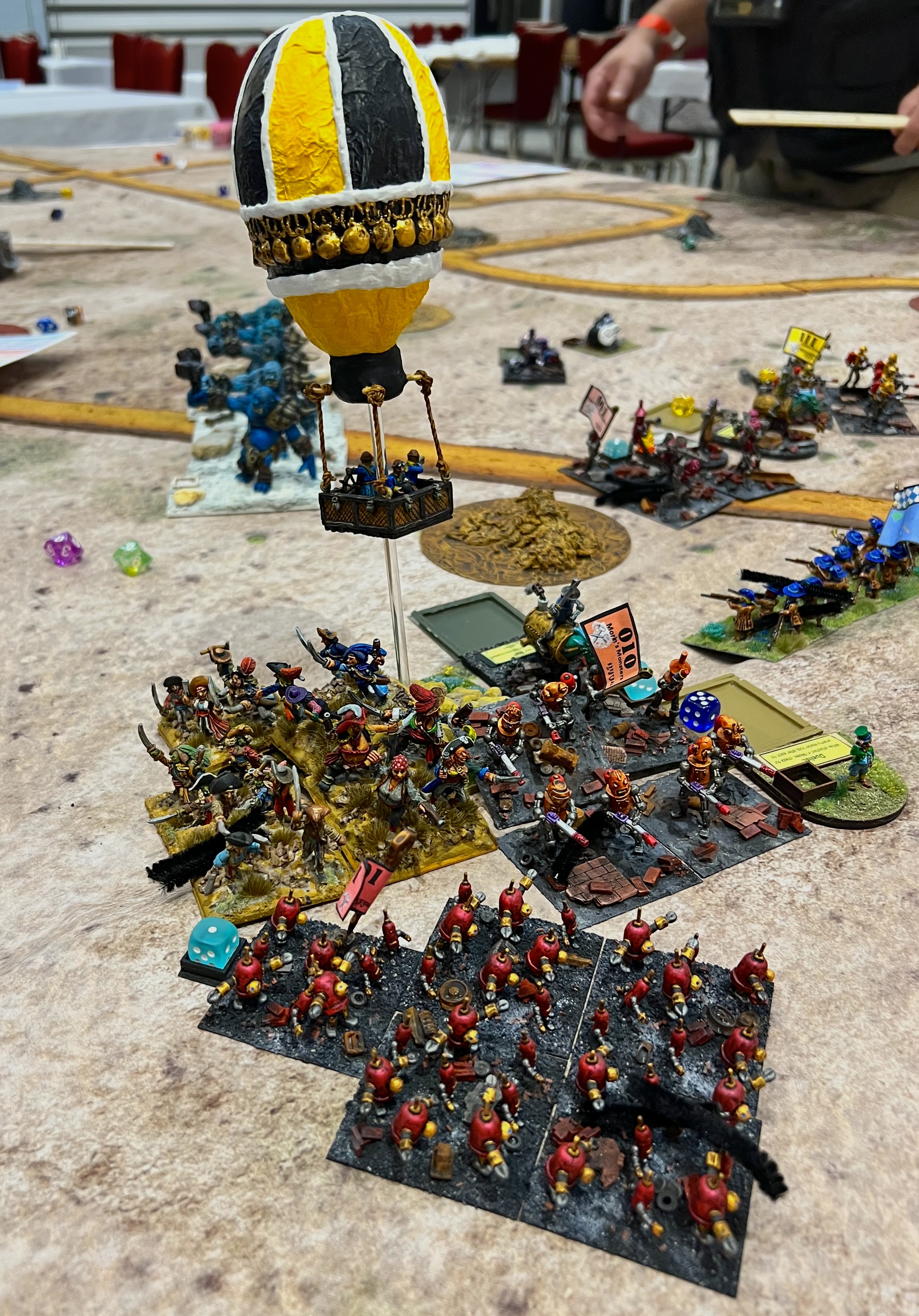
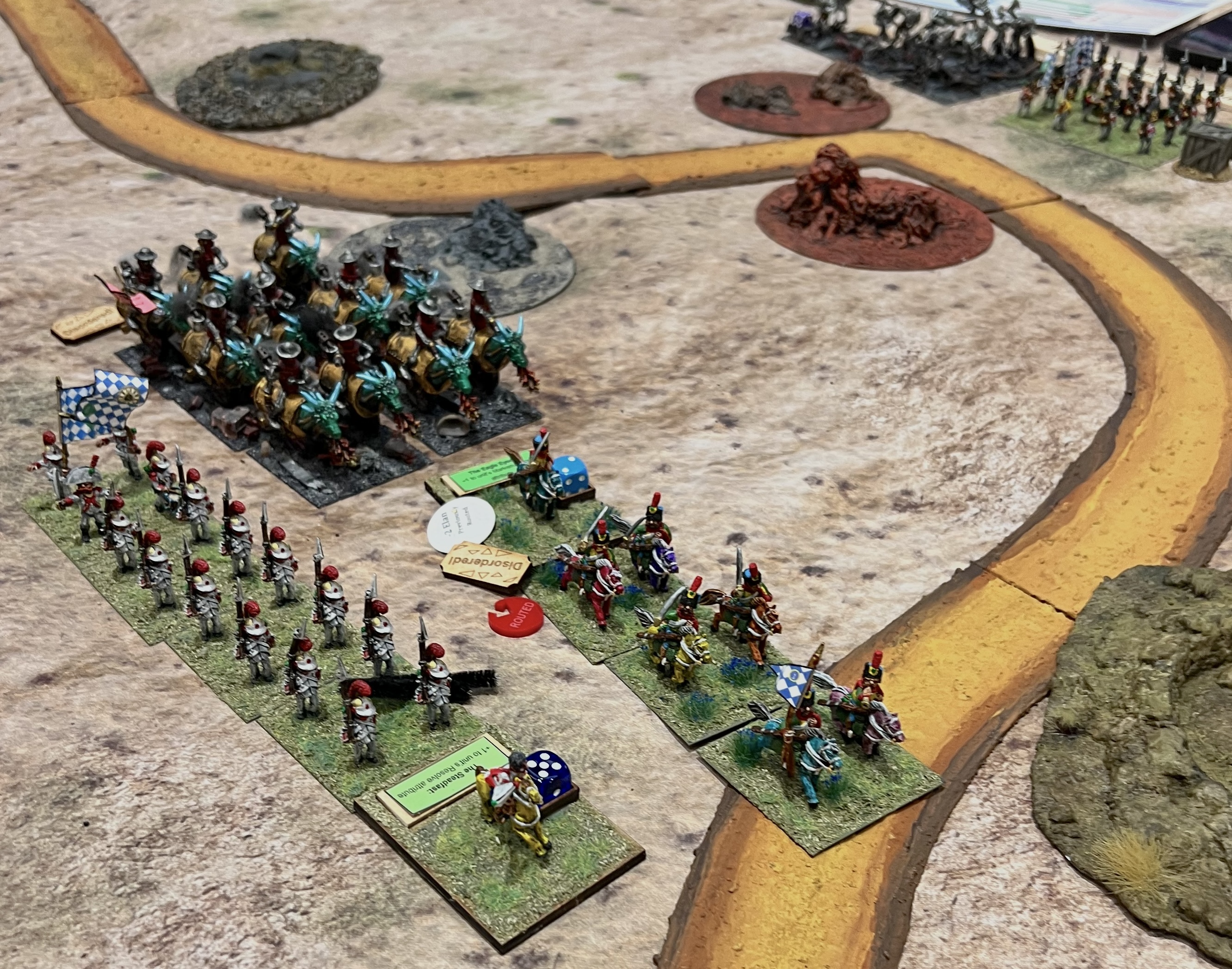
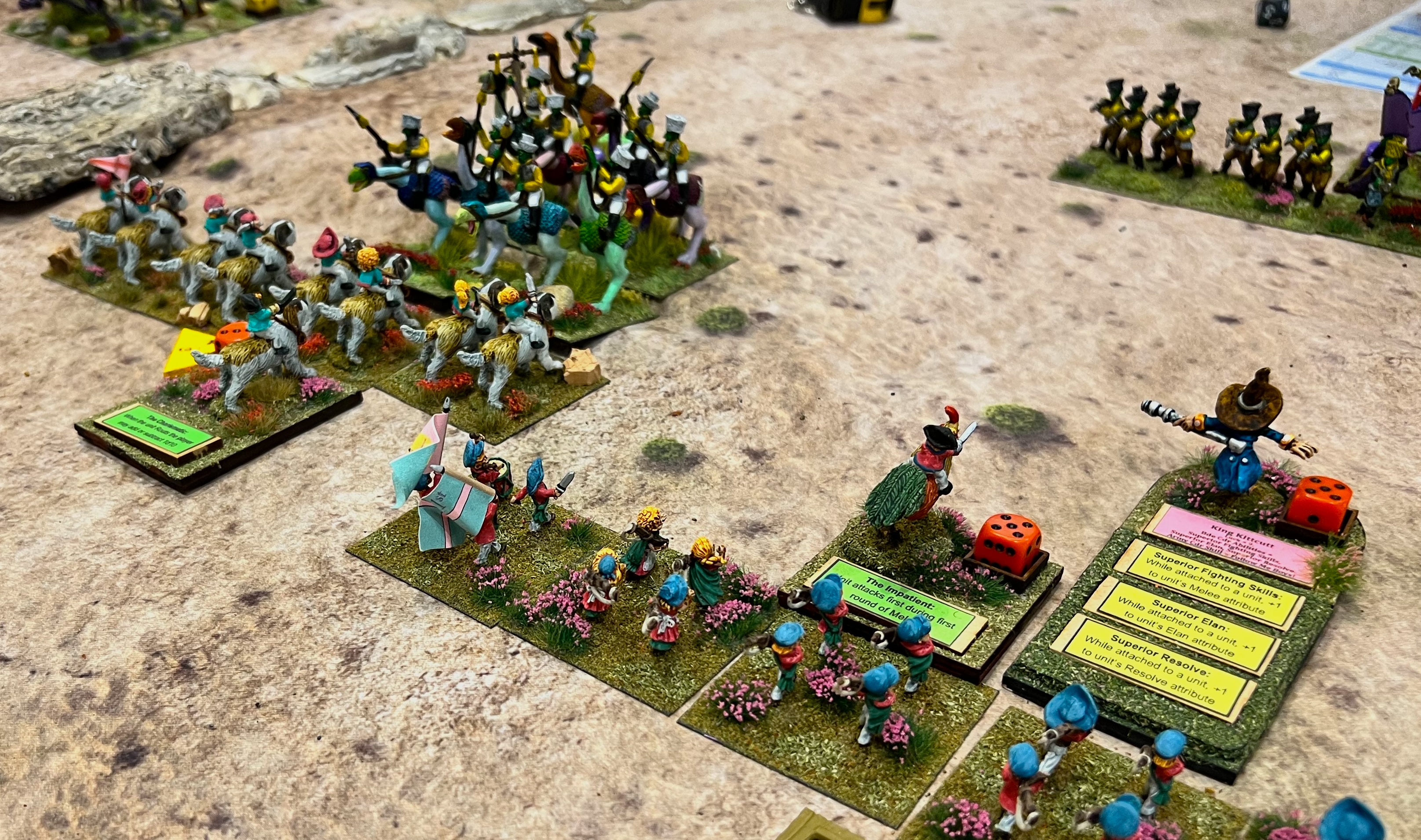
The game set up – I loved creating this panoramic expanse!Players arrive – once again demand to play was high!1st Munchkin Brigade set upThat’s a full game!Nitpik’s “Morin’s Monsters” armed with napalm blasters hope to cook up some Great Pumpkinheads.A regiment of Great Owls (Munchkin allies) overflies the Lemon Drop Legionnaires and hits them in the rear!Jinjur regiments (female pirates and Munchkin allies) breach the wall.The Munchkins breach the western gate and their light cavalry pours through to look for technological treasures.In the center, two axe-wielding Nitpik regiments have had enough of the Munchkins. The Jade Automata and the Pink Nightmare regiments charge over their defensive wall. Their counterattack wipes out the Munchkin artillery and drives two Munchkin infantry regiments from the game.Another view of that mechanical counterattack.Meanwhile, the cleaver Jinjur pirates locate some of Nitpik’s technological wonders in a wrecked building.
The game ended – in a dead tie 23-23! A real nail-biter to be sure!
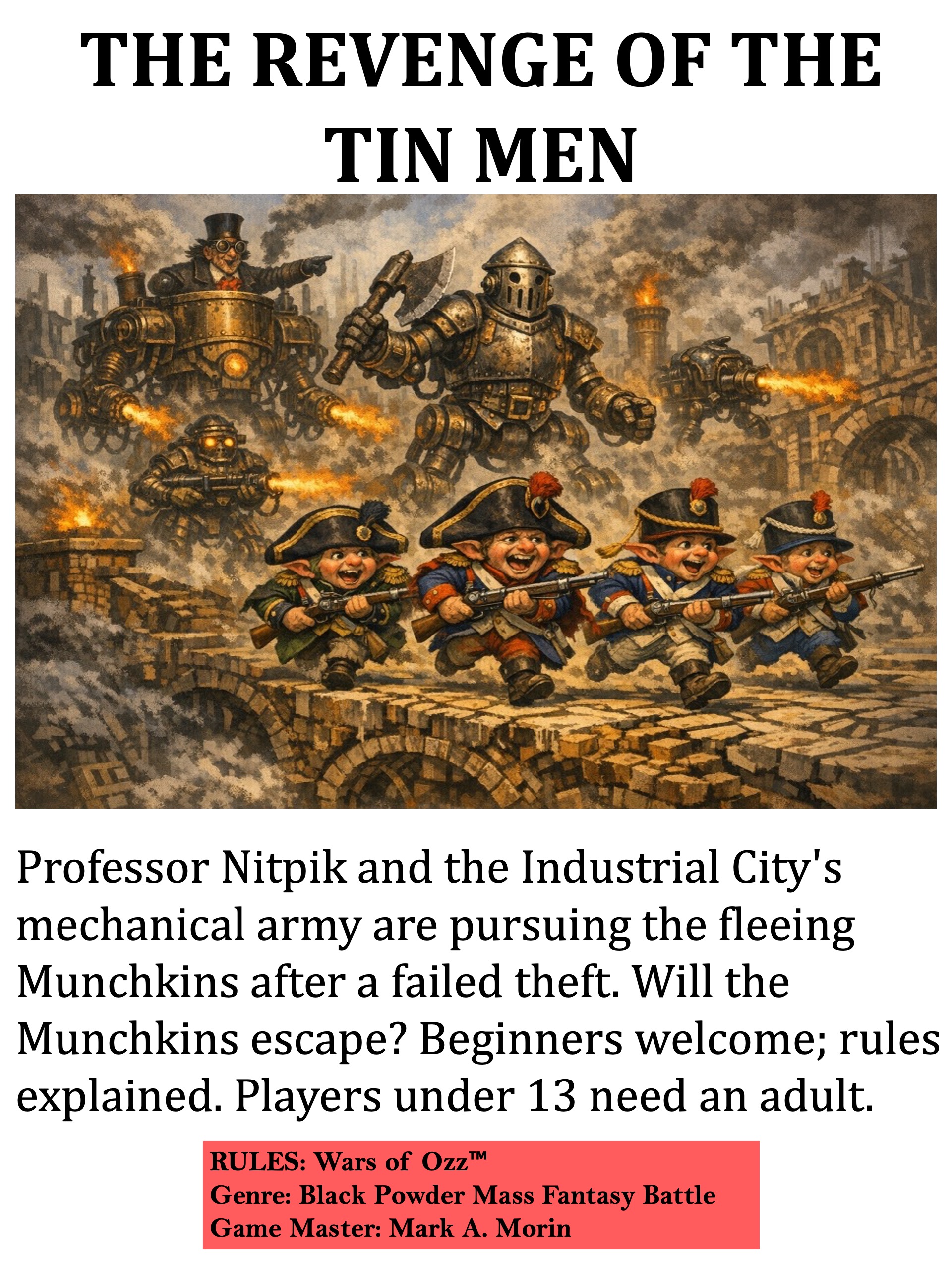
The next game builds on this one. The Munchkins have found technology, but welshed on their agreement to share! Thus, they betrayed their allies. As a result, their former allies have jumped over to the Nitpik side. The Munchkins are fleeing to safety, with Nitpik in hot pursuit.
Revenge of the Tin Men
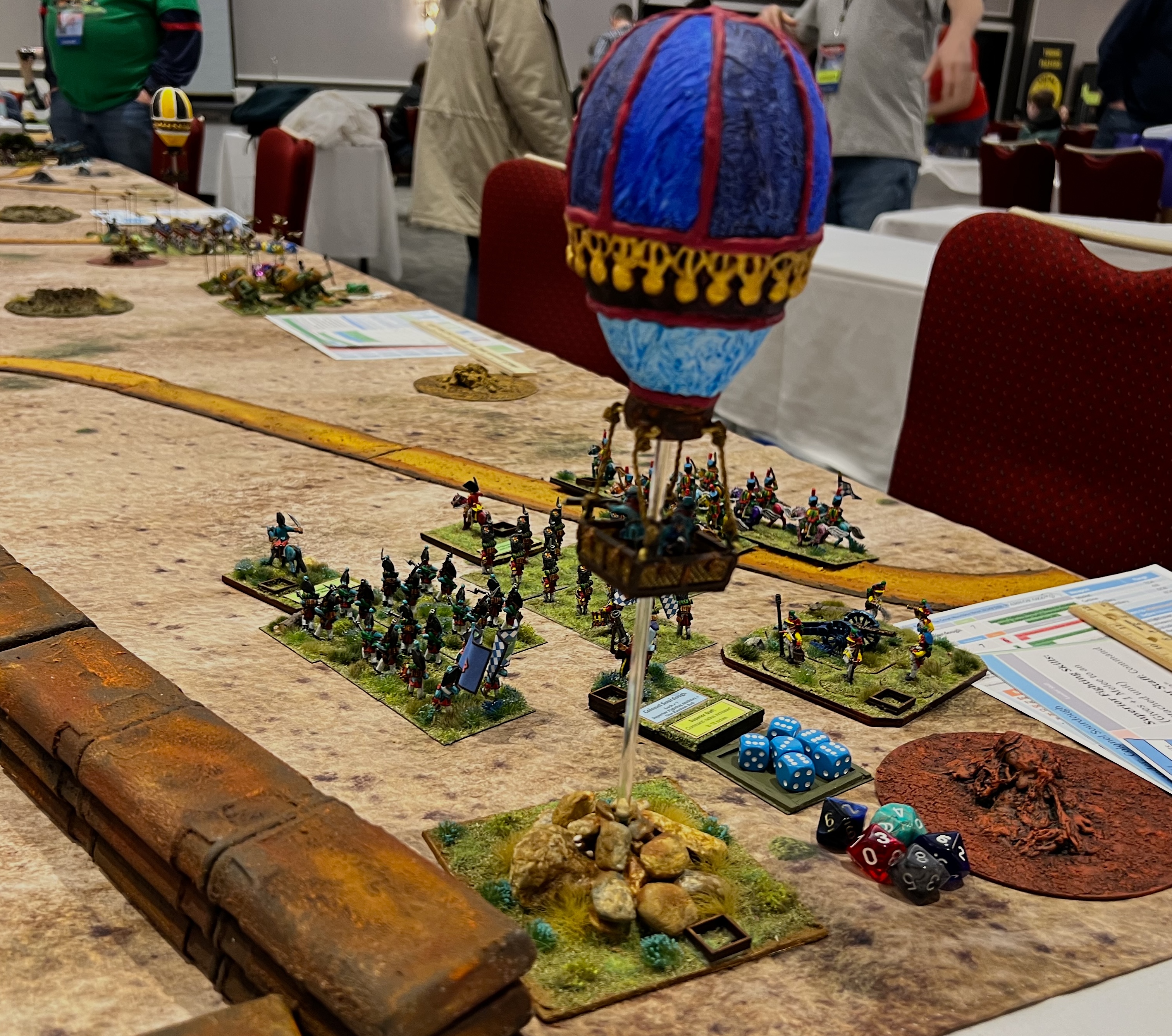
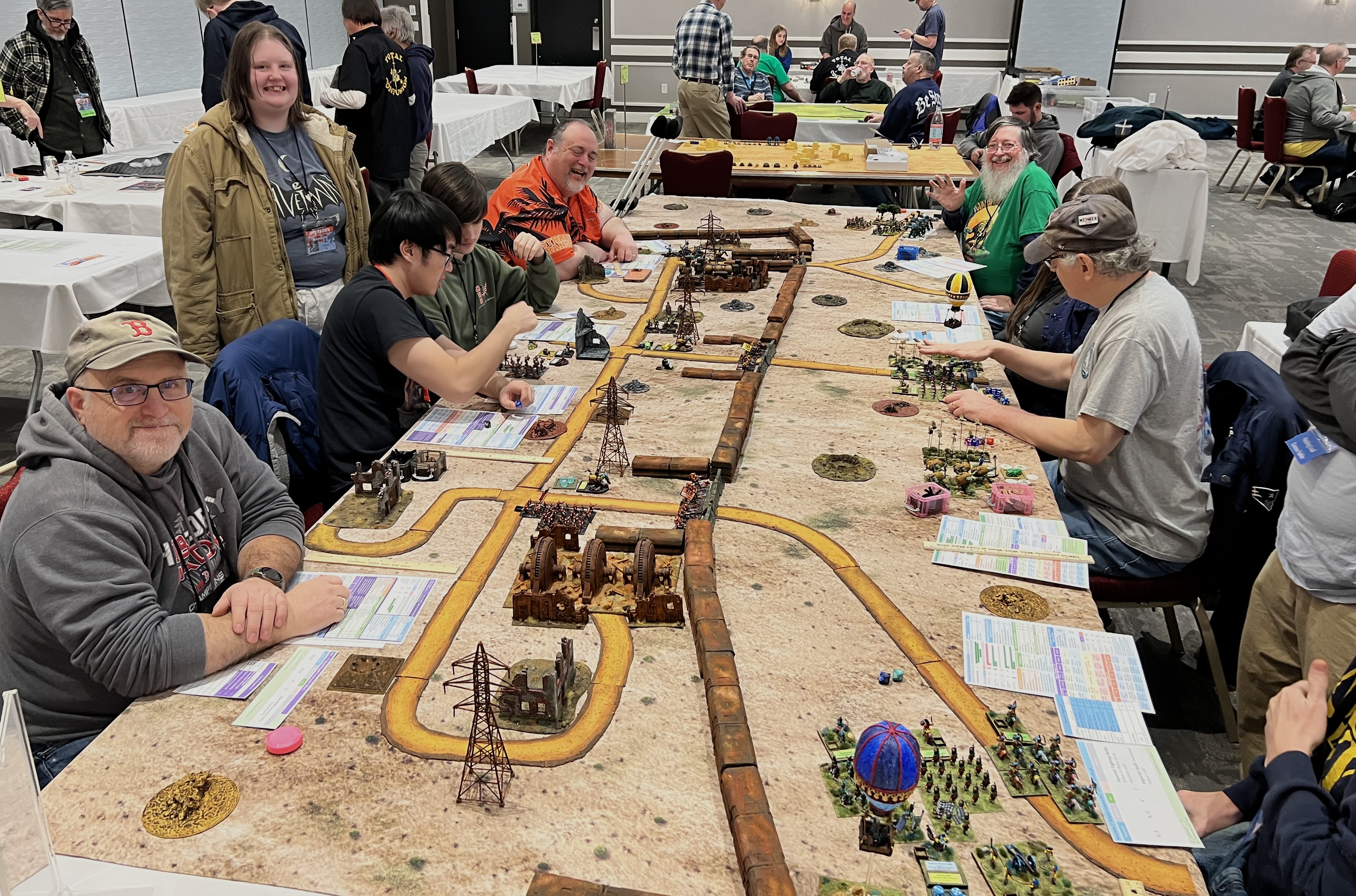
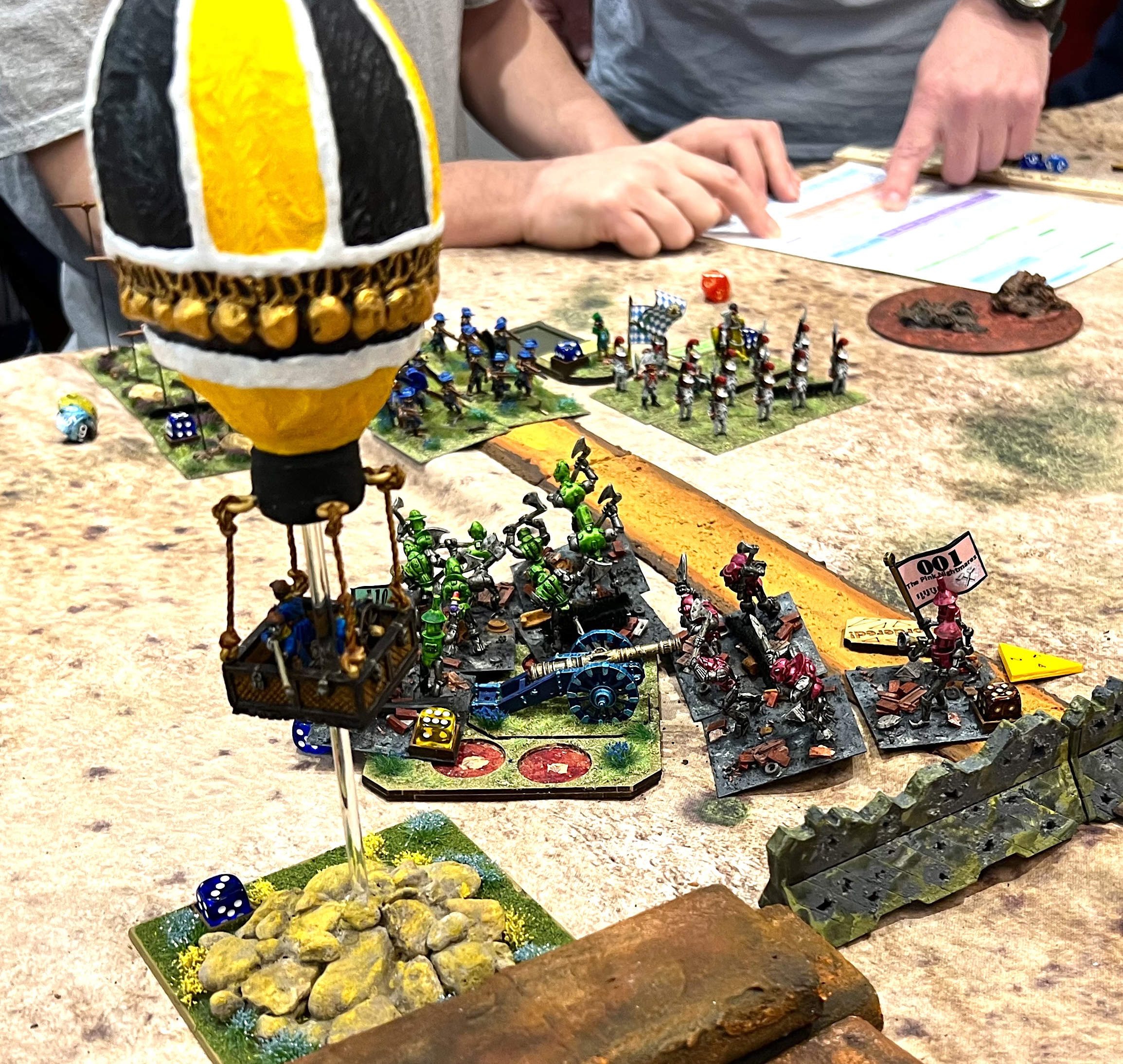
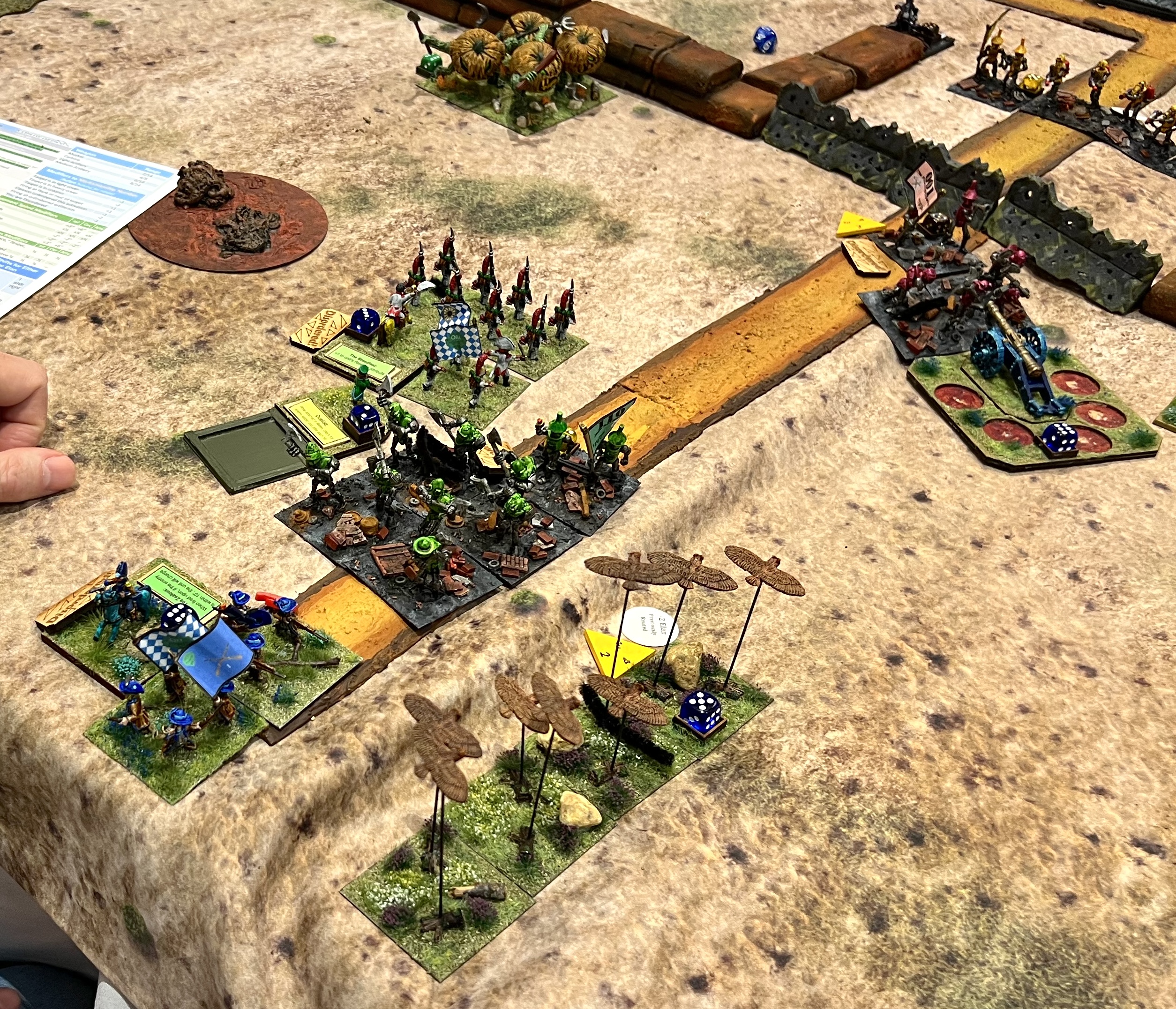
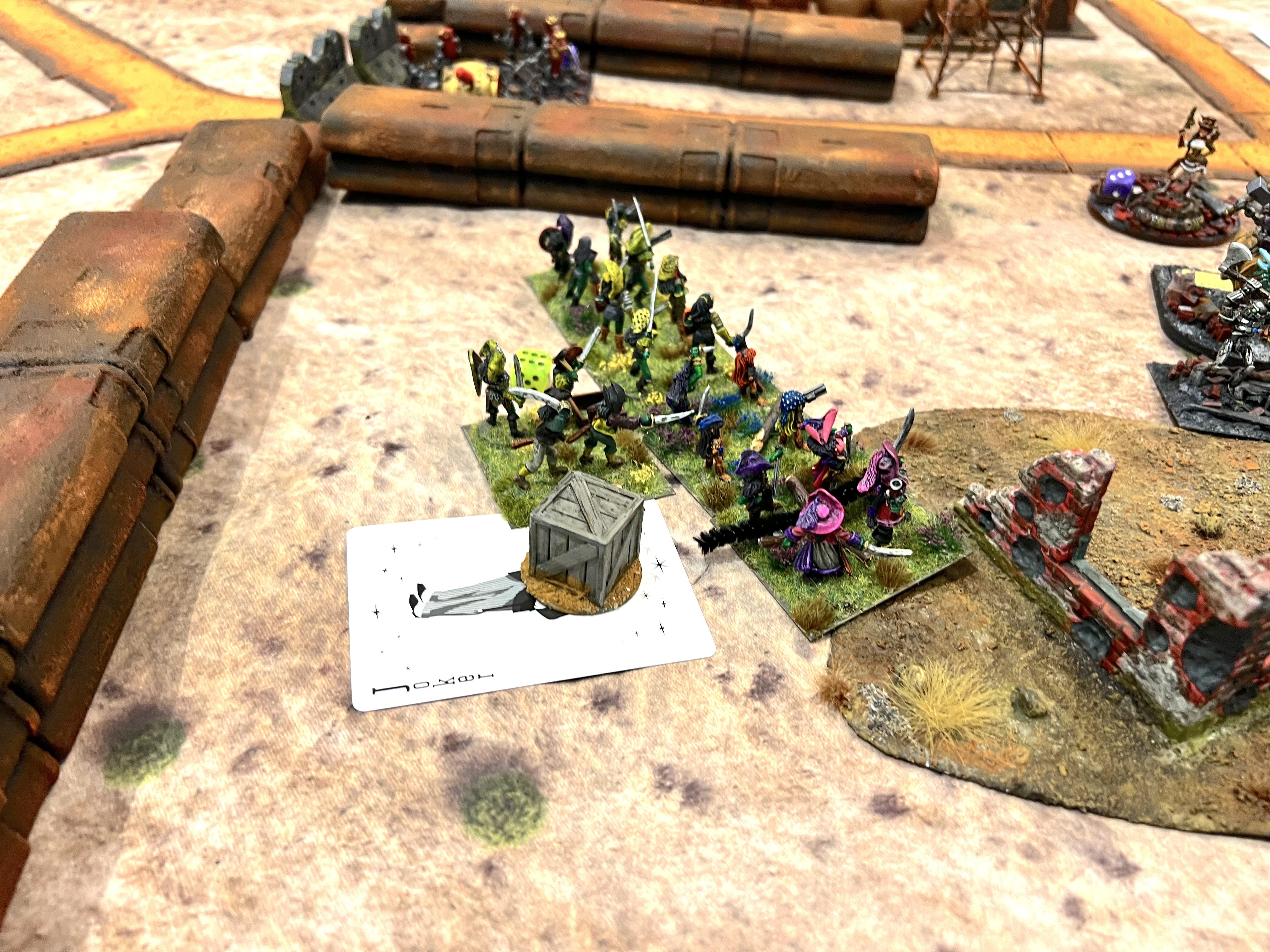
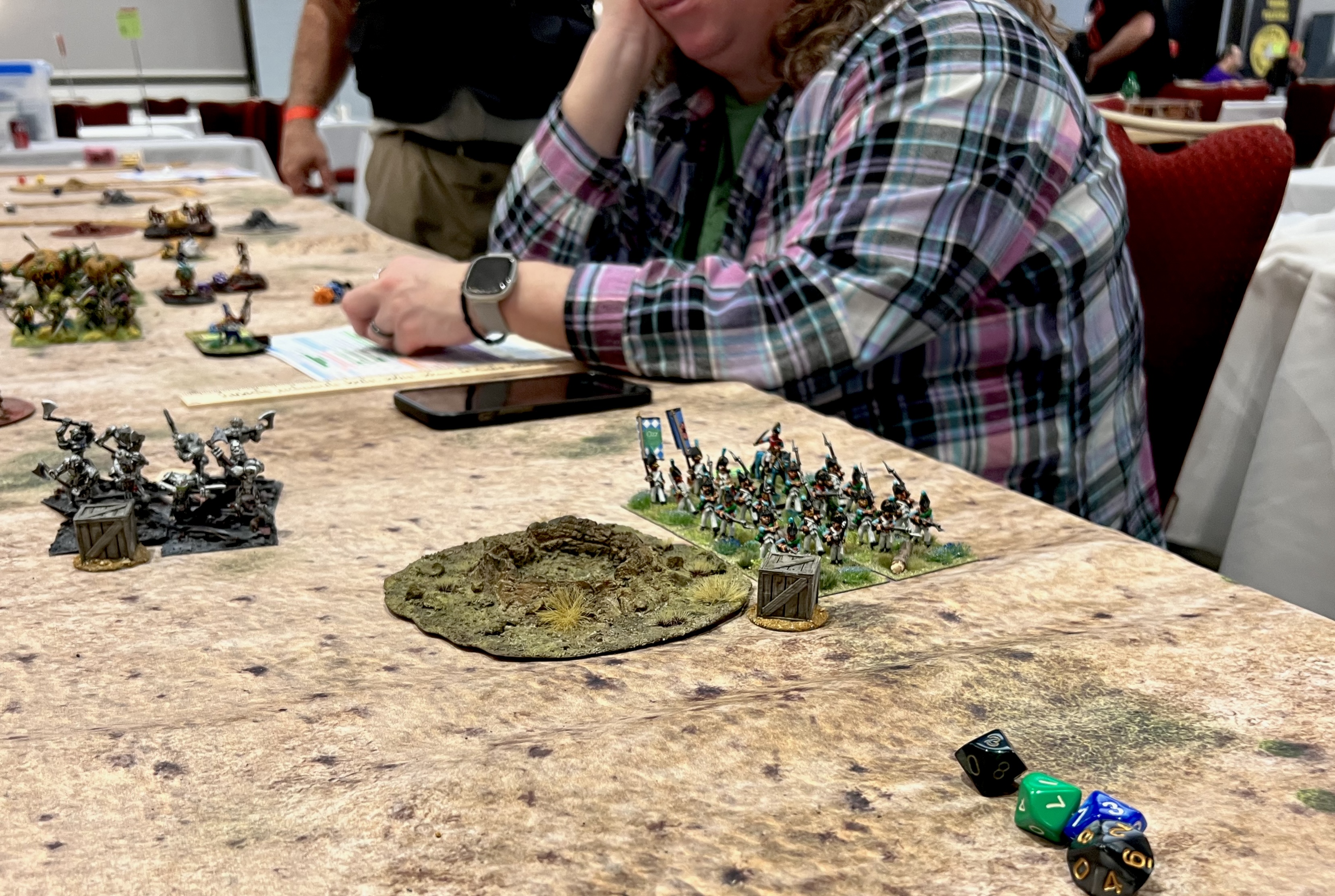
Another big game! The players plan.The Munchkins have 4 heavy crates of technology carried by 4 regiments. The crates slow down the Munchkins. The little folk need to cross a line with the crates safely to gain victory points. Additionally, each Munchkin base that escapes the Nitpik pursuers gets a point. Nitpik gets points for recovering crates and for eliminating Munchkin bases. The Munchkins have set up a delaying picket line of light cavalry and sharpshooters between the two balloons. This is to give those fleeing a chance to escape the Nitpik and allied horde.On the right, the Munchkin picket line. On the left, the pursuers!There were many Nitpik pursuers. This included those who switched alliances, like Frost Ogres, Great Pumpkinheads, and Jinjur pirates. Traffic control became a challenge as they tried to catch the Munchkins.The pursuers coordinate their movements.The Munchkin Aerostat frustrated several Nitpik regiments. As they tried to advance, the Aerostat laid down effective disruptive musketry on the mechanical men. Nitpik cavalry broke through and tried to run the Munchkins down. Several crates were lost as the Munchkins routed in disarray.The game ended with this scene showing Sam disappointed. The Munchkins nearly won the game. Her unit only needed 1 more inch to cross the line of the crater with the crate. So close! (well played though Sam!!) In the end, Nitpik won a VERY narrow 12-10 victory.
That wrapped up Friday night. The next game would happen Saturday morning set in North Africa.
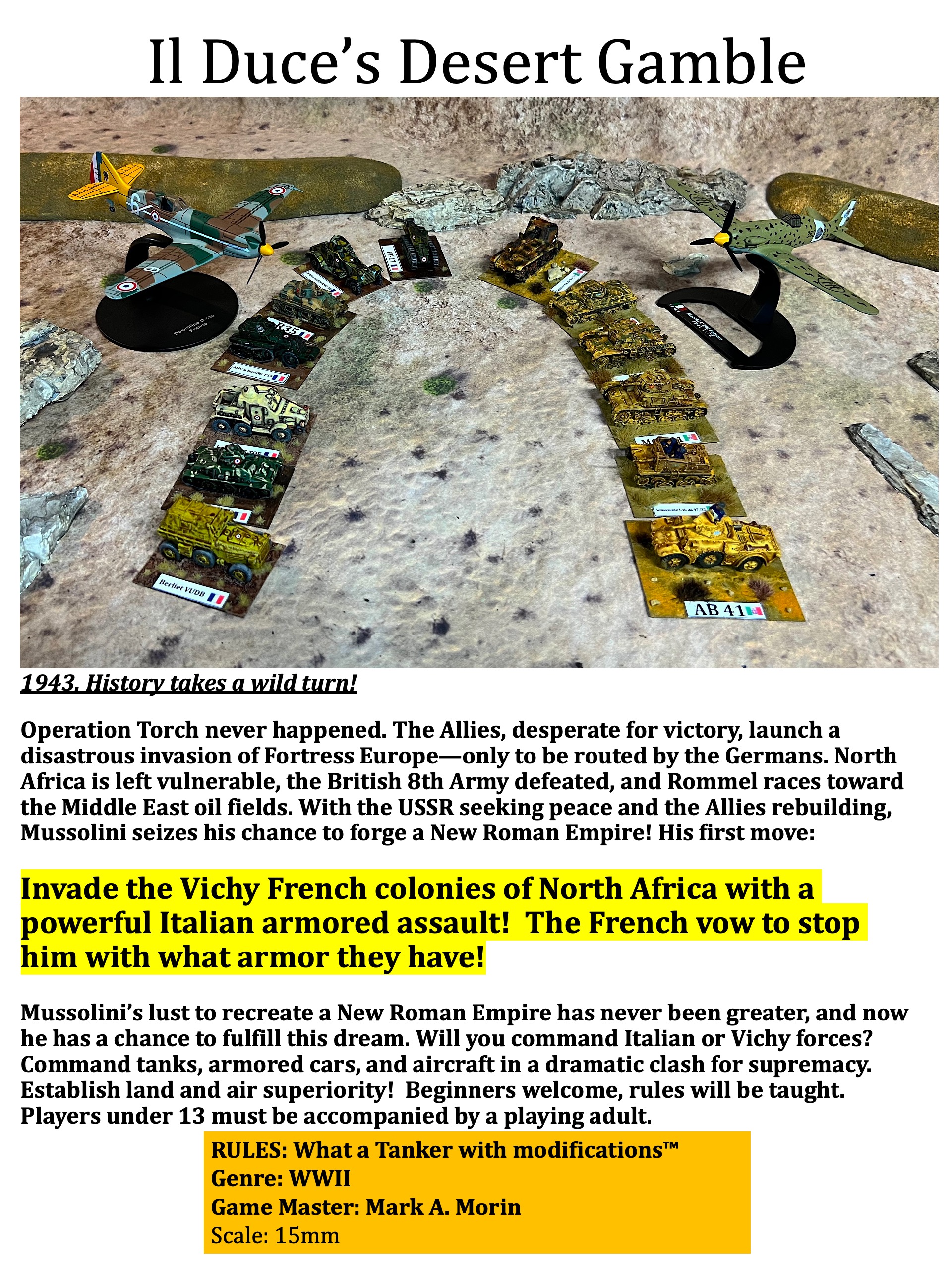
Il Duce’s Desert Gamble
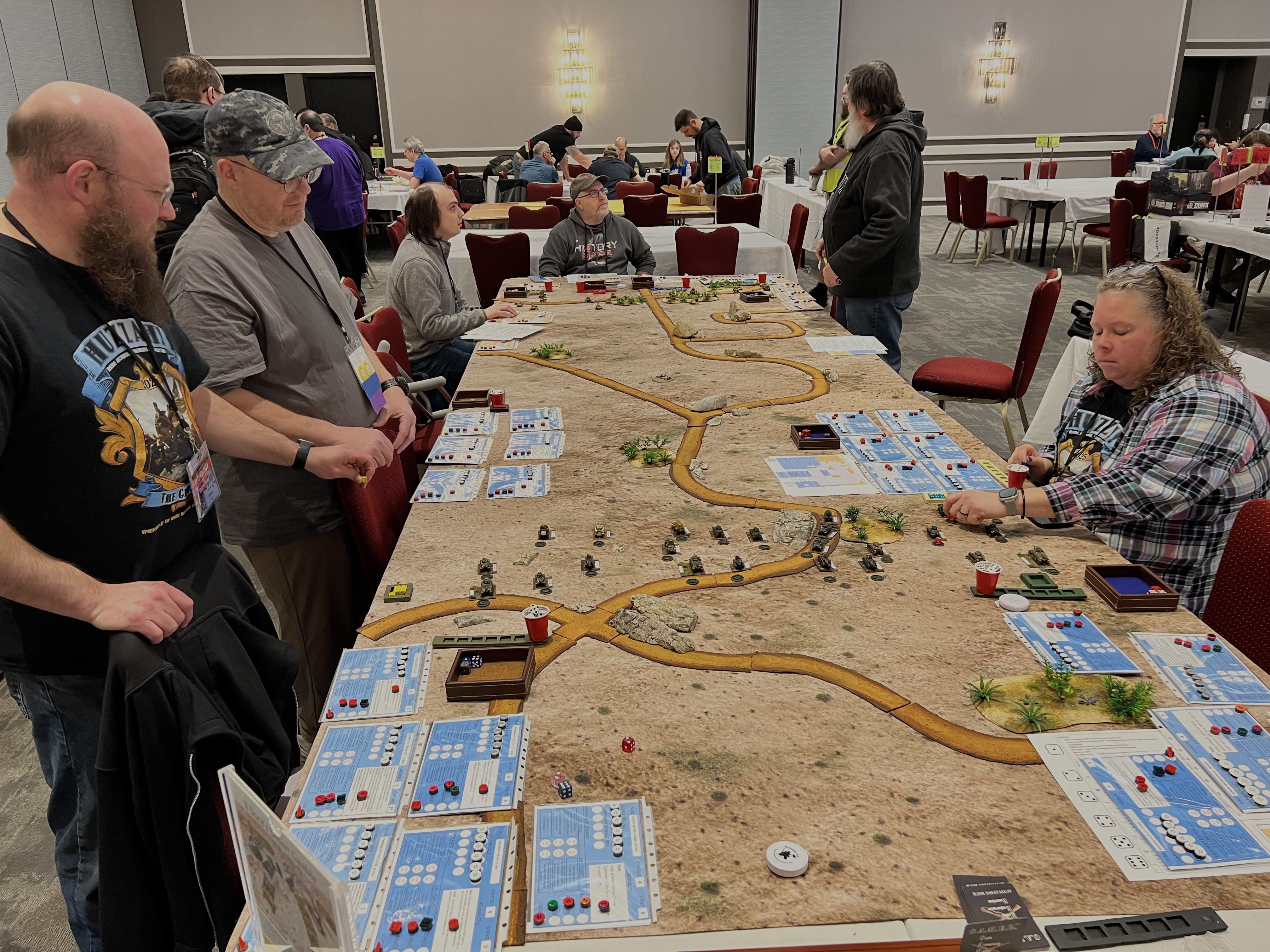
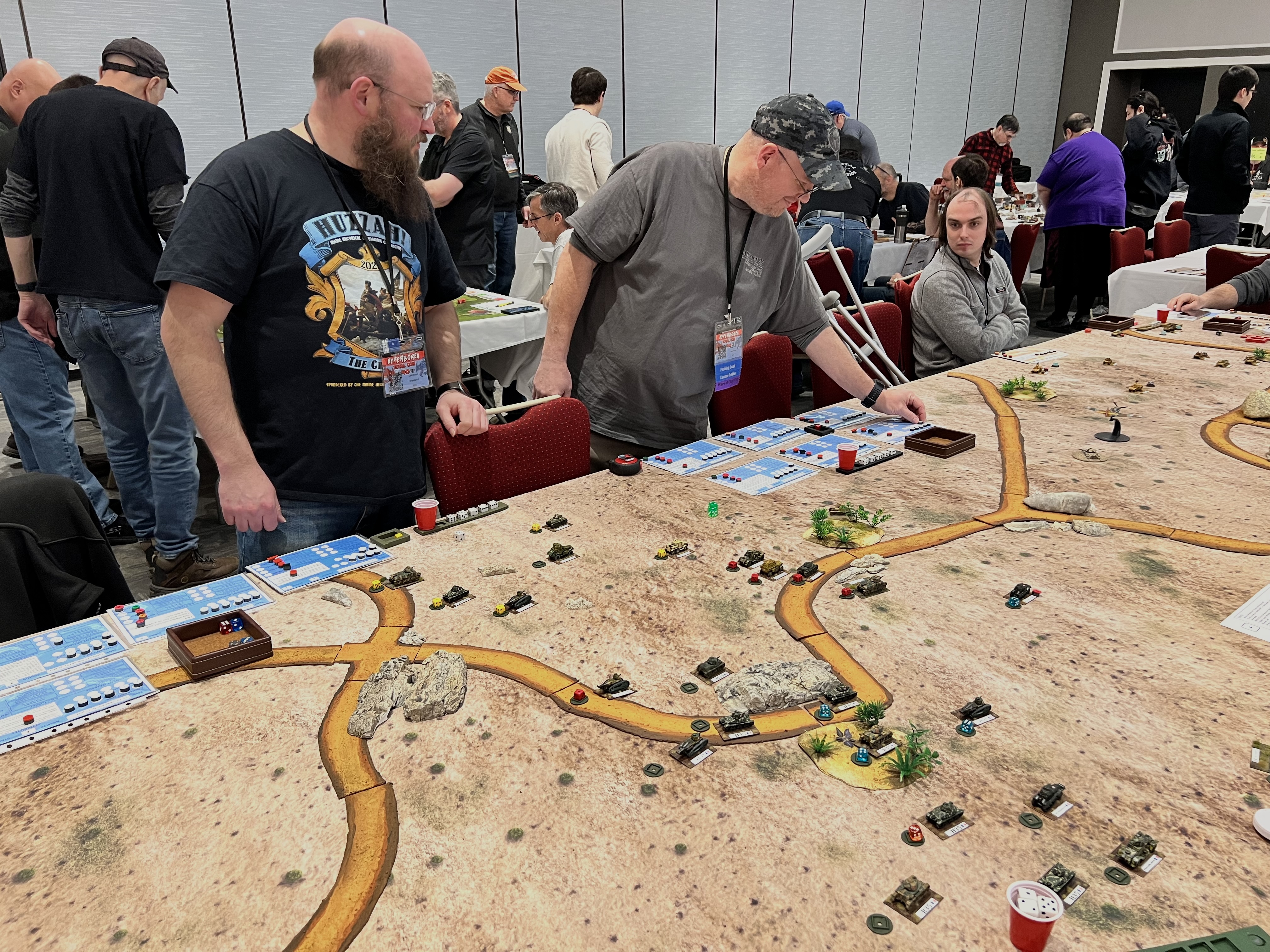
This what-if modified What a Tanker scenario also filled up quickly as well.
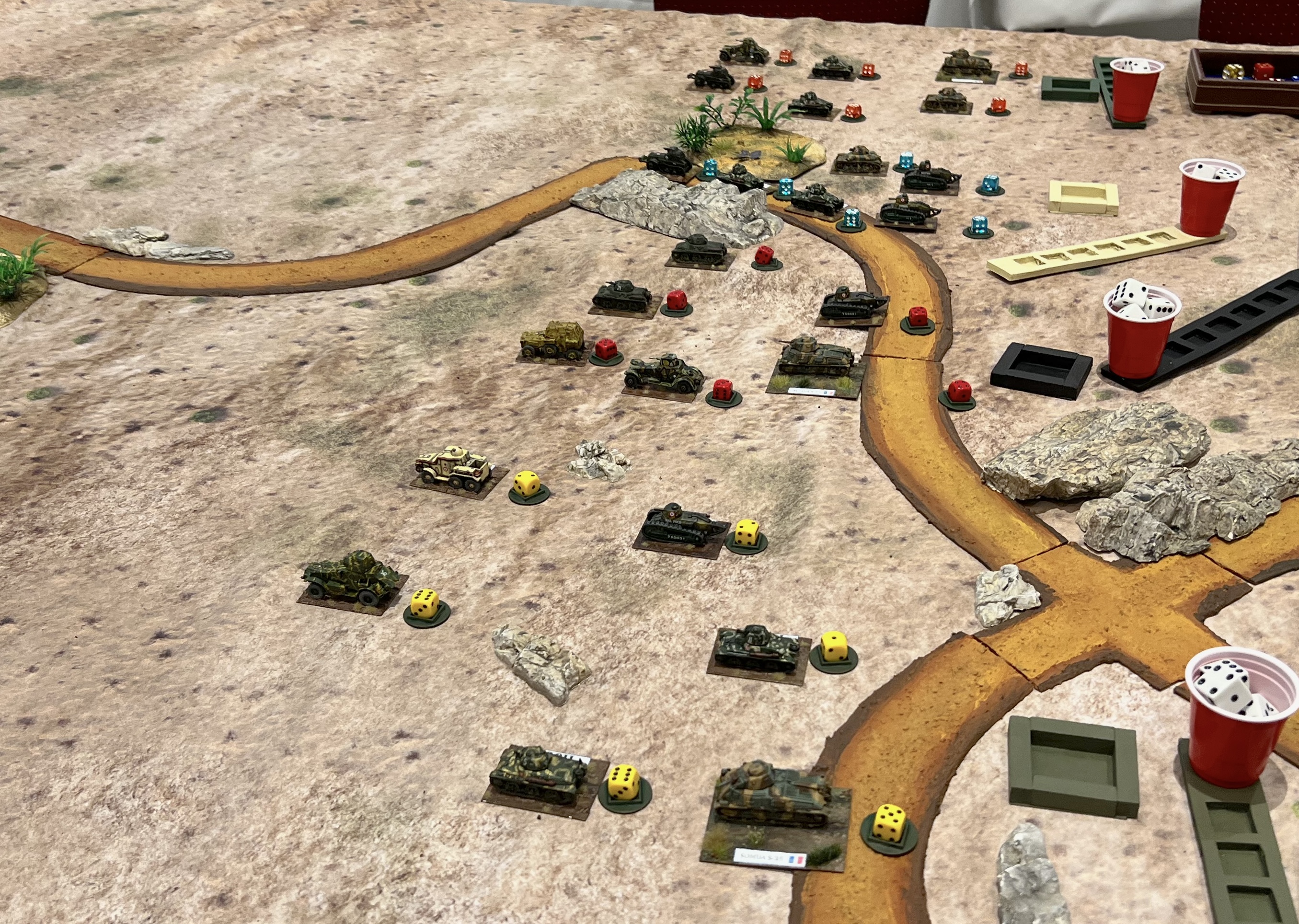
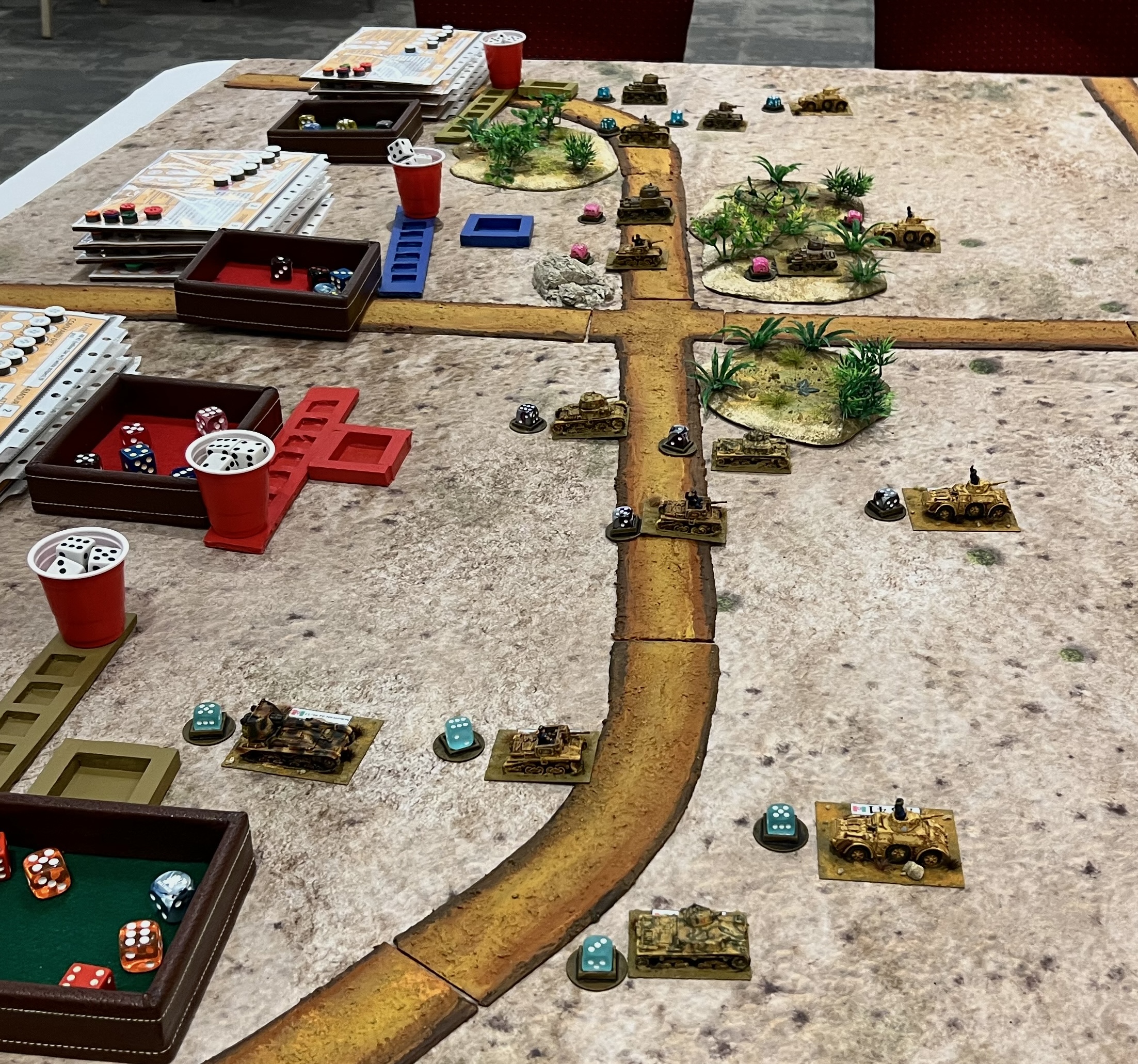
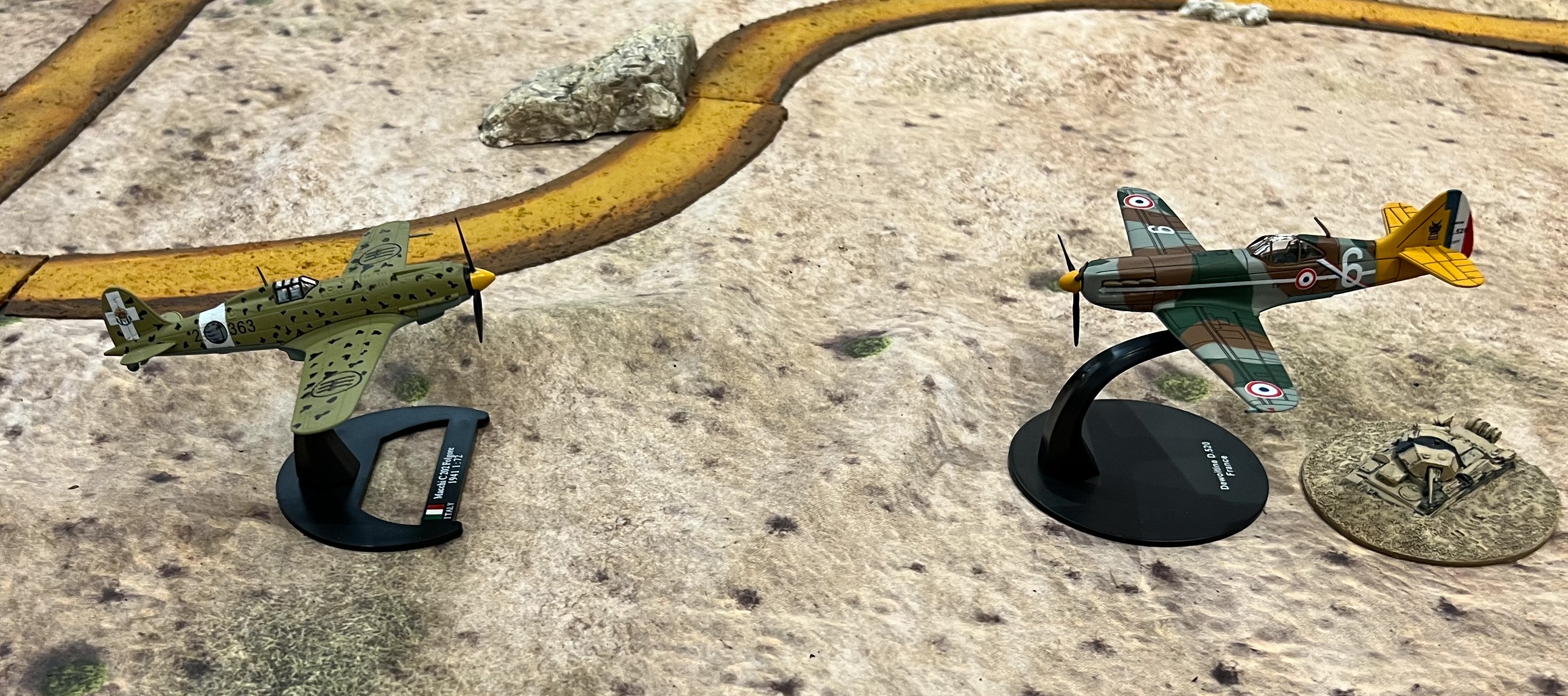
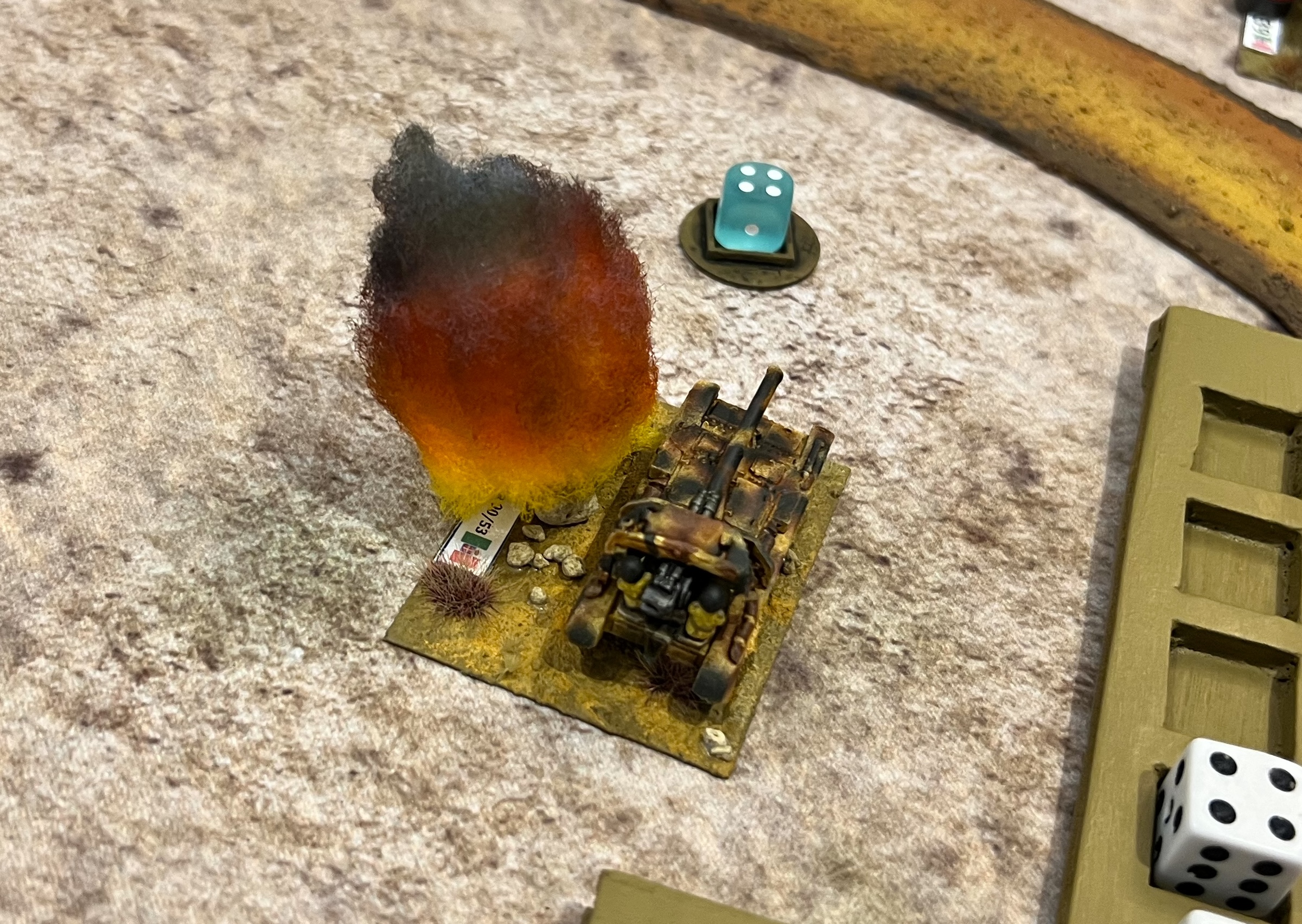
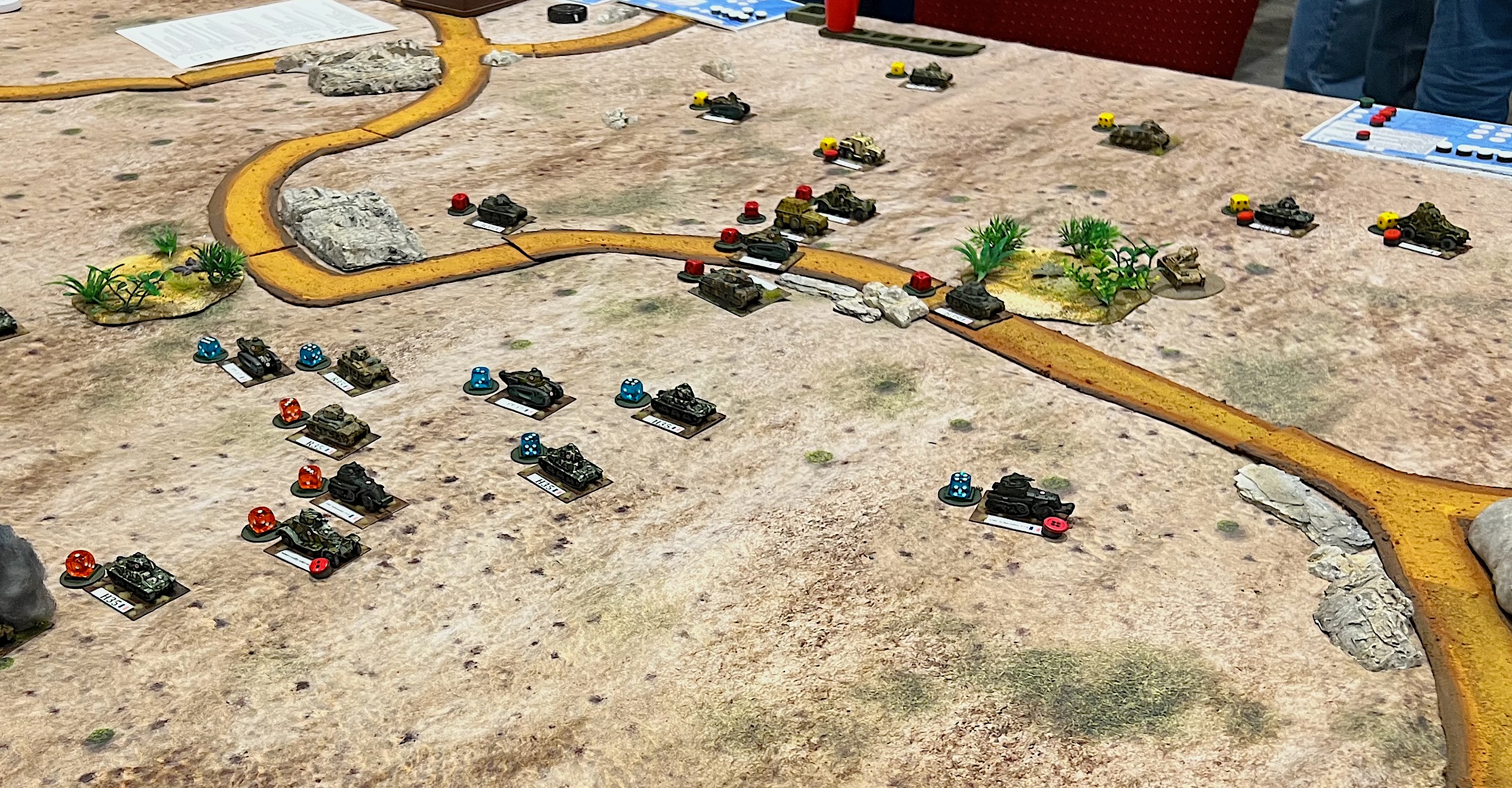
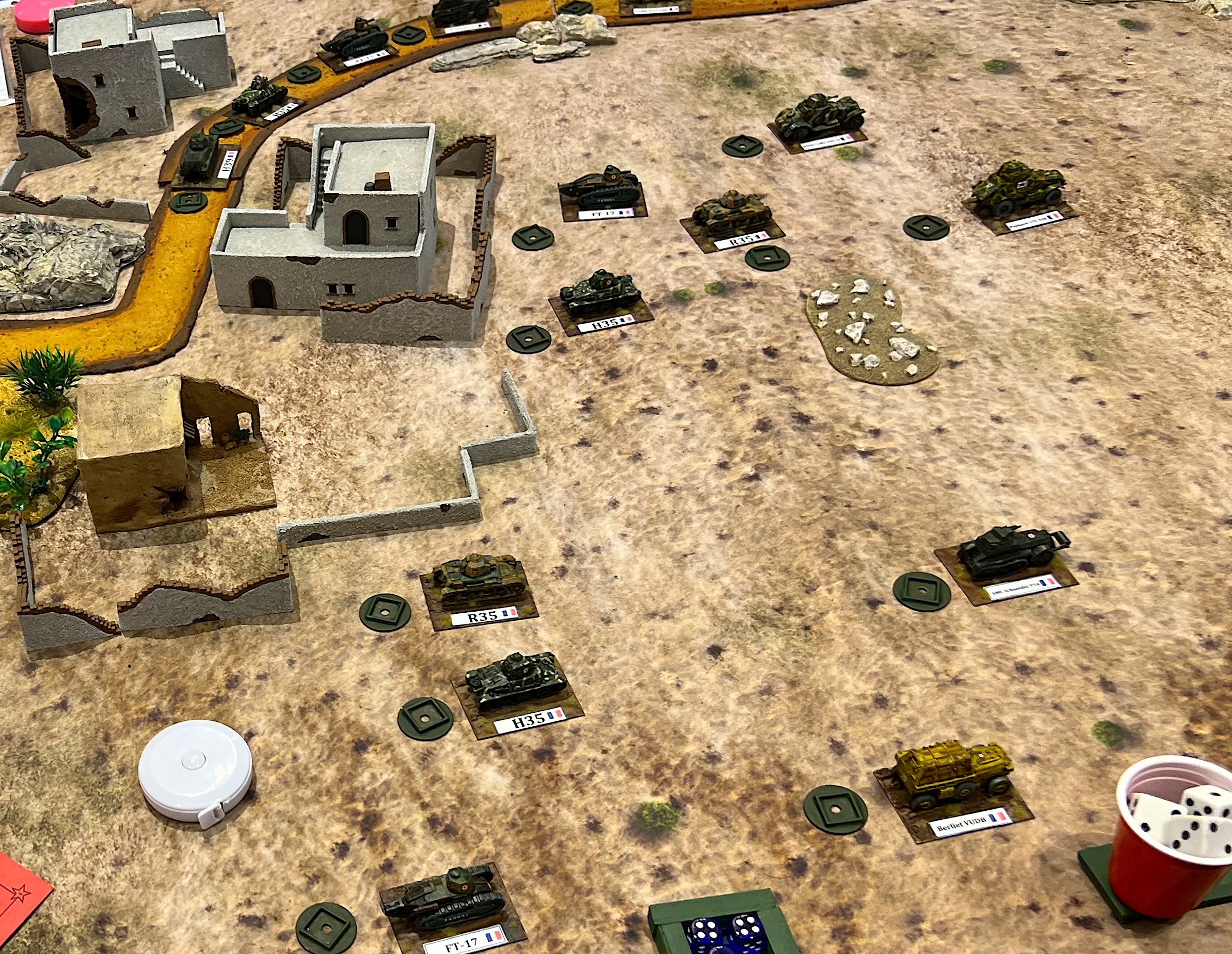
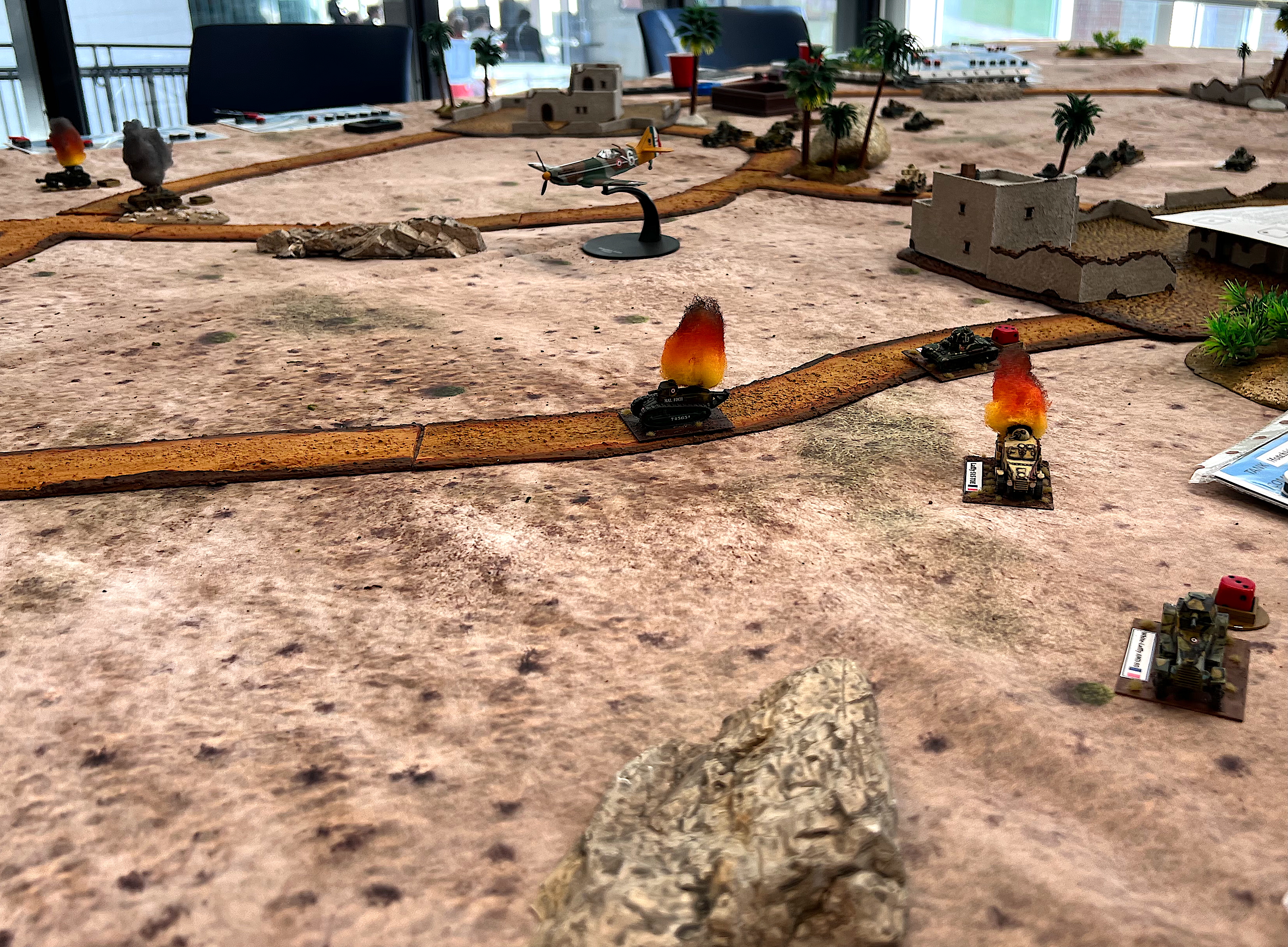
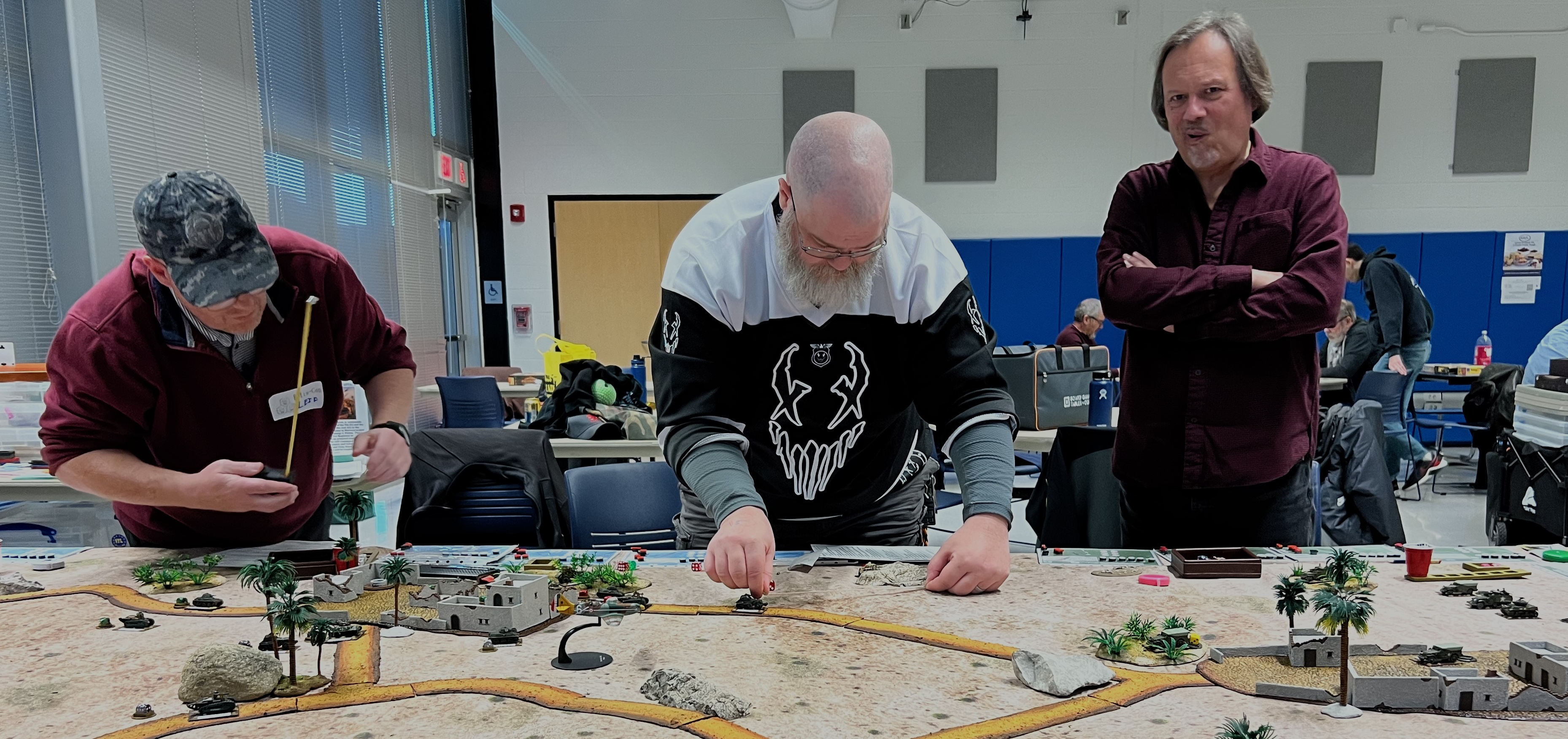
Vichy French armor facing the Italians.Royal Italian Army armor facing the French.The players plot their moves.An Italian Macchi C.202 Folgore (Italian “thunderbolt”) dogfights a Vichy Dewoitine D.520.Leif smiles as he records temporary damage on his tank. The damage was caused by Leif’s very bad dice rolling for a very old and worn out French FT-17!A Vichy SOMUA S35 knocks out an Italian Semovente 90/53.French forces advance.
The game ended with Vichy winning 540-440.
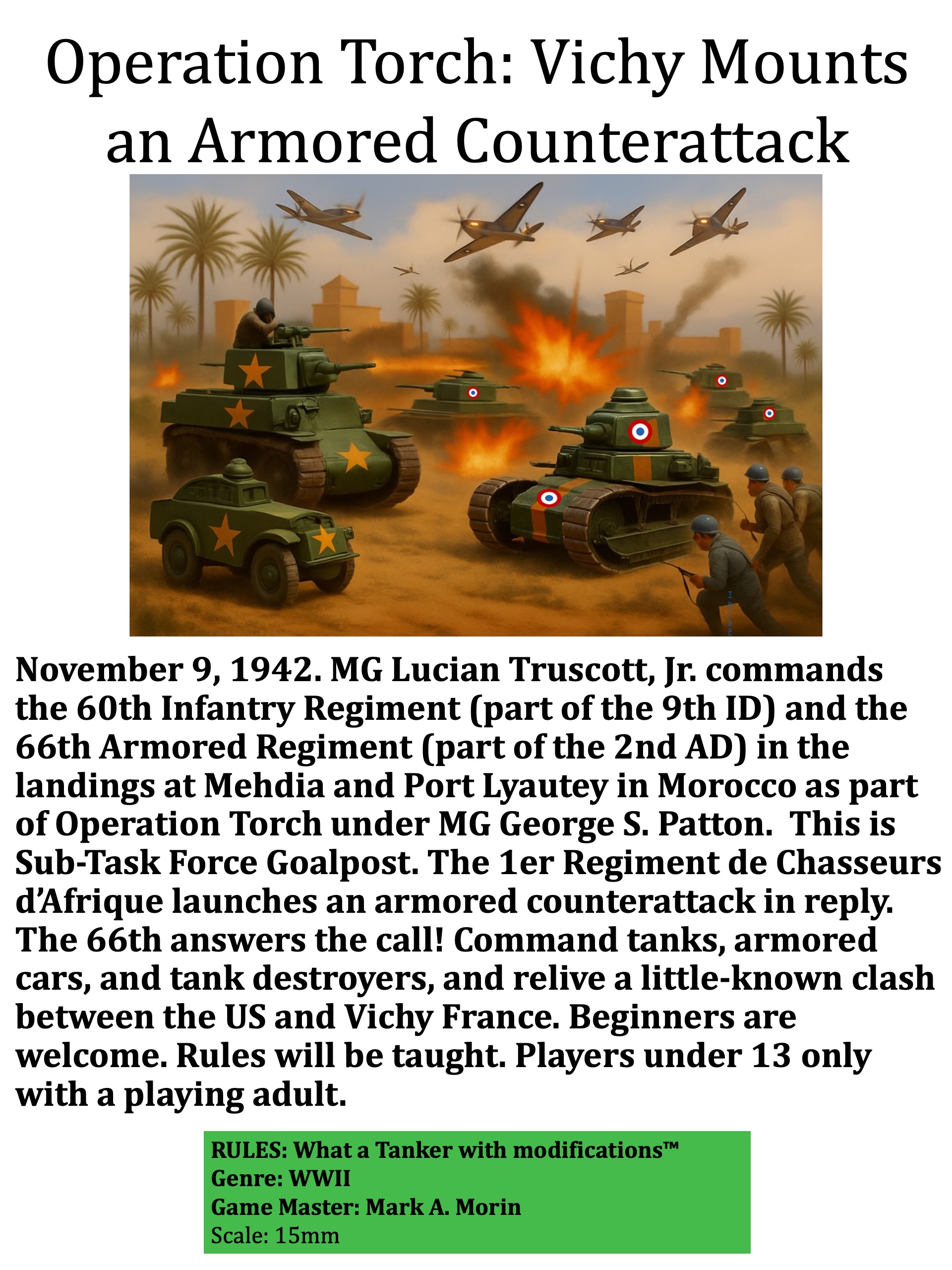
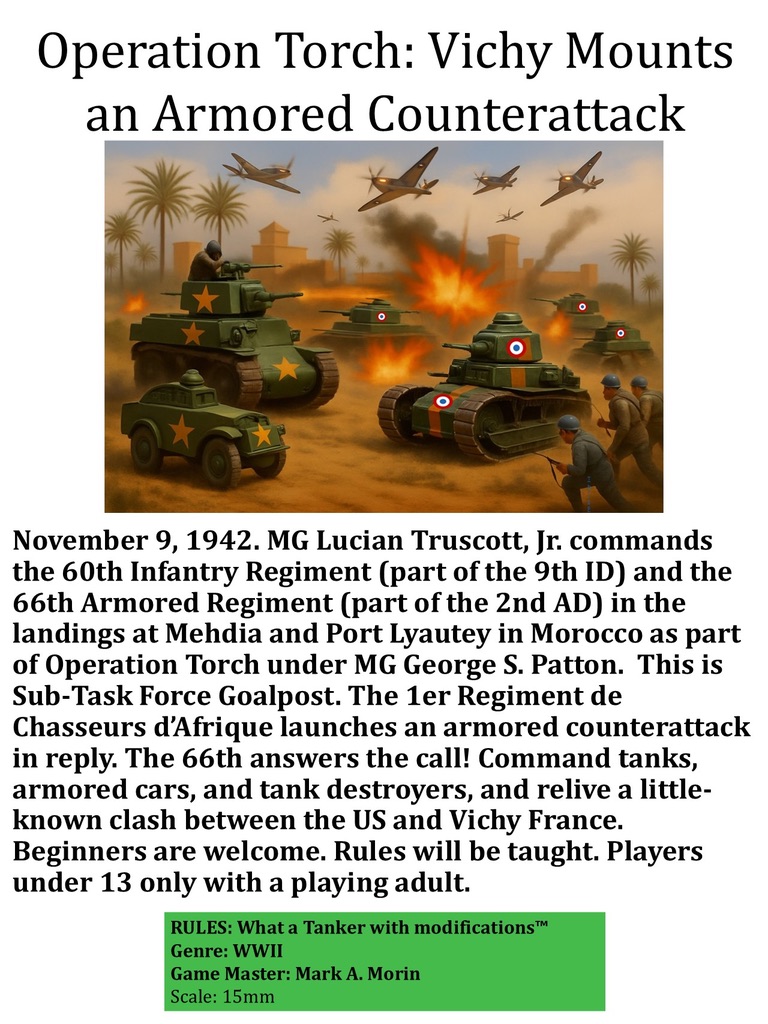
For Saturday afternoon, I ran Operation Torch: Vichy Mounts an Armored Counterattack. This was also a modified What a Tanker game.
Operation Torch: Vichy Mounts an Armored Counterattack
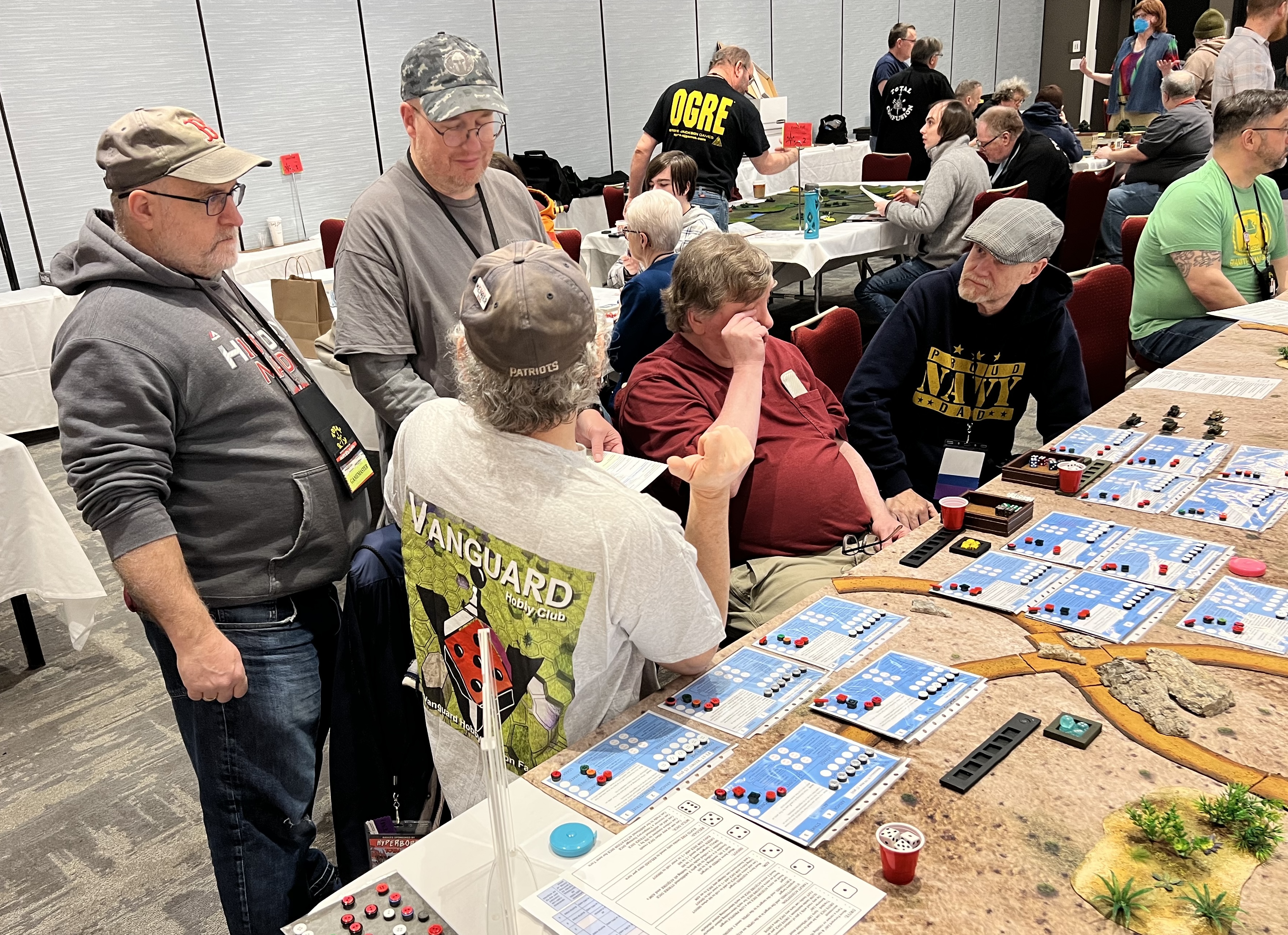
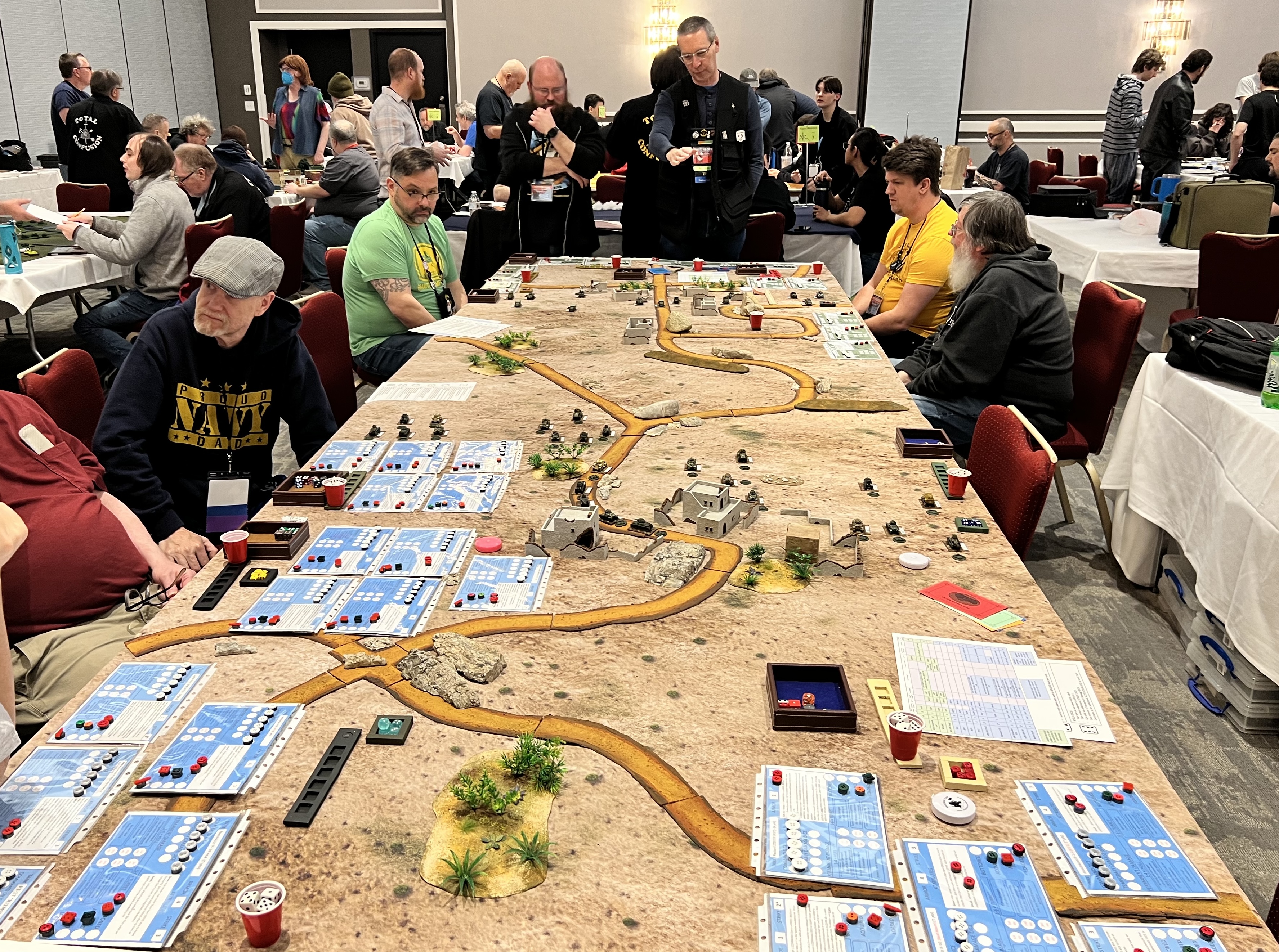
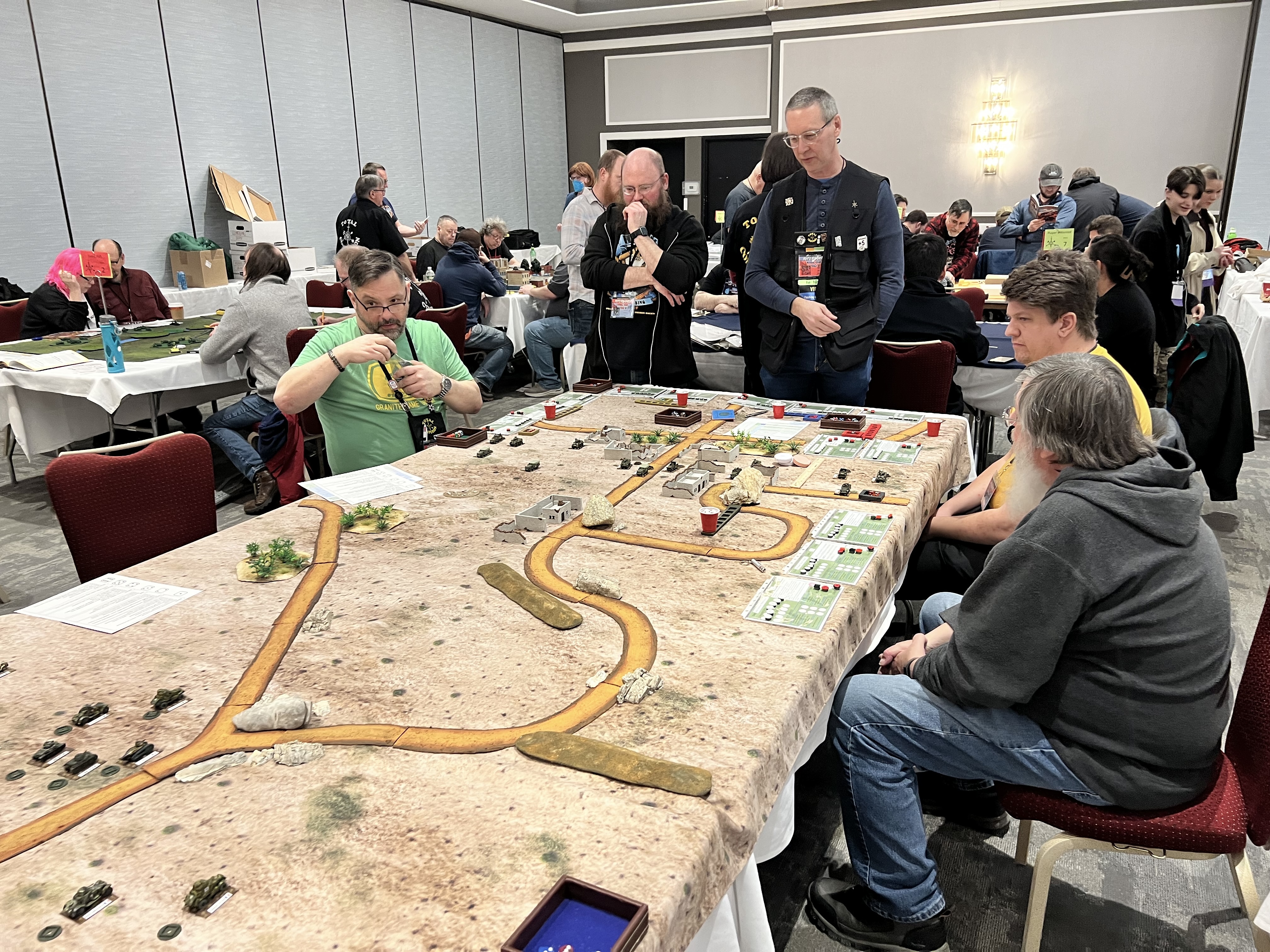
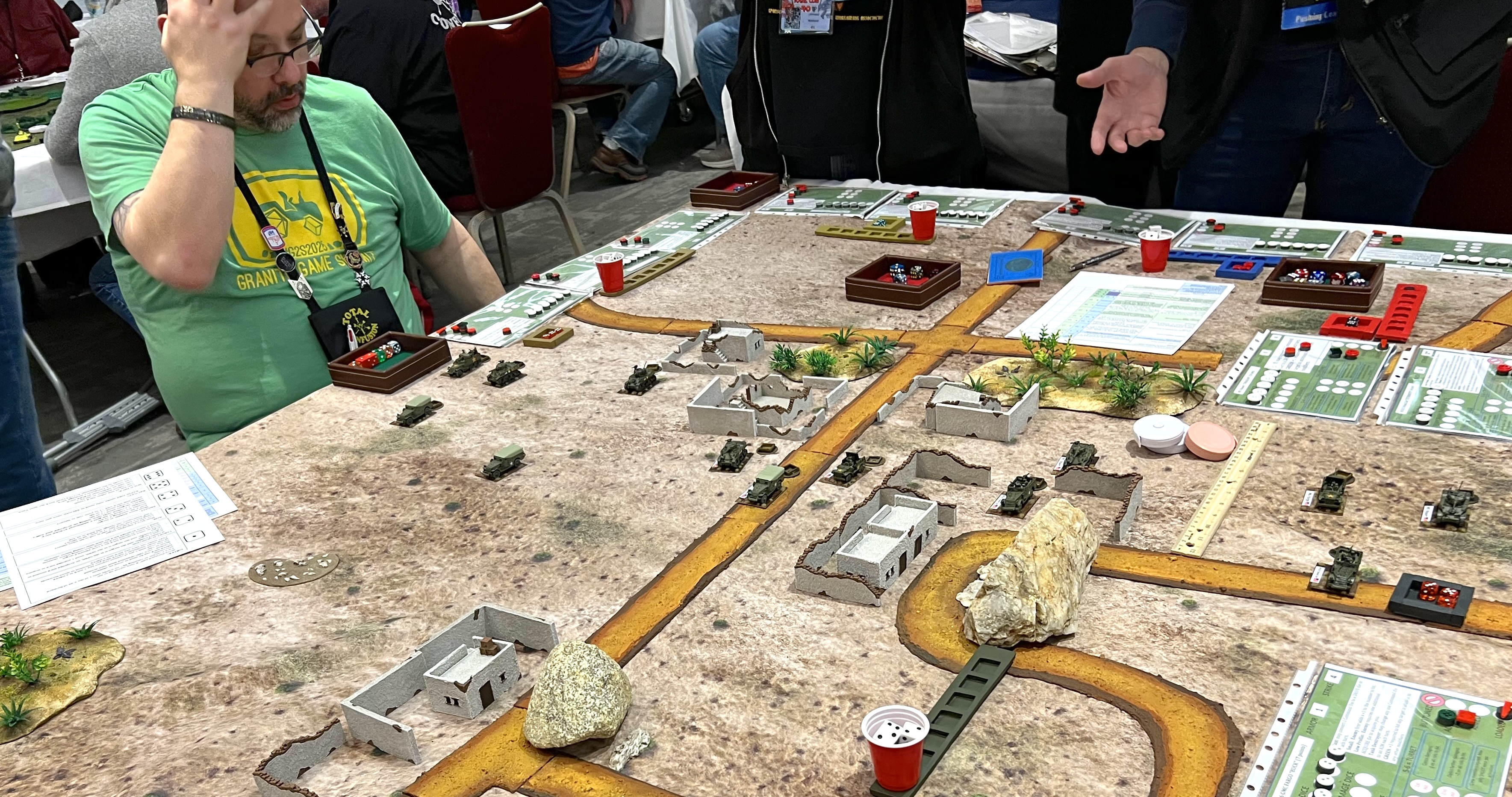
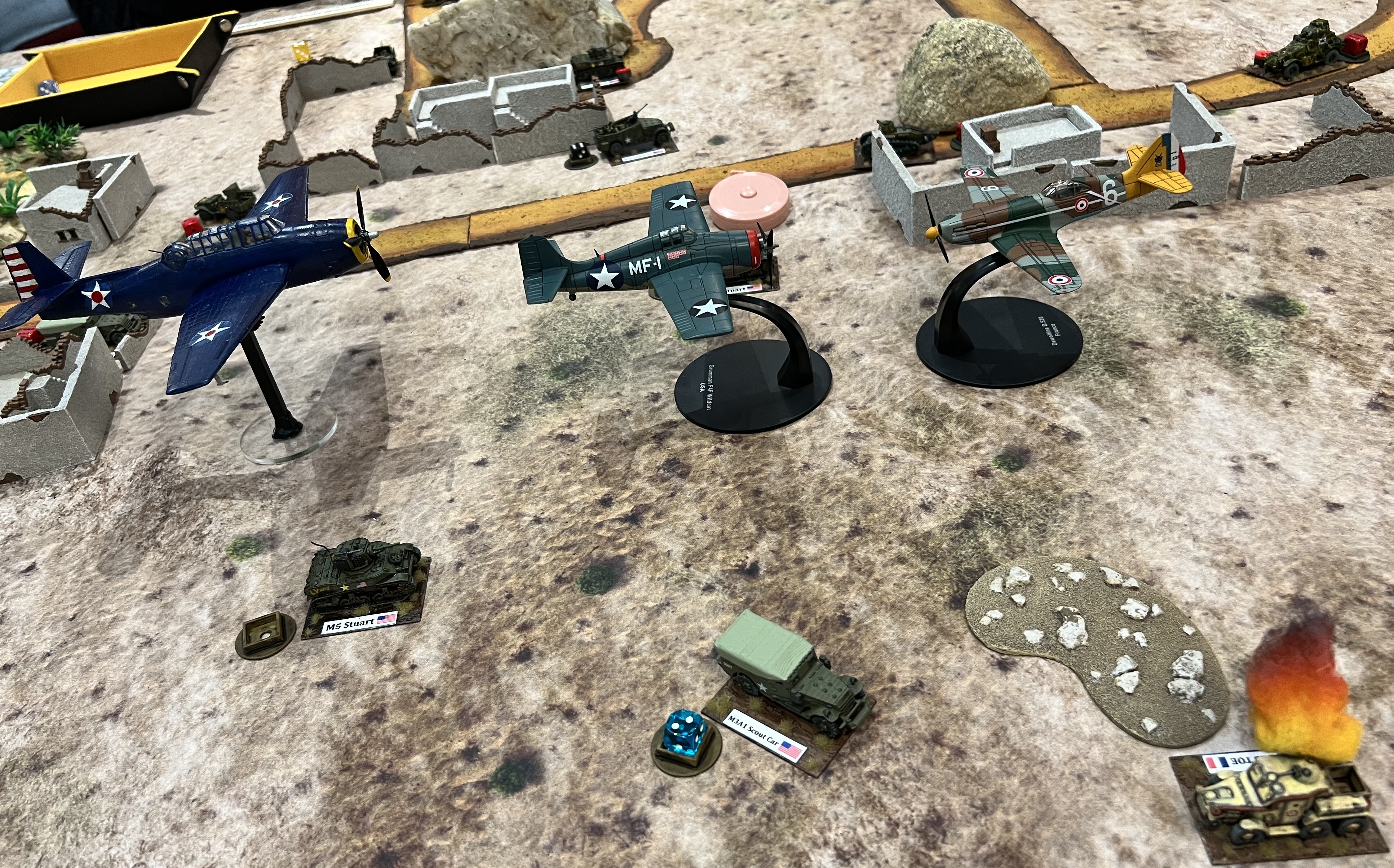
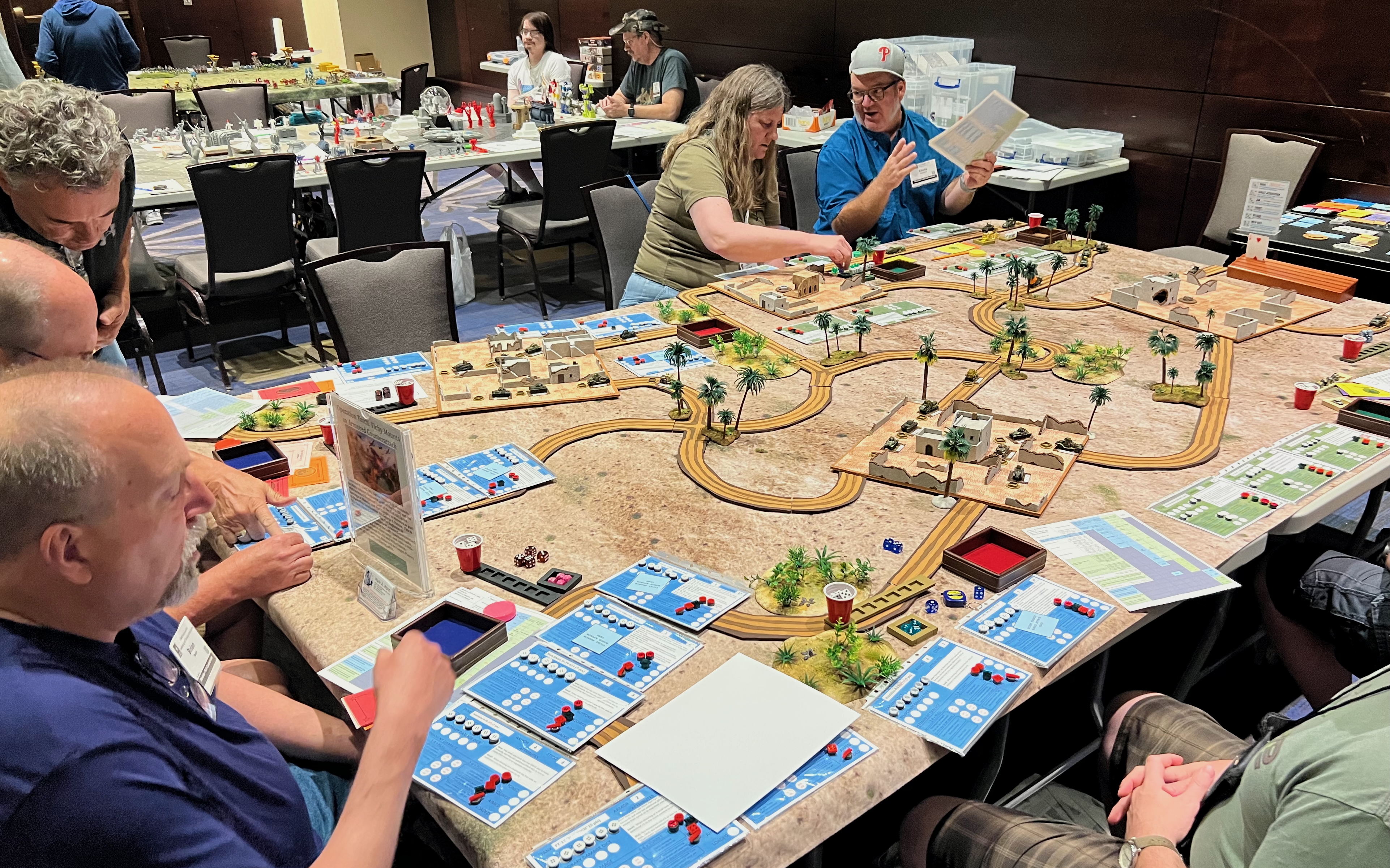
The Vichy players plan their assault.The American players are ready!The Americans watch as the Vichy French get closer. They have plans of getting air cover and naval gunfire on the French!Knowing this, the French spread out to avoid massing a big target.Mal considers his next move.Aircraft are deployed, but the US Navy rules the skies. This allows for the Avenger to call in naval gunfire from the USS Savannah. This destroys multiple Vichy vehicles.
The US air superiority and naval gunfire carried the day – with the US winning a significant victory.
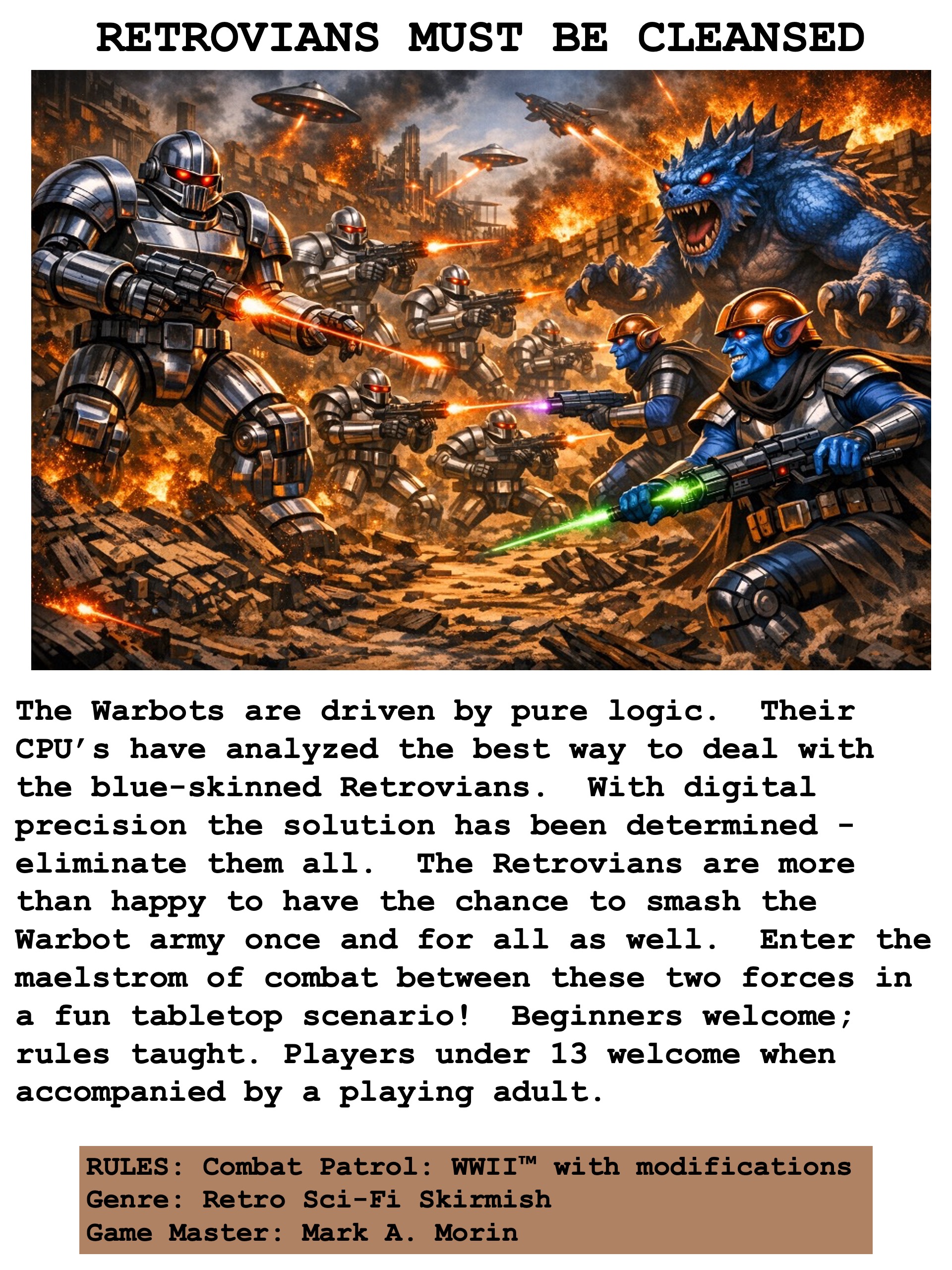
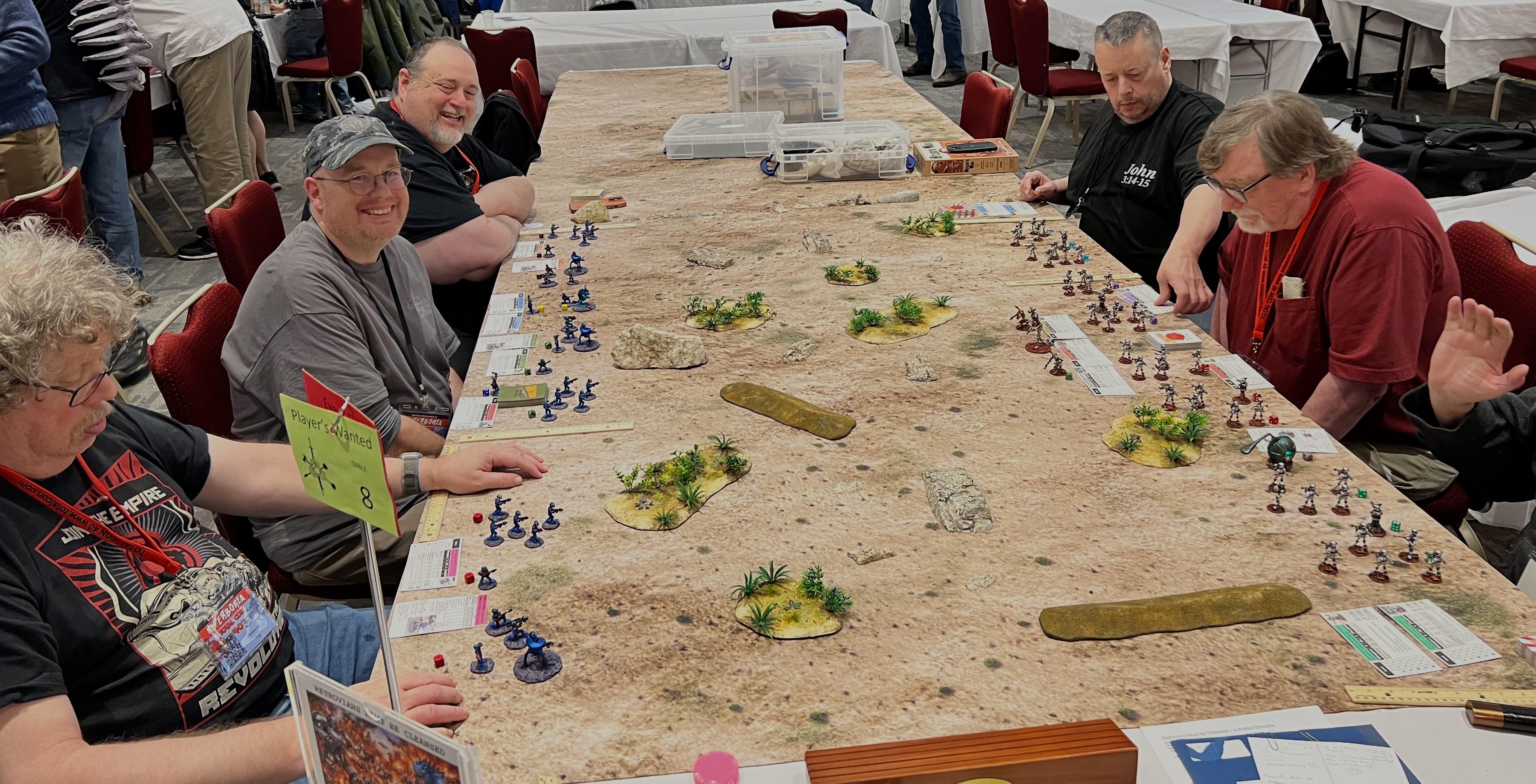
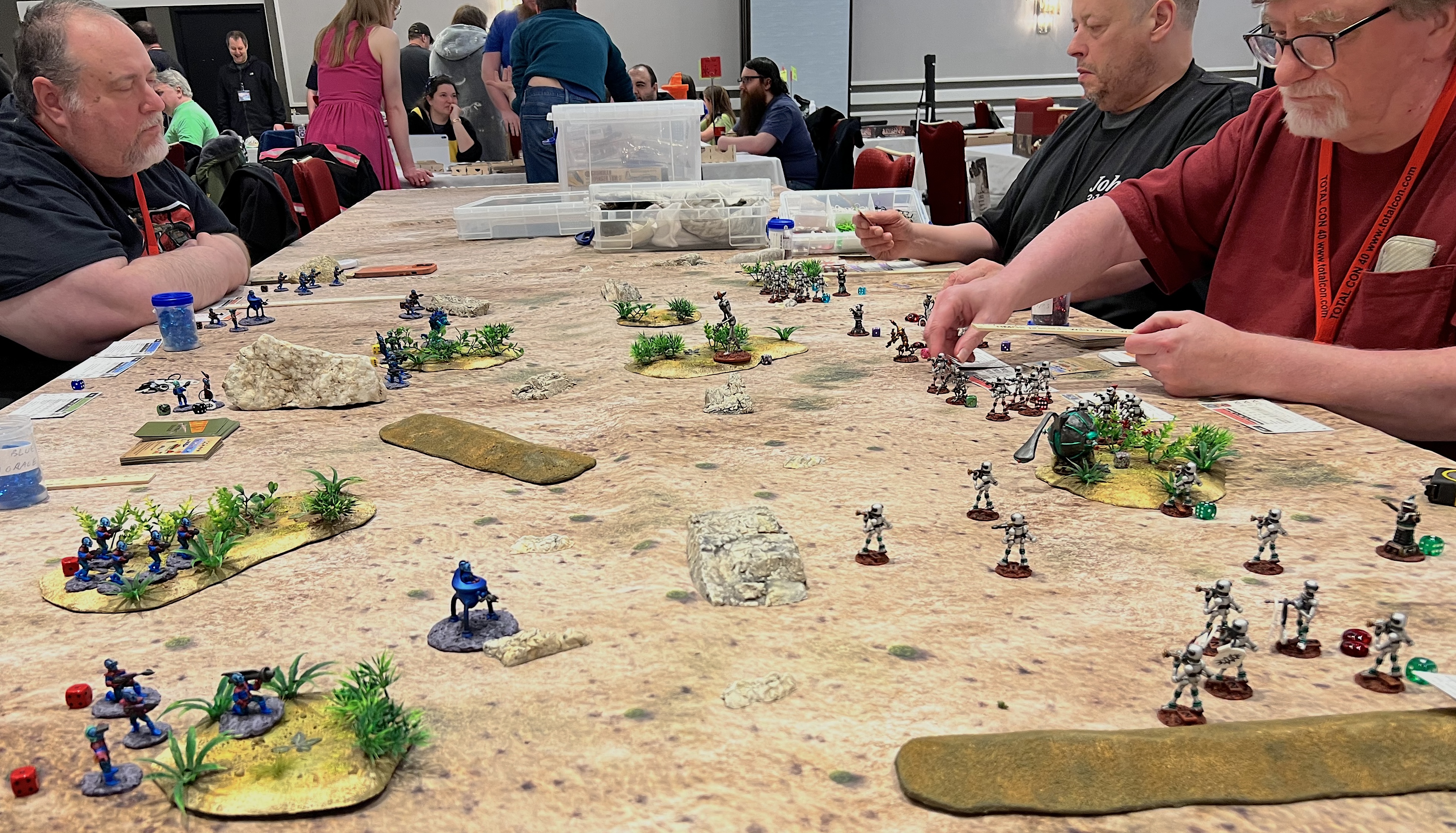
RETROVIANS MUST BE CLEANSED
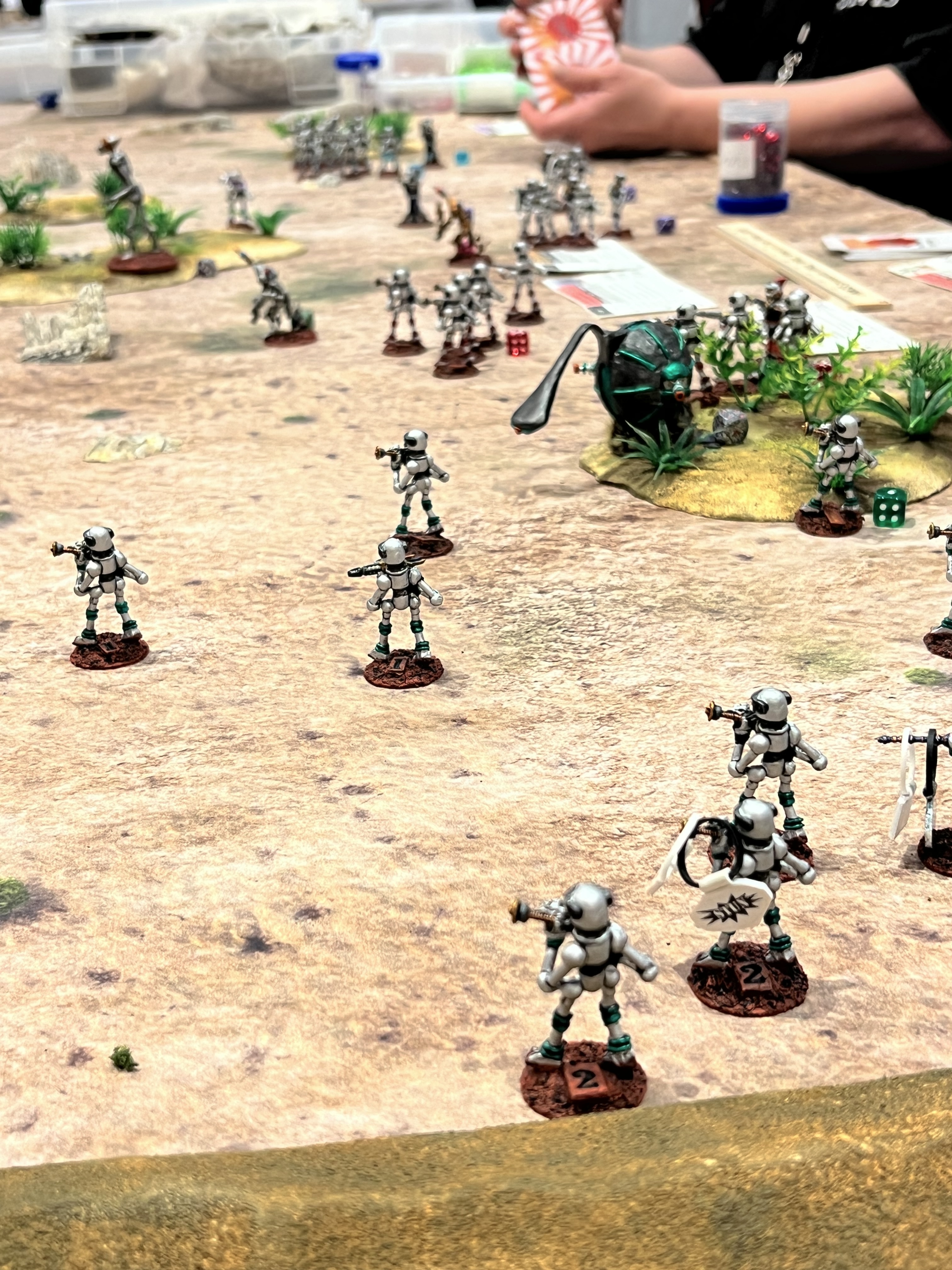
Saturday night’s game was upon me, and I had decided to run another Combat Patrol retro sci-fi game. This time, the Retrovians would face the Archive Star Rovers Warbots. They would also confront my own creation – the Mark 1 Sphere tank.
Happy Gamers at the start! Retrovians are on the left, Warbots on the right.A Retrovian Bra’sheer tripod moves out front of its infantry. The Mark 1 takes up a supporting position as the Warbots march forward to glory.The Mark 1 safely delivers machine gun fire from its sponsons. Meanwhile, the Warbots also take fire and are stunned.
I did not take many pictures of this game. I do believe that the Warbots wore down the Retrovians. Yes, they were “cleansed”. It was nice to see these figures back on the tabletop.
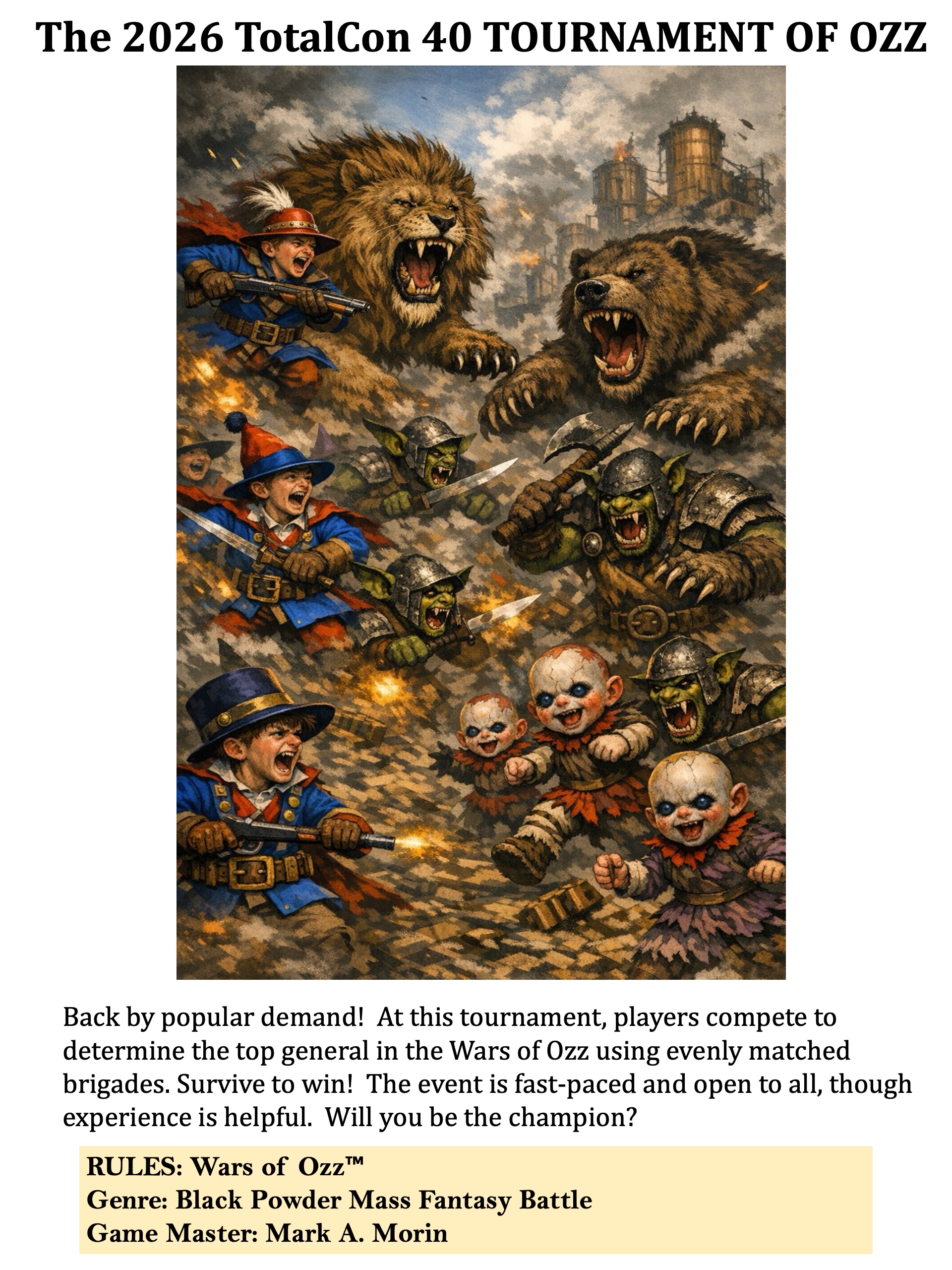
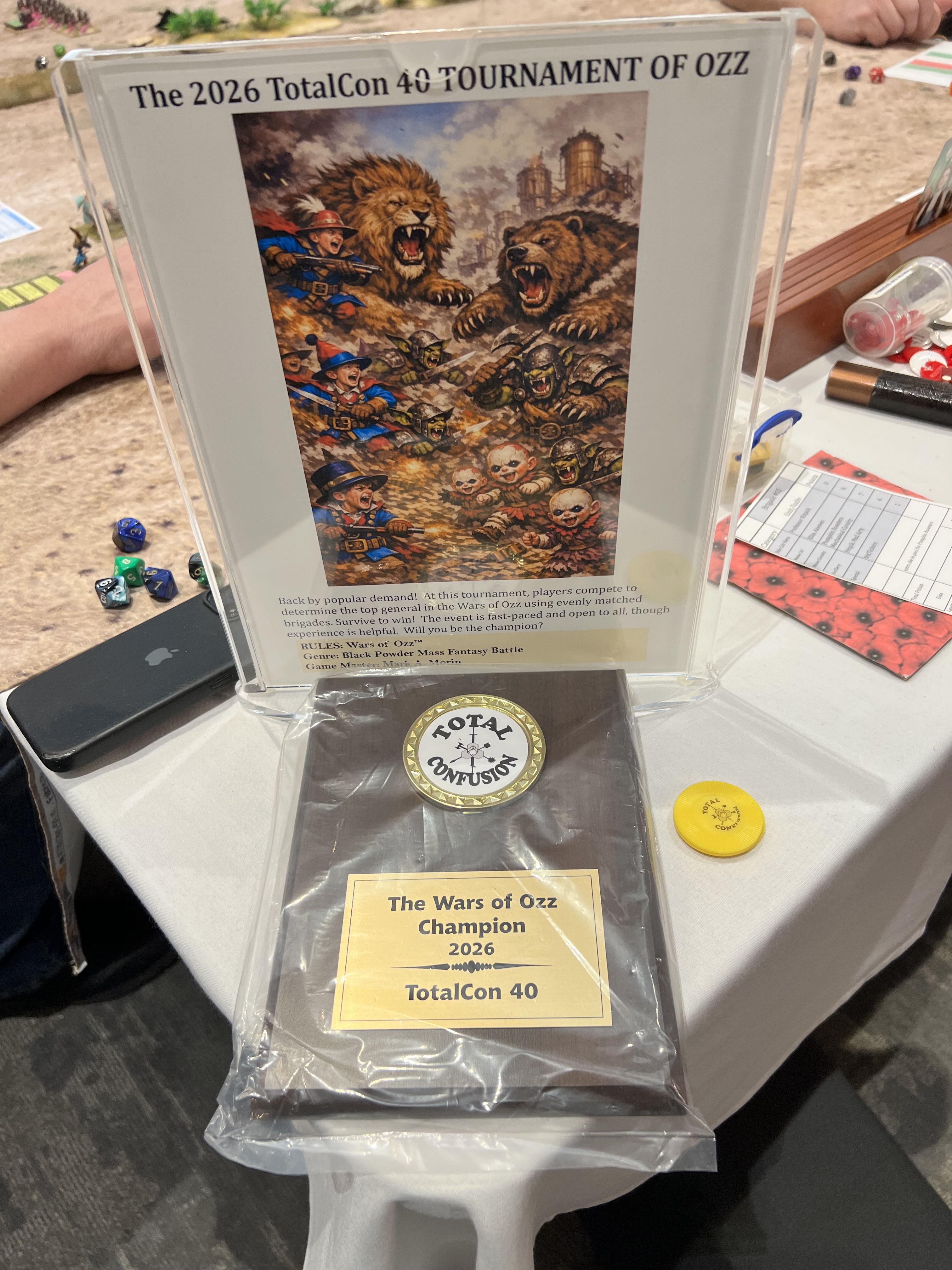
This was the penultimate game for me of TotalCon 2026. I headed off to my room. I was ready for the 2026 TotalCon “Tournament of Ozz” on Sunday morning.
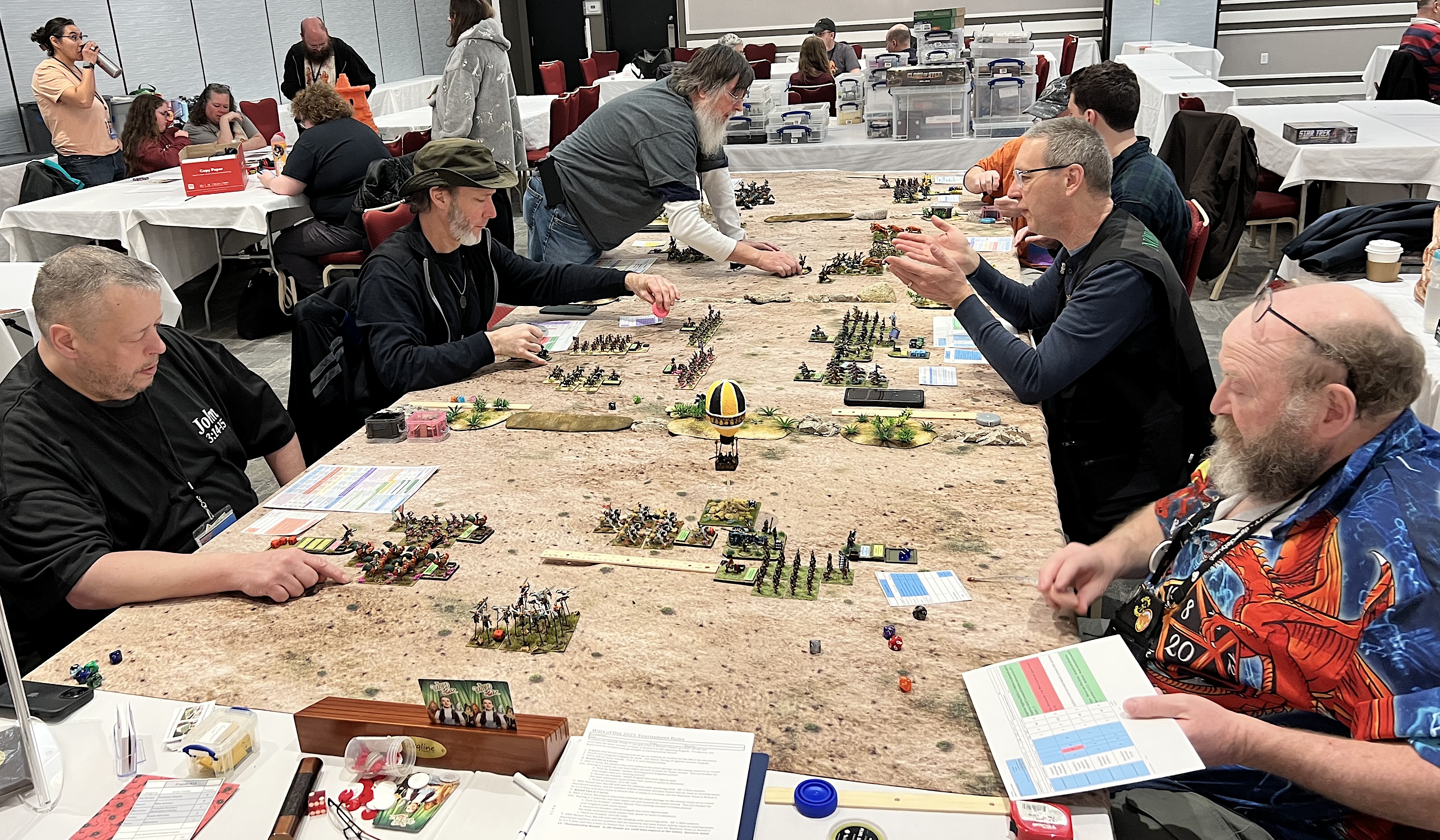
I had 7 out of a possible 8 players. At random, one player got a “bye” in round one. The match-ups were done at random and 7 different 21-point brigades were assigned at random. Inflicting the most damage on the enemy was the victory condition to move forward in the tournament. Tie breakers were also in play if that was needed.
Glory on the Line!
In Round 1 – the match ups were:
Impkins (Ken) versus Munchkins (Eric)
Munchkins (Bob) versus Gillikins (Dave)
Winkies (Brad) versus Gillikins (Jacob)
Winkies (Leif) got the round 1 bye
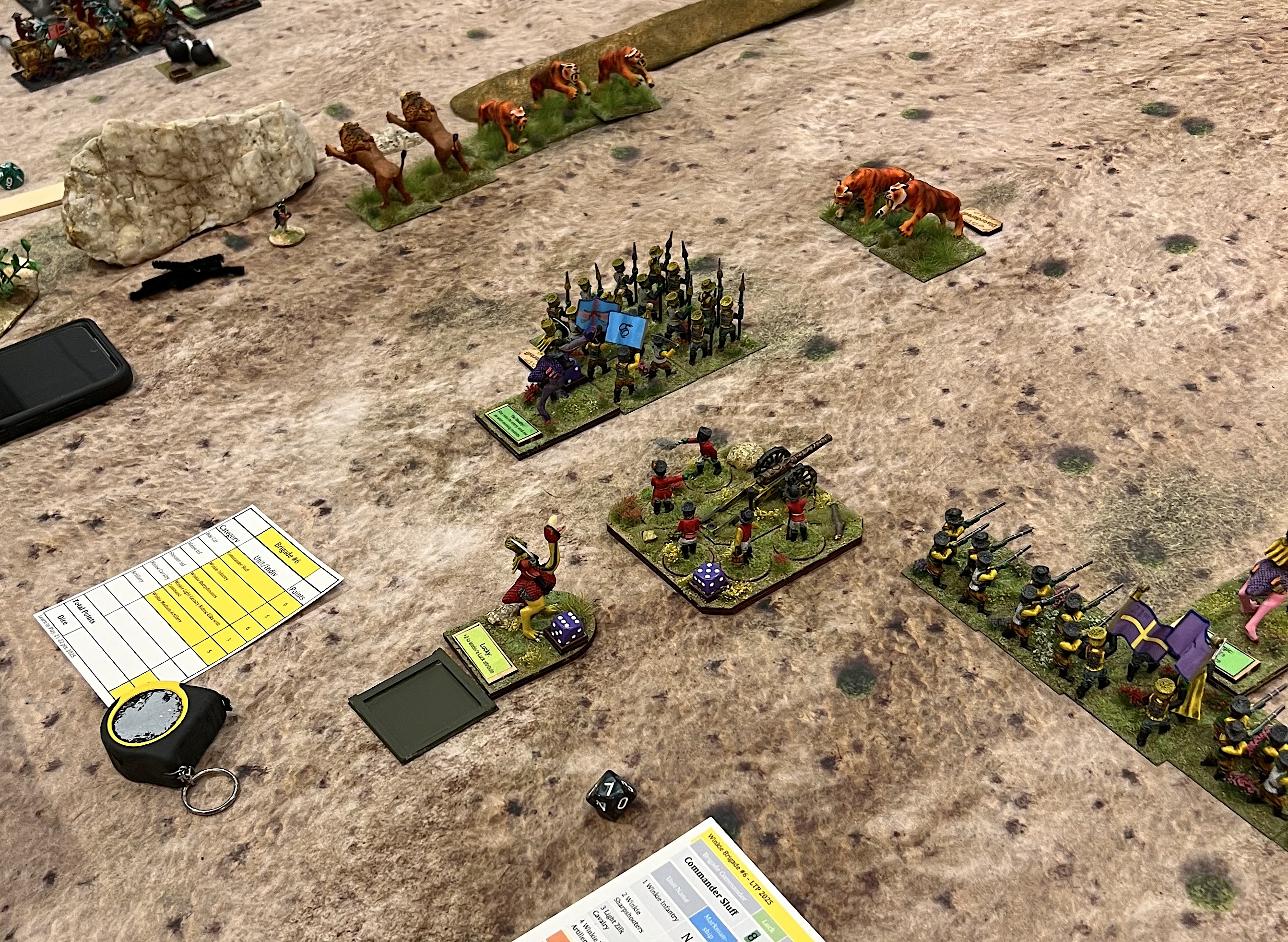
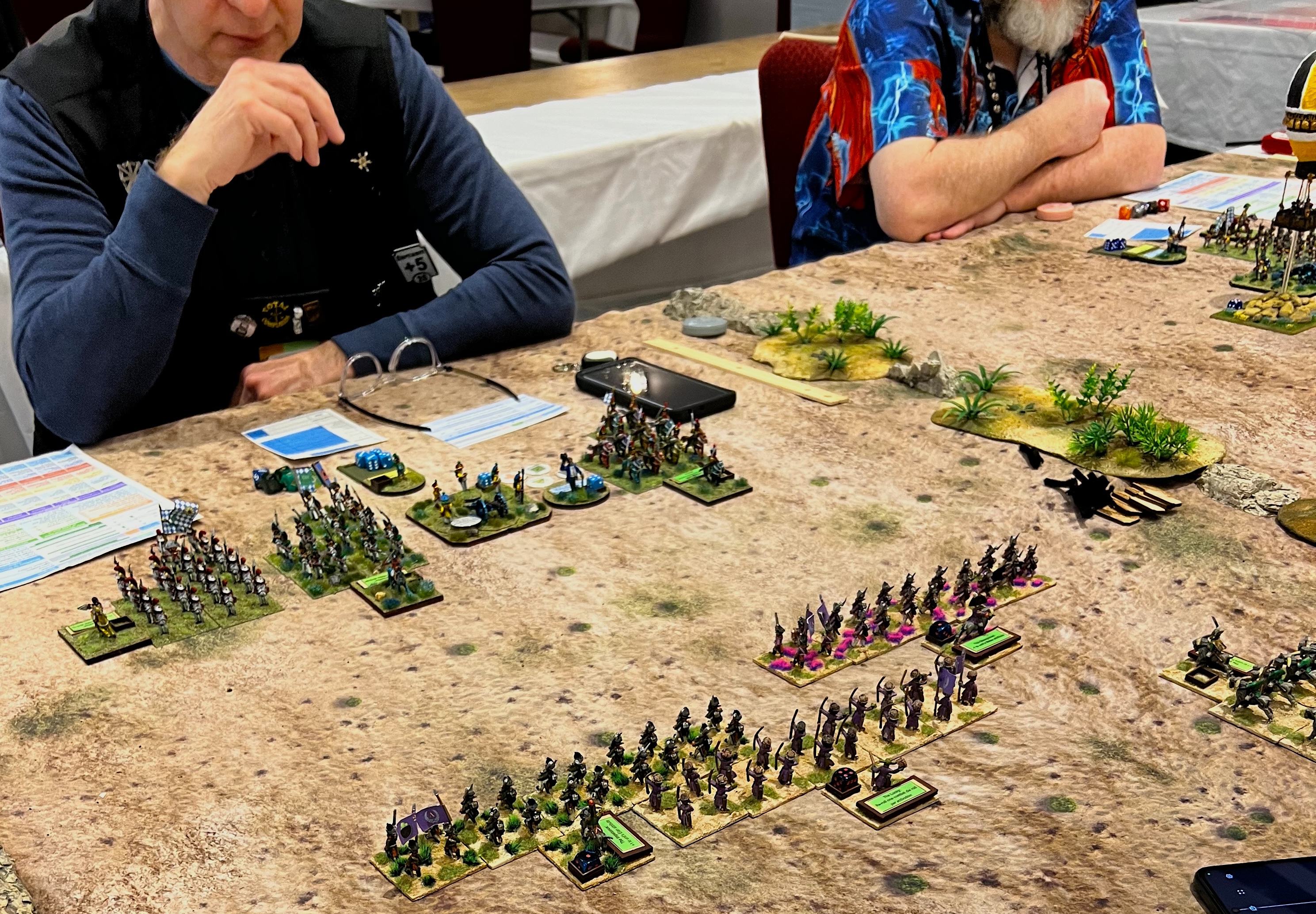
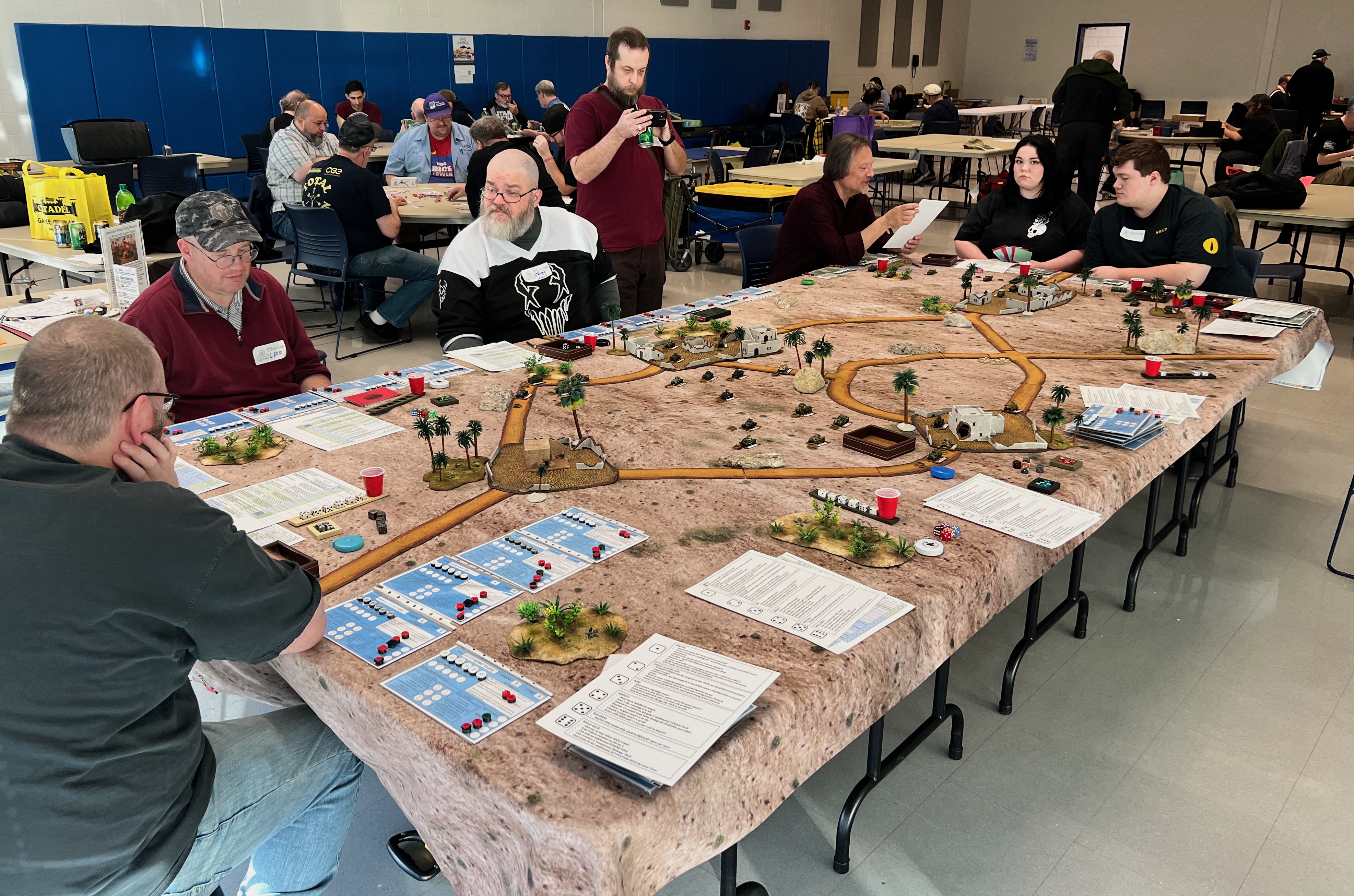
Round 1 begins!Brad’s Winkies devastate Jacob’s GillikinsBob’s Munchkins get into a shooting match with Dave’s Gillikins.Round 1 winds down.
The Round 1 results were:
Impkins (Ken) defeated Munchkins (Eric)
Munchkins (Bob) defeated Gillikins (Dave)
Winkies (Brad) defeated Gillikins (Jacob)
Winkies (Leif) got the round 1 bye
Yielding the semifinals as:
Impkins (Ken) versus Winkies (Brad)
Munchkins (Bob) versus Winkies (Leif)
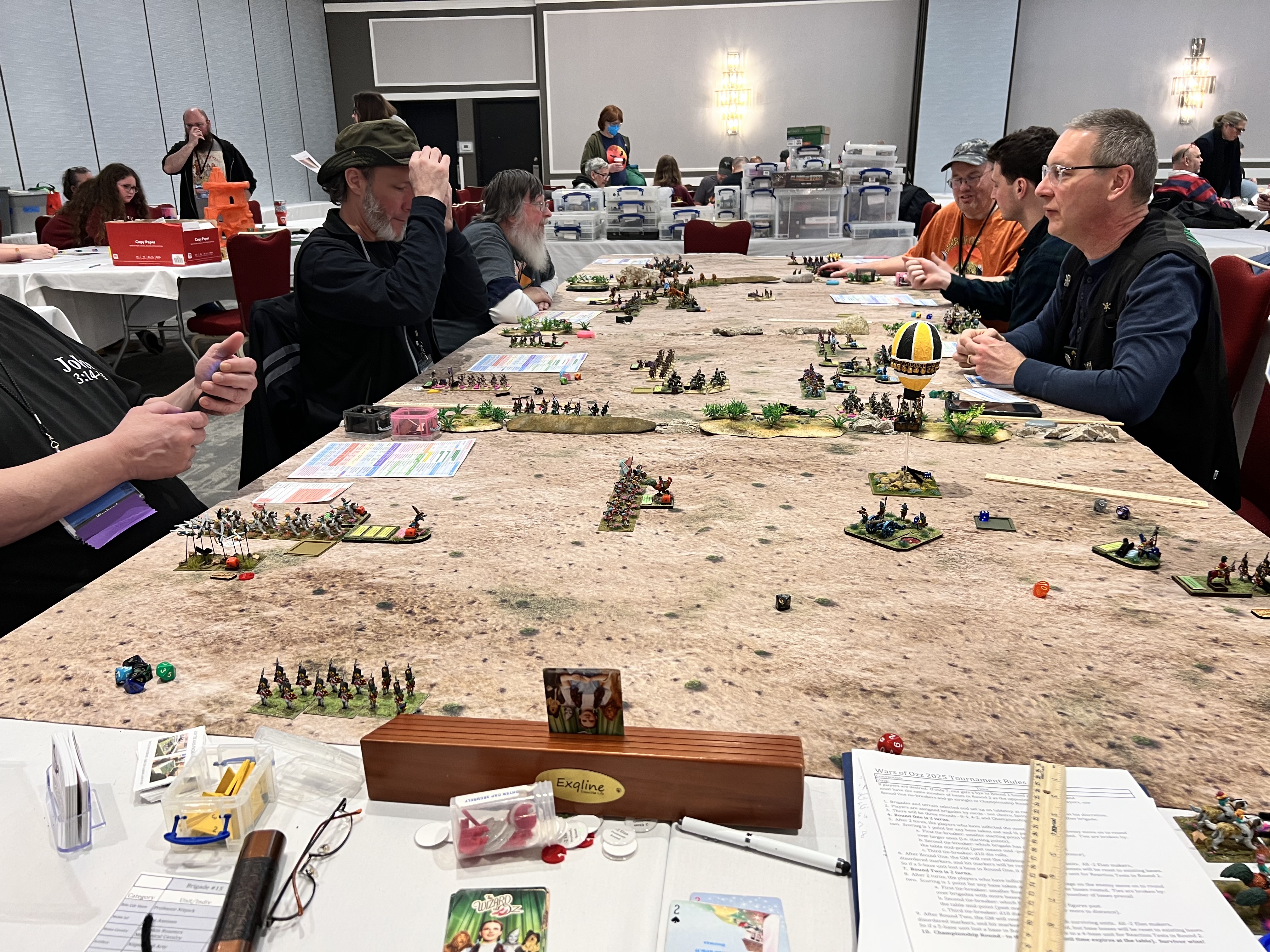
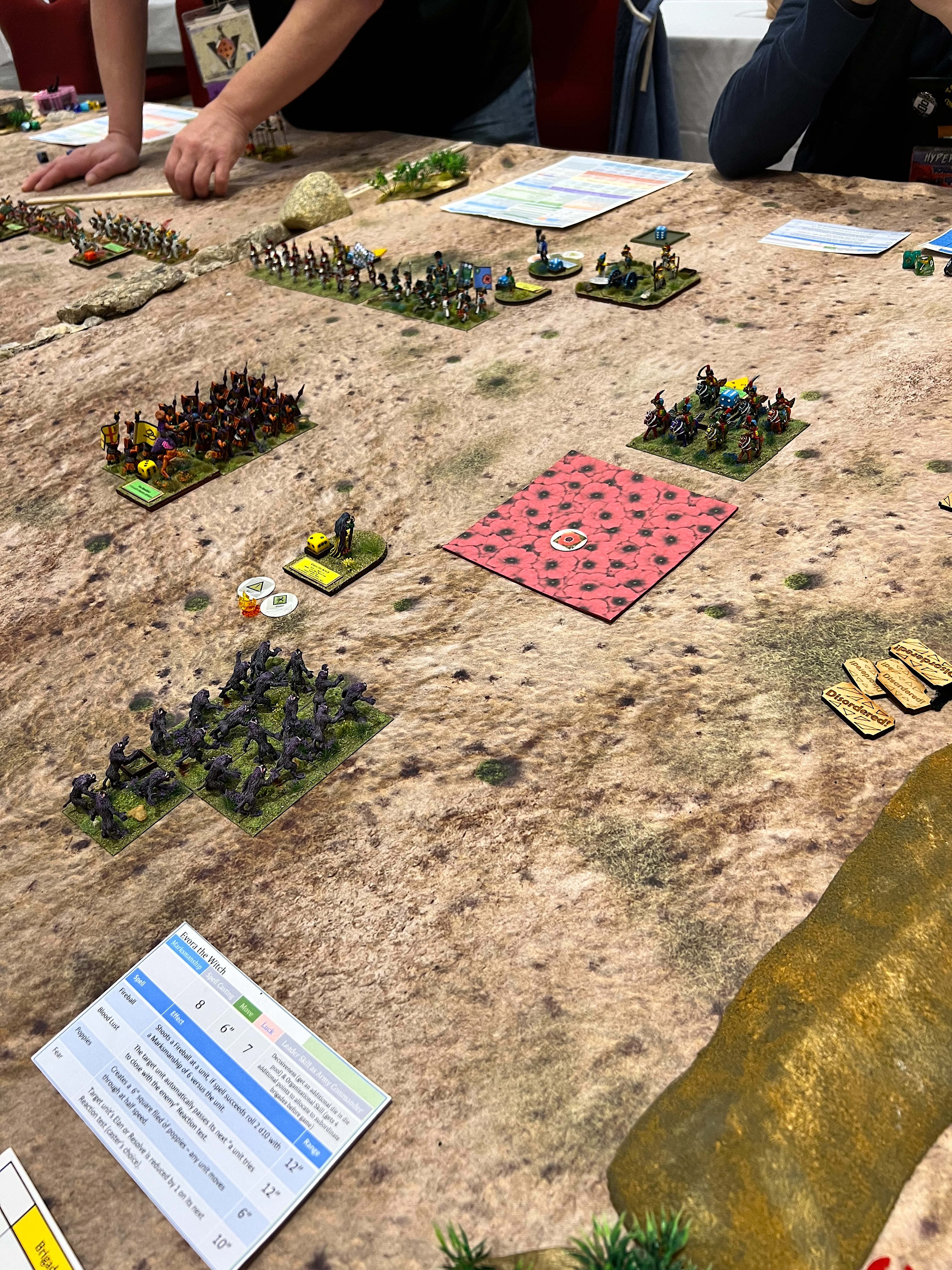
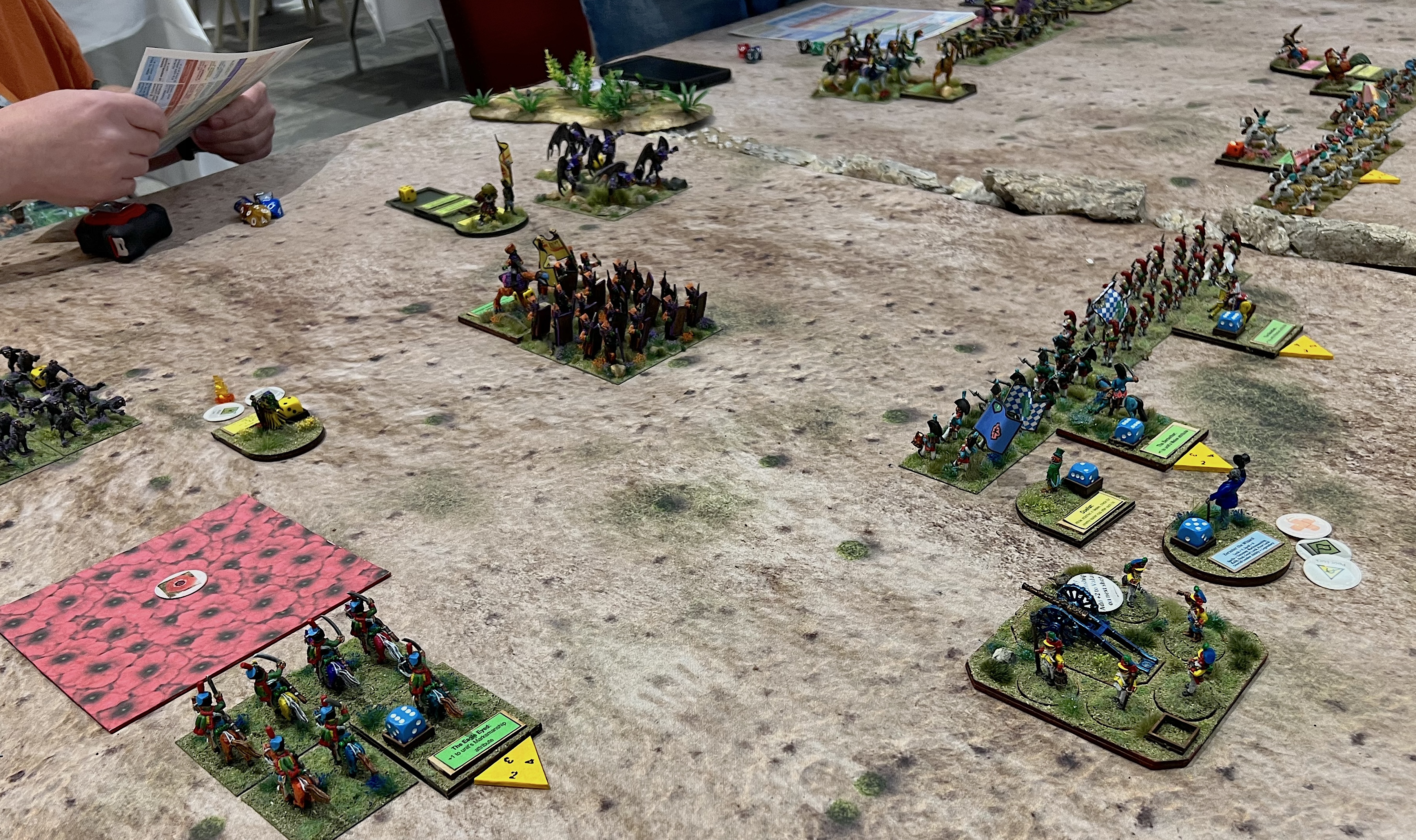
The semi-finalists!Leif casts a poppies spell to thwart Bob’s cavalry,Bob’s Munchkins prepare to unleash musketry on Leif’s Winkie Guard. They would rout!Meanwhile, Ken’s Impkins got hit hard by Brad’s Winkies.
The Round 2 (semifinals) results were:
Winkies (Brad) defeats Impkins (Ken)
Munchkins (Bob) defeats Winkies (Leif)
Yielding the FINALS as:
Munchkins (Bob) versus Winkies (Brad)
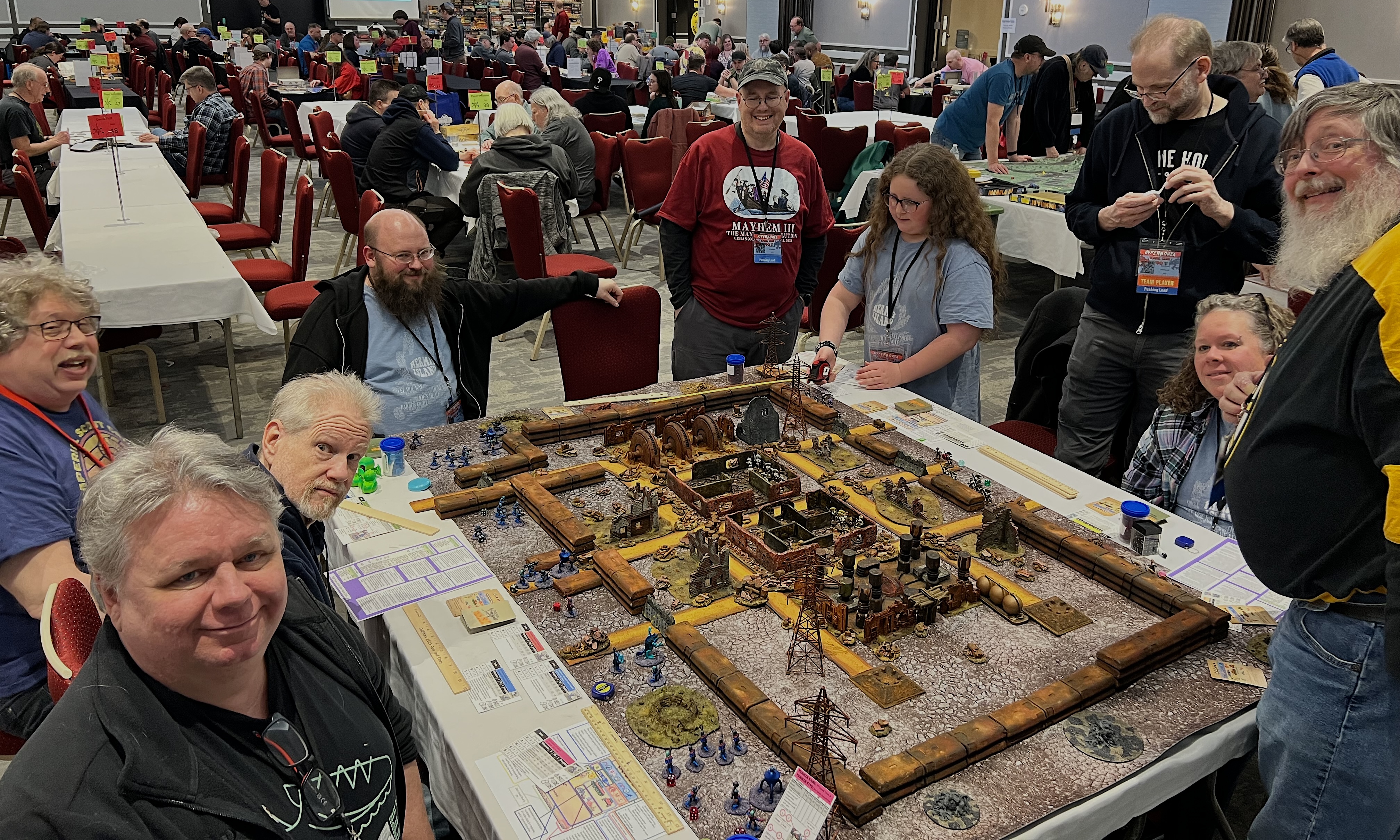
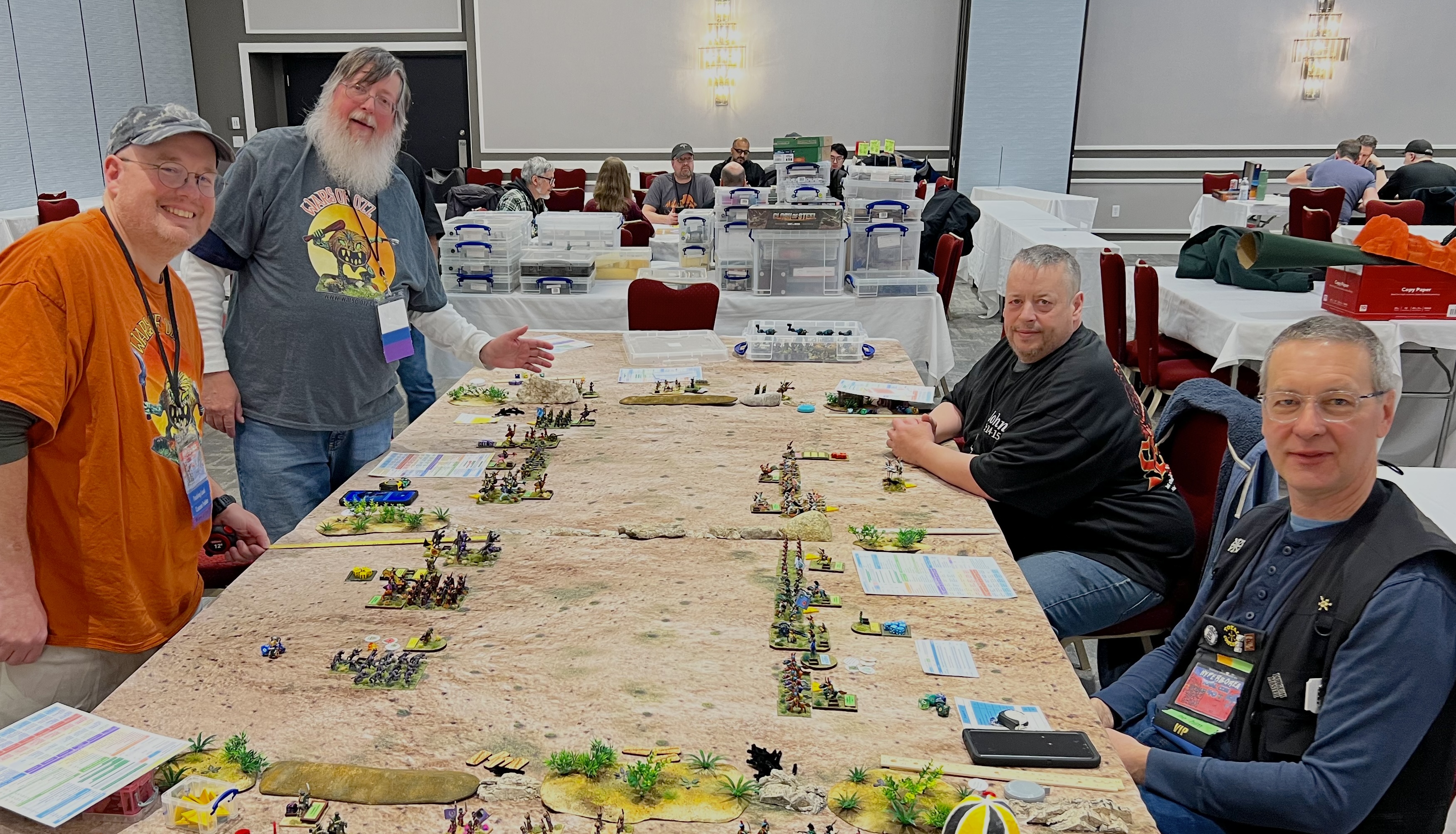
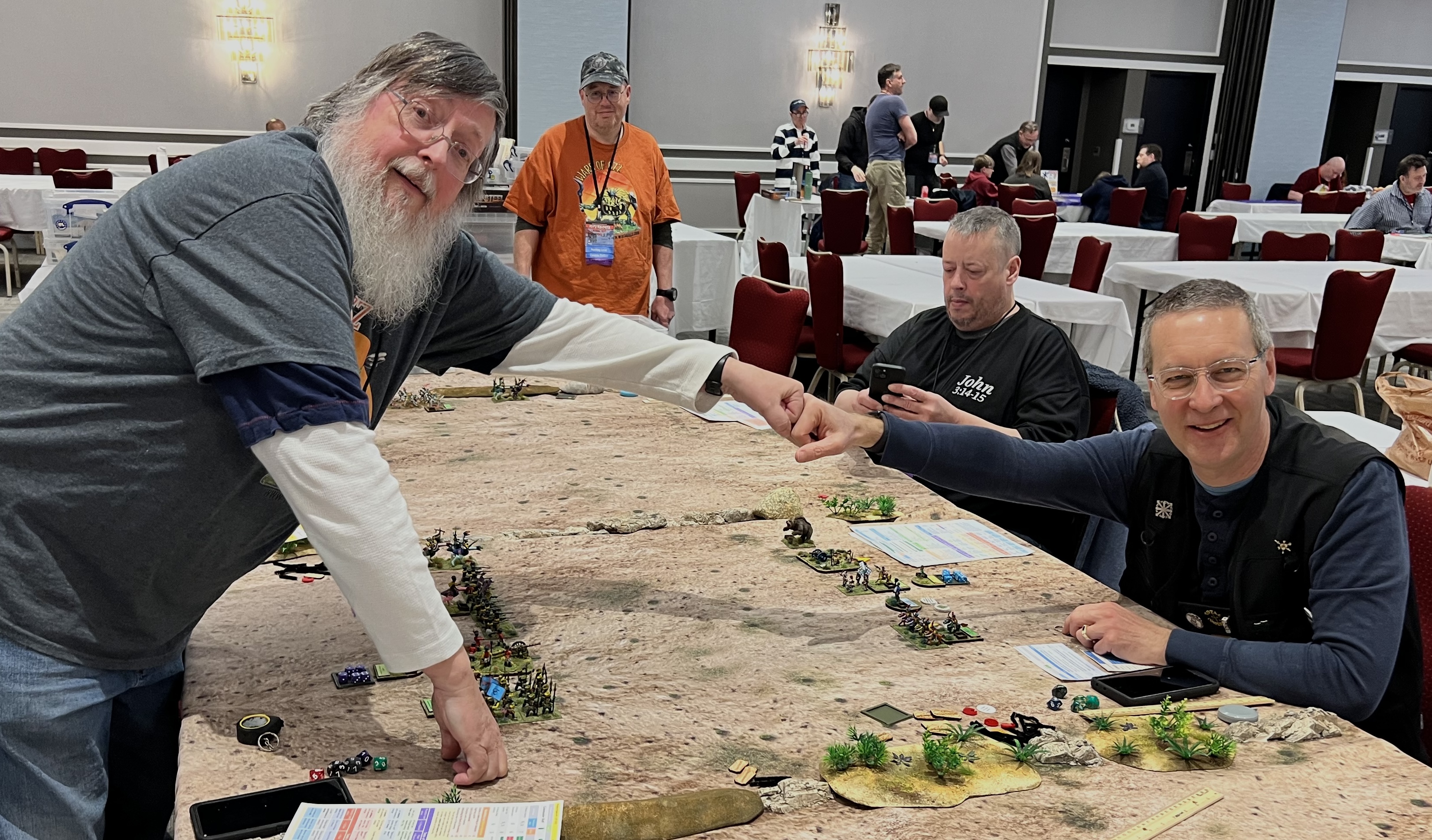
Brad and Bob get ready to rumble!
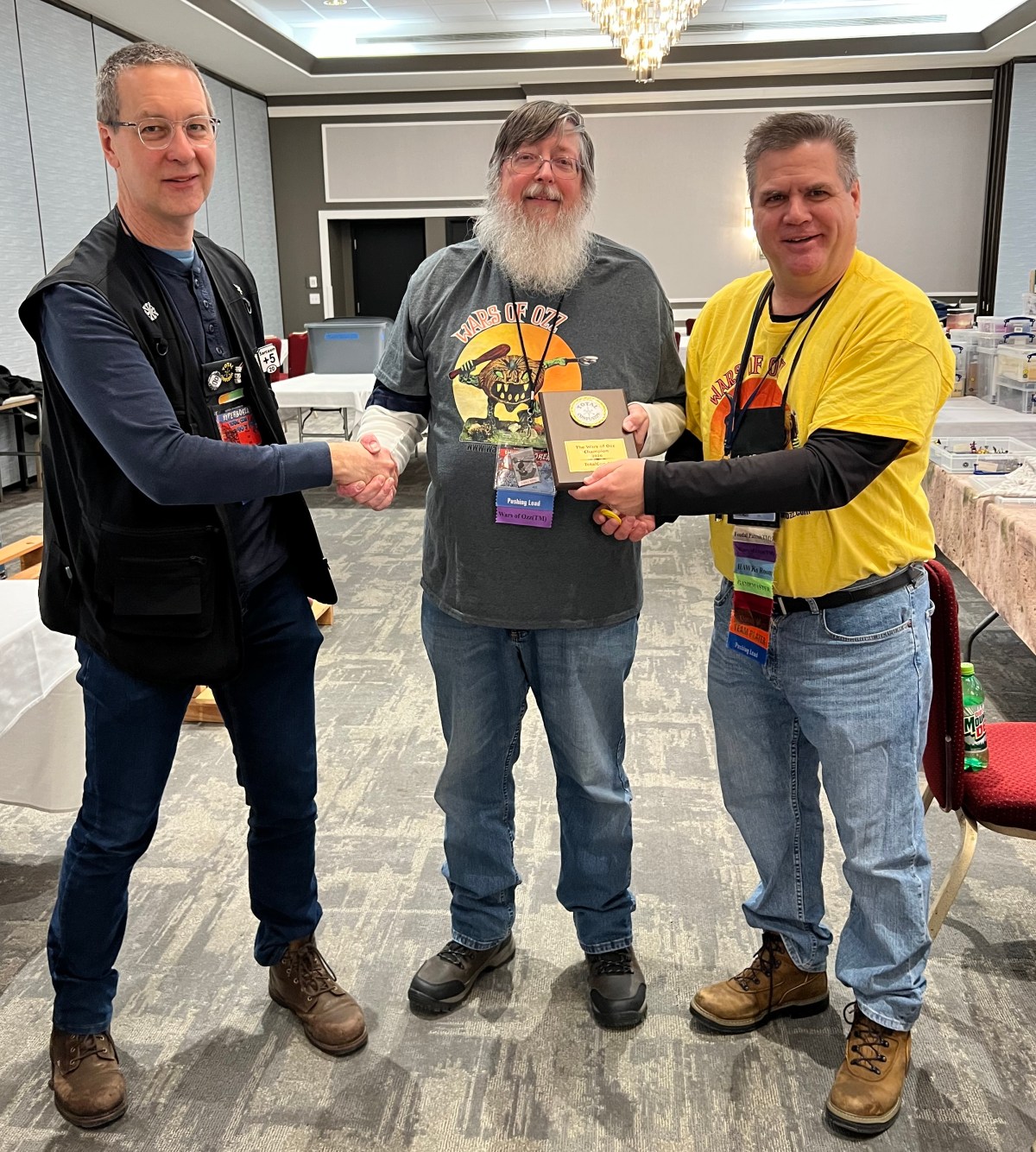
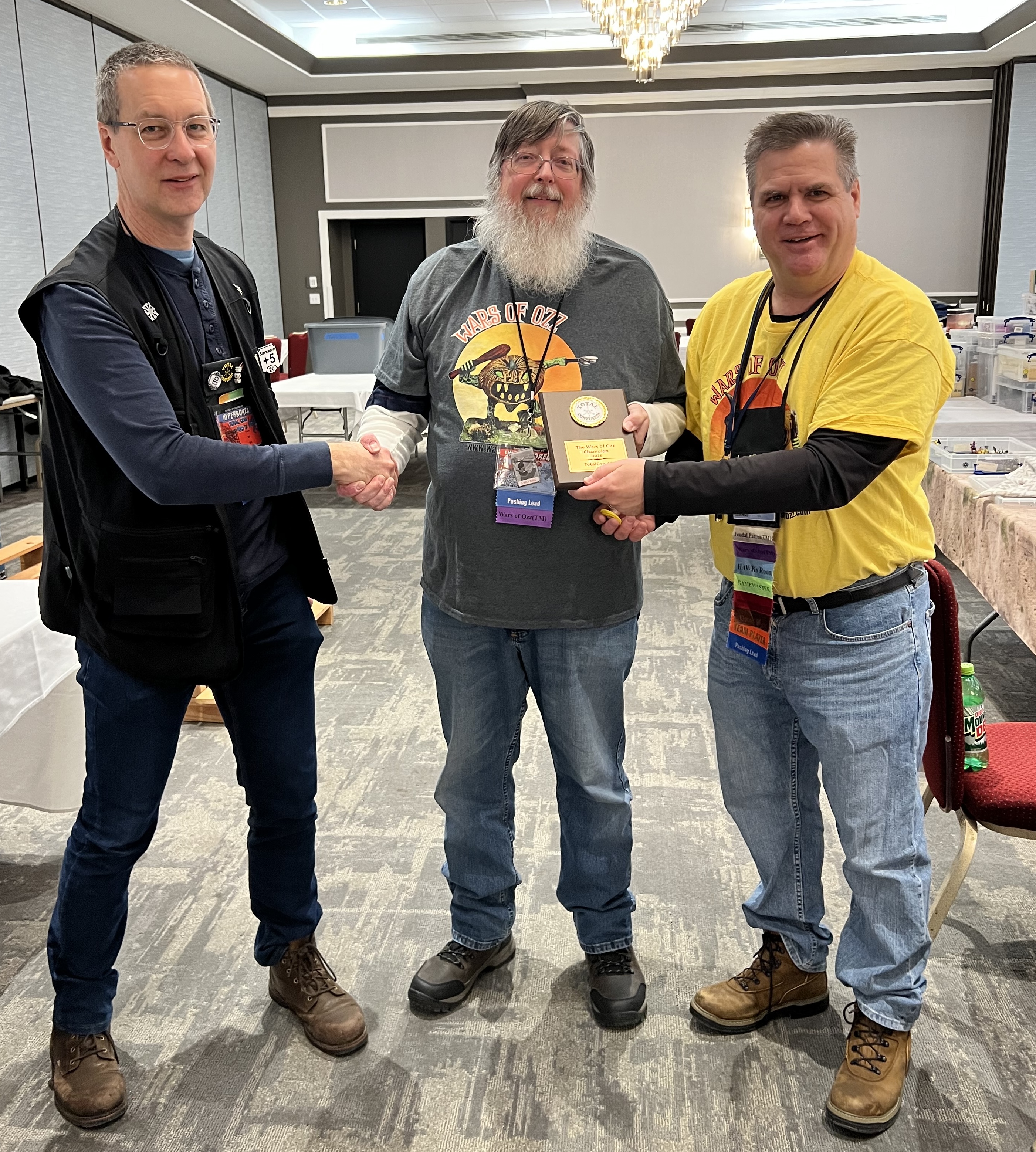
In the end, Brad outlasted Bob – though it was close! Congratulations to Brad as the 2026 TotalCon Wars of Ozz Champion! Congrats to Brad!
The 2026 runner up Bob, the 2026 champion Brad, and your happy GM.
Thank you to all who helped me at the convention. Special thanks to Leif and Brad.
I also want to extend a very special thanks to Bryan Clauss, Steve Parenteau, Kevin Baumann, and the entire TotalCon staff. They do a magnificent job running a great convention! BIG THANKS!!
Lastly, a few areas that you can check out if you dare:
In short, (if you don’t want to click above) he has a list of folks who blog that he follows (most of them are the same ones that I also follow).
To quote Roger:
Well, What I’m asking you to do is, if you look below you’ll see a list of blogs that I follow (or should follow!), some are great painters (actually all of them are) 3D printers, game writers, DM’s, Sculptors, Convertors etc.. The one thing they all have in common is they are all entertaining writers! So if you can I’d like you to follow each of the links and take a look around, now some of these have not had new posts added for a while, but don’t let that put you off, have a look around check out some older posts, you never know there might be something you like or find useful, if so make a comment, follow (or if you have too “like”), let’s give these people some love and hopefully get them posting again!
So, take a look. I know some might not be up your alley, but if you’re into hobbying or modeling etc, most will. Of course my blog does also have some golf in there, but that’s just another addiction you know…
In WWII, the Royal Italian Army was heavily engaged in the North African Campaign starting in June 1940. They fought first alone against the British and then in concert with Nazi Germany’s Afrika Korps after February 1941. The tide of battle ebbed and flowed across North Africa. The Italians and the Germans formed the Panzerarmee Afrika. They battled the British 8th Army in Egypt, Libya, and eventually Tunisia. There, along with US and UK troops from Operation Torch, Axis forces were driven from North Africa in May 1943. Shortly afterwards, in early July of 1943, Operation Husky – the invasion of Sicily – occurred. By the end of that month, Mussolini was ousted. Italy then requested a separate armistice and was out of the war. German forces seized any available Italian war materiel and continued to fight in Italy. Italy then was really in a state of civil war. Some Italian forces fought with the Allies. Others sided with the Germans. Partisan attacks were common – and continued even after the German surrender in April 1945.
I have found the Royal Italian Army and its equipment interesting. At HAVOC I had run a big North Africa What a Tanker game back in 2019. At this year’s HISTORICON, discussions with one of the players intrigued me. We talked about a “what if” scenario for a “What a Tanker” game where I could have the French defending against the Italians. Mulling that over the summer, I decided to do it! I call it “Il Duce’s Desert Gamble“.
It’s 1942 or 1943. Here, the Allies do not launch Operation Torch. Instead, with the USSR on the verge of collapse, they make the disastrous decision to launch Operation Sledgehammer . It fails miserably. The USSR seeks a separate peace with Germany. The British 8th Army is routed and German forces advance towards the Middle East and its oil fields. The US and UK are in no position militarily or logistically to try any invasion anywhere in Europe for years. The US refocuses on Japan and the Pacific.
Meanwhile, Mussolini sees an opportunity to further his vision of a new Roman Empire that would dominate the Mediterranean. He sees France’s colonies as ripe for the taking, and gains Hitler’s assent to take them. This sets up my desert battle scenario between Vichy French armor and the Italians.
In preparation for the game – I have enough French from my Operation Torch game. I did however need to augment the Italians.
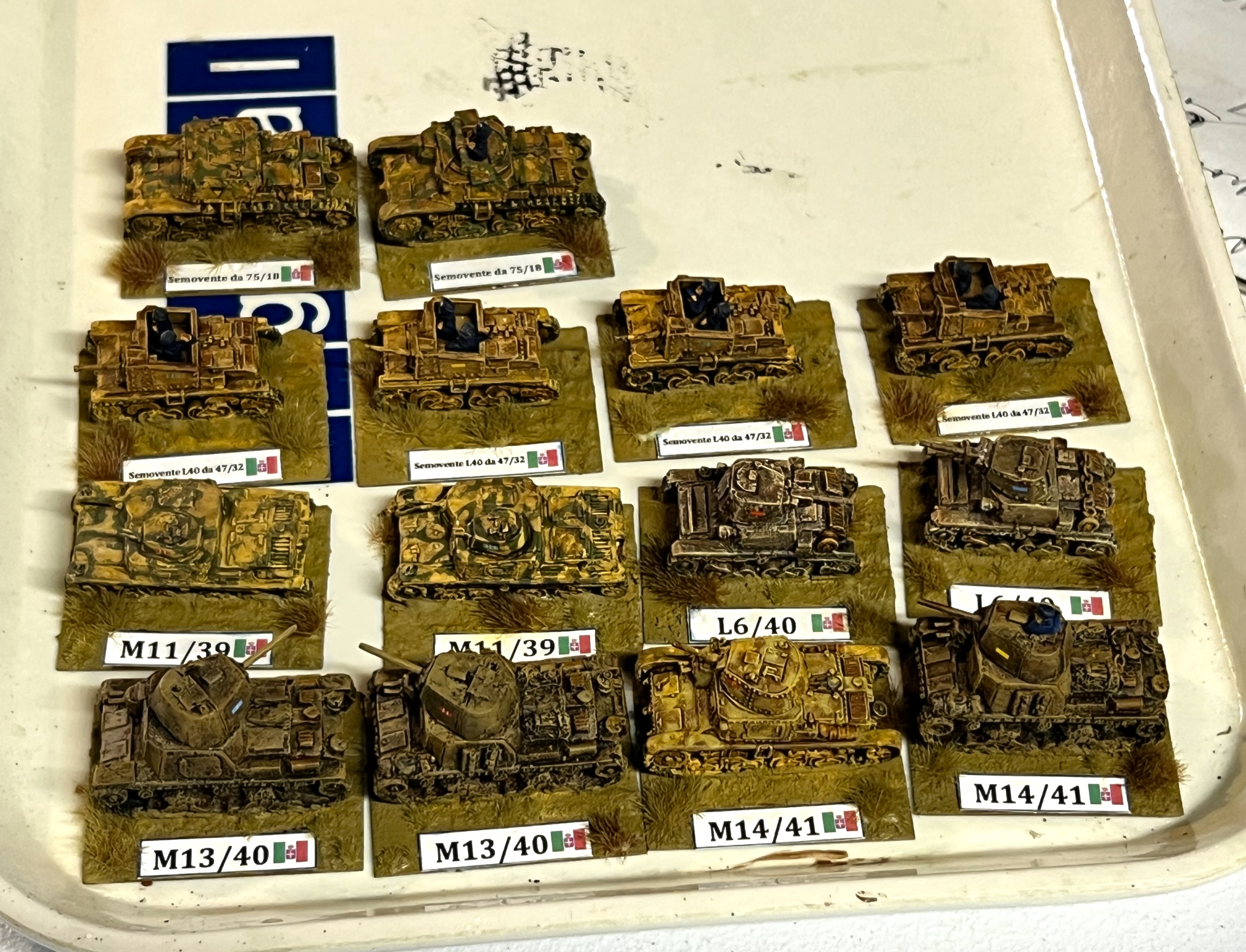
My Italian armor before this project.
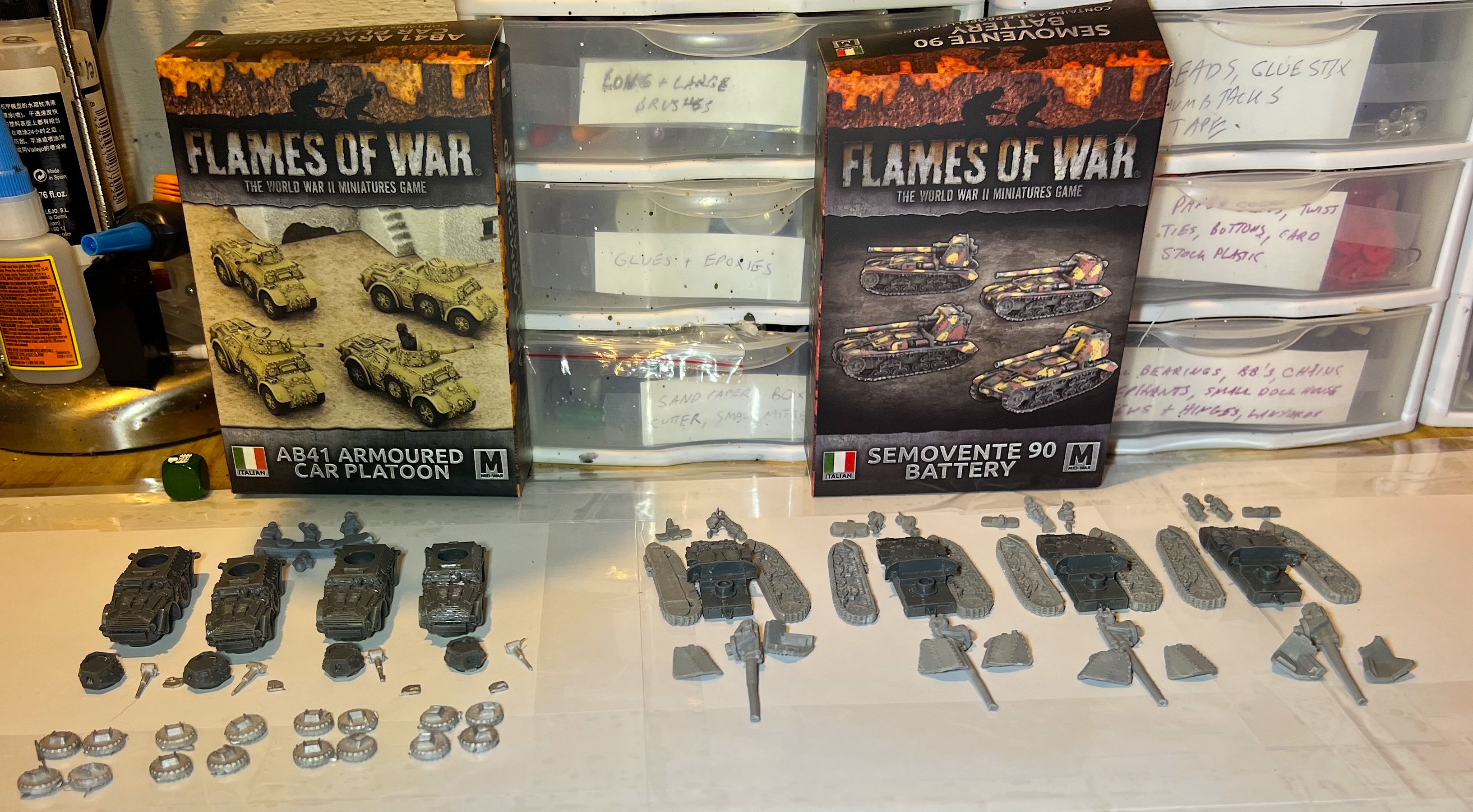
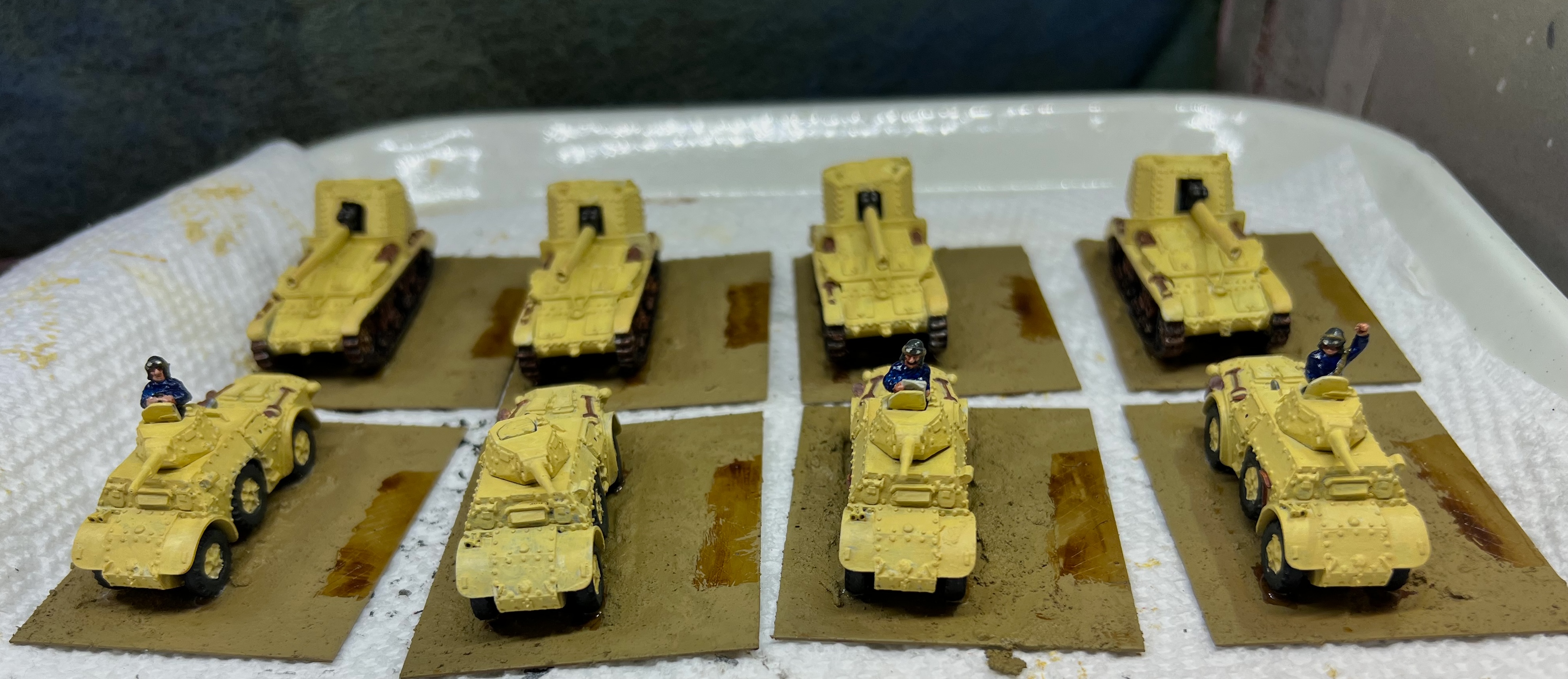
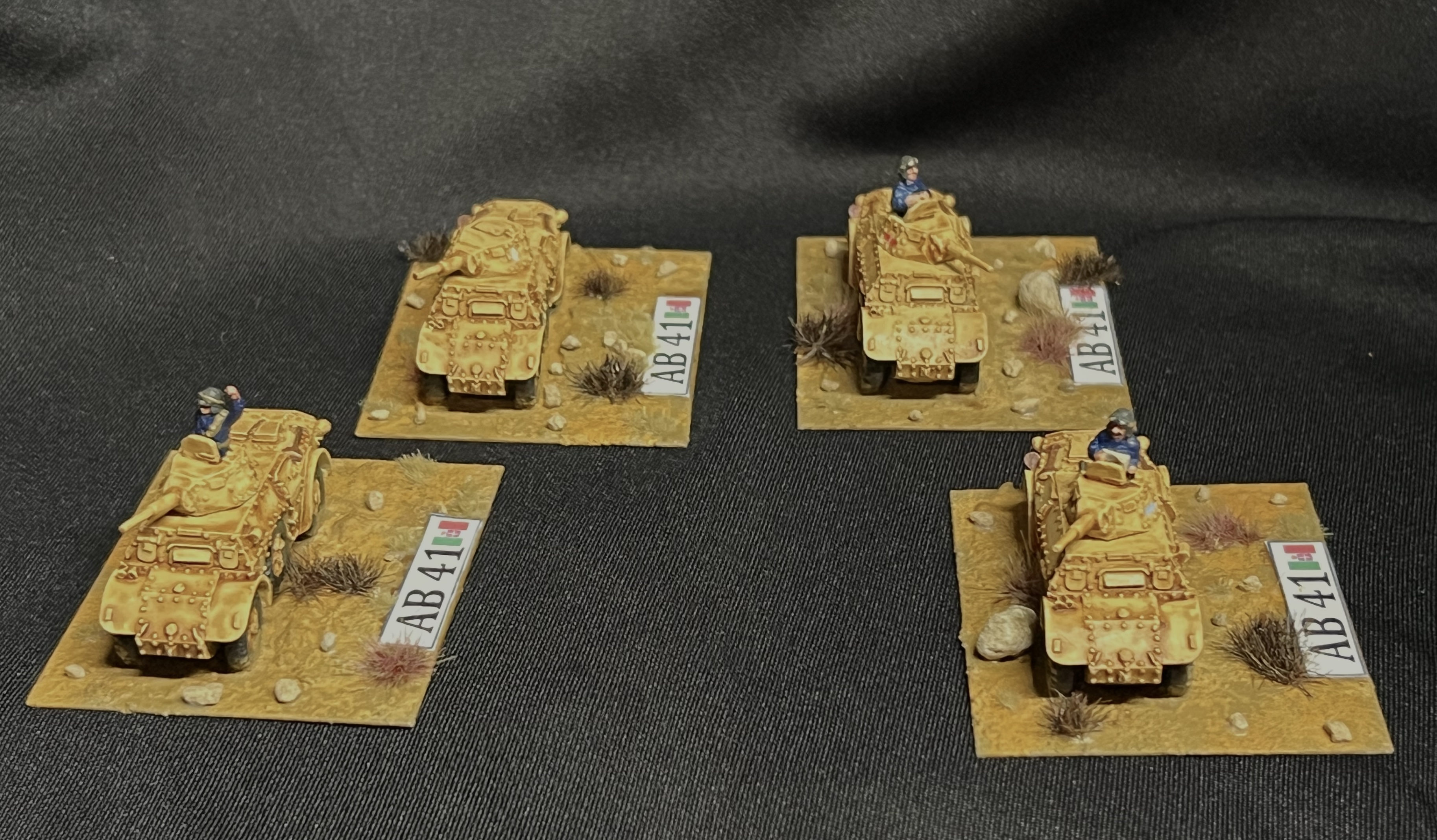
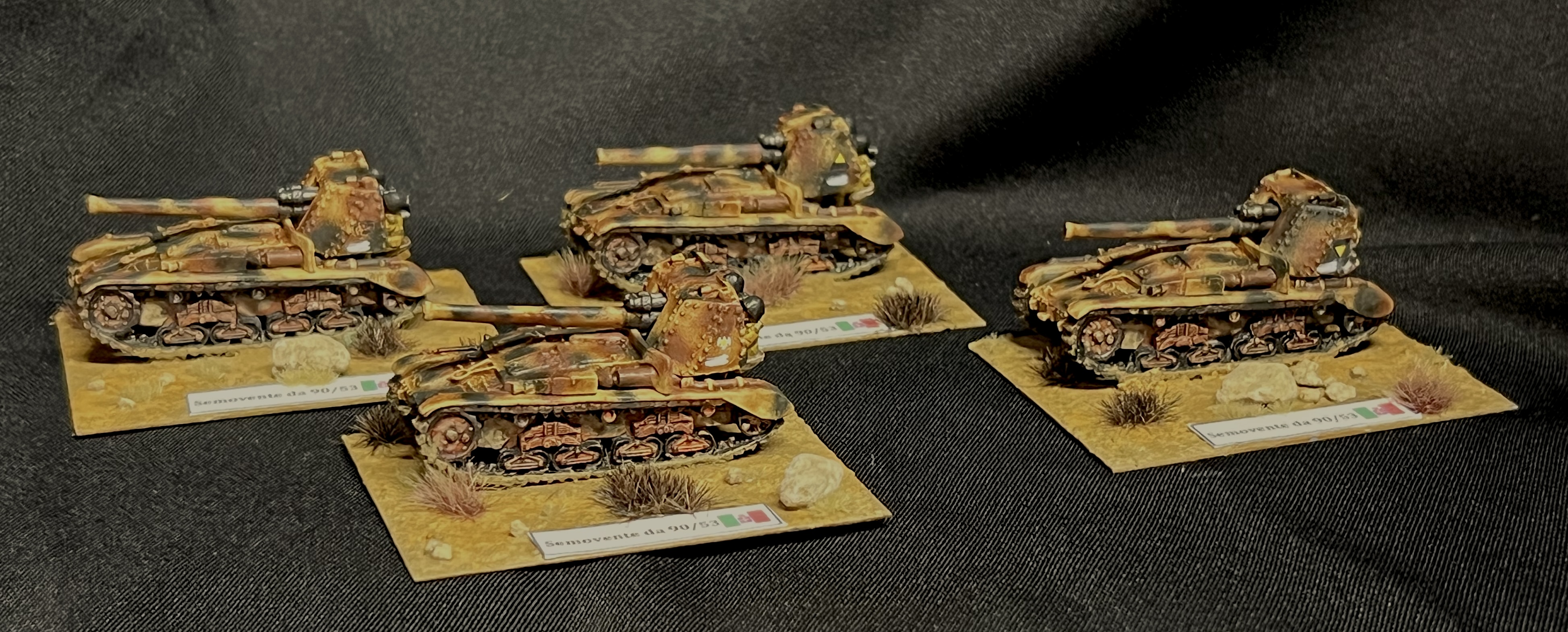
Specifically, I wanted to give them some armored cars. These include the Autoblinda Fiat-Ansaldo 41, also known as AB 41. I also wanted to provide another newer and more powerful tank destroyer, the Semovente 90/53. I use 15mm/1:100 scale models for these games. I acquired a 4-vehicle platoon of the AB 41’s. Simultaneously, I bought a 4-vehicle battery of the Semovente 90/53’s. Both kits are from Battlefront (Flames of War).
The AB 41 had a 20mm Breda autocannon – similar to the Panzer II- with decent anti-armor penetration capabilities. Its armor was effective against infantry small arms. 667 were built, and served everywhere the Royal Italian Army fought. It served also post-war until the mid-1950’s.
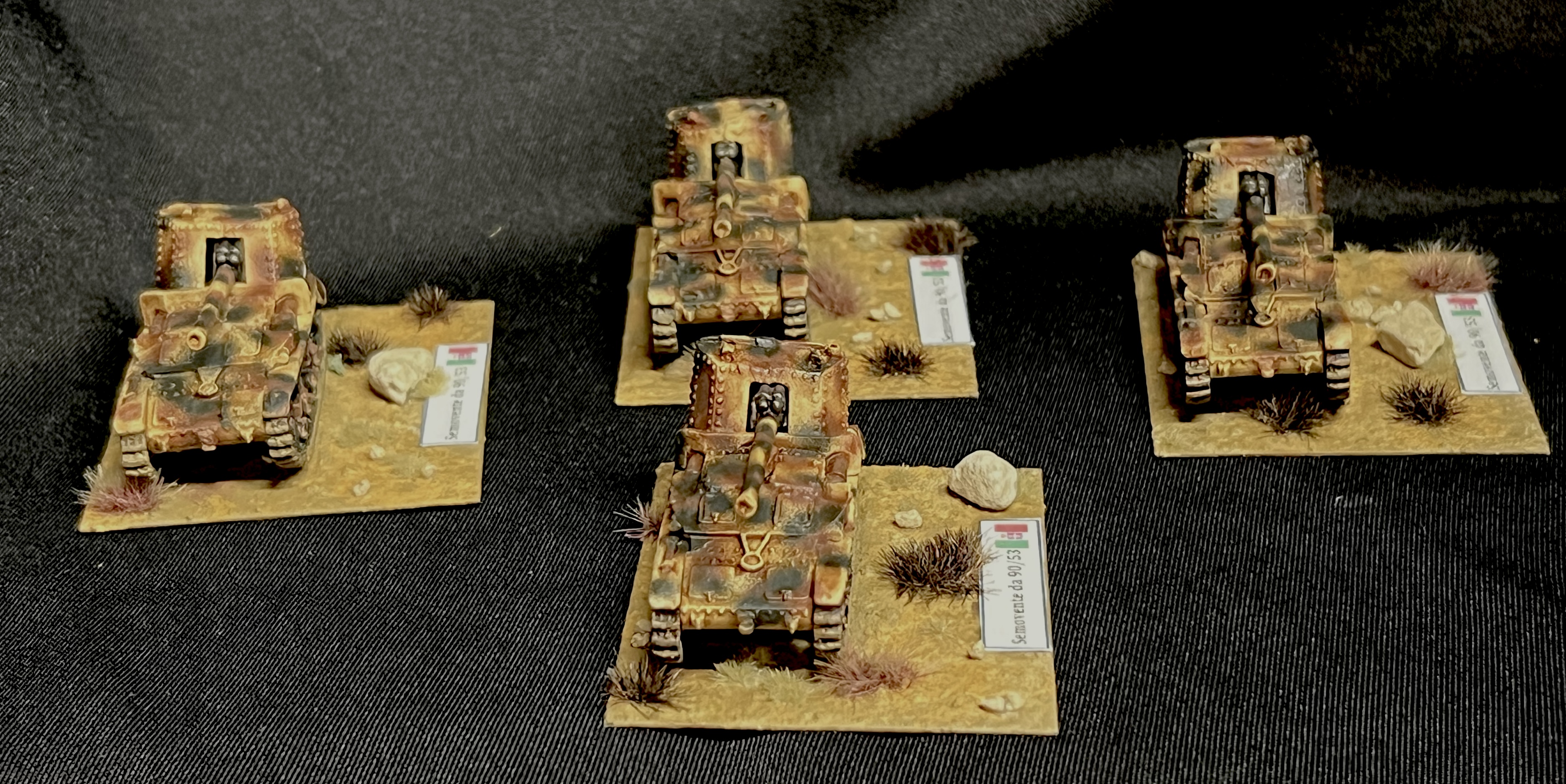
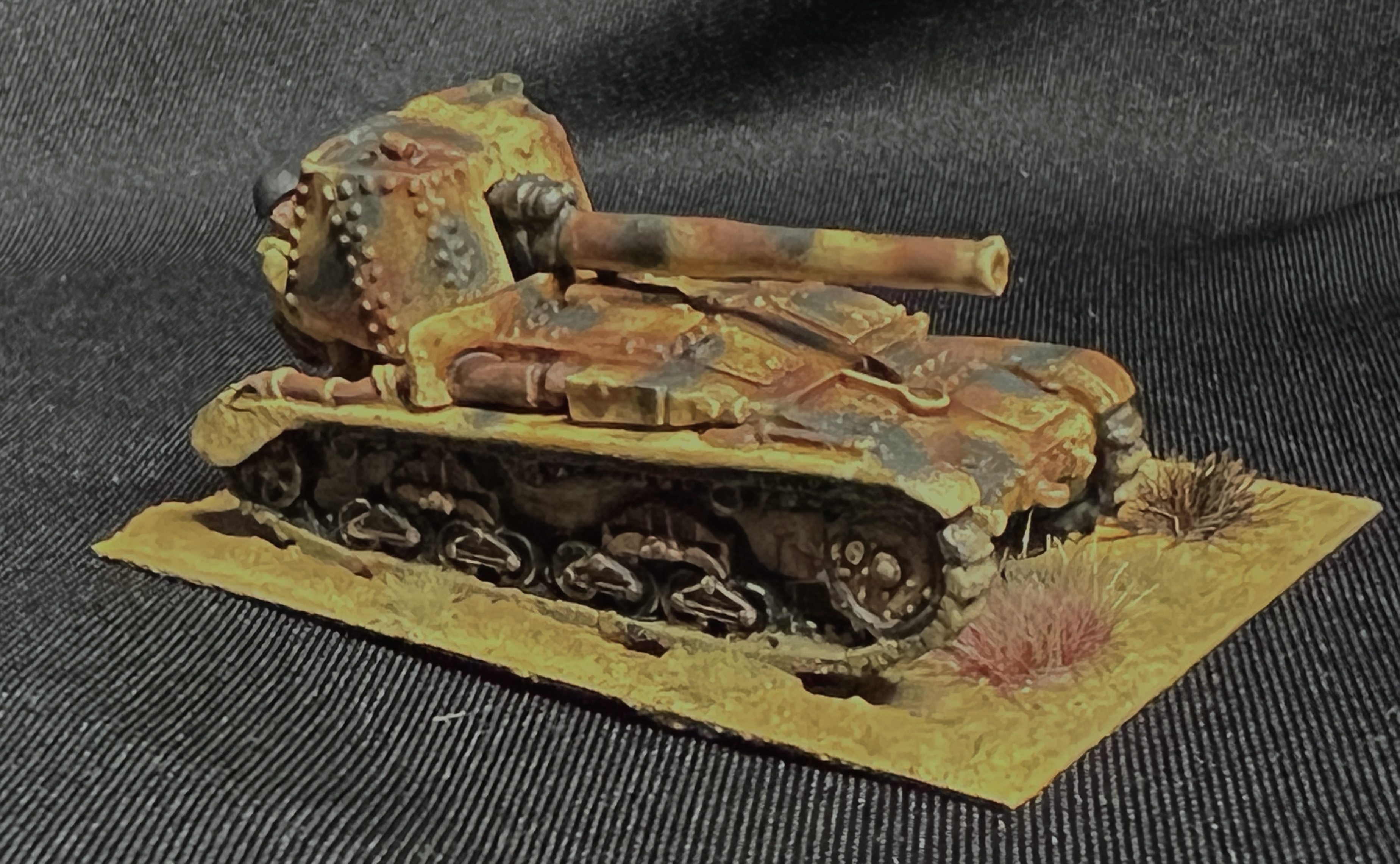
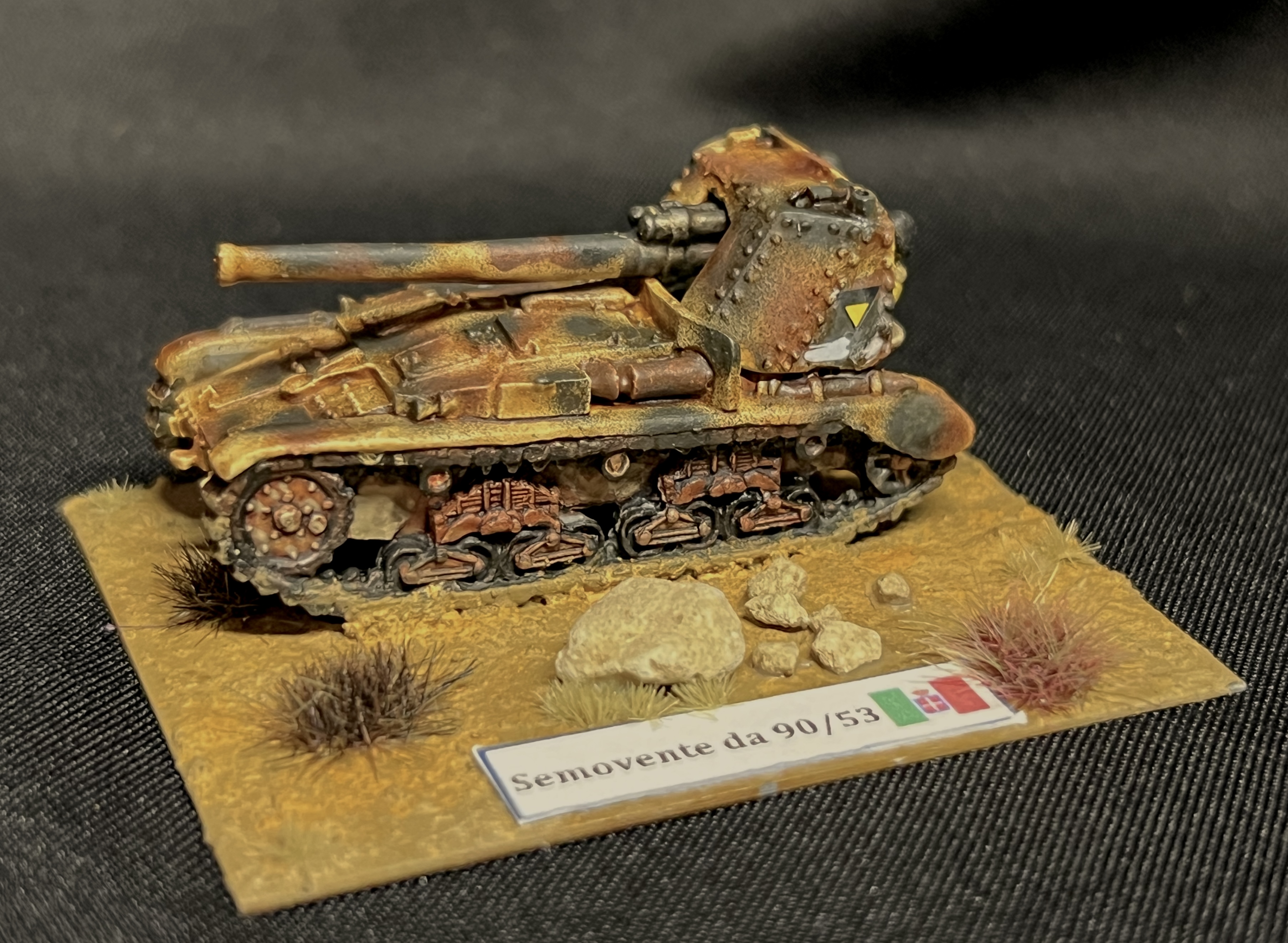
The Semovente 90/53 was built too late and in too few a quantity (only 30 were ever built) to see much WWII action. It had some (not much) experience in North Africa and Sicily under Italian control. The Germans also used seized examples. It’s design was inspired by the Italian experience on the Eastern front. The Italians there found that they had no way of stopping T-34’s or other more modern armor. It took a 90mm cannonne da 90/53 anti-aircraft gun and put it on an M14/41 tank chassis. The gunners would be exposed as they were behind a mantlet. It also needed an L6 tank modified to carry its ammunition. It’s armor penetration was impressive and any Allied tank it faced was vulnerable even at long range. I have decided to forego using any L6 tanks as ammo carriers for the game. I’ll just assume they are there. I’m also assuming that these would have been available in sufficient numbers for my game scenario in the absence of the Italian Armistice. Just one survives to this day at Fort Sill here.
An interesting aside note – 12 of the same type of anti-aircraft gun were taken from the Italian battleship Vittorio Veneto. These guns were awarded to Yugoslavia as war reparations. I remember playing with that ship’s token in Avalon Hill’s War at Sea game as a kid. That they ended up firing in 1991 is somewhat odd!
According to Wikipedia:
After the war, the twelve 90/53 guns from the Italian battleship Vittorio Veneto were assigned to Yugoslavia as a part of war reparations. They were mounted on a coastal artillery battery on island Žirje off Šibenik as a part of the Cold War defense strategy. These guns saw action in September 1991 during the Croatian War of Independence, deterring the Yugoslav People’s Army assault on Šibenik and blocking 34 Yugoslav Navy’s patrol boats and minesweepers which were later captured by Croatian forces in the inner harbor.
Reminiscing ended – back to the vehicles!
WIP Shots
The two kits as received.
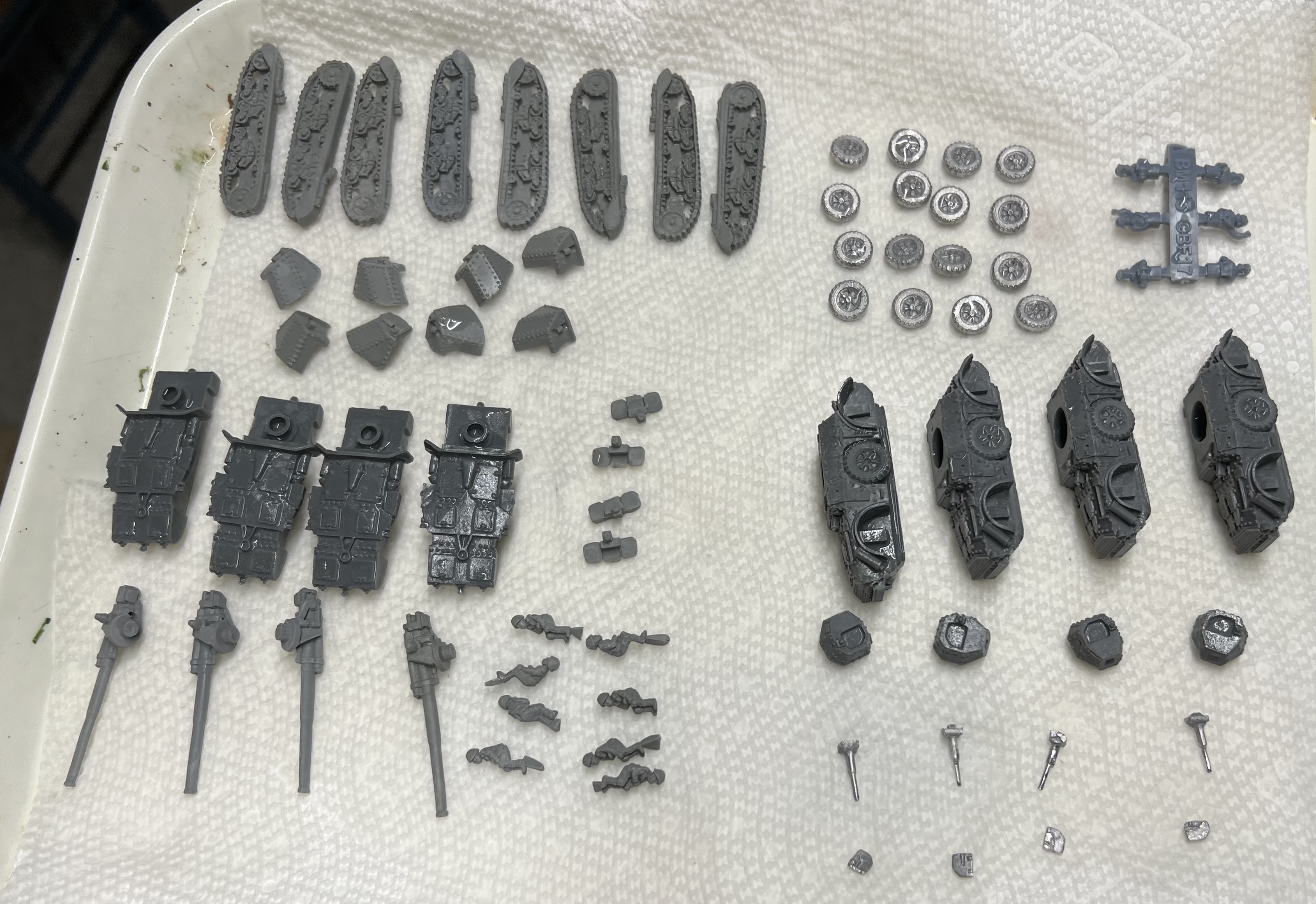
As is my usual practice, I washed and scrubbed the components.
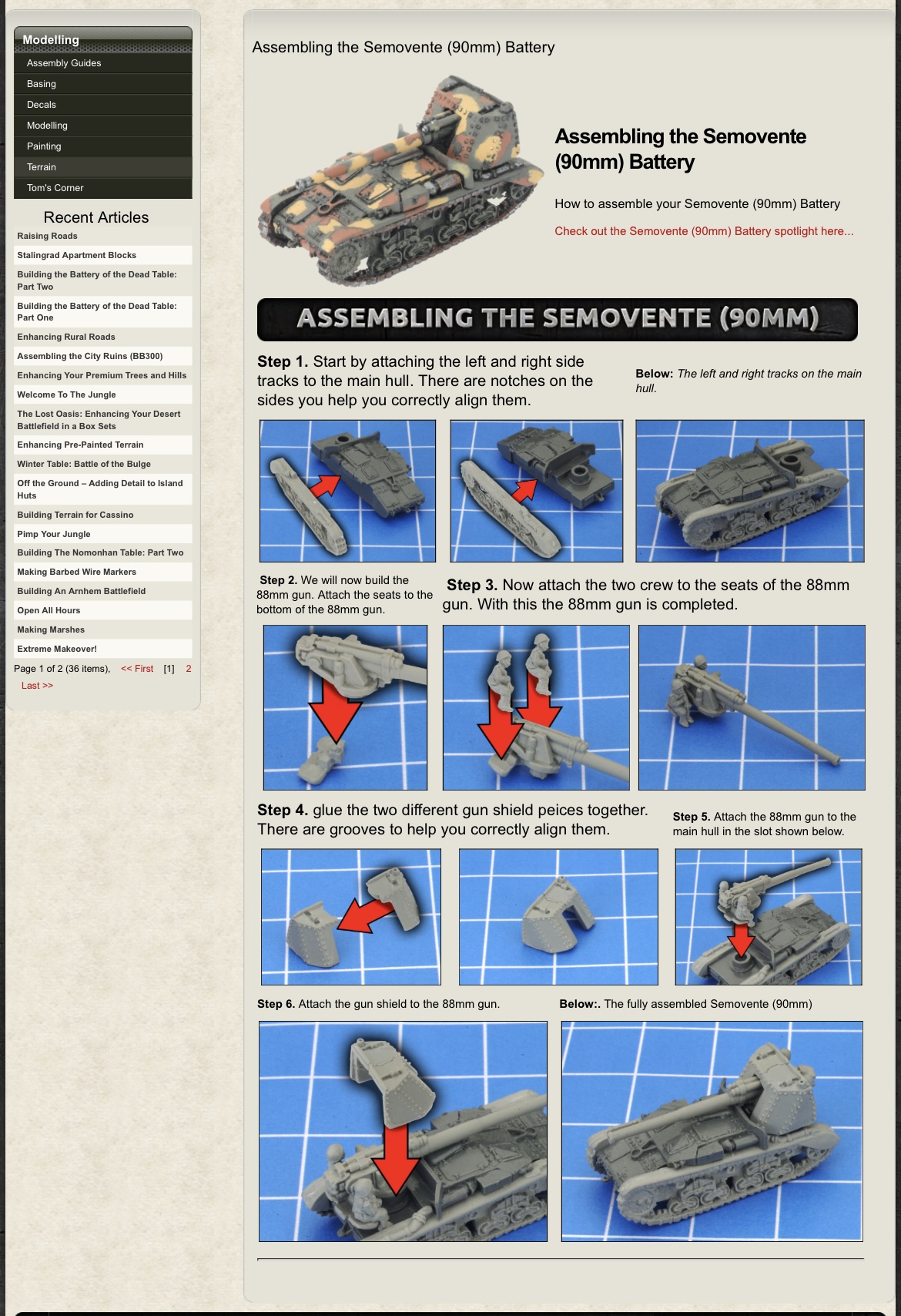
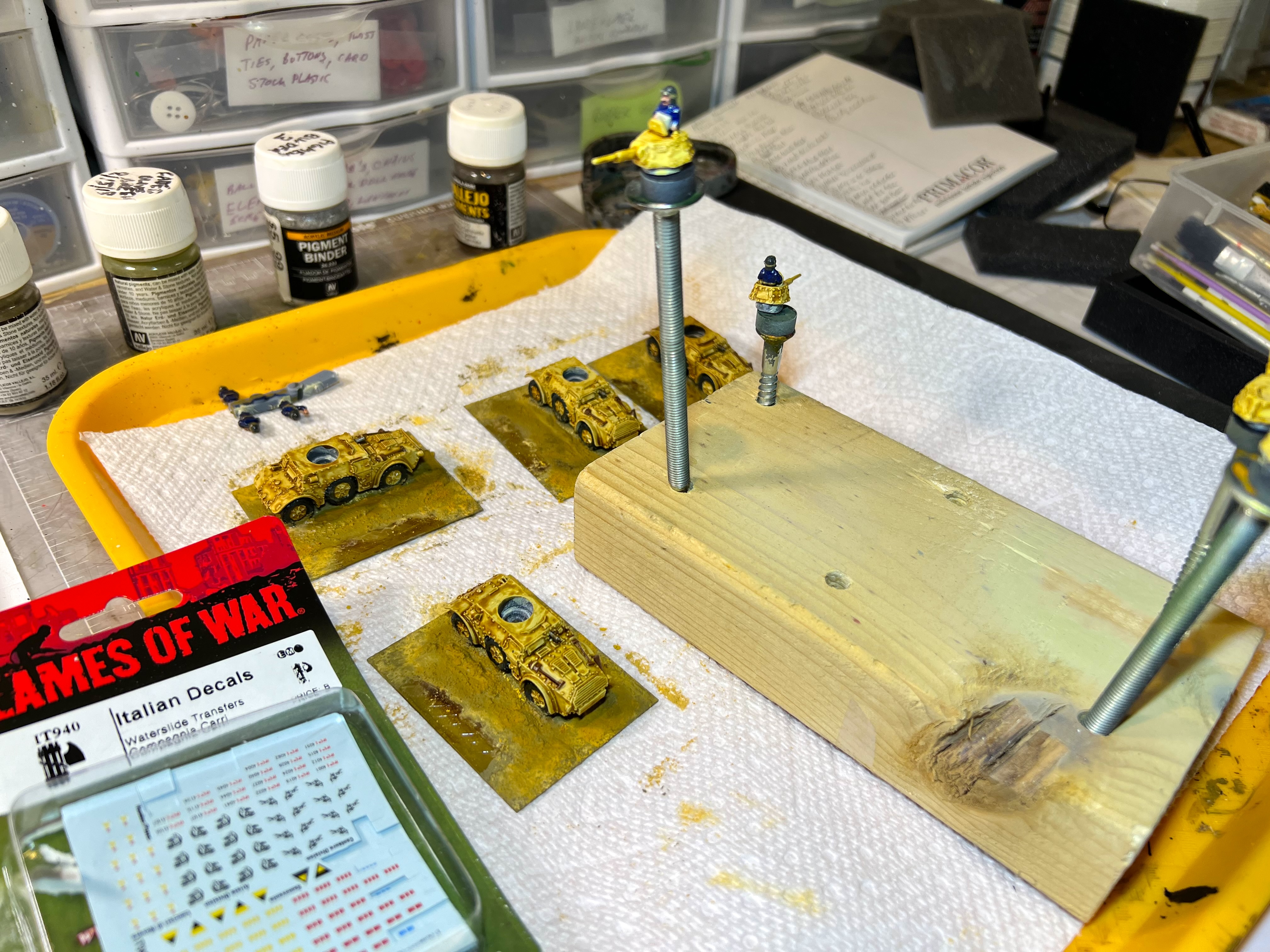
That model was not so easy to work on – mainly the crew and weapon mounting. I ended up using green stuff on the fiddly mantlets. I did paint the crew of the Semovente’s – though no one will ever see their faces! As for the commanders of the AB 41’s – I used three different poses plus one with the hatch shut.
I mounted the vehicles on their bases as shown below. Once painted, I applied decals for better tabletop recognition (for the players).
Side view on basesFront view on basesRear of Semovente 90/53 showing the crew.
I shaded the AB 41’s. I applied decals on the vehicles and pigments to some texture paints on the bases. All paints and more that I used are listed at the end of this post.
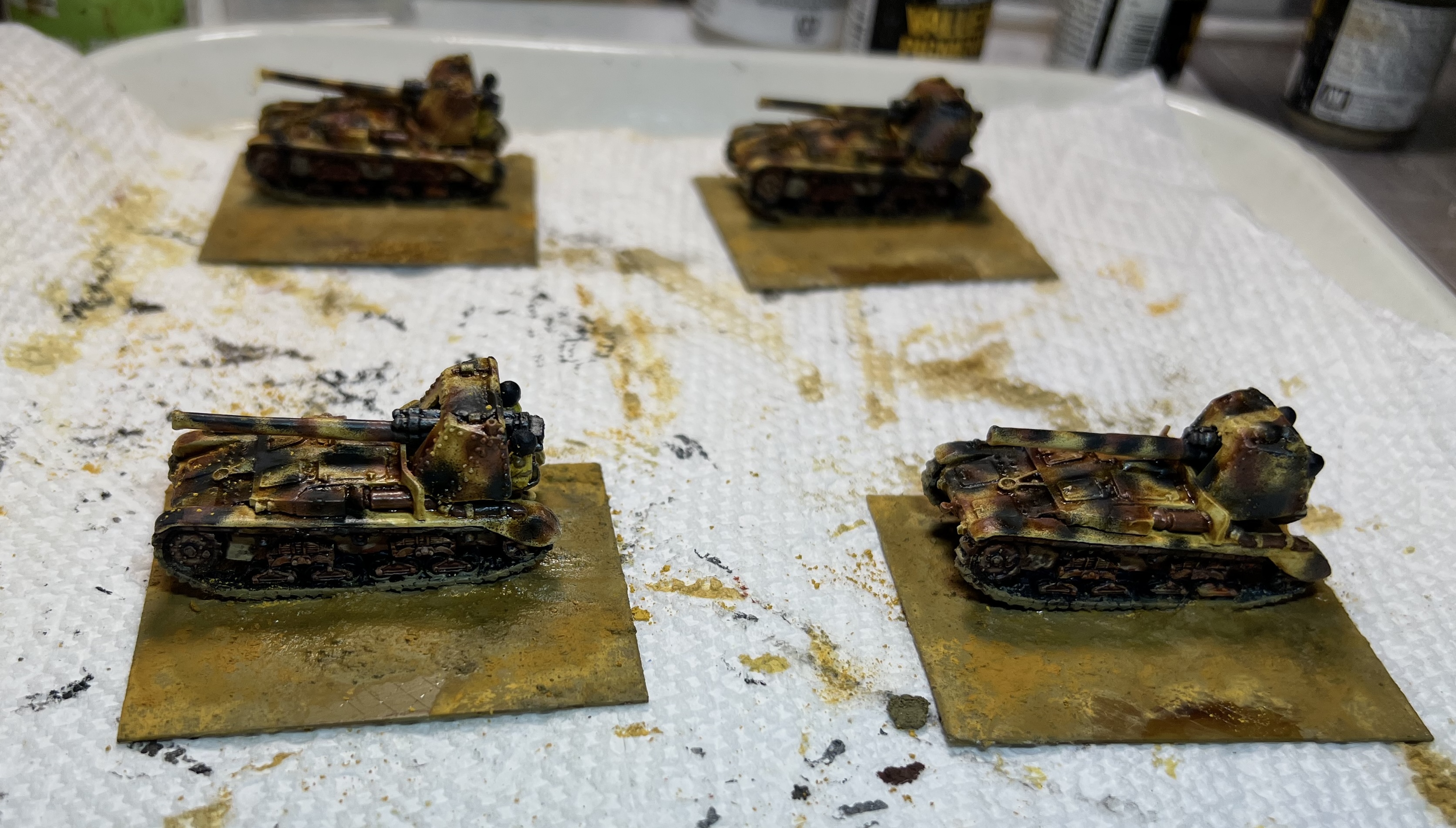
I airbrushed the camouflage pattern on the Semovente’s.
At this point, the models were finished!
Left sideRear viewRight side
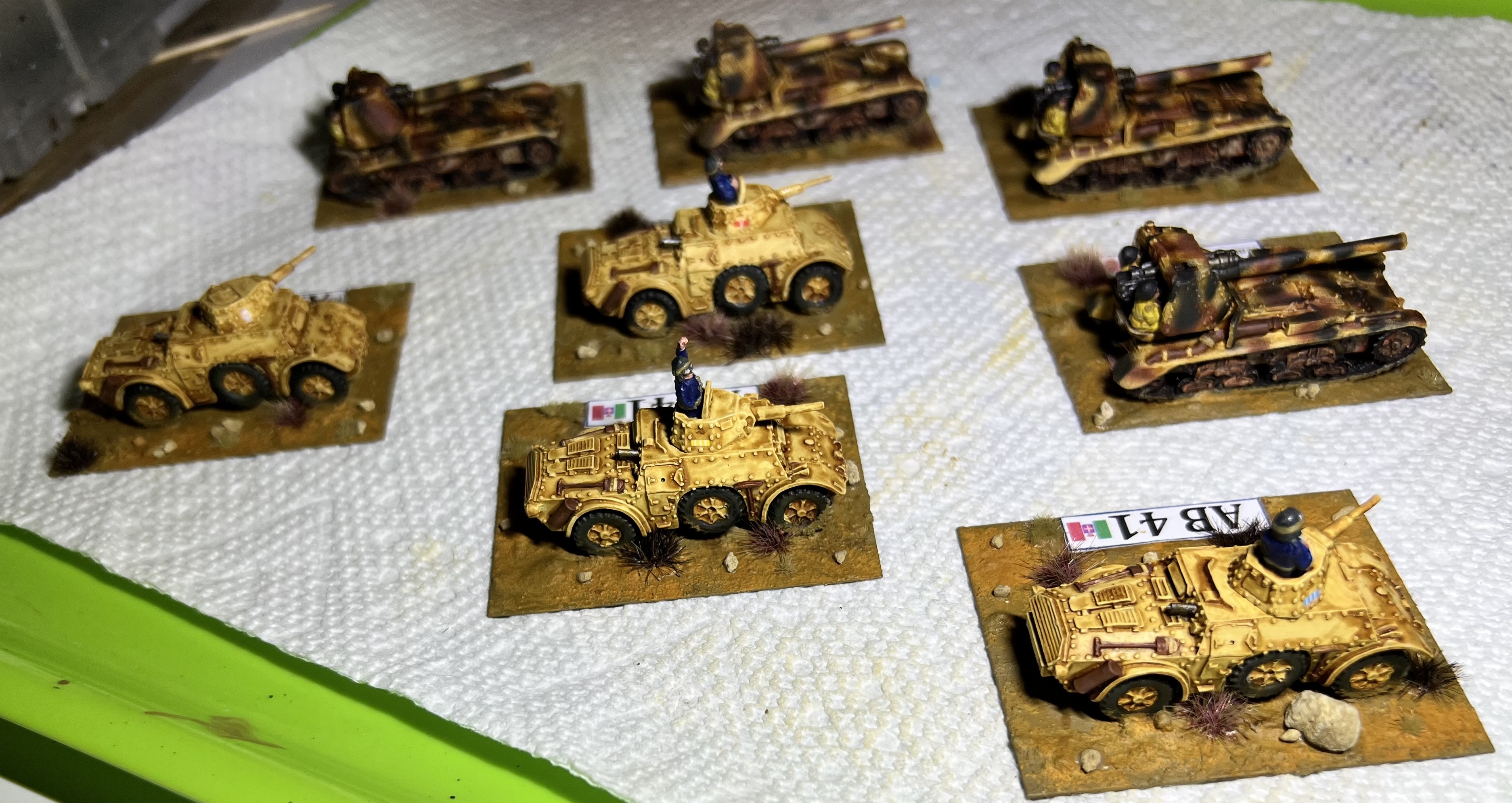
Let’s now see some eye candy of the models.
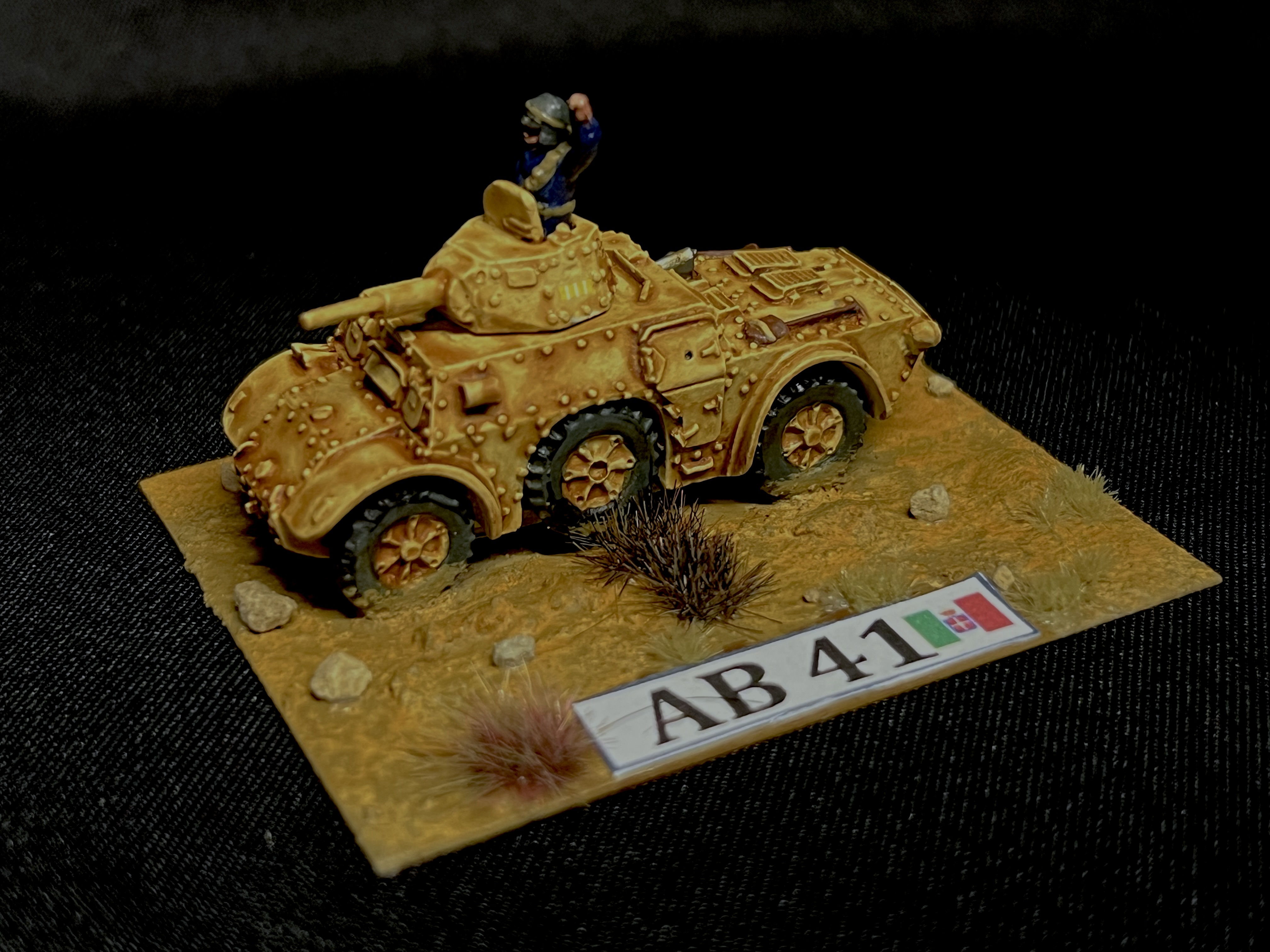
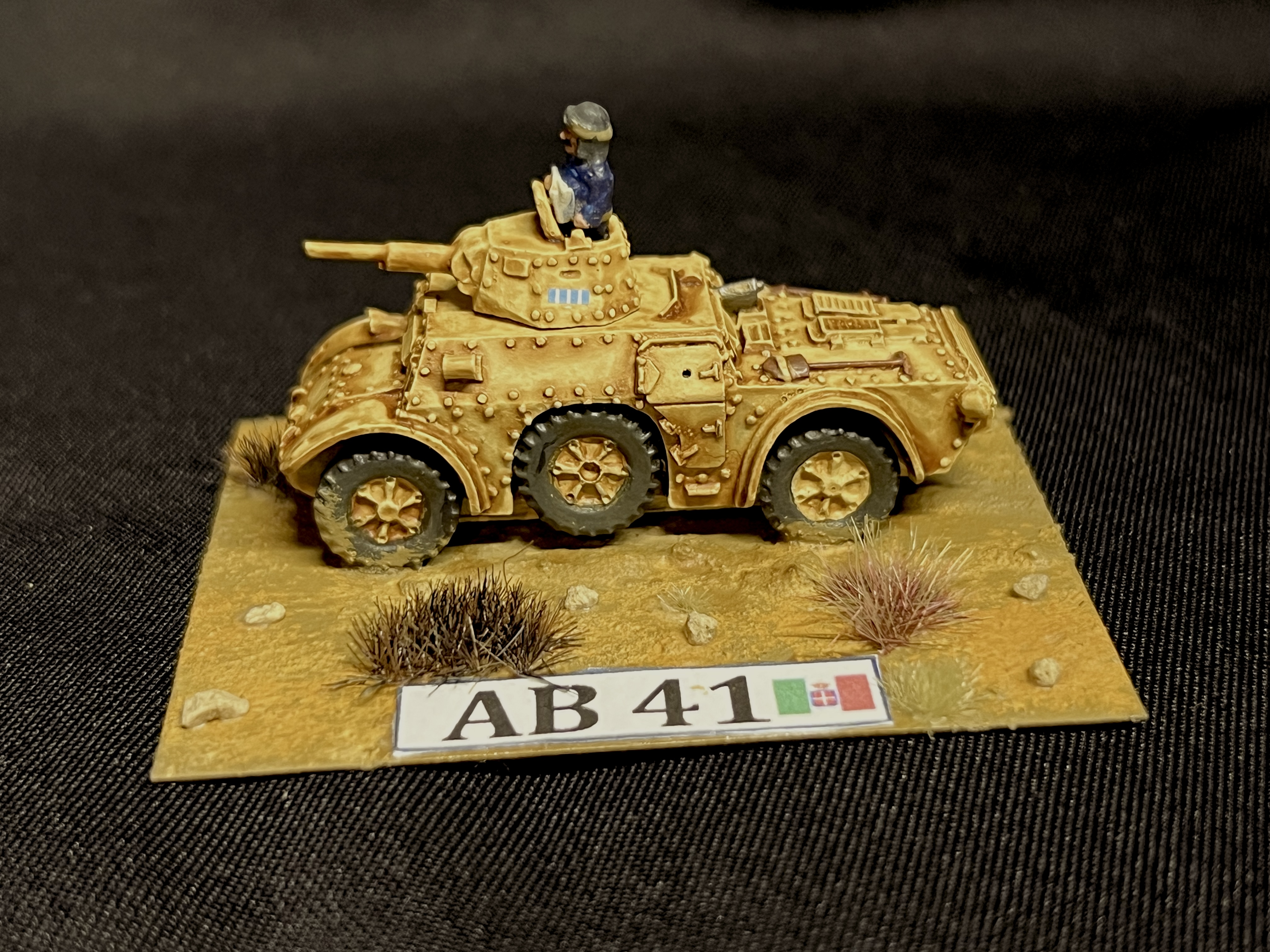
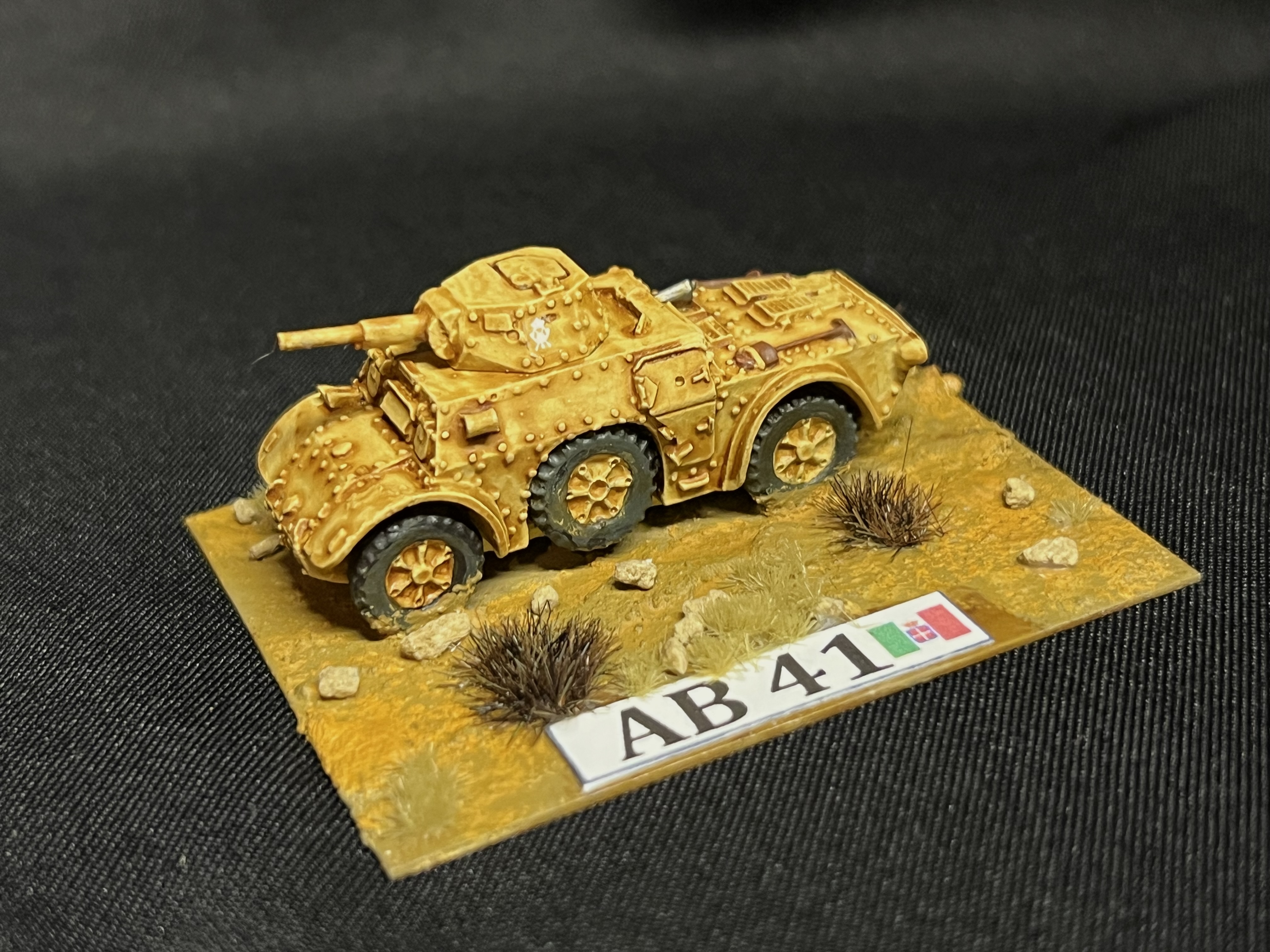
AB 41
AB 41 frontal viewAB 41 right sideAB 41 rear view
Lastly, close up shots of the 4. Note that they all have different decals on their turrets.
Commander with binocularsCommander with raised fistCommander with mapAB 41 with closed hatch
Semovente da 90/53
Semovente da 90/53 left viewSemovente da 90/53 frontal viewSemovente da 90/53 right side viewSemovente da 90/53 rear view showing gunners
Lastly, close up shots of the 4. Note that they all have different decals on their mantlets.
These will be on the tabletop at Cold Wars, TotalCon, and other upcoming conventions. Please let me know your thoughts and feedback in the comments section. Thanks in advance for your input. As always, thanks for reading.
For all of my posts on WWII games and projects, there is a consolidated list. You can find the posts and their links located here.
MATERIALS USED
PAINTS, INKS, GLAZES, SHADES, WASHES, PIGMENTS AND FLOCKING USED ON THE FOUR BATTLEFRONT/FLAMES OF WAR AB 41 ARMORED CAR MODELS
Green Stuff
Gorilla Glue
War Games Accessories Steel Bases Number FOW 3 (2″ x 2½”)
Over the summer, happily, golf dominated my free time for the most part. I didn’t really have much time for hobby work or wargames. Blogging about what little I did complete or participate in fell to the wayside. The “little” that I refer to is work on my 15mm/1:100 scale WWII scenario, Operation Torch: Vichy Mounts a Counterattack. This scenario is part of a What a Tanker game. It is set in Morocco in November 1942. The Vichy French responded to the American landings during this time with an armored counterattack.
It is a little-known clash. France the June 1940 post-armistice was titurlarly neutral, and had the responsibility to defend its colonies against any allied invasions. At this time in 1942, the Soviets were under massive German pressure on the Eastern Front. They were begging the Allies to get in the fight against the Germans – anywhere at all. However, at this point in the war, the US/UK were not in a position logistically to assault Fortress Europe. They also lacked the necessary forces to execute such a mission successfully.
The invasion of North Africa – and the colonies of Vichy France – became the compromised option. Operation Torch thus came to be. In addition, this assault would open up a line of attack on Rommel’s rear. This would reduce pressure on the British 8th Army in Egypt. However, no one knew how much the Vichy French would resist.
My flyer for the game scenario.
As I write this, the 2025 golf season is over now. At least it is here in balmy Massachusetts in November. It’s time for me to capture my summer and fall efforts that led to my running this games at conventions. This post will cover some of my preparations, upgrades, and the actual games themselves. I will discuss the initial games at HMGS HISTORICON, then my upgrades, then the games at HMGS FALL IN! and EllisCon.
By the time I attended HISTORICON in July of 2025, I had the scenario pretty much where I wanted it. I had play-tested it with friends, and was ready to roll it out. This year, in total I have run the game twice at three different conventions. These are HMGS HISTORICON in July, and both HMGS FALL IN! and EllisCon in November. This makes six iterations so far since the spring.
For vehicles for the game, I have finished many AFV’s for that I have discussed in previous posts. Here below are those posts in reverse chronological order in case you missed them:
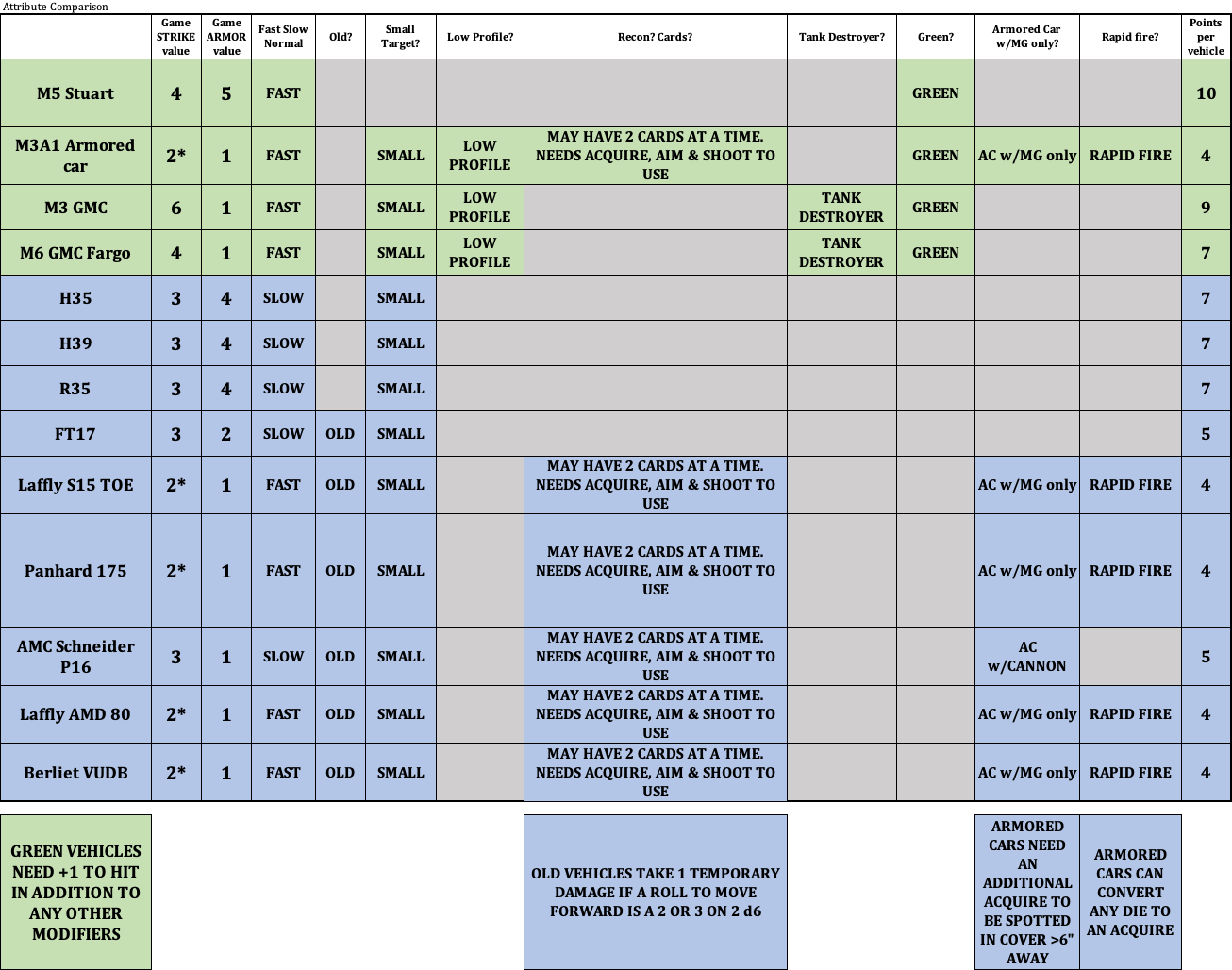
The vehicles for the gameAFV attributes for the game
In addition to the vehicles, many game aids also were on my to do list. Before HISTORICON, I made road sections and town bases out of poster board and painted them. I also built dice boxes and dice frames for ease of play. Plus, I needed more blast markers for destroyed vehicles.
I was making these dice aids to make play better. What a Tanker is a great game. However, for a multiplayer game at a convention, the activation sequence is not the greatest. It does not keep the players engaged. I decided to borrow Buck services Double Random ActivationTM activation methodology, and that seemed to serve the game well. I also added Bonus Attack Cards and other changes as discussed in the next section.
Overview of My Scenario Rules Modifications
The game uses modified What a Tanker rules. The major modifications that I use are:
The game starts with each player receiving $75 in Tanker Bucks.
Before there are any play or purchases of extra resources, there is a VICHY FREE ATTACK PHASE. All US vehicles on the table will receive both 1 French infantry attack and 1 French AT attack. This phase represents the Vichy infantry attacks that were repulsed in November 1942 prior to the armor engagement. This happens only once at the beginning of the game.
There is an ACQUISITION PHASE after the free attacks conclude. More vehicles and Bonus Attack Cards may be purchased. This phase happens once at the beginning of each turn.
Uses of Bonus Attack Cards in the game simulate infantry, anti-tank, artillery, naval gunfire, and air actions. These are deployed by scout cars according to each sides’ historical capabilities. These cards can be shared across the team. Bonus Attack Cards are purchased with “Tanker Bucks”, which also play into Victory Conditions. Having more Tanker Bucks at the games end is better, as high amount remaining wins the game. I allow teams to share their Tanker Bucks as well. However, you need to use resources to defeat the enemy. You earn $25 for each AFV or plane destroyed. See the card below to see the costs for acquisitions and for rewards. So, a balancing act exists for the players. Do they hoard their Tanker Bucks, or use them effectively against their opponent?
Costs and Rewards as shown on the requisition form.Vichy Bonus Attack CardsUS Bonus Attack Cards
To represent the French vehicles’ advanced age and mechanical unreliability. “OLD” French vehicles that try to move and roll a 3 or less will lose 1 die to temporary damage. Mathematically, there is an 8.33% chance of that happening. So a good number of the Vichy Forces are indeed OLD (mainly the armored cars and the FT-17’s). In addition, all of the French tanks and some armored cars are SLOW – which limits their advances. But, in the game, there are more of them, and not all of the French tanks are OLD.
Any vehicle touching a road can convert any die to a DRIVE dice.
Armored and scout cars may engage other armored cars and tanks with heavy machine guns or deploy Bonus Attack Cards. Also I have rules that show how devastating any cannon fire would have been against thin-skinned vehicles. Cannon fire causes double hits on thinly armored vehicles that are not tanks.
The US Army was inexperienced before these landings. To represent that, their status is GREEN at this point in the war. GREEN means their base roll needed to hit increases. It goes from needing a 6 on 2d6 added together to a 7 as a base number. Most of the French vehicles are SMALL. This necessitates an additional +1 to hit at short range. There is also another +1 at long range. Oh yeah, the Stuarts have just a 37mm gun. This means that the US has a tough time making damaging hits at long range against French tanks.
The US use of Bonus Attack Cards is limited to just the US Scout and French Armored Cars. The M5 Stuart’s radios got wet during the landings and were not working. Many French tanks in North Africa did not have radios. The one-man-turrets in all of these Vichy tanks made coordinating activities very difficult.
To represent the fight for air superiority, I added Bonus Attack Cards that allow the deployment of French Dewoitine D.520’s and American carrier-bases F4F Wildcats. These vie for air superiority and can also convert to ground attack missions with other Bonus Attack Cards as well.
Having air superiority enables the US player to deploy the Avenger TBM’s as spotter planes. These can improve US artillery accuracy significantly. They also can also bomb the French vehicles with depth charges (yes that happened). Lastly, Avenger deployment also opens up the chance for devastating naval gunfire from the light cruiser USS Savannah.
Modifying the activation sequencing methodology by using Buck Surdu’s “DOUBLE RANDOMTM ACTIVATION” method.
Because of the different activation sequence from What a Tanker, I now use three types of dice. Larger white d6 are used for COMMAND DICE (these let your AFV take actions). Larger colored d6 are used for ACTION DICE (for rolling for movement and firing). Smaller colored d6 are used for ACTIVATION DICE (to, well, activate an AFV in the game).
Scoring is done with TANKER BUCKS. Most wins at game end. See the rules file below (downloadable) for all the details.
I was asked to share my rules on the Facebook What a Tanker page. As I am a wicked nice guy (as we say here in Massachusetts), I am happy to do so. Below is the Word document that outlines all of the rules changes in detail. Feel free to download. If you use them, please do share your thoughts and experiences with me, I’d love to hear them.
Let’s look at some photos from the HMGS HISTORICON convention games next.
HMGS HISTORICON 2025 PHOTOS OF THE GAME
I ran the scenario twice at HISTORICON in July 2025. The games went well. Each side won once.
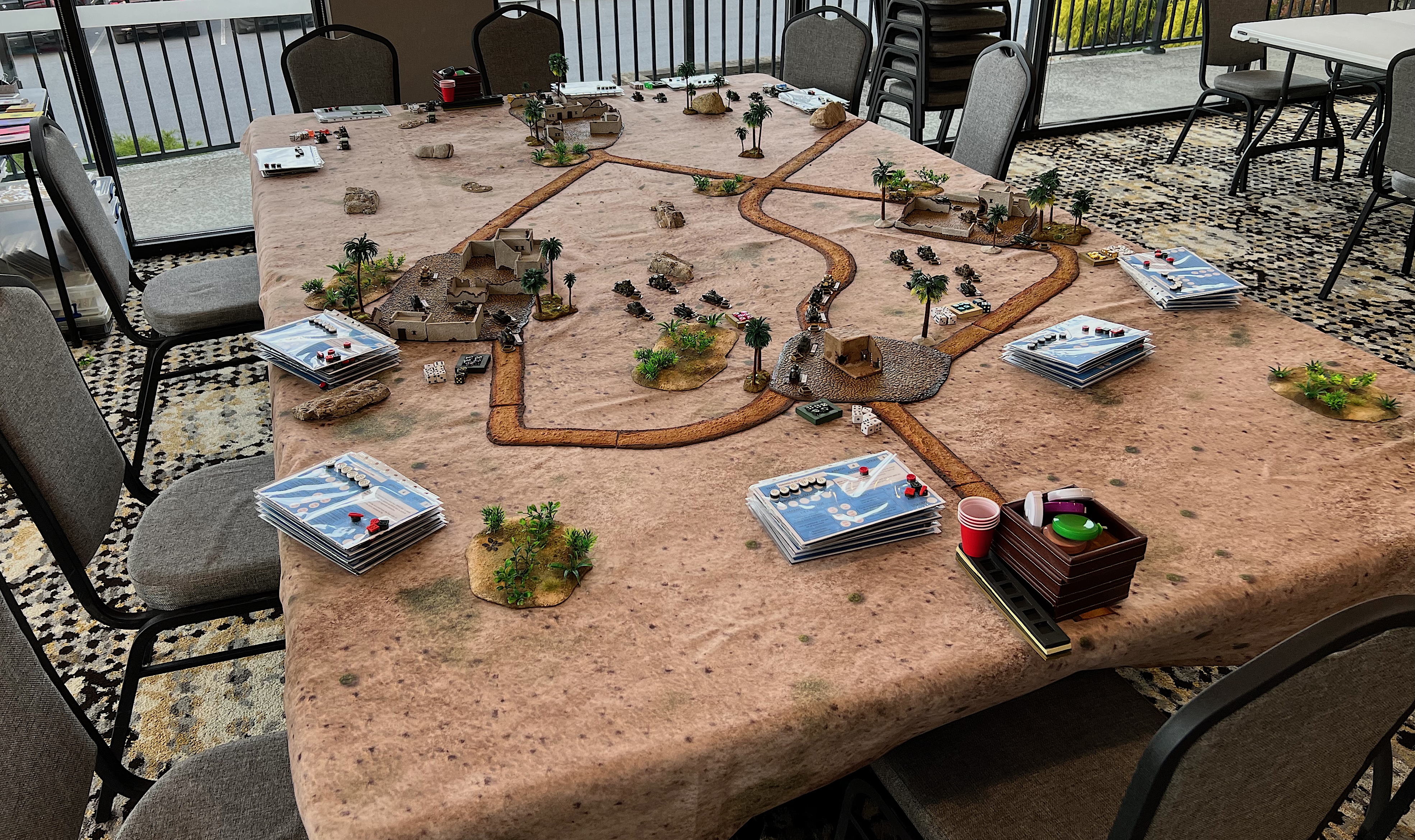
The tabletop set up from the French side. Note the painted poster board roads and town pavements.Each French player started with 5 vehicles. The number of American vehicles varied by player, usually 2-3 including one M5 Stuart tank.Set up with Tanker Bucks. I did eventually decide on $75 per player on each side with the differentials being the cost of resources.The players from the first game – the French won here.In the second game, the US won. This victory was mainly because Dan Eustace successfully used his Bonus Attack Cards. He successively achieved air superiority with Wildcats, then got the Avenger deployed. This led to calling in naval gunfire from the USS Savannah – unleashing a volley from its 15 6″ guns. The results on the French armor was devastating.
After the game, I pondered what improvements I could make. The tweaks in the rules are reflected in the file I shared previously. However, I need to add:
More game aids like dice holders
More blast markers
Better roads – I wanted rubber ones that laid flat and took up less space in a box.
Better town bases that also were rubber and laid flat on the tabletop.
Actual plane models to represent the aircraft. I was using photos on flight stands at HISTORICON for the planes, and I wanted better.
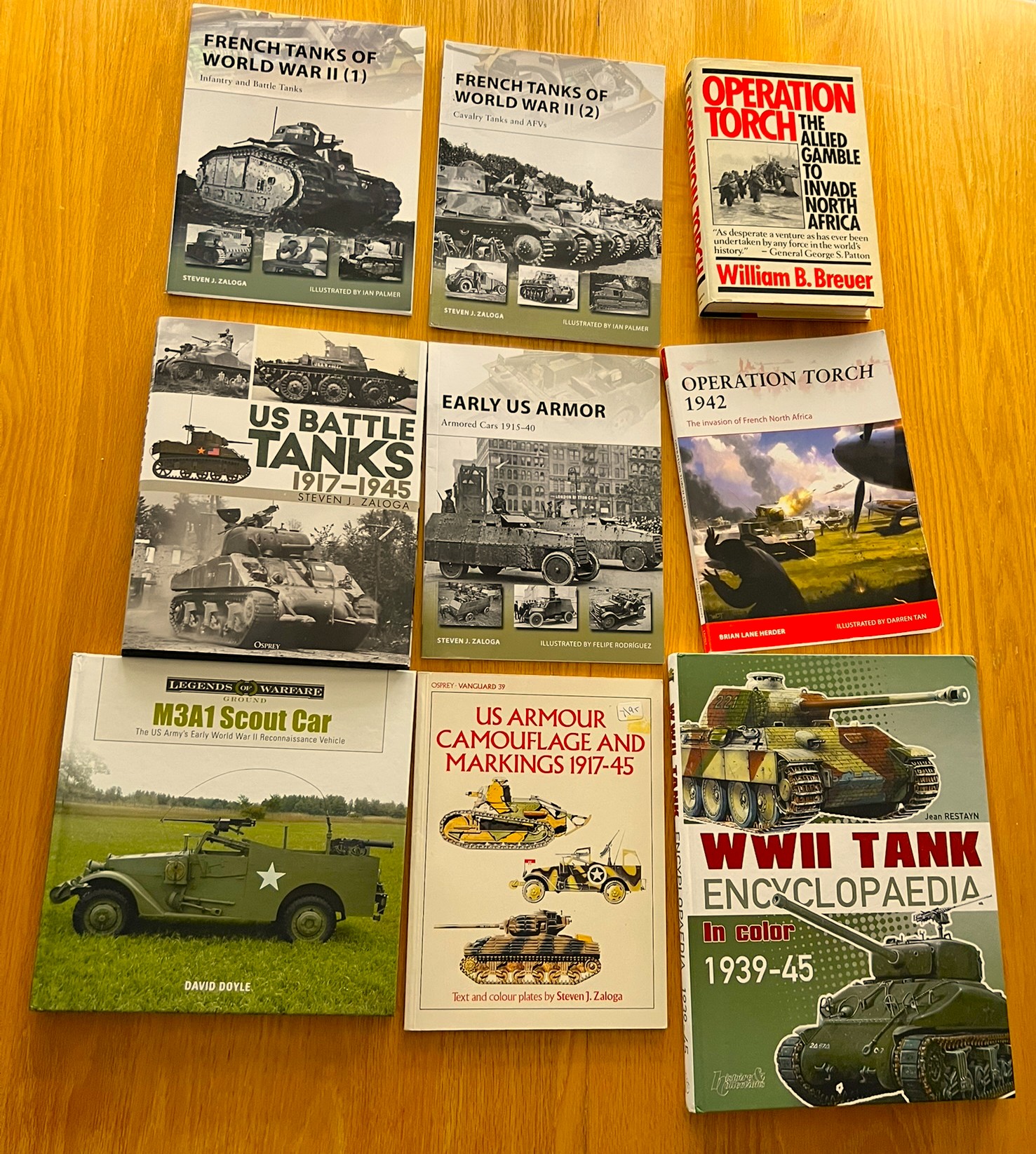
I wanted to read a book on the campaign that I learned about. It was recommended to me in a comment to one of my blog post links on TMP. It focused on this phase of WWII, and I planned to do this before I did any more hobby work. Rick Atkinsons’s An Army at Dawn is a true gem of a historical book, and a must read. This was my August effort.
Previous research booksAugust’s great read!
After reading these, it was time to get going on the additional “stuff” listed above. I knocked out the dice frames and similar tasks quickly. I had enough for 8 players, and now I was set for 10.
Building Dirt Roads and City Bases WIP Shots
Now it was time to make the roads and city bases. I stumbled on this excellent video on how to make rubber wargaming roads. It became the blueprint I used and I highly recommend his process.
Here is a link to the excellent video.
Below are progress WIP shots of how I built 54 sections of road and 4 bases.
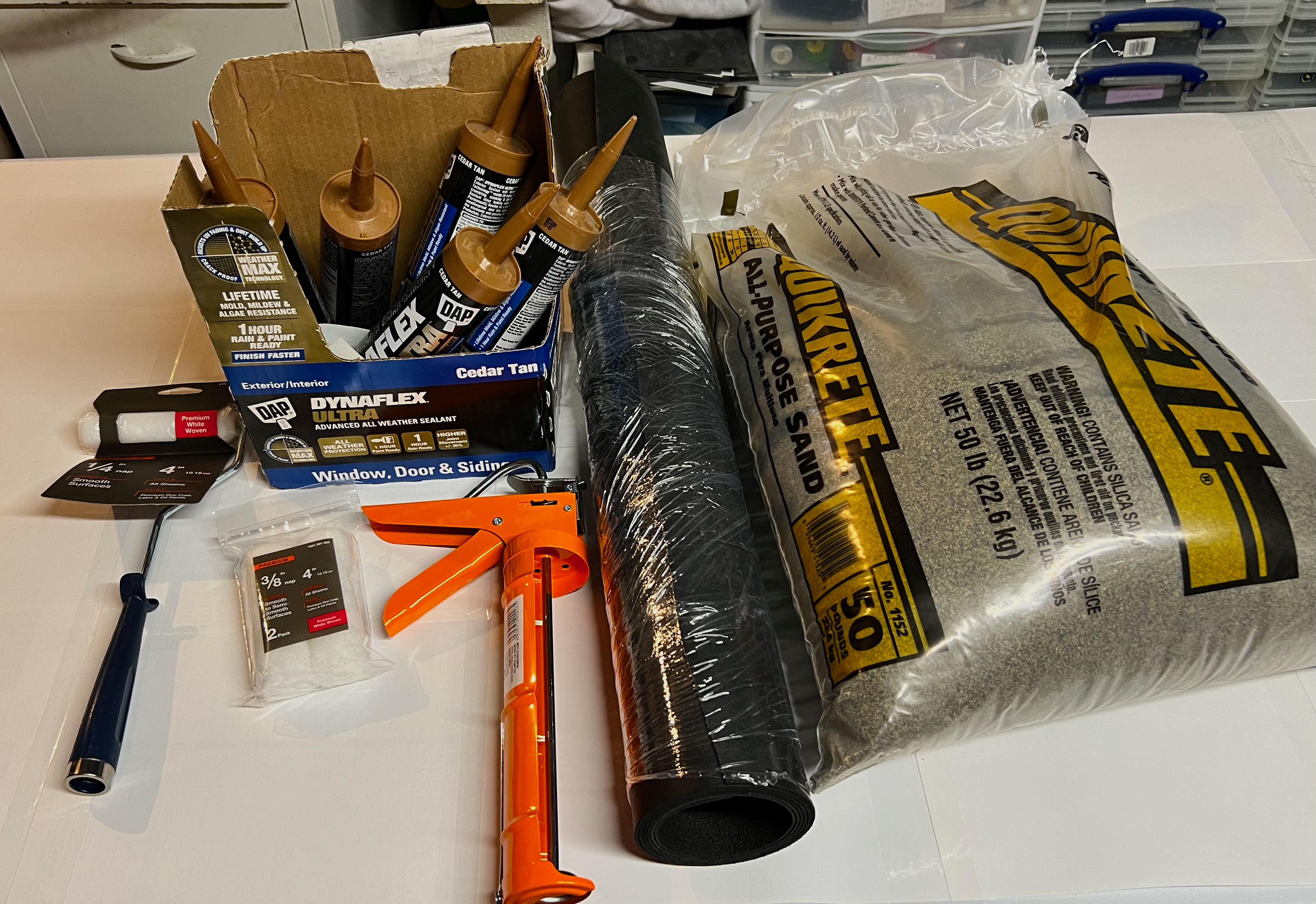
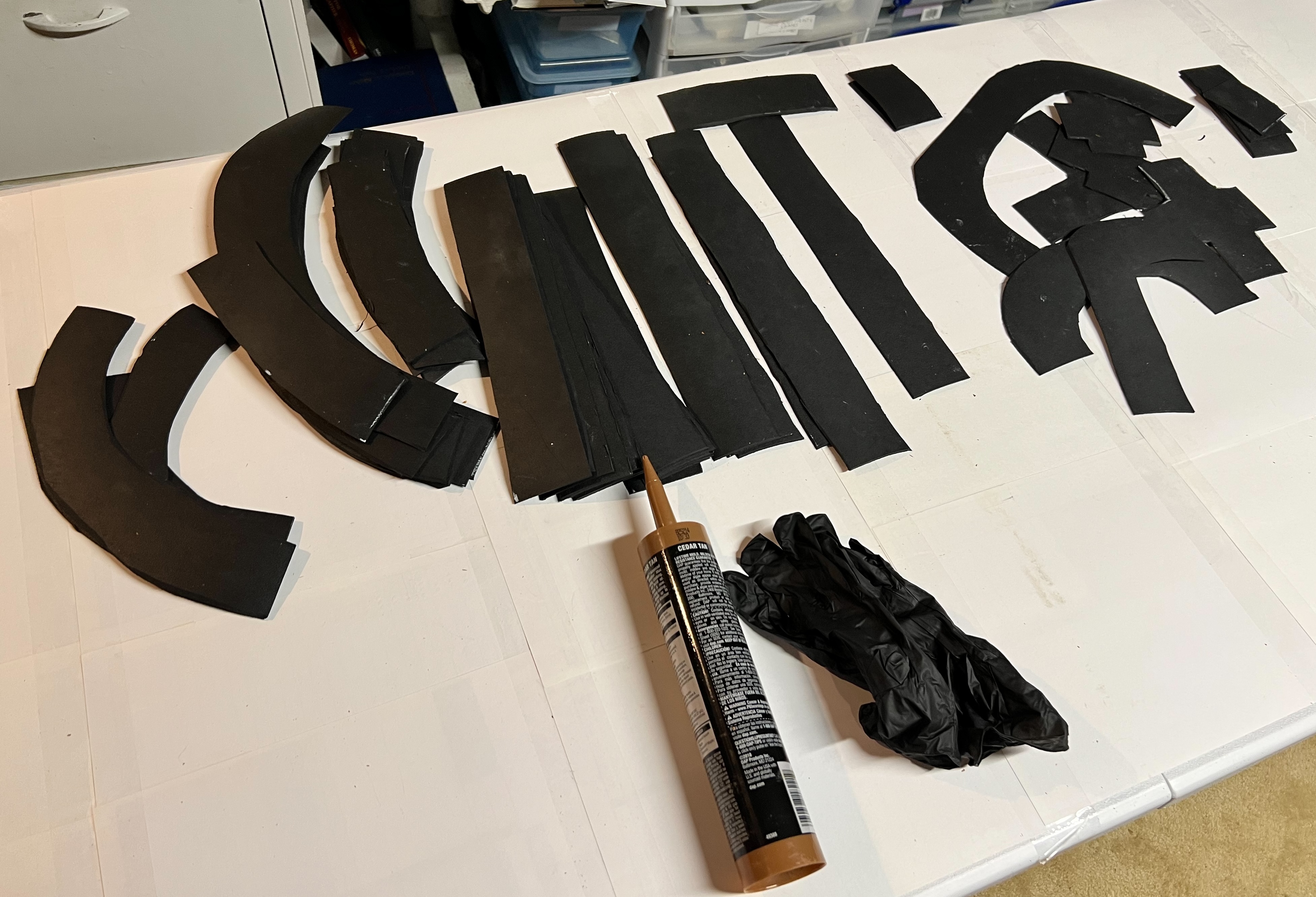
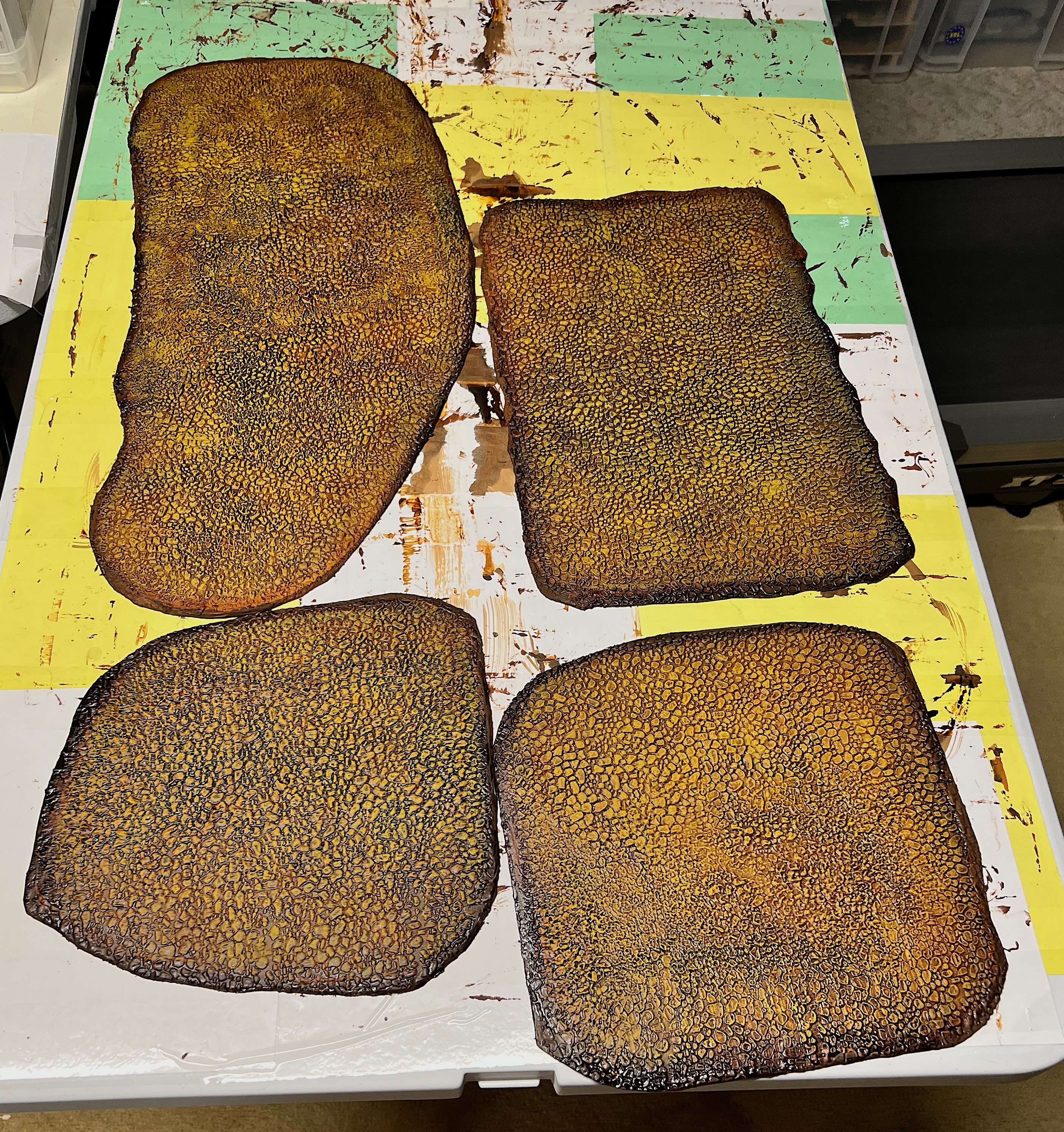
What I needed included a small paint roller, a caulking gun, and paintable caulk sealant. It also involved cutting up rubber floor runner material. Additionally, play sand and chinchilla dust were used on the roads for texture.I cut the floor runner rubber with a box cutter on a wooden cutting board. I made the same number and types of dirt roads I had previously made with the poster board (54).
For a working space to work on the roads, I covered one of my gaming tables with paper. The sheets were secured with packing tape and this was sufficient to protect the table.
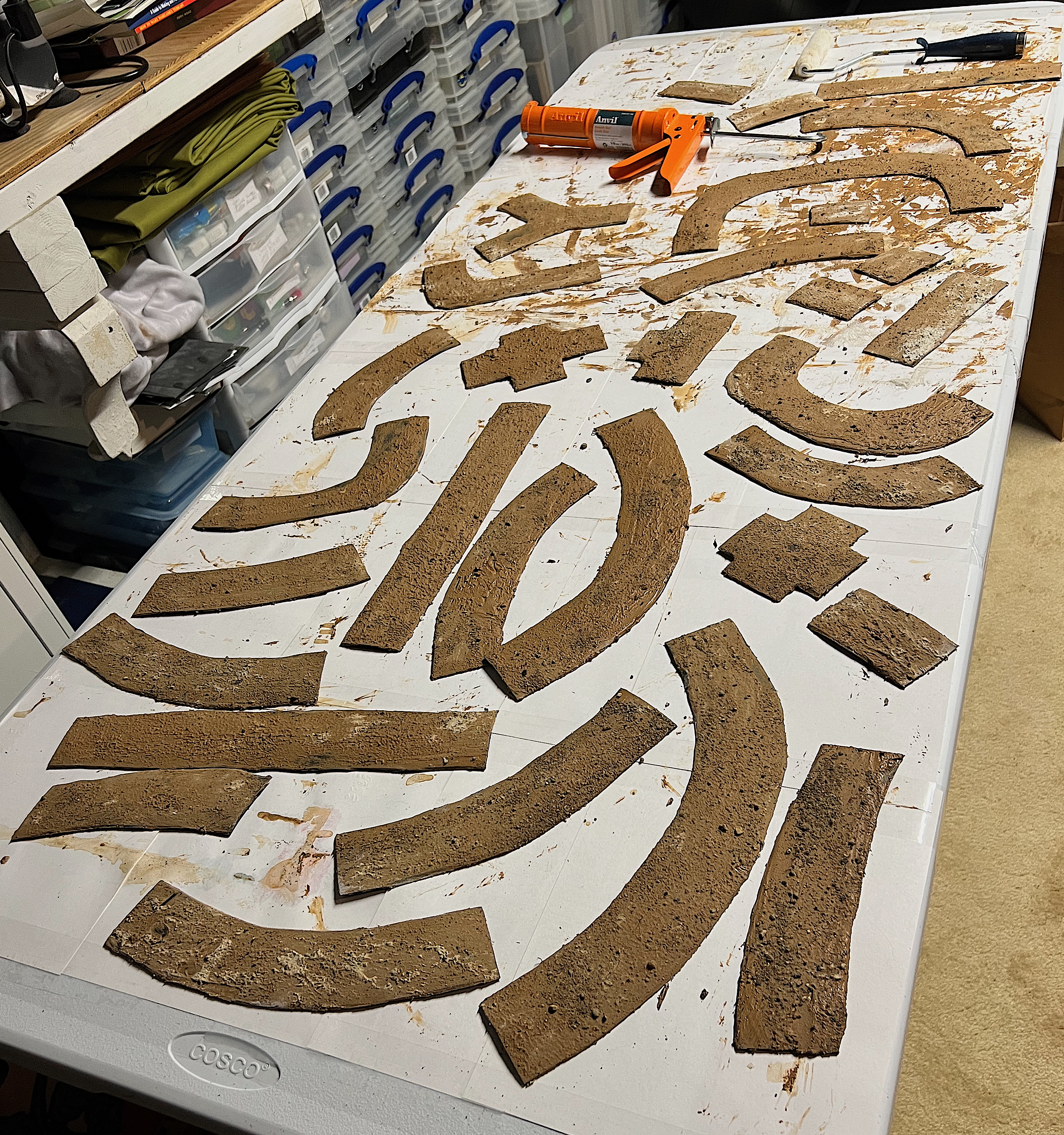
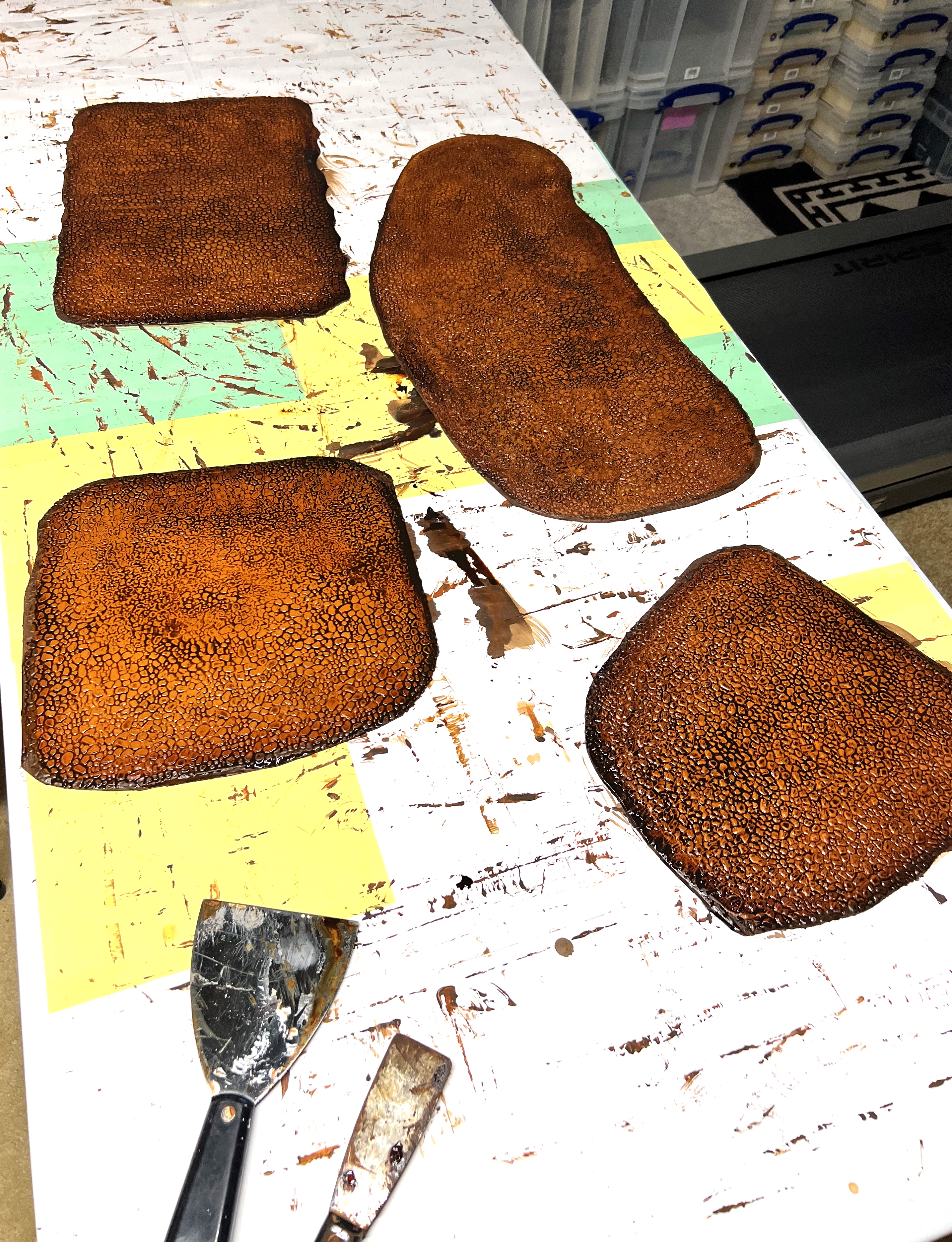
Here you see some of the road sections in progress. Sand and chinchilla dust were both rolled onto the caulk with a wet paint roller.The first tranche of roads drying……and here painted minus some final dry brushing.Then it was on to the city bases. I limited the width of the city bases to accommodate using a Green Stuff World Mega roller. The roller made a cobblestone imprint.Greg Priebe was kind enough to gift me the roller. Here I cut the first piece of rubber floor runner. As I did with the roads, I beveled the edges slightly. The edge angle was around 45 degrees.A caulking gun spread out the sealant. Then I smoothed it as you see with two different putty knives, before rolling the cobblestone patterns. This was the approach for all four bases – I just sized and shaped them differently.The painting scheme was basically the same for all four. Here you can see the imprinted cobblestones. To accentuate them, I used a Liquitex “Burnt Umber” ink cut with thinner. Then I let them dry before adding a quick dry brush.The final bases completed. I would place 15mm buildings on them.
This was far more economical than buying similar roads. Now that the dirt roads and town bases were completed, it was time to add my 3 aircraft.
Aircraft Model WIP Shots
My search initially was for the right three 1:100 scale planes, but that effort proved fruitless. No one really makes aircraft in that scale, at least not the ones that I was looking for. Most models were 1:72. I did find some die cast models that would work just fine. They are more like game status makers. Those diecast models were the carrier-based Grumman F4F Wildcat and the Dewoitine D.520. Both had flight stands – an important feature as I wanted their landing gear to be retracted in flight.
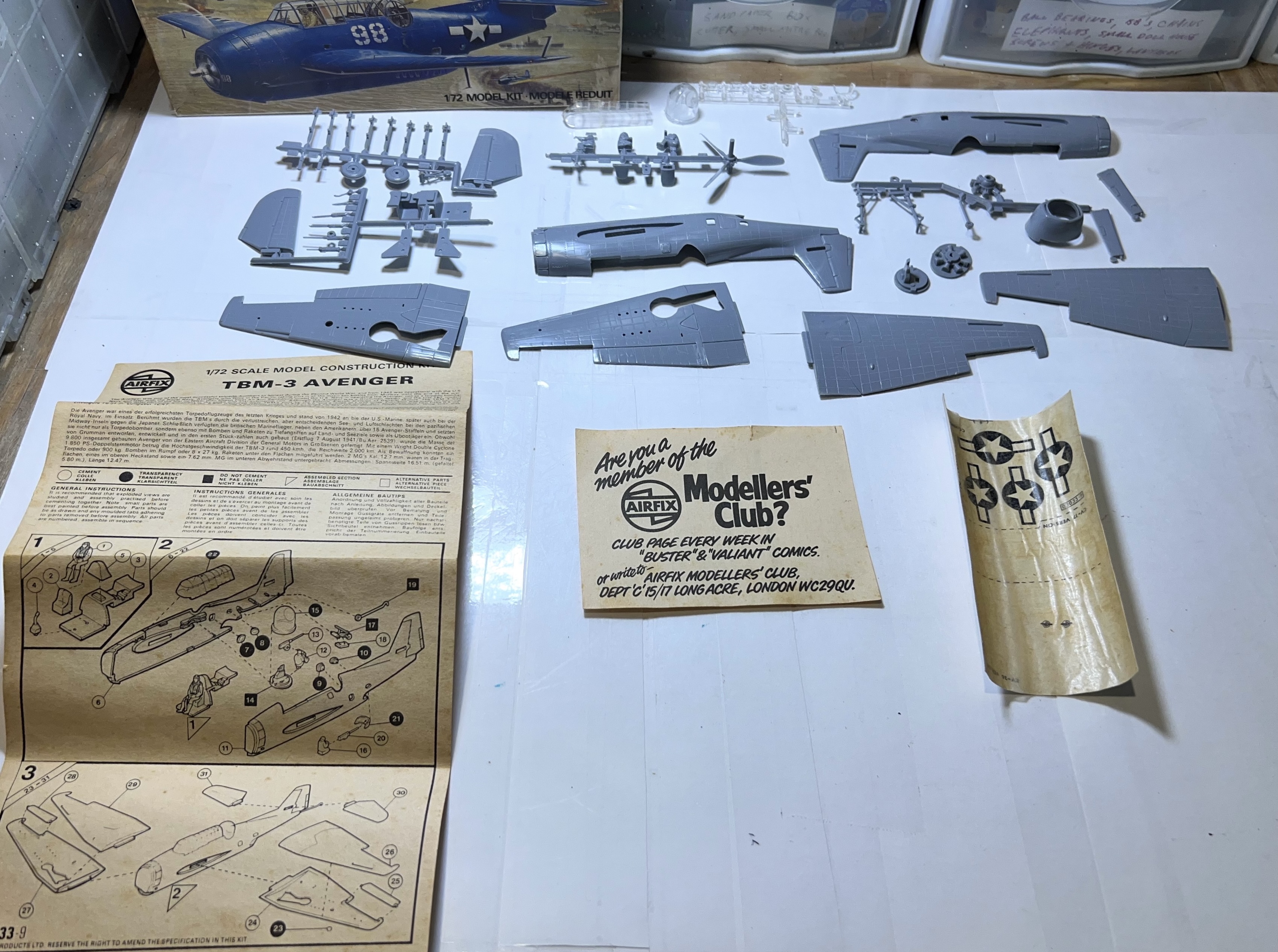
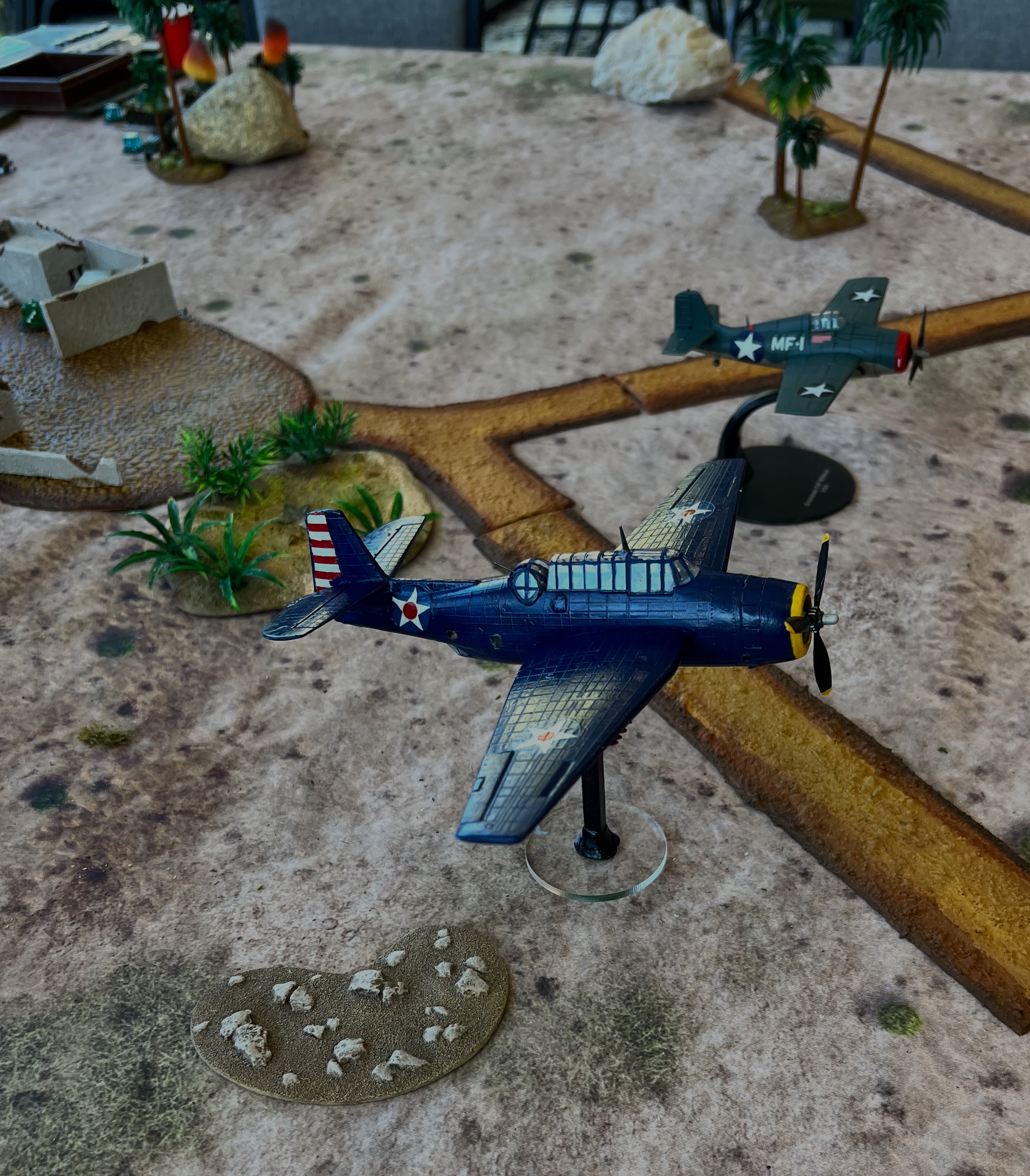
A bit of assembly for these two diecast models was required, but not much. That left the Grumman Avenger TBM to source. And lucky me, I found one on eBay – obviously left unassembled since at least 1979 – if not much earlier. It was an Airfix plastic model, and it was complete. The papers inside were amazingly yellowed with age as you will see. I had not built a plastic model like this since I was a kid. It was probably for sale back then!
The F4F Wildcat, the Dewoitine D.520, and the Avenger kit. It says “new”, but…I guess it was at some point in the 1970’s? 1960’s?The kit contents.The components laid out so as to figure it all out. The directions were fine. The decals were, well, as you can see, trash. I did order some replacements from eBay as you will see.
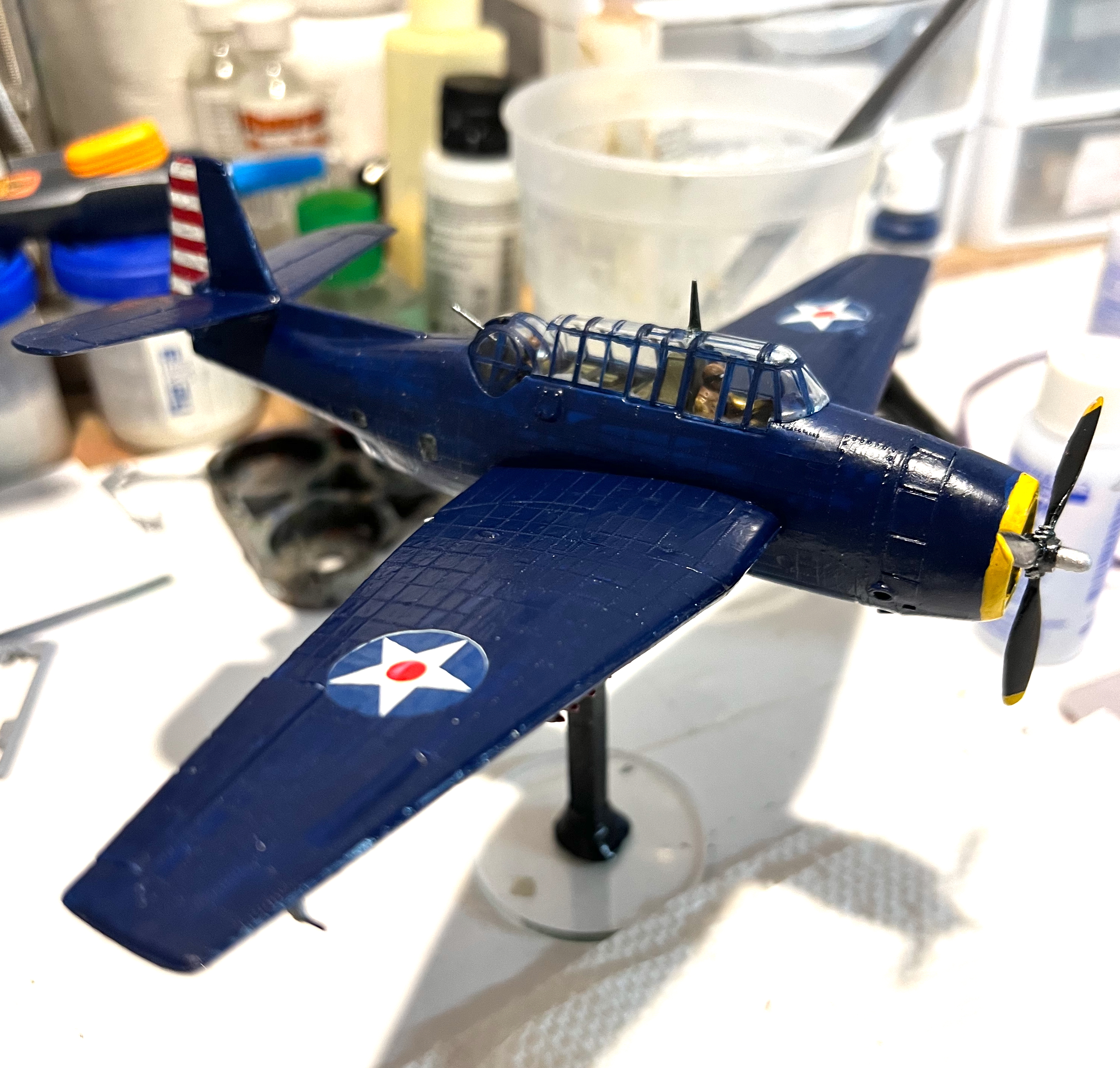
As for assembly, it went fine. I painted the three crewmen. The tail gunner will never be seen because the acrylic window was not too clear. As for the outside, I went with a Vallejo “Deep Prussian Blue” – it seemed closest to the box color. In my research, I saw several different color schemes for the undercarriage. Some were blue, some were two-toned. The model would be on a flight stand. This stand would not afford visibility to the bottom, so I decided that blue was sufficient.
Inside the wing – how old was this?The three crewmen and the rear landing gear and tailhook. The tailhook would not survive the build.Avenger TBM assembled and painted (and below in the gallery).
The last assembly from the kit for the Avenger was the rockets underneath. I assume that any depth charges would have been in the bomb bay – as unseen as the gunner underneath. So that works!
The rockets are mounted. Next, we moved on to applying appropriate decals. That proved to be the most difficult part.
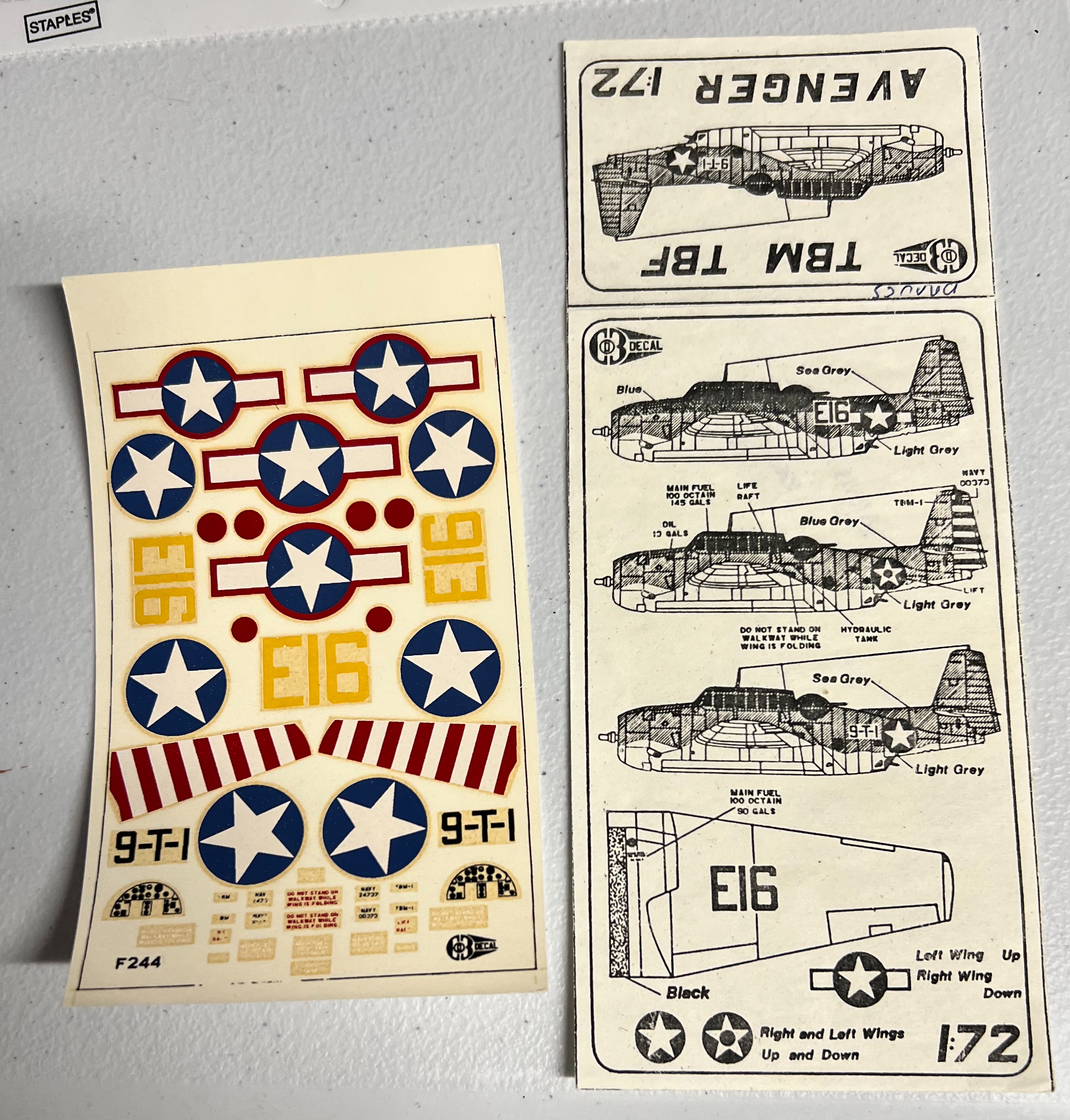
The decals I bought were from the US and came via a modeling shop in Latvia of all places. I have no idea of the age – except likely post-Cold War I imagine. I used multiple coats of Microscale “Liquid Decal File” to restore them as best I could. Even with that, several of them disintegrated into multiple jigsaw pieces in the progress of placing them on the model. This led to my having to reconstruct the decals while wet. Ugh. I made it work.
The “newer” decal set.Latvia?
But wait – before all the decal work – I needed a flight stand! I made one with a 1/4″ wooden dowel, green stuff, and a 2″ acrylic base. I carefully carved out a hole on the model to accommodate the stand.
Then it was on to applying decals as best as I could.
Mid-stage with the decals. The tail and rudder ones were really finicky.
Finally the planes were done. I also built a special travel box for the Avenger. For the other two, the original package blisters served that purpose.
All three planes for the game, frontal view……and a side view.
Upon completion, I could mock up the tabletop in the cellar in preparation for HMGS FALL IN! in Lancaster PA and EllisCon in Danielson, CT.
Mock up of the Tabletop
I used photos of this mock up in my cellar to guide its recreation at both upcoming gaming conventions.
First up, HMGS FALL IN!
HMGS FALL IN! 2025 PHOTOS OF THE GAME
The game as set up in the H.A.W.K.’s room.The players in my first game. It was nice to have my Wargame Wingman Leif Magnuson in the game. Several Maine Historical Wargame Association members joined as well! As I am also a member of MHWA, that was VERY cool.The French tanks and armored cars were cautious about leaving a town here. The Mainers plot their strategy.
The US then deployed air, achieved superiority, and brought on the Avenger.
The F4F Wildcat about to dispatch the Dewoitine D.520.While US vehicles burn in the background, the Avenger deploys, and calls in naval gunfire……blasting the Vichy armor.
With that, the US won the first game I ran.
In the second game, the tables turned. The US never got going very well. Or, perhaps, the French were very lucky. Take your pick. I don’t have any photos of that game (apologies) – but it was a complete French victory.
Next up, one week later, was EllisCon.
EllisCon 2025 Photos
Here I also ran the game twice.
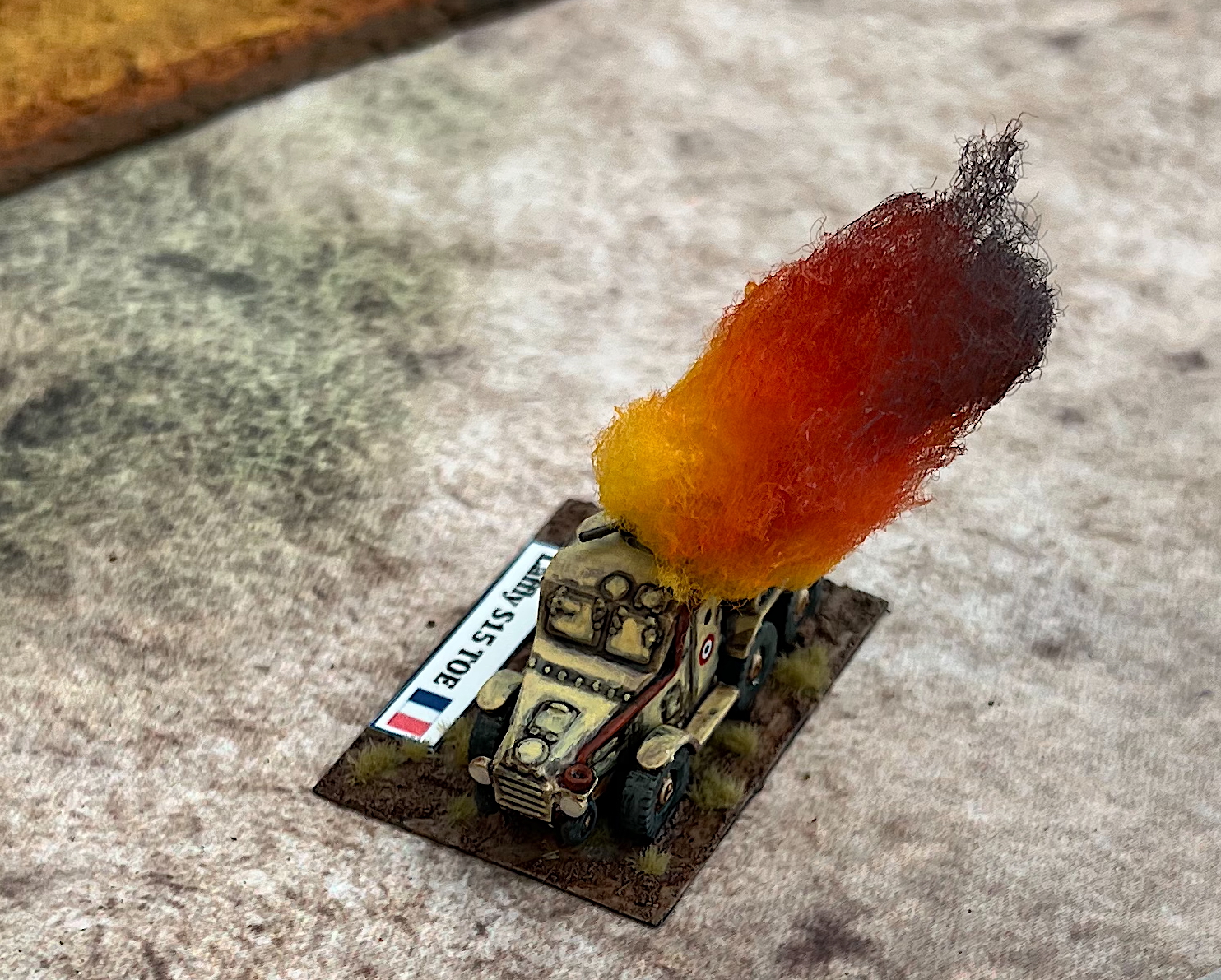
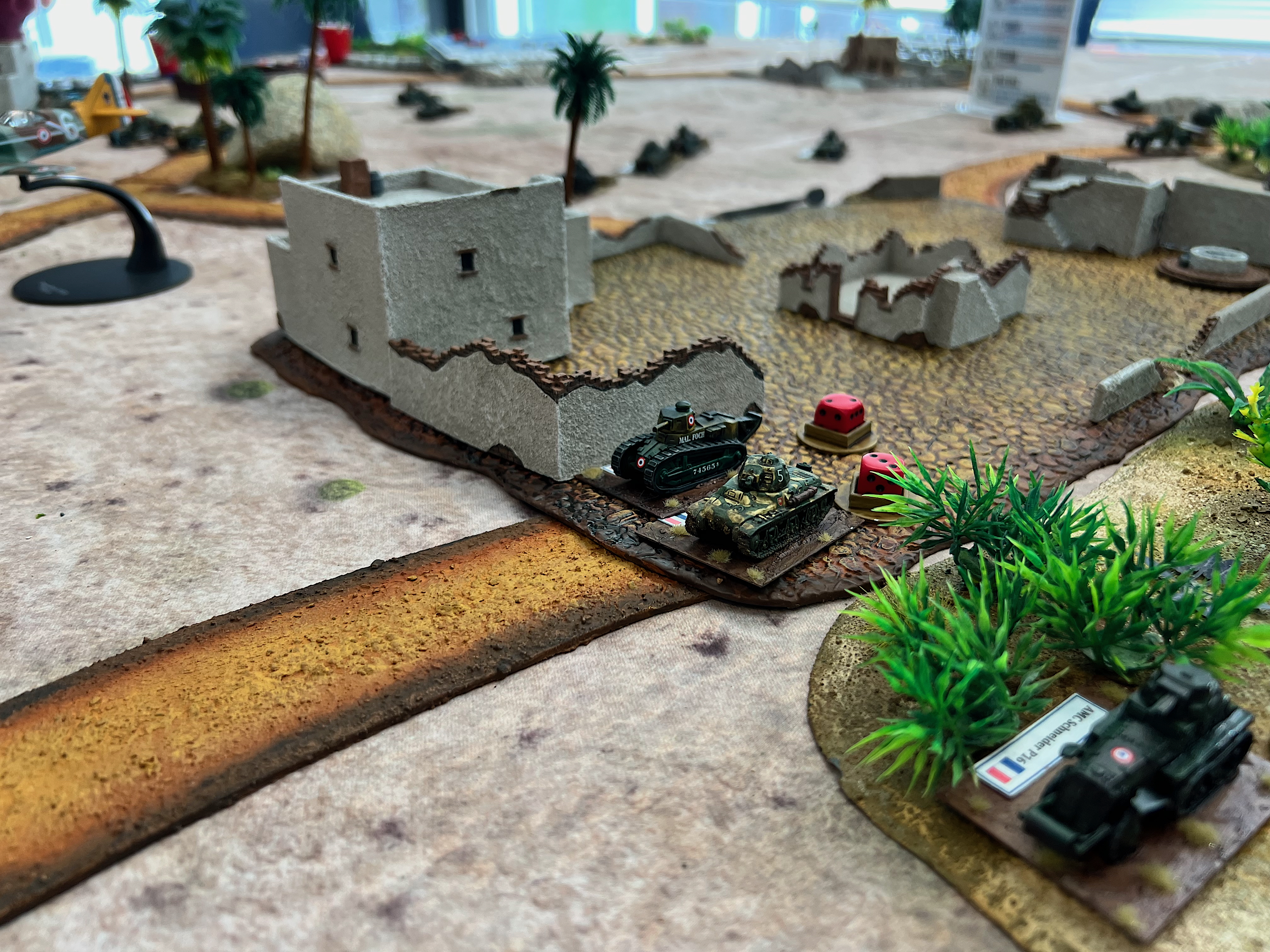
The first game at EllisCon had 4 players. Leif joined us again for both games. Here he strategizes for the French with his teammate Brian.A Laffly S15 TOE armored car is hit and burns early in the game.The US players are then hit hard, as the M5 Stuart “Beast”, and M3A1 Scout Car “Annie” are destroyed. The M3 GMC “Hurricane” takes cover in a brush firing position.Once again, though at a different convention, the Vichy armor looks to leave the town safely in the face of “Hurricane”.The French gain air superiority.An AMC Schneider P16 (the old armored car on right) uses its 37mm gun to destroy the M5 Stuart “Beast”.The FT-17 ” Marechal Foch” is taken out near r=the end of the game.
At the end, the Vichy claimed a victory, as their Tanker Bucks were more than the Americans total.
In game two, the fortunes reversed yet again. Leif played again and was joined on the other side by Gregg Belevick. Both were involved in my initial play testing of this scenario.
The players discuss their game strategies.The French players move up – and Gregg has a twinkle in his eye – does he have a plan?Yours truly GM’s the game. Photo courtesy of David DeVeauI guess Gregg did have a plan – naval gunfire! Convention history repeats itself as 5 Vichy vehicles burn on the Moroccan sand.
The US won this game with the last barrage destroying 1/3 of the Vichy force deployed at the time. A massive US victory!
I really like this scenario. So far, the victories have been 3 for each side. It seems pretty fairly balanced. It’s fun and highlights a little-known part of WWII. It’s likely coming again to a convention in 2026.
I list the paints that I used for the roads at the end of this blog post. For my records, I am sharing these materials I use for these projects with you, dear reader. You’ll see the list below detailing the process and materials for both the roads/bases and the Avenger torpedo bomber.
I hope that you found this tale of my journey interesting. If you do use my rules modifications, again please let me know how they worked out. If you have any questions, certainly throw them at me. I’d also enjoy any feedback on the work or this post in the comments section. Thanks in advance for that.
Lastly, I have compiled all of my posts on WWII games and projects. There is a consolidated list of posts and their links located here.
MATERIALS USED
PAINTS, INKS, GLAZES, SHADES, WASHES, PIGMENTS AND FLOCKING USED ON THE DIRT ROADS:
TrafficMaster Rubber Floor Runner from Home Depot, SKU 1003092882
DynaFlex Ultra Advanced All Weather Sealant “Cedar Tan”, (paintable caulking)
Quikrete “All Purpose Sand”
Chinchilla Dust
DecoArt Americana “Cinnamon Stick”
DecoArt Americana “Deep Ochre”
DecoArt Americana “Raw Sienna”
DecoArt Americana “Raw Umber”
Apple Barrel “Burnt Umber”
Vallejo Thinner
PAINTS, INKS, GLAZES, SHADES, WASHES, PIGMENTS AND FLOCKING USED ON THE TOWN BASES:
TrafficMaster Rubber Floor Runner from Home Depot, SKU 1003092882
DynaFlex Ultra Advanced All Weather Sealant “Cedar Tan”, (paintable caulking)
Quikrete “All Purpose Sand”
Chinchilla Dust
DecoArt Americana “Cinnamon Stick”
DecoArt Americana “Deep Ochre”
DecoArt Americana “Raw Sienna”
DecoArt Americana “Raw Umber”
Apple Barrel “Burnt Umber”
Vallejo Thinner
Liquitex “Burnt Umber” (ink)
PAINTS, INKS, GLAZES, SHADES, WASHES, PIGMENTS AND FLOCKING USED ON THE AIRFIX AVENGER TBM-3 MODEL:
Airfix Grumman Avenger TBM-3 1:72 plastic model kit
I promised back in August that I would post about my US M5 Stuart tanks. These would be the linchpin of my US forces in my “Operation Torch: Vichy Mounts an Armored Counterattack” games.
M5 Stuart in Casablanca.
Yes, the US and UK did briefly engage French forces of Vichy in North Africa in WWII. After the US Operation Torch landings, Vichy did put up a resistance. Technically they were supposed to be neutral after the 1940 Armistice. However, the Soviets were dealing with massive battles on the Eastern Front, and the US/UK allies were not yet ready to successfully invade Fortress Europe. As the Dieppe raid showed, it would have been a catastrophic failure in 1942.
The idea was to take off some of the pressure on the Soviets by getting in the war somewhere and tie down the Germans. French North Africa became the chosen option, with the hope that the Vichy French would welcome the US/UK invaders as liberators and not invaders. For a brief period in November 1942, both of these two options played out in Morocco, Tunisia, and Algeria – until the French there decided to cease resisting the Allies. Subsequently, back in Europe, Hitler was enraged at the Vichy capitulation and ordered his forces to invade the remaining southern part of France that was not yet occupied.
Back in North Africa in November 1942, one of the more obscure incidents of the conflict was in Morocco – where the French 1er Regiment de Chasseurs d’Afrique launched an armored counterattack towards the landing beaches. At that critical juncture, the 66th Armored Regiment of the 2nd Armored Division (and Sub-Task Force Goalpost) had just 7 M5 Stuart tanks that it could cobble together to intercept the French. Their M4 Sherman tanks needed a port to unload, and that had not happened yet.
I found this article/post by Patrick Chaisson to be an excellent description of the combat that happened in November 1942.
As far as a concept for a wargame, I liked the idea of a game that would recreate this clash of armor – especially as one side was green as hell, and the other fielded such a hodgepodge of elderly and obsolescent armor.
I ran this game twice at HISTORICON 2025, along with two Wars of Ozz games. All went well. I hope to post some convention shots in my next post (albeit very late). Unfortunately golf season was very busy this summer (well, fortunately for my golf game and not my hobby projects). Still, I keep my word. I thought I’d add a bit about the game as well, while saving specific game/convention photos for the next post. However, the game is coming back!
I will be running the game again twice at HMGS Fall In this November. Here are the inks – one is on Friday afternoon and one is on Friday night. I can handle up to 10 players per game – and I can scale it for fewer as well. as of this writing, there are still slots available.
My game poster. It marks my first foray using AI (Freepik) to generate an image. I wasn’t completely thrilled with the result, but it’s OK for a flyer.
The game uses modified What a Tanker rules. The major modifications that I use are:
Using Bonus Attack Cards to simulate infantry, anti-tank, artillery, naval gunfire, and air actions. These are deployed by scout cars according to each sides’ historical capabilities. Bonus Attack Cards are purchased with “Tanker Bucks”, which also play into Victory Conditions. Having more Tanker Bucks at the games end is better. Yet, you need to use resources to take out the enemy. So, a balancing act exists for the players. Do they hoard their Tanker Bucks, or use them effectively against their opponent?
Representing the French vehicles’ advanced age and mechanical unreliability. “OLD” French vehicles that try to move and roll a 5 or less will lose 1 die to temporary damage. Mathematically, there is an 11% chance of that happening. So the Vichy Forces are indeed slow. But there are more of them, and not all of the French tanks are OLD.
Creating a way for armored cars to engage other armored cars – and tanks, with heavy machine guns or Bonus Attack Cards. Also I have rules that show how devastating any cannon fire would have been against thin-skinned vehicles.
Representing the US Army as being totally GREEN at this point in the war. Their base roll needed to hit goes from needing a 6 on 2d6 added together to a 7. Add to that the concept that most of the French vehicles are SMALL, necessitating an addition +1 to hit at short range, and another +1 at long range. Oh yeah, the Stuarts have just a 37mm gun. This means that the US has a tough time making damaging hits at long range against French tanks.
The US use of Bonus Attack Cards is limited to just the US and French Armored Cars. The M5 Stuart’s radios got wet during the landings and were not working. Many French tanks in North Africa did not have radios.
Use of Bonus Attack Cards also represented that the US had both carrier-based air support as well as naval gunfire from the USS Savannah. I added F4F Wildcat’s and Avenger TBF’s for US air support. The F4F’s can provide air superiority, which allows them to also do limited close air support missions. Having air superiority enables the US player to deploy the Avengers, which can act as spotter planes for both artillery and naval gunfire. The Avengers can also bomb the French vehicles with depth charges (yes that happened). The French can contest the US air superiority by deploying Dewoitine D.520’s.
Modifying the activation sequencing methodology by using Buck Surdu’s “Double Random Activation” method. It’s the same one used with Wars of Ozz, Feudal Patrol, and Combat Patrol games.
Back to the Stuarts. The M5 vehicles are 15mm/1:100 scale. I sourced them from two places. I got an OOP Flames of War 5-tank platoon (plastic) from Noble Knight Games. I also bought five 3D-printed resin models on eBay from HobbyHouse&Miniatures LLC. The plastic models were fun to work on, and I was glad to have the additional resin ones. Historically, 7 M5 Stuarts were sent to counter the Vichy counterattack. When I drilled out the resin models for magnet installation, two broke in half (not the fault of the model, just me. In the end, I had 3 of those, making 8 models in total, which was fine given that seven were originally sent along with some M3 and M6 tank destroyers.
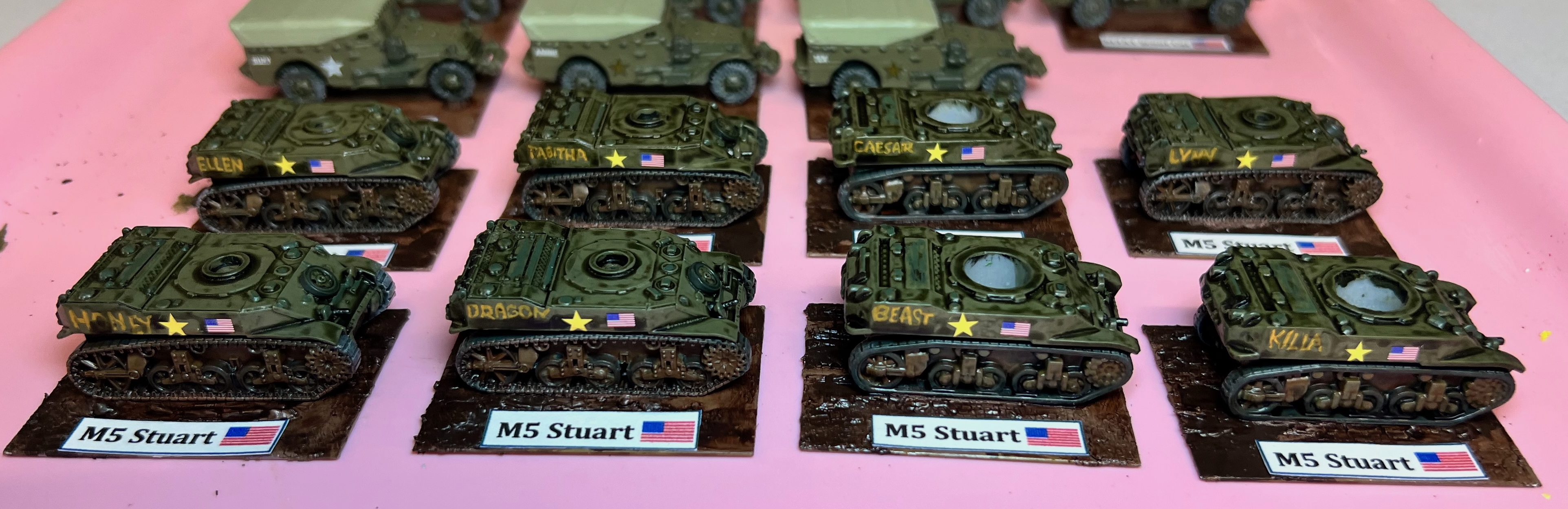
I worked on the M5 tanks in parallel with the M3A1 Scout Cars and the M3 and M6 Tank Destroyers that I have discussed previously. I tried to incorporate the gold stars and US flags that were unique to that period of the war. I also decided to give the vehicles hand-painted names:
Honey (my Mom’s nickname)
Dragon
Beast
Killah
Ellen (my daughter’s name)
Tabitha (my granddaughter’s name)
Caesar (my late cockatiel’s name)
Lynn (for my ever-so-tolerant wife)
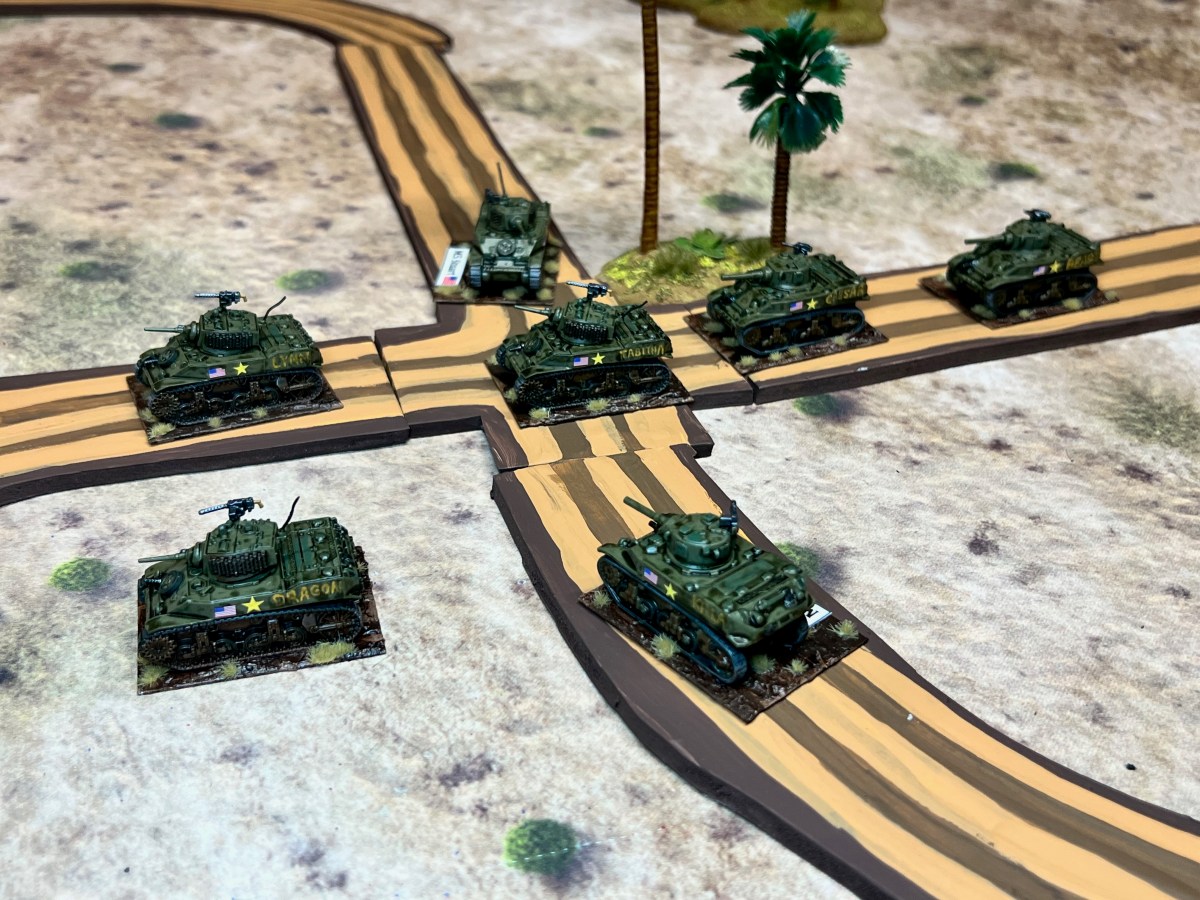
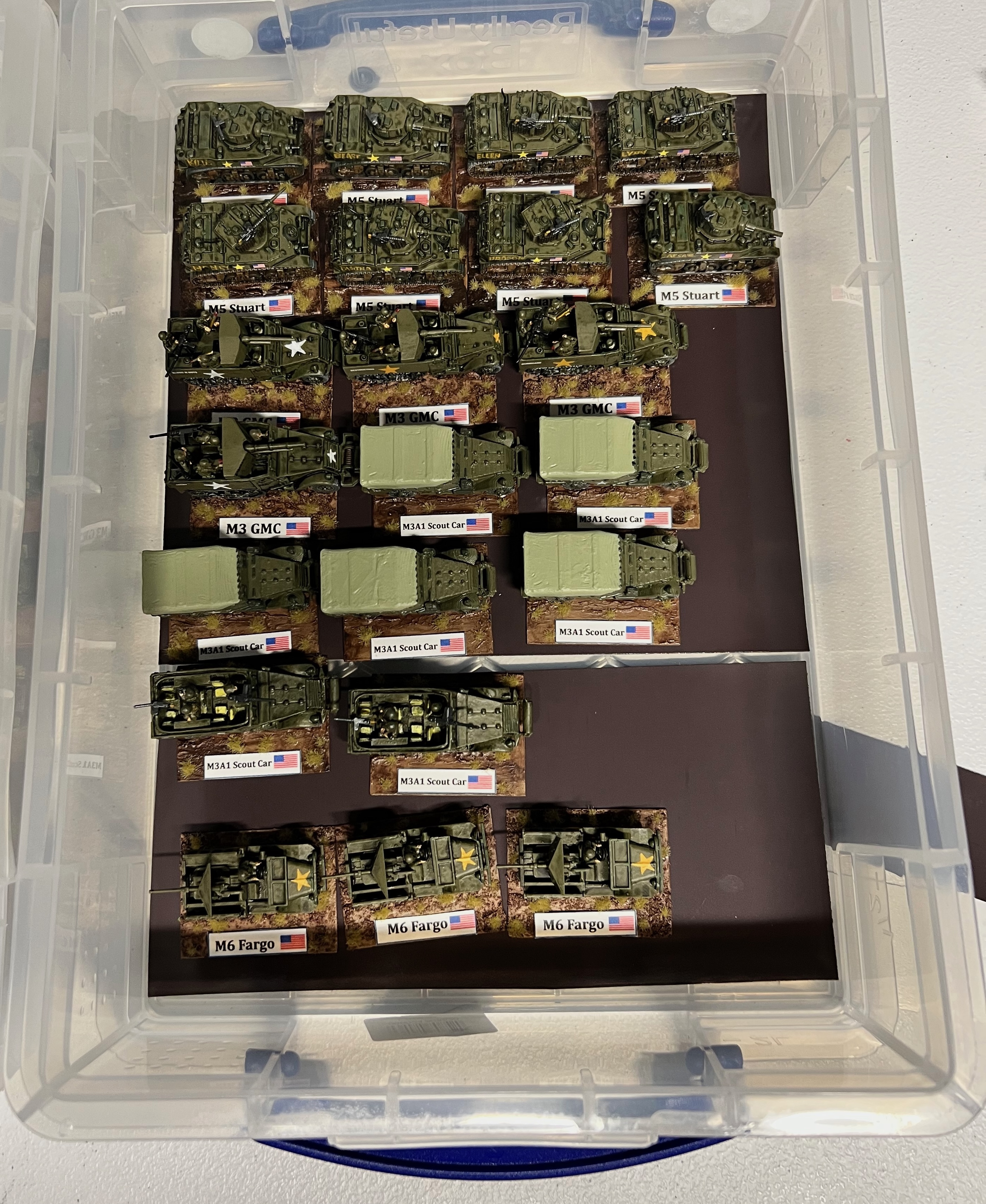
The M5’s without their turrets, showing the basing and details. I list the paints and other materials used at the end of this post.The eight M5’s completed.The 22 US Army vehicles for my game in a Really Useful Box.The 8 M5’s on my tabletop.
This wraps up this post on my 8 M5’s. If you have any feedback – please let me know in the comments section!
Lastly, for all of my posts on WWII games and projects – there is a consolidated list of posts and their links located here.
MATERIALS USED
PAINTS, INKS, GLAZES, SHADES, WASHES, PIGMENTS AND FLOCKING USED ON THE FIVE BATTLEFRONT/FLAMES OF WAR PLASTIC M5 TANK MODELS AND THE THREE HOBBYHOUSE&MINIATURES LLC 3D-PRINTED RESIN M5 TANK MODELS:
Green Stuff
Paper Clip wire
War Games Accessories Steel Bases Number 16 (½” x ½”)
The US Army had a lot of catching up to do at the start of World War II. This was true both in terms of vehicles and doctrine in the way of armored warfare. This included anti-tank units.
Initially, the US Army experienced internal squabbles about anti-tank troops and control. These were among the infantry, cavalry, and artillery branches. They disputed over which would control what were then-called “anti-tank battalions”. Interestingly, the Armor Branch (created in 1940) had little interest in that fight. It desired to stay focused on offensive operations.
The September 1941 Louisiana Maneuvers demonstrated the efficacy of anti- tank battalions. In June 1942, the Army created a new branch for this force. They also developed a doctrine to support their use (Field Manual 18–5, Tactical Employment, Tank Destroyer Unit). Tank destroyer battalions were then created and began to be fielded.
Developing doctrine is one thing – fielding self-propelled anti-tank equipment is another. When Operation Torch was launched, there were not any of the tank destroyers that you saw in later battles. No M10 Wolverines, M18 Hellcats, or M36 Jacksons – or even towed M1 57mm or M5 guns – took part in Torch.
Nope, at the start of the war, the US Army fielded just two models of tank destroyer. One was on an M3 half-track, which mounted the venerable 75mm Canon_de_75_modèle_1897. This combination was called the M3 Gun Motor Carriage (GMC). The other was the M6 Gun Motor Carriage (GMC). This was a Dodge Fargo truck with a rear-mounted M3 37mm gun. Defensively, needless to say, both of these types were not well-armored at all.
Offensively, while the 75mm gun could still pack an anti-armor punch, the 37mm was well on its way to complete obsolescence. Add to that the M6 GMC was rearward-facing. It would have to be turned around to fire, That would have been quite a challenge in combat. I imagine that it was inspired by the British use of portee anti-tank weapons. However, the main reason was probably the urgency of fielding something to fight in the anti-tank role. Add to that – US industrial might had not yet reached full production capacity seen later in the war.
M3 GMCM6 GMC
But you go to war with the Army you have. Tank Destroyer battalions were formed, consisting of a headquarters company, a reconnaissance company (including a pioneer platoon – Engineers!), and 3 twelve-vehicle tank destroyer companies. Each company fielded each one platoon of M6 Fargo GMC’s and two platoons of M3 GMC’s. Each M6 platoon had 4 vehicles, and each of both of the M3 platoons had 4. These would see combat starting in November 1942 during Operation Torch.
At that point, doctrinally, tank destroyers were by nature defensive forces. They were supposed to blunt any enemy armored attack or counterattack – obviously by destroying tanks. This would allow for counterattack by US tanks and infantry. Operation Torch would be the first test.
For my What a Tanker games for Operation Torch at HISTORICON 2025, I needed both types of tank destroyers. For the M3 GMC’s, I bought 6 from Old Glory (SKU CD-223A) and assembled and painted up just 3. I also found one Battlefront/FOW model (SKU US101) at HAVOC that joined the mix. Now I had 4 M3 GMC’s for gaming. M6 GMC were not easy to source – and I also had never heard of them. So my friend Greg Priebe agreed to 3D-print some for me. You may remember that Greg printed the French vehicles for me I previously wrote about here. He made Panhard 175 TOE’s and Berliet VUDB’s for me.
Thanks again Greg!
I was able to put together 3 M6 GMC’s with what Greg sent me. I worked on these in June as well.
June was a crazy month – and I was able to get these together before HISTORICON 2025. As for photos – well you’ll see what I have.
M3 GMC
The three Old Glory models are metal, while the FOW model is metal and resin. all are 15mm/1:100 scale. Painting the crews was challenging (and fun)!
Three Old Glory M3 GMC models are on the bottom, with the FOW model at the top of the photo.
I painted them up with both gold and white stars. The gold stars were unique to the North African campaign. I thought they gave a more authentic Operation Torch look. Apparently in November of 1942, standardization to white stars was not yet part of the US Army’s official painting scheme. Unlike my M3A1 Scout Cars, I freehand painted the stars. I found they looked better than my decals. For more variation, I either painted the stars on the hood or the grills. Also, each got a name – I used the decals that I had available. The names of these were:
BLOOD N GUTS
DESTRUCTION
HURRICANE
LUCKY
My 4 M3 GMC’s. From left to right, BLOOD N GUTS, HURRICANE, DESTRUCTION and LUCKY (the only FOW model).Close ups of DESTRUCTION and HURRICANE.
M6 GMC (FARGO)
These were all 3D-printed resin in 15mm/1:100 scale. I wish that I had been able to add crew to these. They were already so fiddly and small, that I satisfied myself with just having a driver. Even at that I had to do a good amount of surgery to get him to fit in his seat!
The M6 GMC’s washed after putting in magnets and ready for assembly and painting. I added magnets to each M3 and M6 to allow brewed-up markers to stick to the vehicles on the tabletop. The M6 GMC’s shown here painted staring at the back end of my Berliet VUDB’s. The M6’s are awaiting basing work and varnishing.
Like with the M3 GMC’s, I gave names to these as well. These names were the only differentiator for these models. The names were:
BUCK (for Buck Surdu)
DUKE
TEX
A close up of two completed models. Here, BUCK is maneuvering into a hide firing position. It would of course have to turn around to fire. Behind is DUKE moving up the road.A closer view of BUCK.
While the M3 GMC was partially effective in North Africa, the M6 was not. Clearly, both were very vulnerable to direct and indirect fire. As time progressed, they were both replaced by self-propelled vehicles with turrets and better protection. The M3 GMC’s were converted back into half-tracks. The M6 GMC’s were stripped of their guns, and were later used as just trucks.
In conclusion, I had some tank destroyers for Operation Torch games of What a Tanker! I also hope that you enjoyed this post on my early war tank destroyers. All that I have left to share on this project are my 8 American M5 Stuart tanks. I will also share a bit about my games at HISTORICON.
What did you think of these tank destroyers? Did anything surprise you? Motivate you to get some for yourself? Please let me know your thoughts in the comments section!
Lastly, you can find all of my posts on WWII games and projects in one place. There is a consolidated list of posts and their links located here.
The next lists are what I used on these vehicles. I review these lists for my own uses on future projects. For some of you, they may also be helpful.
MATERIALS USED
PAINTS, INKS, GLAZES, SHADES, WASHES, PIGMENTS AND FLOCKING USED ON THE ONE BATTLEFRONT/FLAMES OF WAR RESIN M3 GMC MODEL AND THE THREE OLD GLORY M3GMC MODELS:
Green Stuff
Vallejo Surface Primer “Black”
Vallejo Surface Primer “USA Olive Drab”
Gorilla Glue
Battlefront “European Skin”
Vallejo Thinner Medium
War Games Accessories Steel Bases Number 23 (1½” x 2″)
War Games Accessories Steel Bases Number 16 (½” x ½”)
Now that I have shared all of the Vichy French vehicles that I completed on this blog, it is time for me to add the American models. These will also be used in my What a Tanker games for Operation Torch at HISTORICON 2025. I am starting with the American reconnaissance scout car – the M3A1 Scout Car.
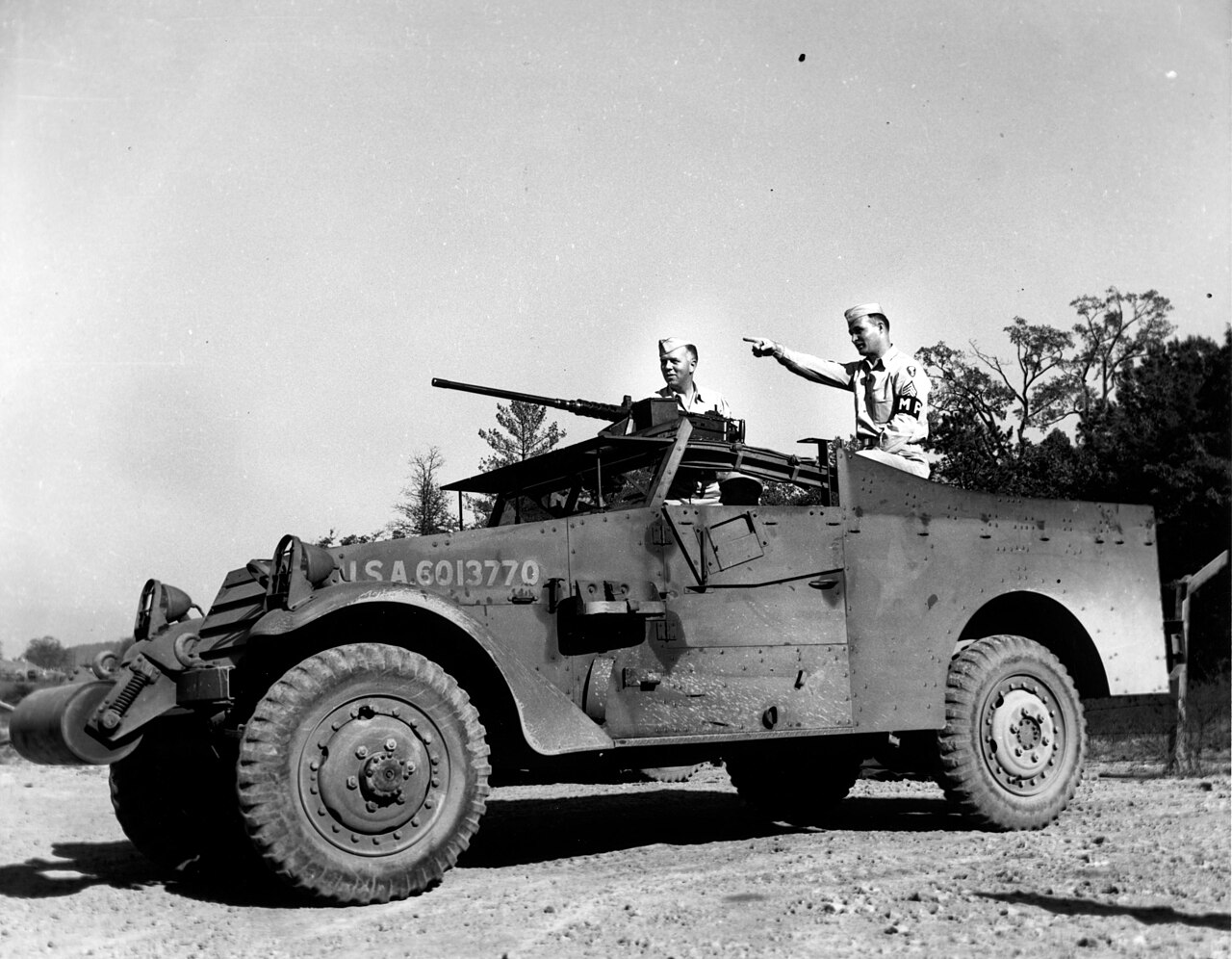
It was designed and built by the now-defunct White Motor Company, with the chassis interestingly being a product of the Diebold Lock and Safe Company. It was a 4×4, and could do up to 50 mph on the road (80 kph). Many of you will notice how similar the M3A1 is to the M3 half-track. And for good reason, as the M3 half-track was a development of the M3A1 Scout car.
It typically carried a Browning M2 .50 caliber machine gun plus up to two additional Browning M1919 .30 caliber machine guns. It was open-topped with armor on the chassis up to 13mm/.5″ in thickness. It could carry up to 6 soldiers in addition to the driver. A canvas cover was available for protection against the elements. The M3A1 was intended to be a reconnaissance vehicle, but its lack of protection made it less desirable than the M3 half-track in that role. In US use, it was relegated to rear-echelon uses after Operation Torch and Operation Husky (the invasion of Sicily). Over 21,000 were made, with over half of that number going as Lend-Lease, mainly to the British Commonwealth and the Soviet Union.
For my Operation TorchWhat a Tanker games, I decided that these would serve as the cavalry scouts that would run into those quirky French armored cars that I’ve been posting about recently.
Sourcing of the M3A1 models came from two different places. I got two Battlefront Flames of War models (SKU US 300) from a flea market at the HAVOC gaming convention in April. These models came with crew and machine guns. As the Battlefront model seems to be out-of-production, I needed to look elsewhere for more models. I went to eBay as a second source.
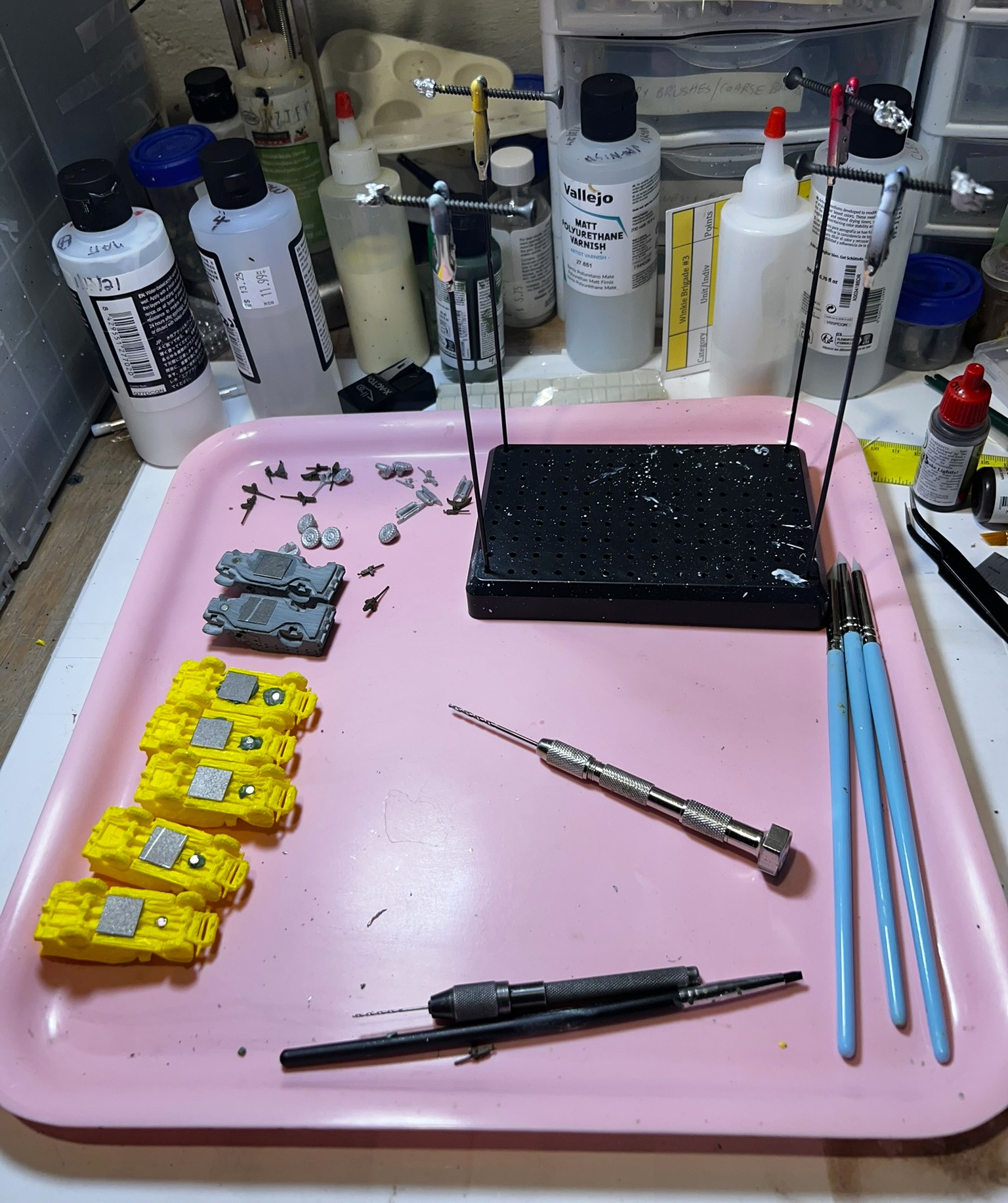
There from Wolverine3d.com I found models with the tarpaulin covers on. Given that a) these were different from the Battlefront models, b) there would be no crew to paint (saving time), and c) very reasonably-priced, I ordered 5, bringing my total available to 7 M3A1’s. They were not too crisp, and made of PLA plastic, but good enough for tabletop use. I started work on them all on May 23rd, and finished them on June 2nd. As I was hurrying to complete the entire project, photography of in-progress work took a backseat. I did work on multiple types of US vehicles concurrently as well. I judged doing separate posts for each type was better for me and you dear reader!
I cleaned up the models and washed them. For ease of painting I then mounted a small 1/2″ square steel base under each M3A1 model. This would allow me to use magnets to support the vehicles while I painted them. I also drilled out and installed small neodymium magnets (secured with green stuff) so that I would be capable of using my equally-magnetized blast markers on any that got brewed up in a game. As for crew- I used my alligator clip stand and some wood screws on them as supports – in a painful way for them (if they were capable of pain of course).
May 23rd – the work begins.
After painting I added decals and labels. Each M3A1 got a different name. Because in Operation Torch there was a mixed use of gold and white stars on US vehicles, I varied their application as well with some home-made gold star decals. They were ok – but not 100% to my liking, and you will see the different approach that I took on the other US vehicles (in future posts).
The seven M3A1’s before I added any tufts as final flocking. The bases are 1.5″ x 2″.
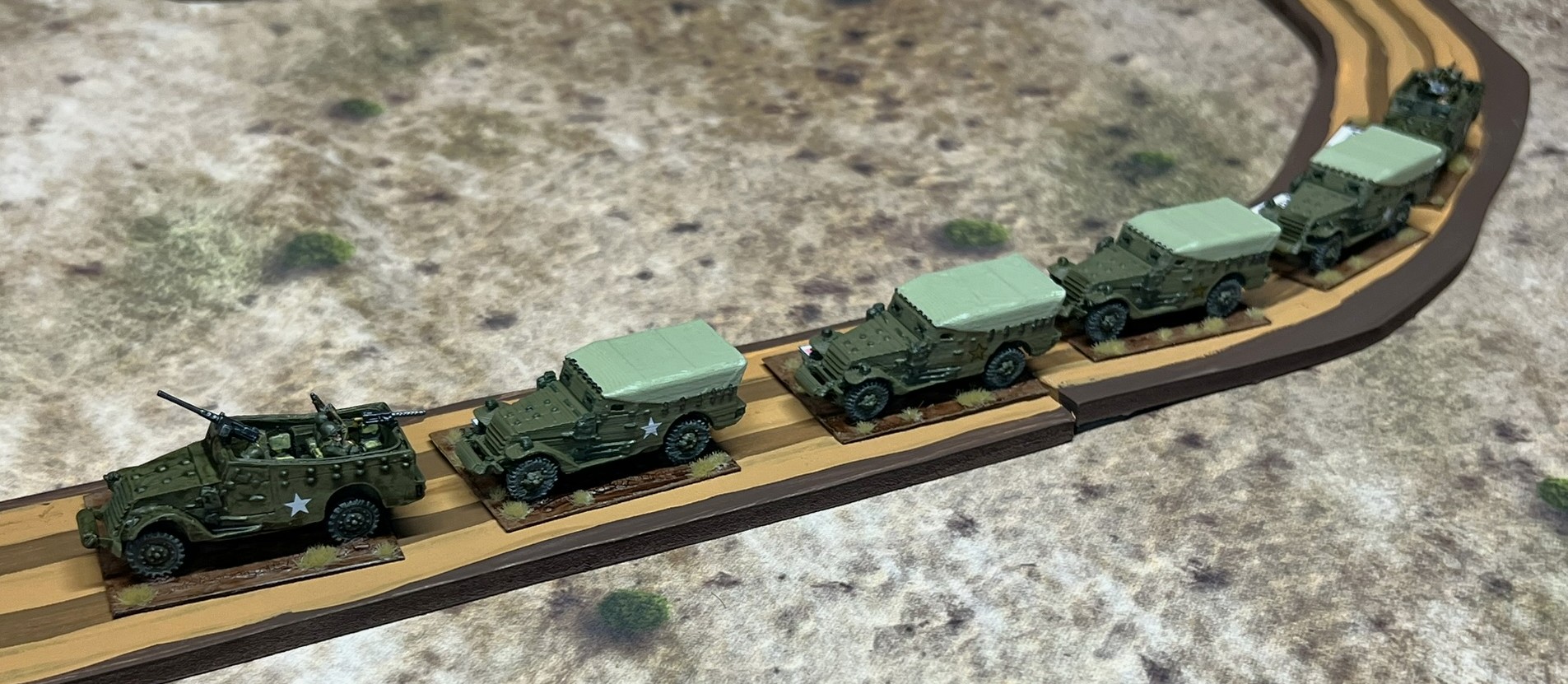
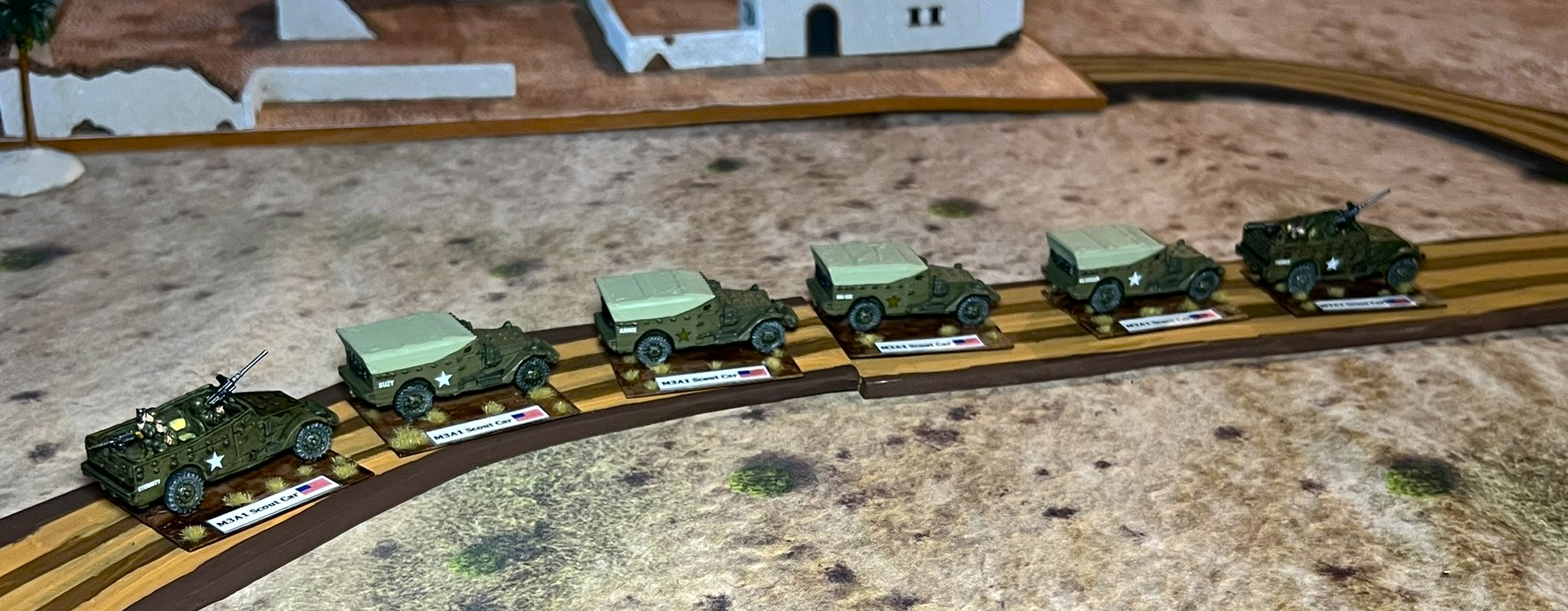
Once completed, I took a few photos of them assembled on my tabletop set up.
M3A1’s in convoy from the drivers’ sides.M3A1’s in convoy from the other side.Close up shot of M3A1 “Fierce”. Each Battlefront model had a driver and two soldiers in the back. I also replaced some of the bendy metal machine guns with plastic ones from another kit.
This wraps up this post on my 7 M3A1’s. Remaining are I have 8 American tanks and 6 tank destroyers to share. Which ones? You can probably guess – rightly or wrongly! What did you think of the M3A1’s? Did you learn anything? Maybe I motivated you to get some for yourself? Please let me know your thoughts in the comments section!
Lastly, for all of my posts on WWII games and projects – there is a consolidated list of posts and their links located here.
MATERIALS USED
PAINTS, INKS, GLAZES, SHADES, WASHES, PIGMENTS AND FLOCKING USED ON THE TWO BATTLEFRONT/FLAMES OF WAR RESIN M3A1 MODELS AND THE FIVE WOLVERINE3D.COM M3A13D-PRINTED MODELS:
Green Stuff
War Games Accessories Steel Bases Number 23 (1½” x 2″)
Vallejo Surface Primer “German Green Brown”
War Games Accessories Steel Bases Number 16 (½” x ½”)
Yes – more armored cars of French origin are coming your way right here and now!
This post will cover off on the last three vehicle types that I built and painted for Vichy French forces during Operation Torch. All three here are armored cars, but each is definitely different and not commonly seen in tabletop wargames. I thought that that aspect alone would make for some interesting historical interest as well as game aesthetics.
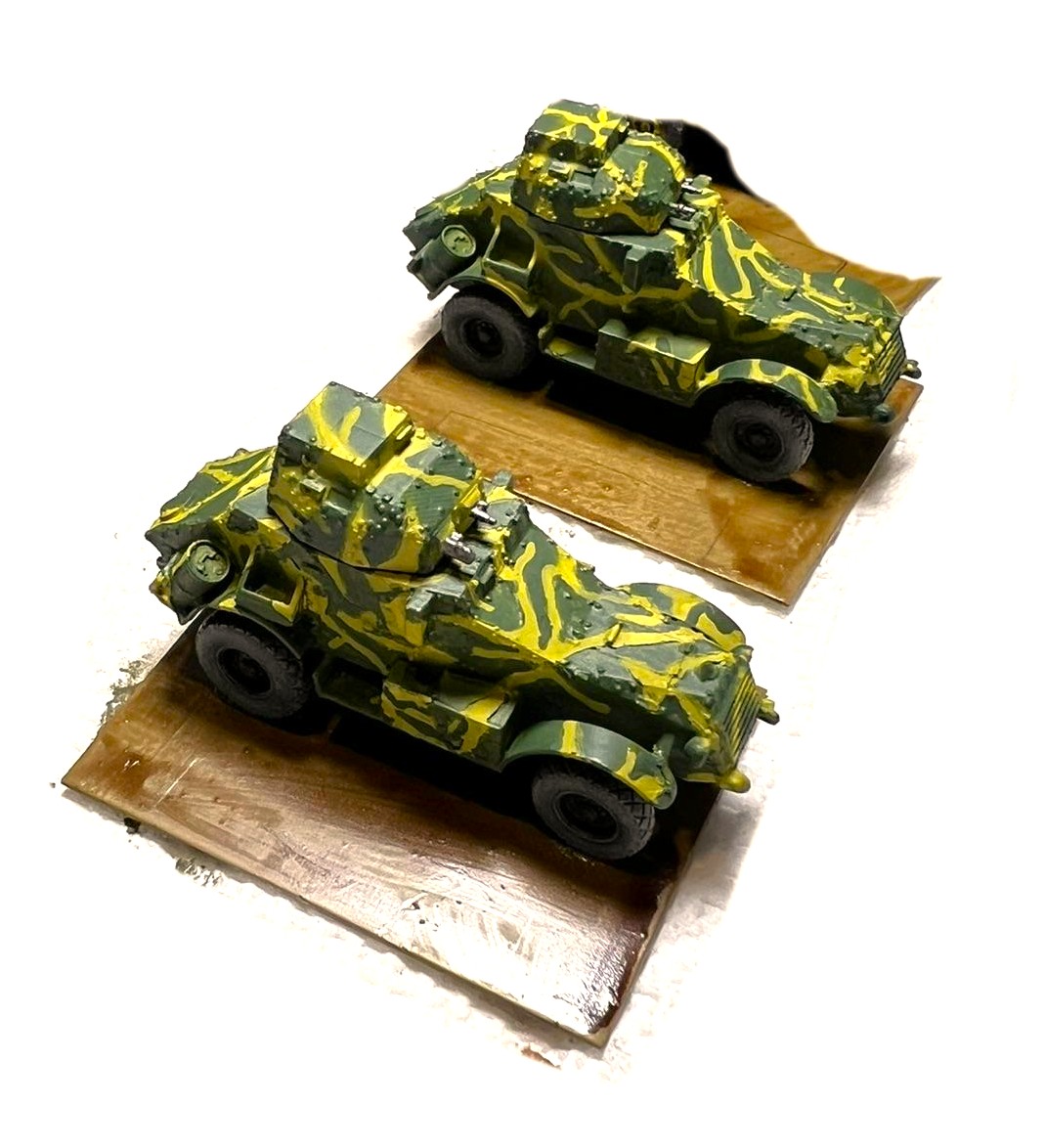
Like the other inter-war armored cars – including the White-Laffly AMD 80’s and the Schneider AMC P16’s that I posted about here – these three were all models of AFV that were “good enough for the colonies”. The French Army certainly considered them as not good enough for defending against a potential German attack. Some were in France during 1939-1940, but most were in North Africa and the Levant. All of these were at least armed with machine guns, with the Panhard having a 25mm cannon as well.
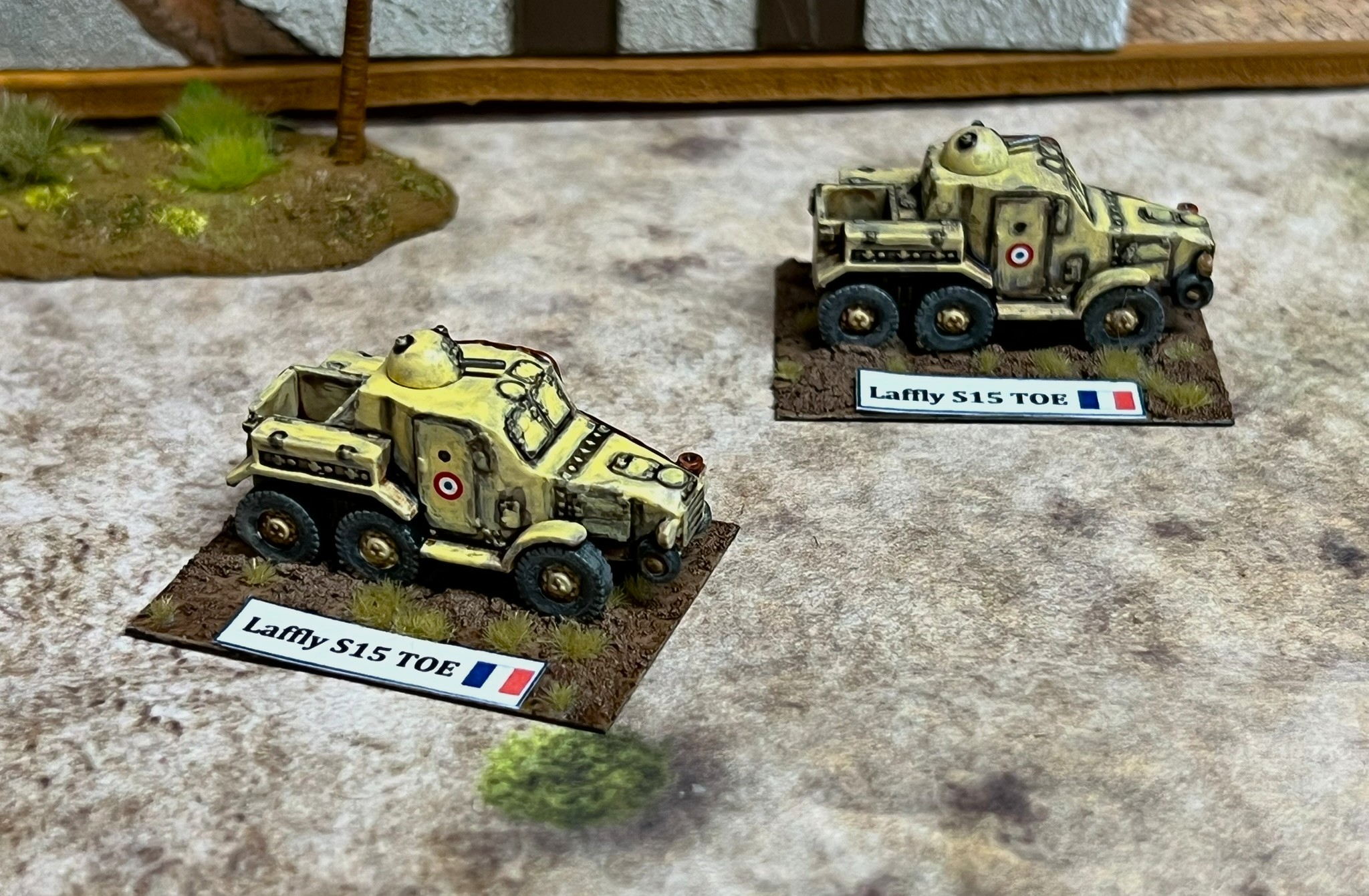
Certainly finding appropriate 15mm/1:100 scale models of these was not easy. Luckily I managed to enlist the help of my friend Greg Priebe who 3D-printed two of these types. I did get the third type (Laffly S15 TOE) from Butlers’ Printed Models. Let’s look at each vehicle and model in turn.
The Panhard 165 and 175 TOE’s shared similar frames – with the 175 version being a modification/upgrade. The acronym “TOE” stood for théâtres d’opérations extérieurs – i.e. designed for foreign theaters of operations like the colonies. Greg printed for me two Panhard 175’s that I assembled and painted. In reality, it was, as you can see, very tall (9.1′). That’s just 1′ 2″ shorter than the M3 Lee!
Do not confuse the 175 with the more well-known Panhard AMD 178. The 165 TOE type was built in the early 1930’s with the 175 TOE upgrades happening around 1934. Maybe 60 or so were initially built and then so upgraded. It did have a 25mm antitank gun, so it possessed some light antiarmor capability. Armor-wise, it had just 6-9mm of riveted armor, so not much. These were really designed to work to keep France’s colonies in line.
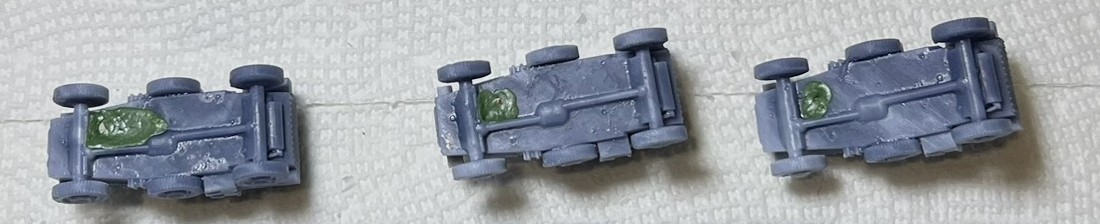
Greg sent me a bag of the models that he printed in late April. I was able to cobble together two good vehicles from the pieces. After a good (but gentle) washing (I needed to be careful of the fiddly fenders), I drilled out and installed small magnets as you see below. This was to make the turrets movable – as well as to hold smoke markers if they got brewed up or knocked out in a game. For a painting scheme. I used a green primer base with yellow camouflage stripes, akin to my H35’s. All of my paints used are listed as references at this post’s end for those interested in such stuff.
Panhard 175 TOE’s drilled out with installed magnets.Panhard 175 TOE’s painted but before tufts and final base work was completed.Completed Panhard 175 TOE models completed, shown here in cover scouting for approaching US vehicles during an Operation Torch game of What a Tanker.
This was yet another Laffly-modified truck. These were common civilian truck chassis developed into a range of different military types, one of which was the Laffly S15 TOE. It was designed for colonial use in 1934, but was not delivered to the French Army until 1938 or 1939. It had a single machine gun – a Reibel 7.5 mm light machine gun located inside of a domed turret. I thought it had a unique look.
Unfortunately, my original purchased models were lost in transit. Yet, the company quickly sent me another pair of models – great customer service! They were crisp and very nice resin models. As I was rushing to finish all these vehicles (yes I am repeating that issue!), I have no WIP shots! For a painting scheme, I went with a sandy look.
My finished Laffly S15 TOE Models.
Berliet VUDB
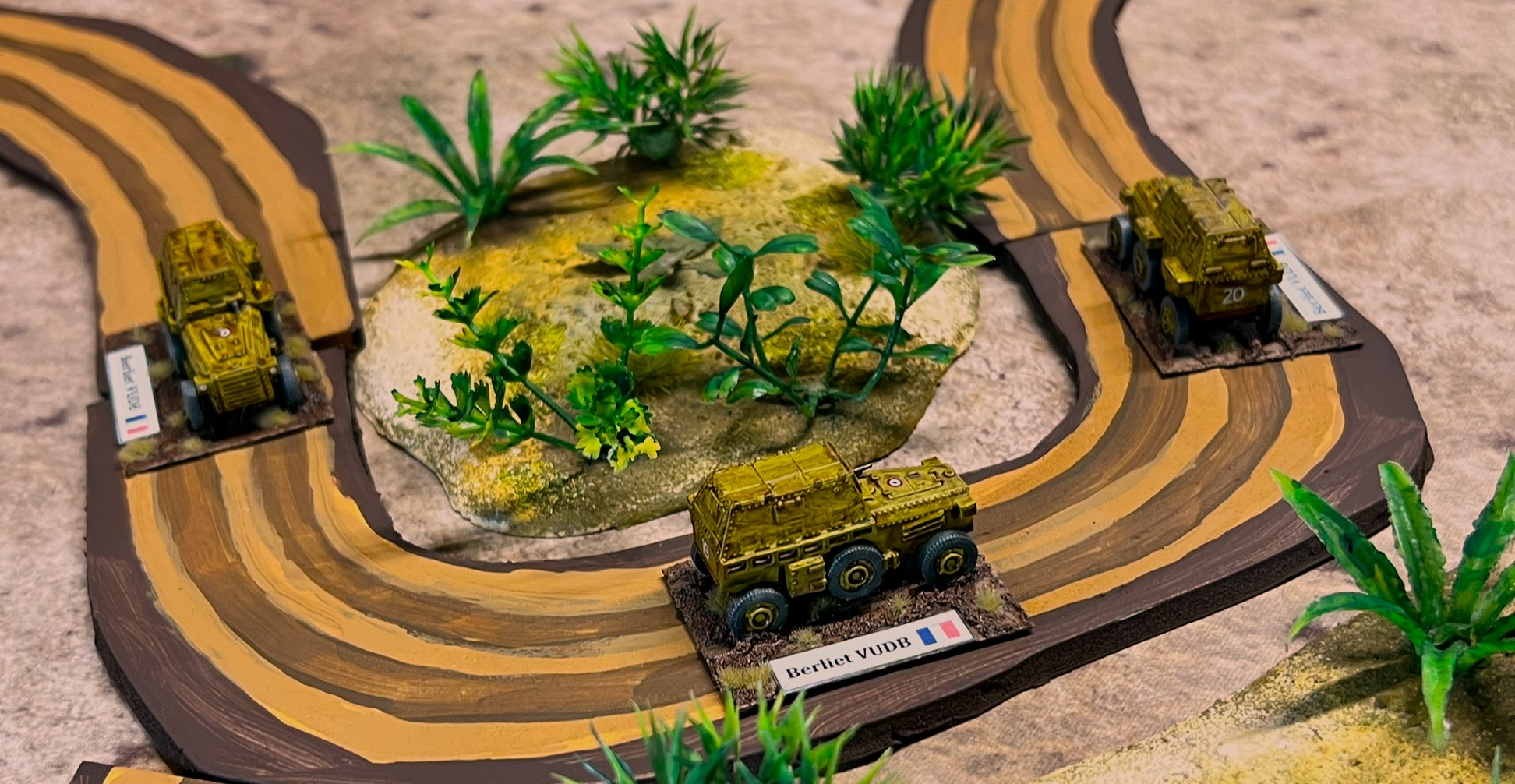
The last type of Vichy French armored car that Greg printed up for me was a trio of Berliet VUDB’s. This type was made by – the Berliet company – which was in competition with Laffly and Panhard for French government contracts. It seems that all three companies got some business. One can only imagine what having so many armored car variants would do to logistics and the need for spare parts.
As you can see, it was a 4×4 armored car with a big spare tire. Some credit this vehicle with the accolade of being the first armored personnel carrier as it had space for a driver and seven soldiers. The vehicle even had ports on the sides from which soldiers could fire their rifles while riding inside. It was armed with two Fusil-mitrailleur Modèle 1924 Modifié 29 machine guns (the standard French light machine gun at the beginning of WWII). Armor was just 7mm thick.
” VUDB” is a French acronym for “voiture de prise de contact“, or “contact vehicle”. It was a scout car in US parlance and use. Sixty-two were produced between 1929 and 1932 – and originally were looked at to be used in the pacification of Morocco in the early 1930’s after the Rif War. There were a number of them in Morocco in November 1942.
As for the models, these were very solid resin prints. No assembly was required except for my usual drilling out holes for neodymium magnets.
My three Berliet VUDB’s at the start.Painted Berliet VUDB’s before I added labels and flocking on the bases. While a Berliet VUDB could have had two machine guns sticking out, the model only had the one out.Berliet VUDB’s on tabletop heading to the front.
That finishes off the 31 AFV’s that I assembled and painted for my Operation TorchWhat a Tanker game. All are in their glory…well their box…below.
31 French tanks and armored cars!
I have now caught up on all my French vehicles! It’s time to move on to the Americans next!
I have 22 American tanks, tank destroyers, or armored cars to write about next. All were used in Operation Torch in November 1942. These vehicles will be the topics of my next posts.
Please, I’d love to hear any feedback – were you surprised at anything here? Learn anything? Get inspired?
Let me know your thoughts in the comments section!
Lastly, for all of my posts on WWII games and projects – there is a consolidated list of posts and their links located here.
MATERIALS USED
PAINTS, INKS, GLAZES, SHADES, WASHES, PIGMENTS AND FLOCKING USED ON THE TWO PANHARD 175 TOE MODELS 3D-PRINTED BY GREG PRIEBE:
Green Stuff
War Games Accessories Steel Bases Number 23 (1½” x 2″)
In November 1942, the Vichy French had a 8 division’s worth of troops in her colonies – from Morocco to the Levant. Under the terms of the Armistice of 22 June 1940, Vichy France was still obligated to defend its unoccupied lands as a neutral state.
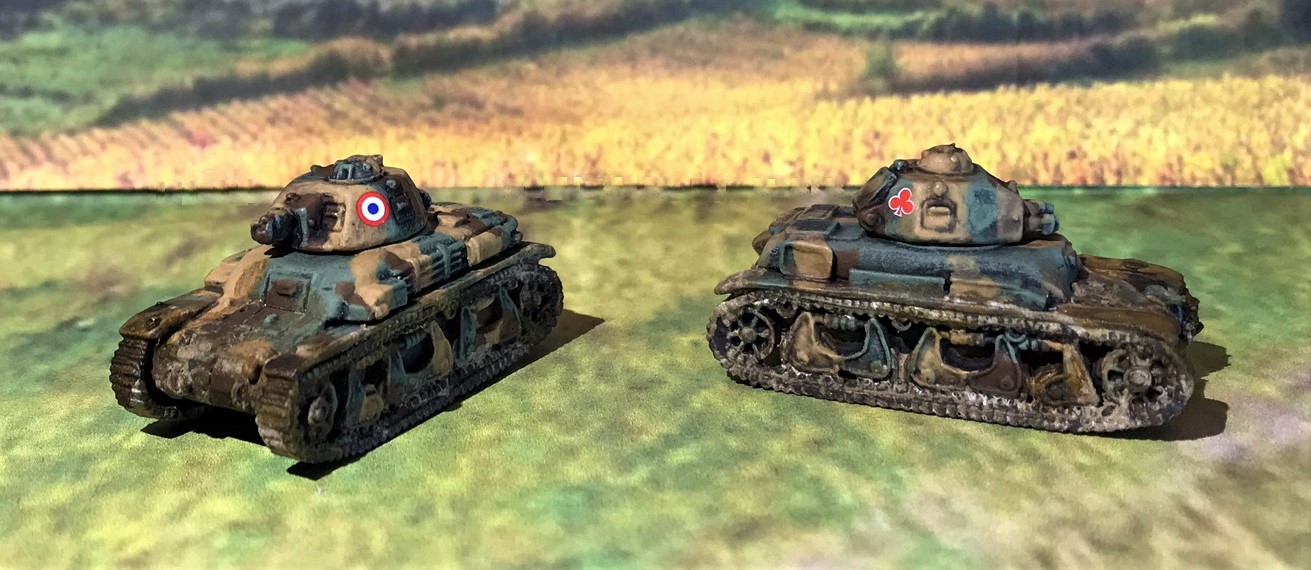
And yes, they had more tanks than just the FT-17’s you saw in my last post. In addition to those old WWI relics, Vichy had Hotchkiss H35 and H39 tanks, as well as Renault R35’s. Both of the Hotchkiss models were “cavalry” tanks, in that they had been forced as a light tank on the French cavalry in the 1930’s (and later forced on infantry tank regiments as stopgaps). Contrastingly, the R35 was an “infantry tank”. After the Armistice, the Vichy Army had both types in the colonies. I did read somewhere that some R35’s were hidden away under hay bales behind horse barns to keep prying German and Italian officers of the Armistice Commission from finding them.
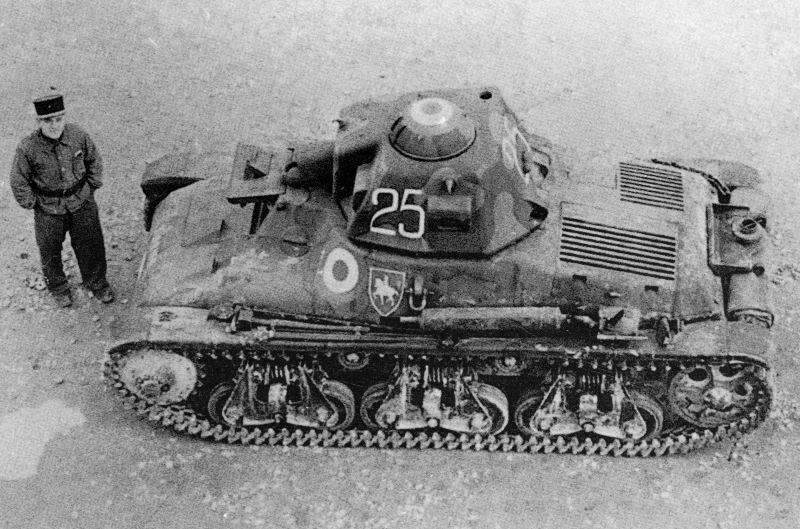
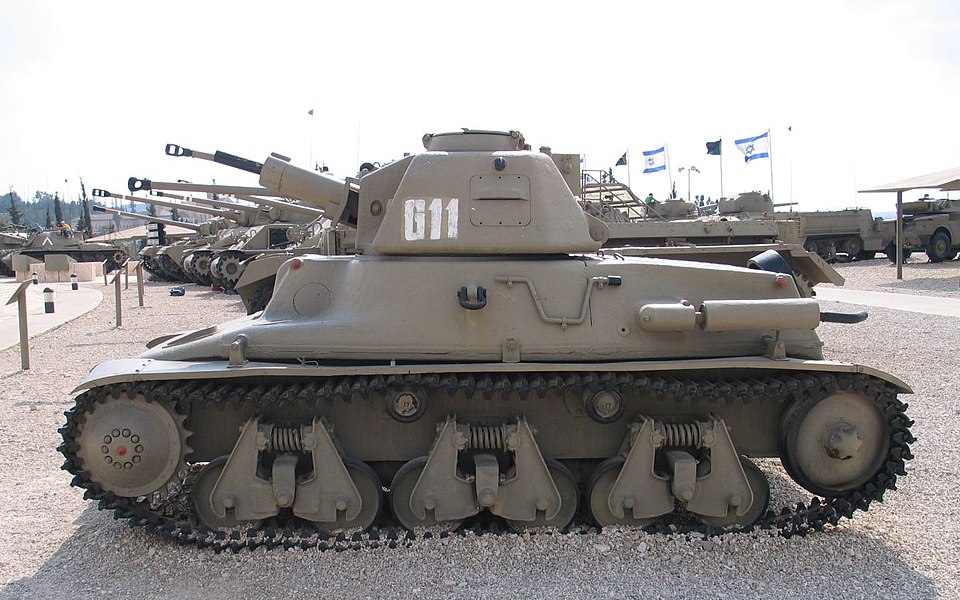
The H35, or Char léger modèle 1935 H, was a two-man tank, armed with the same cannon as the FT-17 (the Puteaux SA18 37mm cannon). The H39, or Char léger modèle 1935 H modifié 39, was a 1938 upgrade of the H35 that also got a better engine, and a newer and longer 37mm gun – the SA38 cannon, that supposedly had increased armor penetration over the SA18 (how much I cannot find!). Both variants were in North Africa in November 1942. There are only two observable differences to an outsider between the two models. Both have different engine deck configurations and the mufflers of H35’s point forward – while H39 mufflers point rearward.
An H35 tank. Note the engine deck and the forward-pointing muffler.An H39 tank shown in Israeli markings at Yad La-Shiryon (officially: The Armored Corps Memorial Site and Museum at Latrun in Israel. Note the rearward-pointing muffler.
As for the R35, or Char léger Modèle 1935 R, it was an infantry tank under French Army doctrine. It too had a two-man crew, and was also armed with the Puteaux SA18 37mm cannon. It was thought to be slightly better mechanically than the H35/H39 variants. As the Armistice forbade Vichy from having pure tank units, these and the Hotchkiss tanks would be spread around into combined-arms units. These Vichy tanks and armored cars would play a role in Operation Torch in November 1942 against US forces in Morocco (and Algeria as well).
R35 tank at Saumur Museum in France.
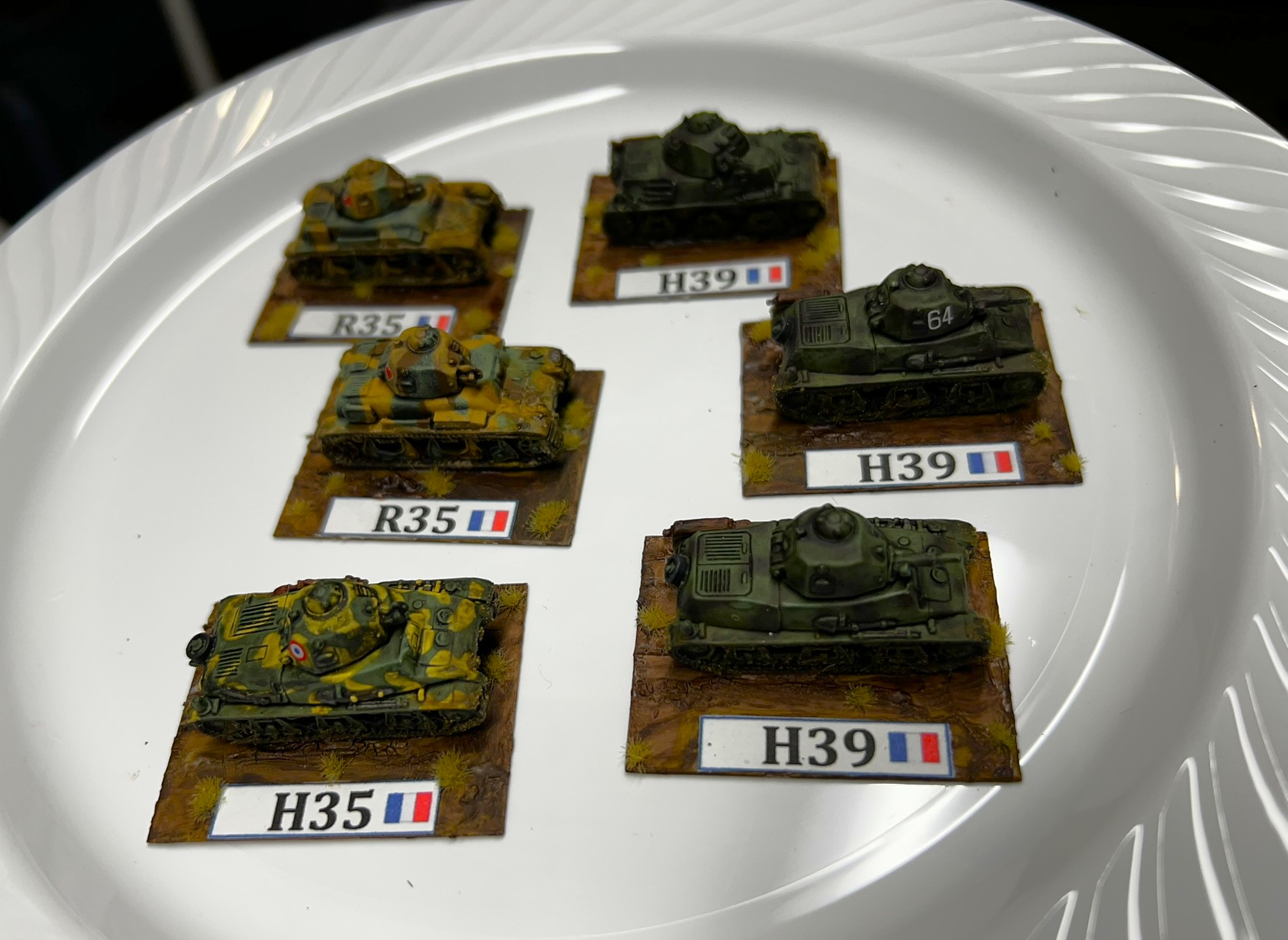
In gathering appropriate models for my What a Tanker game for HISTORICON, I started with looking for H35 and H39 metal or 3D-printed models in resin. I found a two listings for some on eBay. One was for Sarge_s Stuff – he had H35’s that could be bought individually – and I ordered 4 of them. The other site was the same one I bought the FT-17’s from earlier – jacobsminis (aka HobbyHouse&Miniatures.LLC). I ordered 5 from HH&M as that was the minimum order. The tanks from HH&M were (and still are) listed as H39’s, but when I got them I realized that they were actually H35’s. Unlike their excellent FT-17 models, some of these had printing errors, and I ended up using just 2 of these. However, I did use all 4 of the Sarge_s Stuff ones as H35’s. For H39’s and R35’s, I decided to rebase the ones that I painted a few years ago. I had 1 H35 and 3 H39’s (documented here) and 2 R35’s (documented here). I rebased all 6 of these.
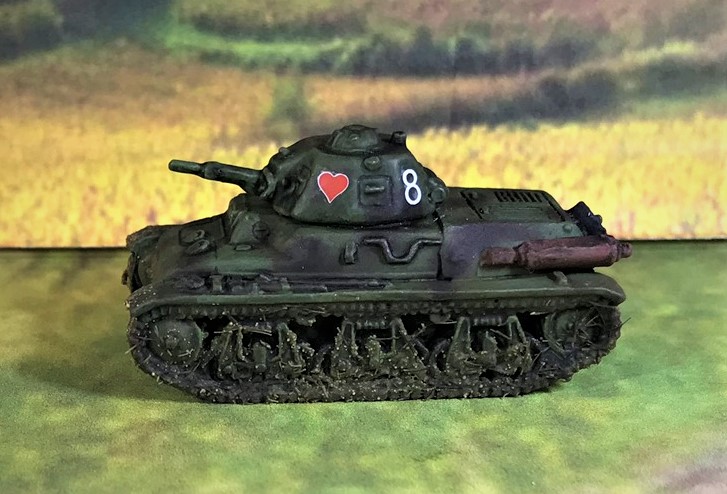
One of my 3 H39’s before I rebased.My R35’s before rebased them.All rebased!
This left me with 6 H35’s to paint to round out the tanks for Vichy (more armored cars would be coming!). As I was also working on many other vehicles at the time, plus running for reelection (I won), plus preparing for and attending HUZZAH, AND prepping for HISTORICON…plus golf…I was BUSY in April, May and even June and July. I am sure that you get the picture, and ironically I have few WIP pictures! But I’ll share what I have.
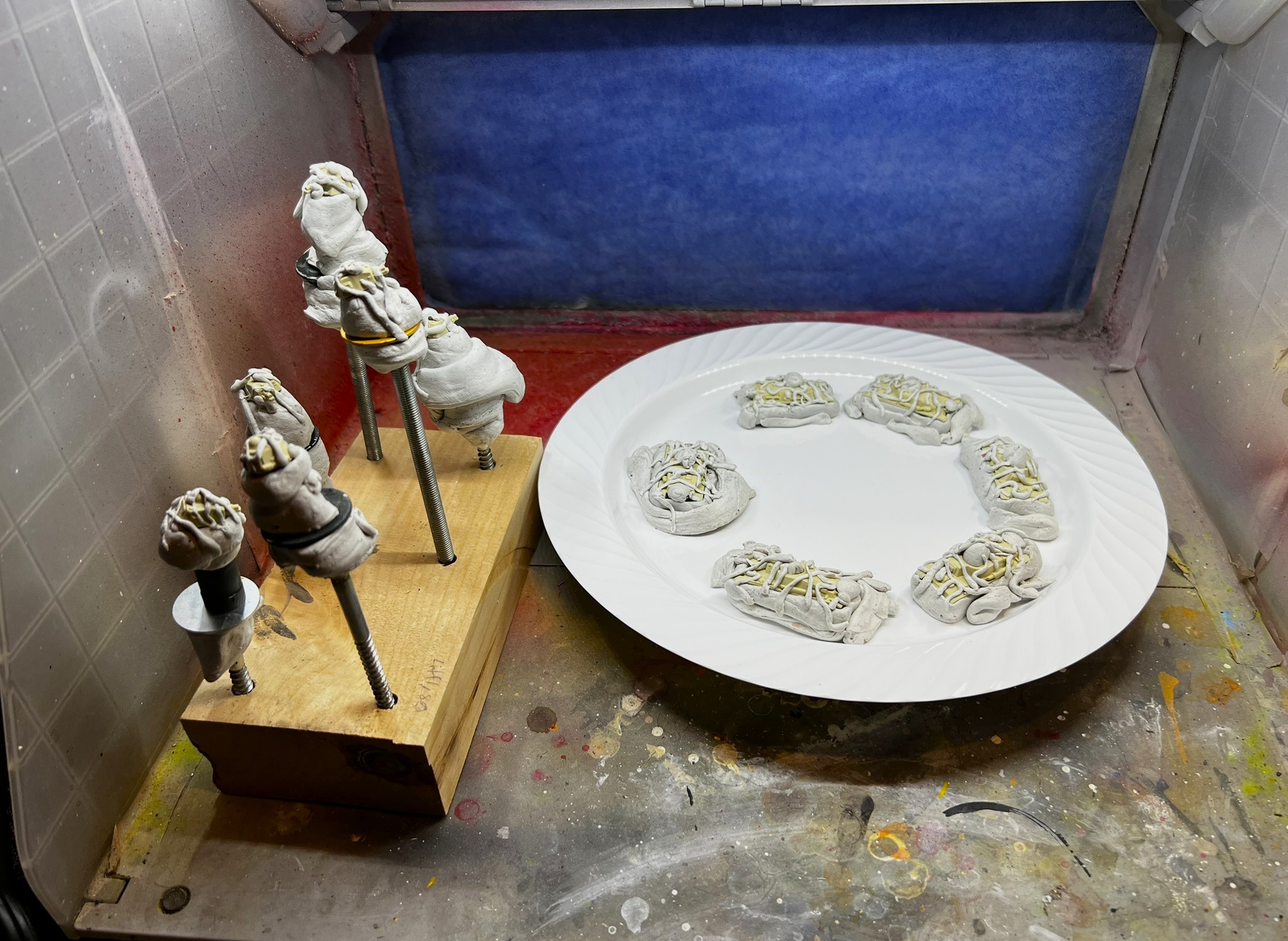
I used neodymium magnets and flat-head nail again to mount the turrets. The two H35 turret prints were slightly different, but I adapted with green stuff.
The 6 H35’s primed with the first desert sand color.
I used poster-tack again for masking/making camouflage patterns over the initial color. I did experiment with using Silly Putty as masking as I had seen someone do that – but it did not work for me. So I went back to what I knew would work – poster tack and touching up afterwards..
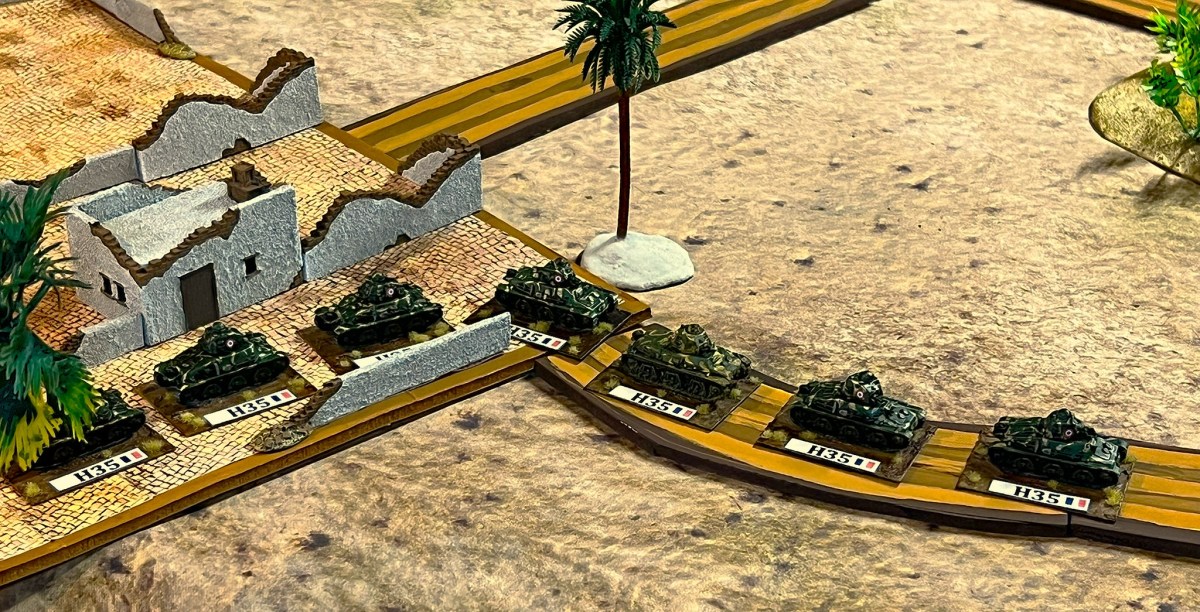
Poster-tack covered!Then I applied a second prime with a NATO Green. Al paints are listed at the end of this post.Now I had 6 H35’s. The third one from the left is one from an earlier project that I rebased, with the other 5 being new. The yellow is different on that older one, but ok enough I think for a game.
Now, I can share some limited…
Eye Candy
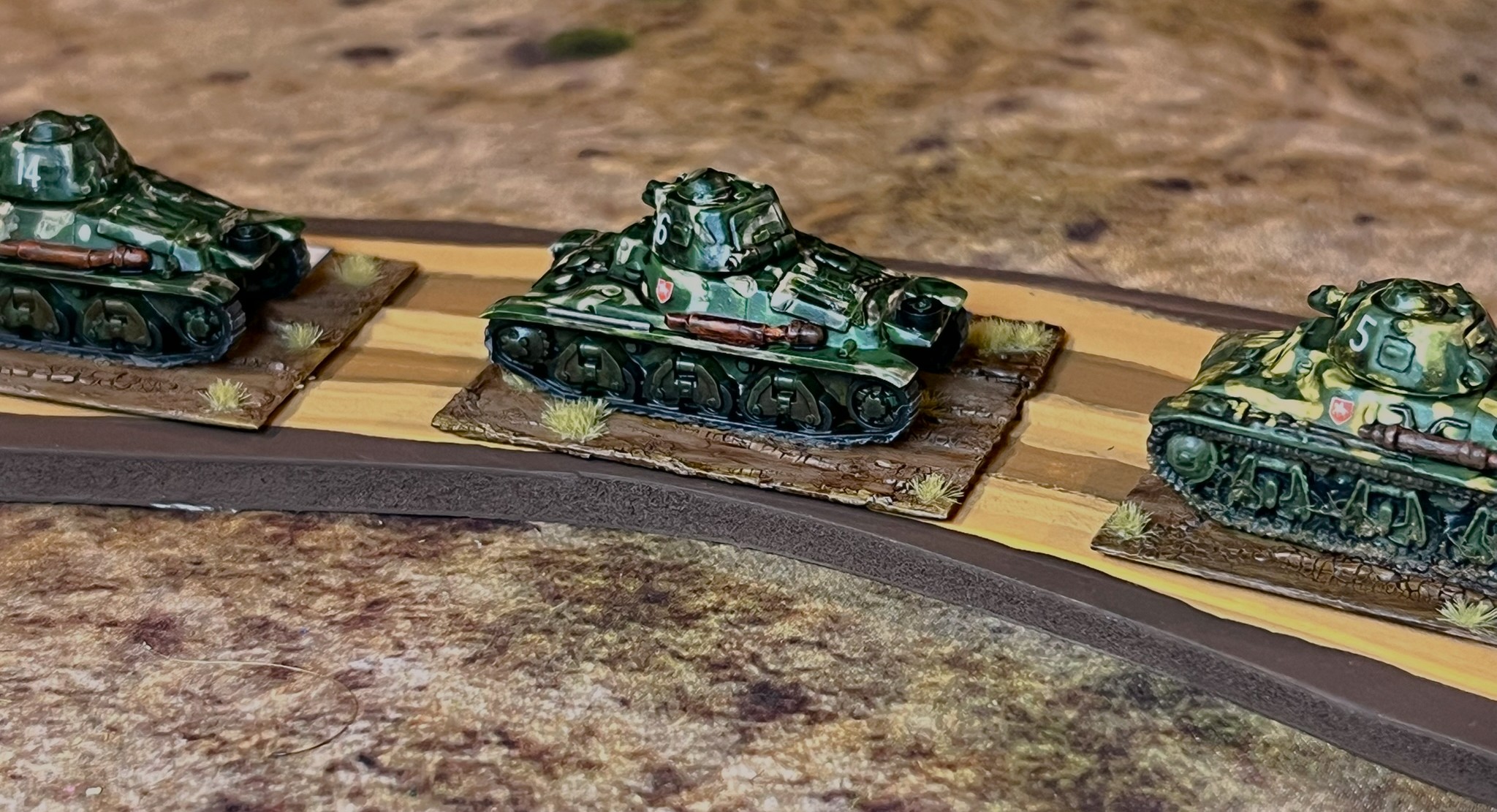
H35’s in column on my game tabletop.Close up of the H35 column.
I am indeed – as promised – catching up on the posts I have backlogged for my What a TankerOperation Torch game project- and yes there are more AFV’s to come. I do appreciate you, my readers. Of the eventually-painted 31 Vichy vehicles I had for the game, this brings me up to 24 Vichy combat vehicles that I have covered to date in this blog. I have 8 remaining Vichy armored cars to write about before I get to the USA. Those 8 will be the topic of my next post. Please, if you want, I’d love to hear any feedback – feel free to let me know your thoughts in the comments section.
For all of my posts on WWII games and projects – there is a consolidated list of posts and their links located here.
MATERIALS USED
PAINTS, INKS, GLAZES, SHADES, WASHES, PIGMENTS AND FLOCKING USED ON THESE H35 MODELS:
Green Stuff
War Games Accessories Steel Bases Number 23 (1½” x 2″)
Vichy France had many different old or at least obsolete combat vehicles in their colonies. While more than half of Metropolitan France was occupied by the Germans, under the Armistice of 22 June 1940, Vichy was still obligated to defend its unoccupied lands as a neutral state.
As such, while Vichy was denied armored units, she was allowed to have integrated combined-arms units in the colonies – forces that had armored vehicles. These Vichy tanks and armored cars would play a role in Operation Torch in November 1942 against US forces in Morocco (and Algeria as well).
My last post covered two older (by November 1942 standards) armored cars used by Vichy forces – the White-Laffly AMD 80 and the Schneider AMC P16. Vichy also had tanks in North Africa, one of the most common was the WWI-vintage Renault FT-17.
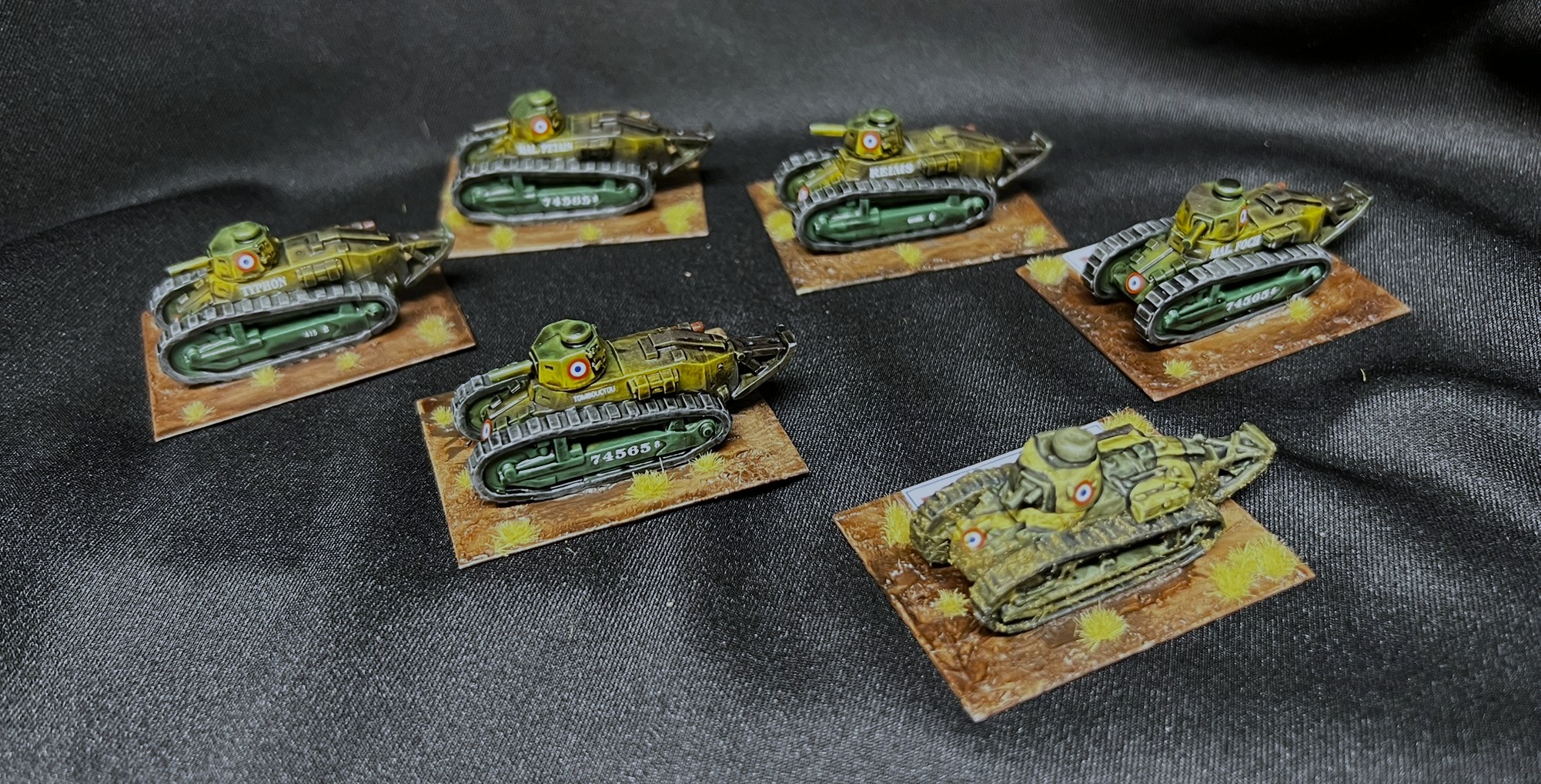
For this post, I will discuss the venerable Renault FT-17’s that I built and painted up for my Operation Torch game of What a Tanker that I ran at HISTORICON 2025.
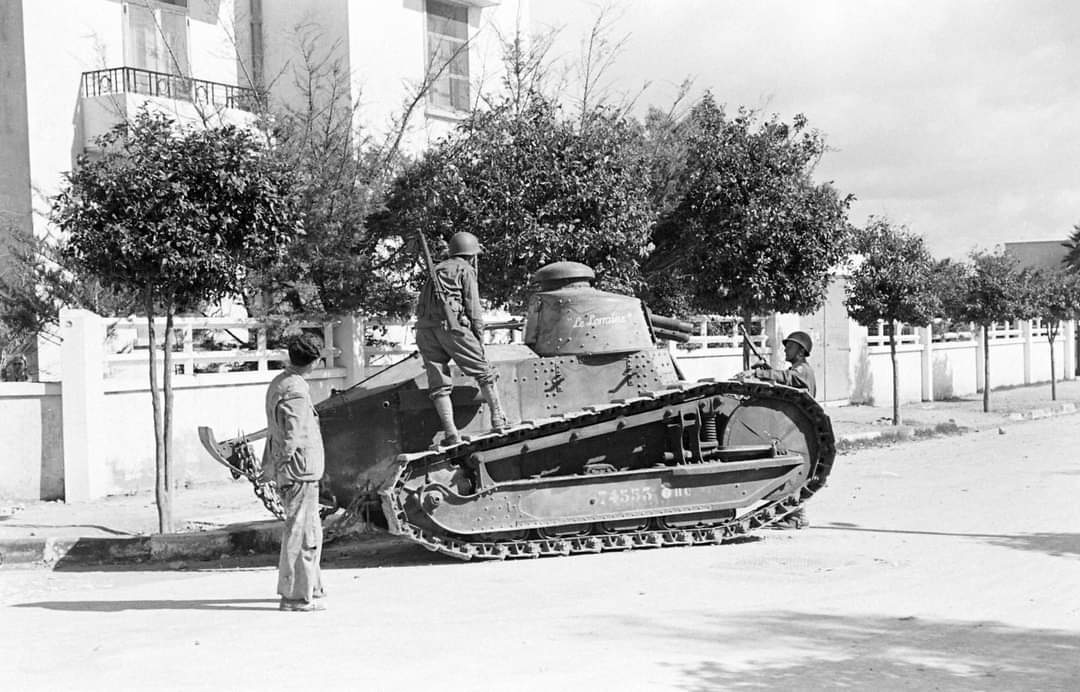
3,000 FT-17’s were built by France between 1917 and 1919. Indeed, she had so many old FT-17’s that the development and acquisition of newer tanks was negatively affected. Simply put, the French budgetary bean counters saw that the French Army had plenty of tanks available on paper, so why build too many more expensive ones? This would not bode well when May-June 1940 came around. Of course, French military doctrine was as least as equally to blame for the Fall of France (read BG Doughty’s The Seeds of Disaster: The Development of French Army Doctrine 1919-1939). After that debacle, Vichy did have many FT-17’s still in her colonies.
For my game, I had to have some FT-17’s. Historically, some were armed with the Puteaux SA18 37mm cannon, others with machine guns and even a very few with a short-barreled 75mm howitzer. For my game-design purposes, I decided that all should be armed with the 37mm cannon. I did have one completed 15mm/1:100 scale metal FT-17 from Peter Pig that I could rebase and use – it was described in my blog here.
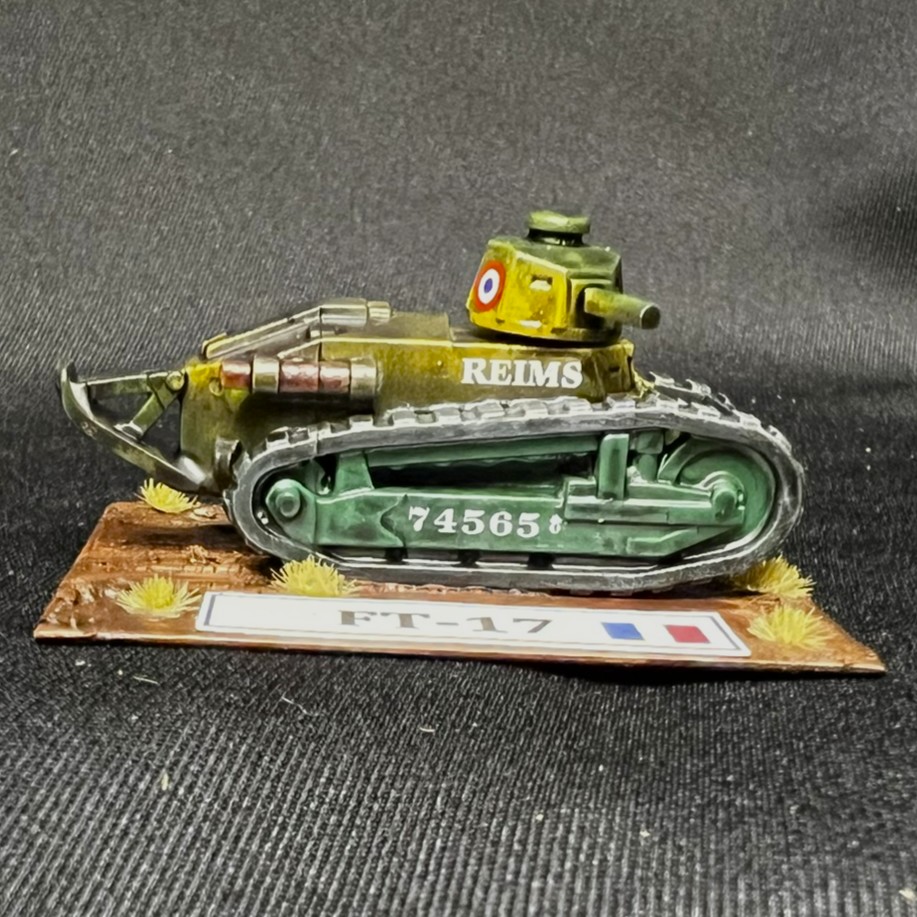
To augment that, I purchased a 5-vehicle FT-17 platoon on eBay from jacobsminis (aka HobbyHouse&Miniatures.LLC). The tanks were nice crisp resin models. I ordered them on April 8th, and they arrived on April 14th. I started to work on them on April 28th (while concurrently working on all of the other vehicles for the project).
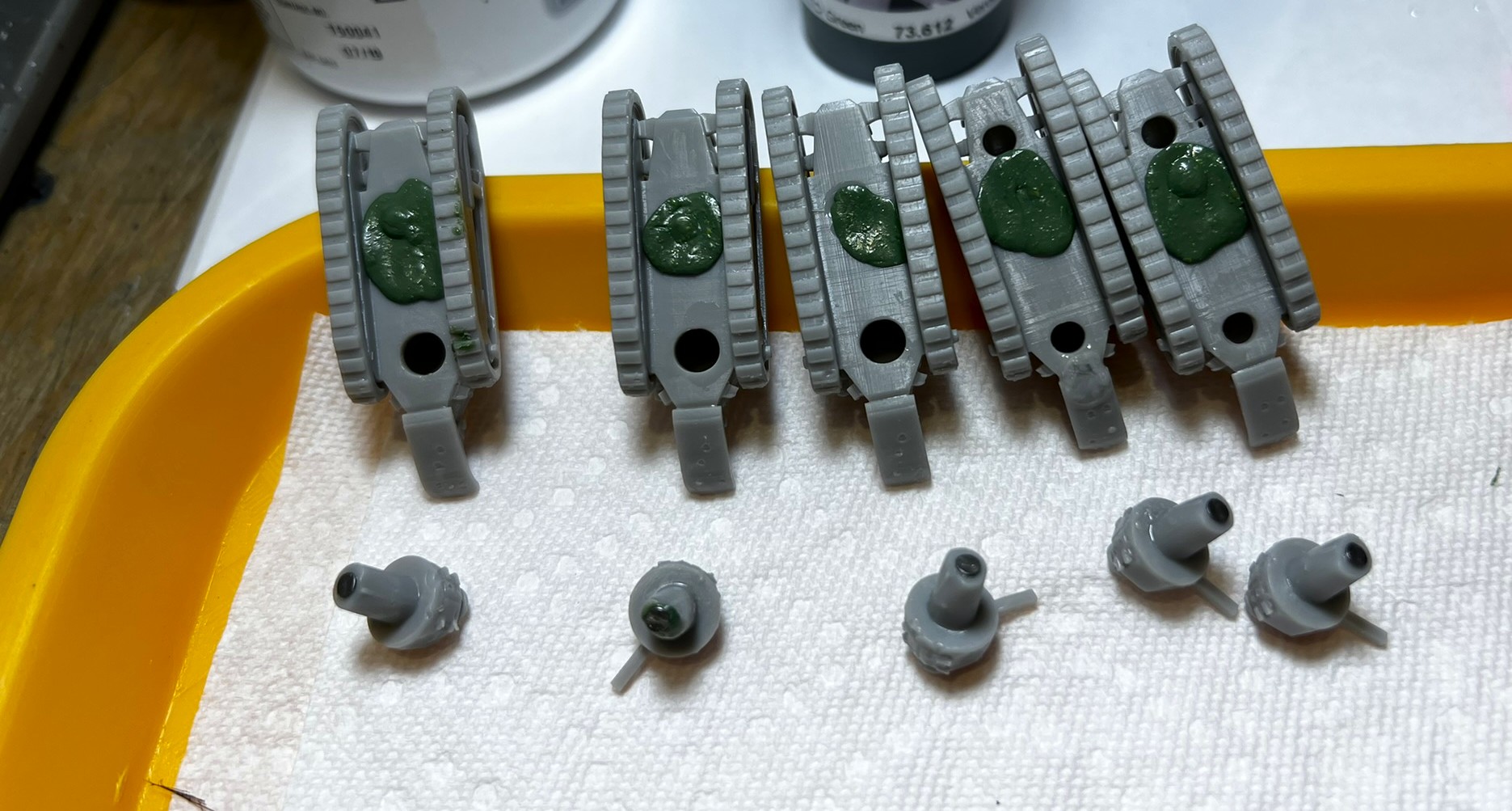
After washing the models, I drilled out and installed neodymium magnets in the hulls with green stuff. I also drilled out the turret bases to accommodate small flat-headed steel nails. These would work with the magnets in the hulls to both allow rotation and keep the turrets relatively secure. Priming and painting followed.
As I was working on many other vehicles, photo time got to be rare for me. Therefore, I do not have much in terms of WIP shots. I adopted the same airbrush painting pattern as I used for the Peter Pig model. The only difference was that I did not add a lot of mud to the tracks.
The main painting is done. You can see the turrets are semi-mounted temporarily on magnets and steel washers for painting purposes.
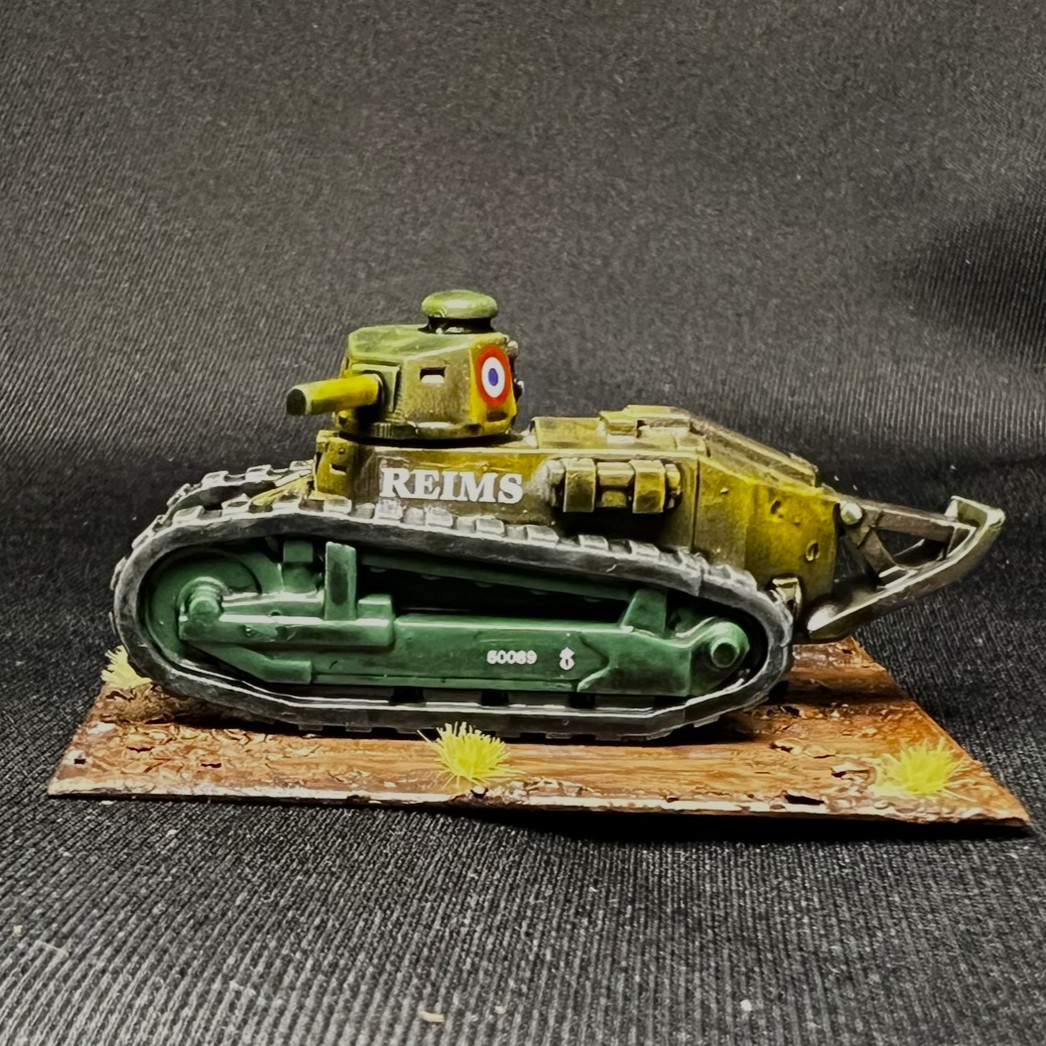
Then it was on to the decal and basing phases, which were like those that I employed and shared in my last post. I did end up with similar numerical decals on different tanks – but I did vary the sides and the other decals. Each one had a distinct name.
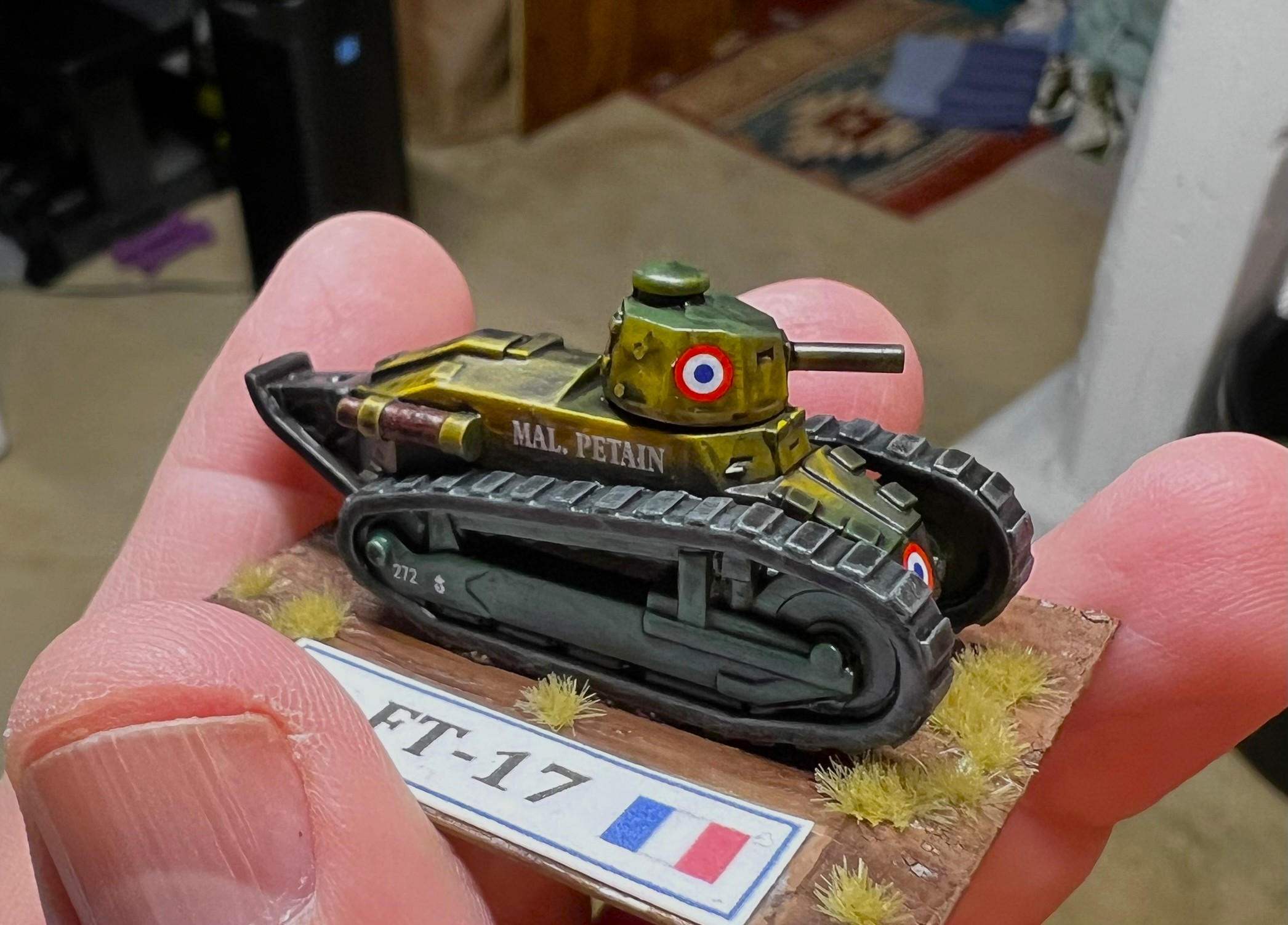
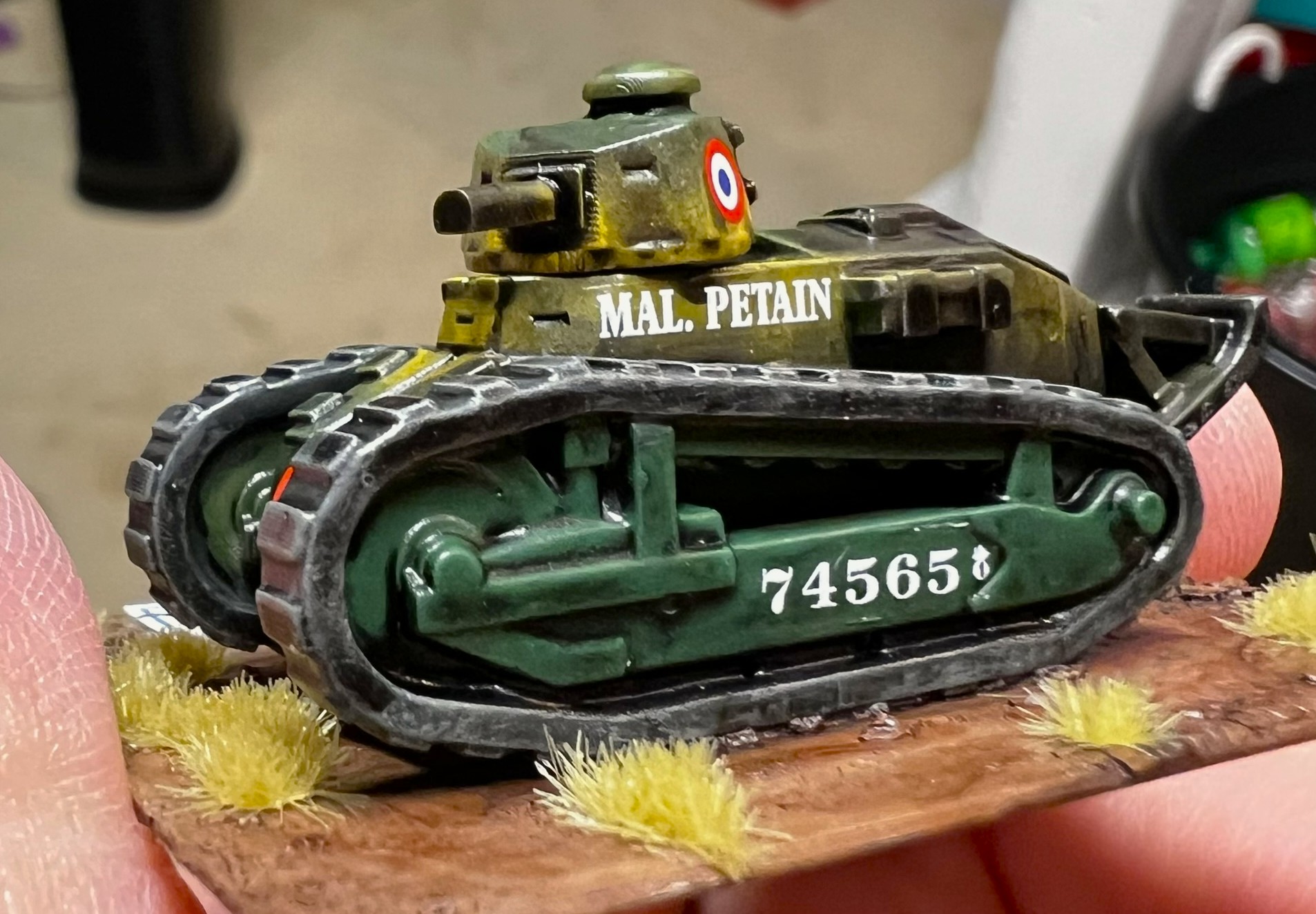
As an example, here is “MARECHAL PETAIN”. Each steel base is 1½” x 2″.
I’m sure that you’d like some better “eye candy”, so…
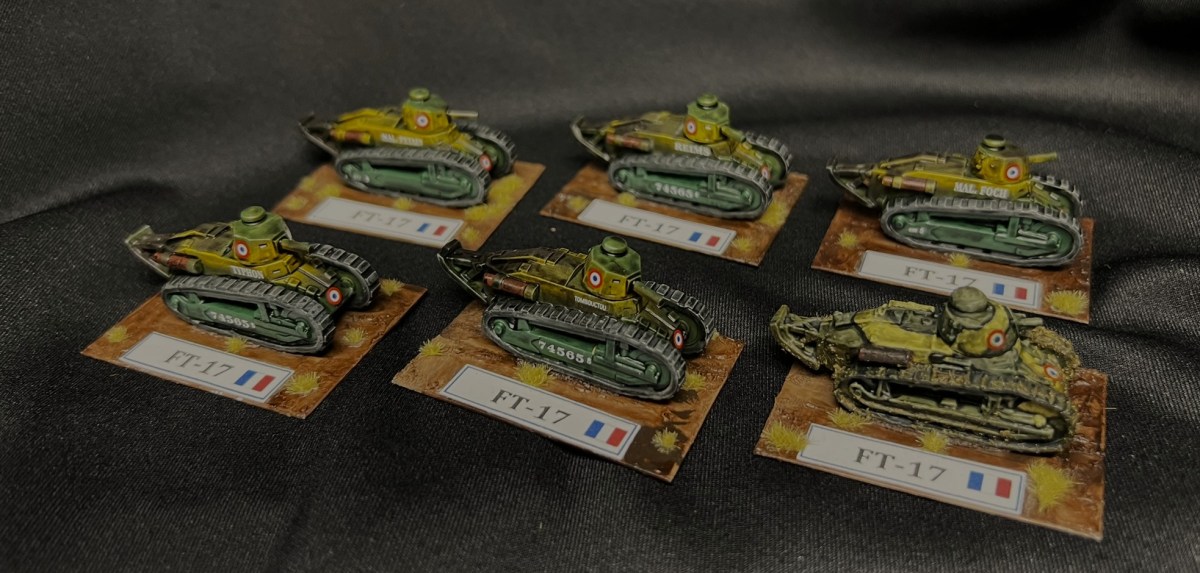
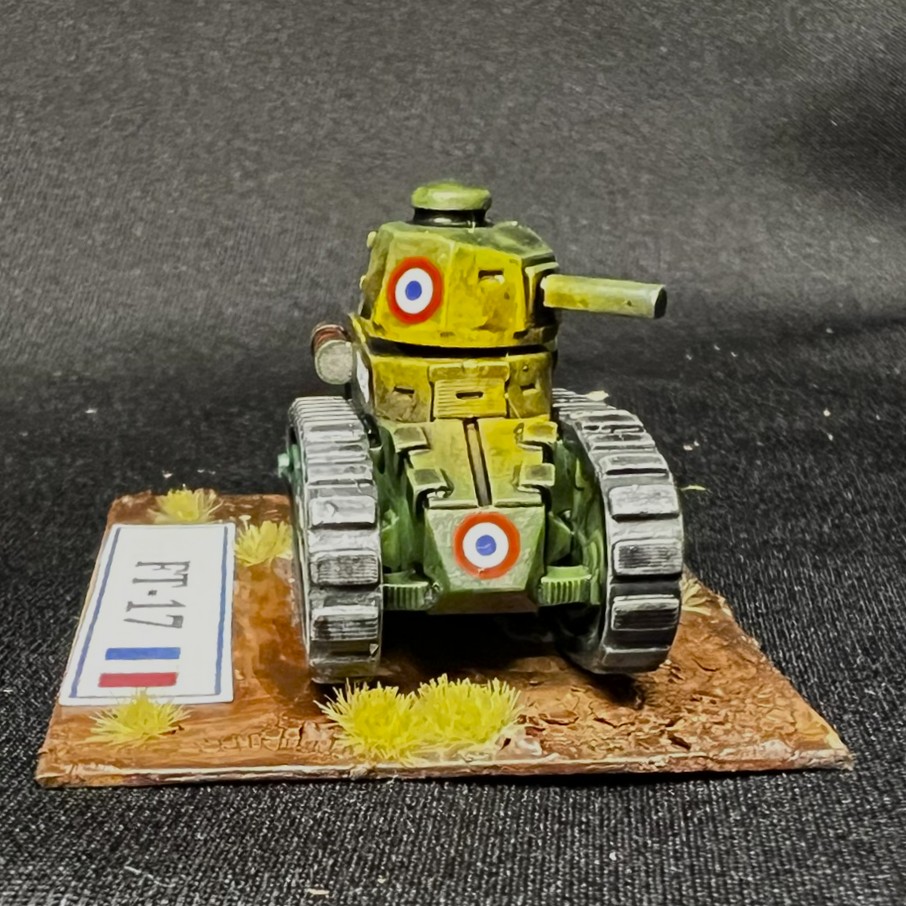
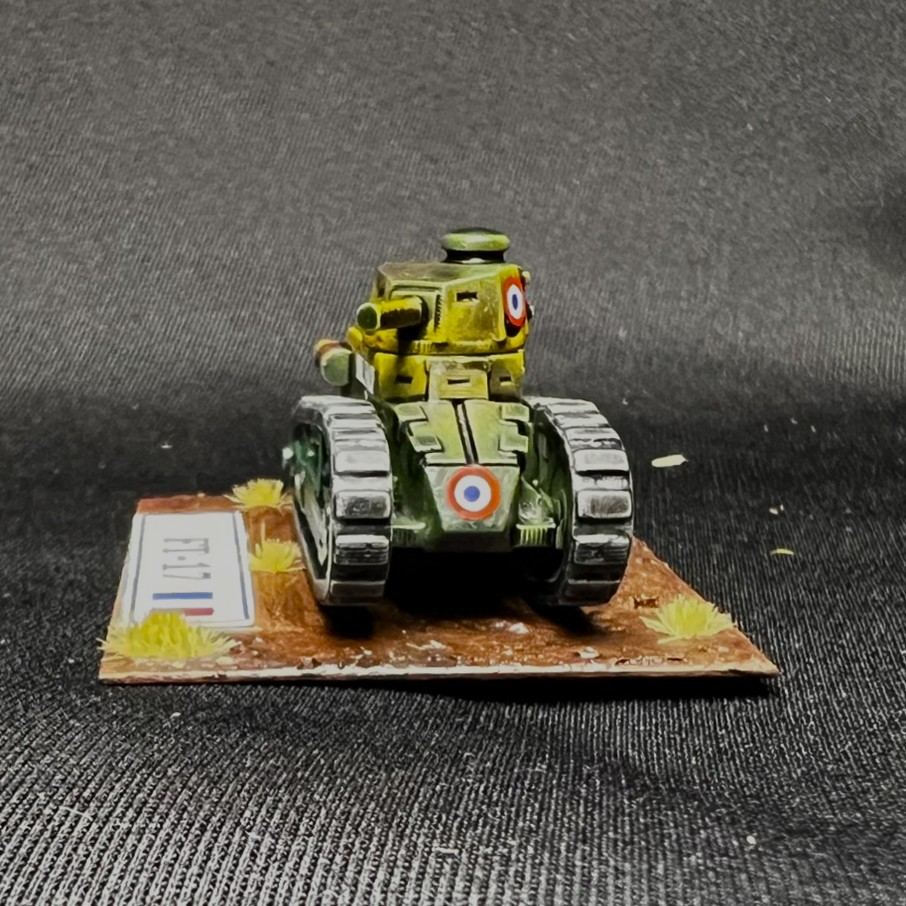
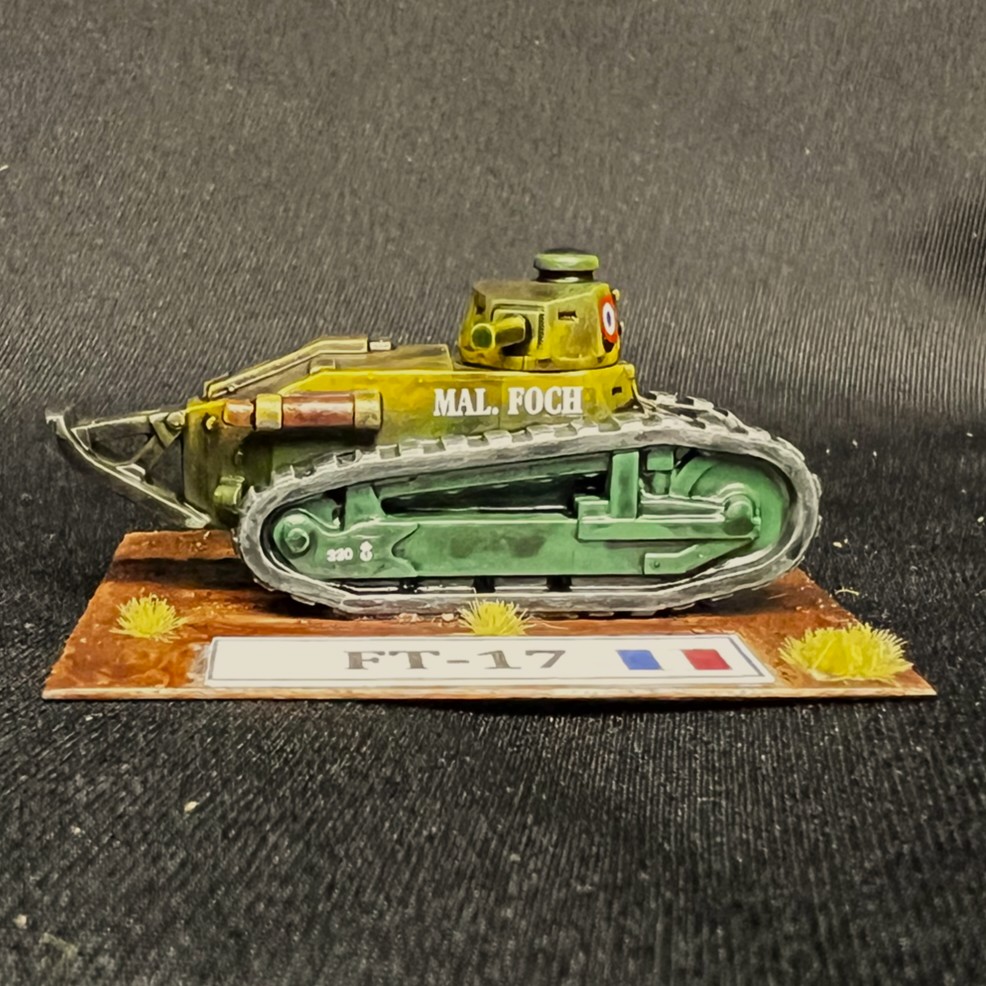
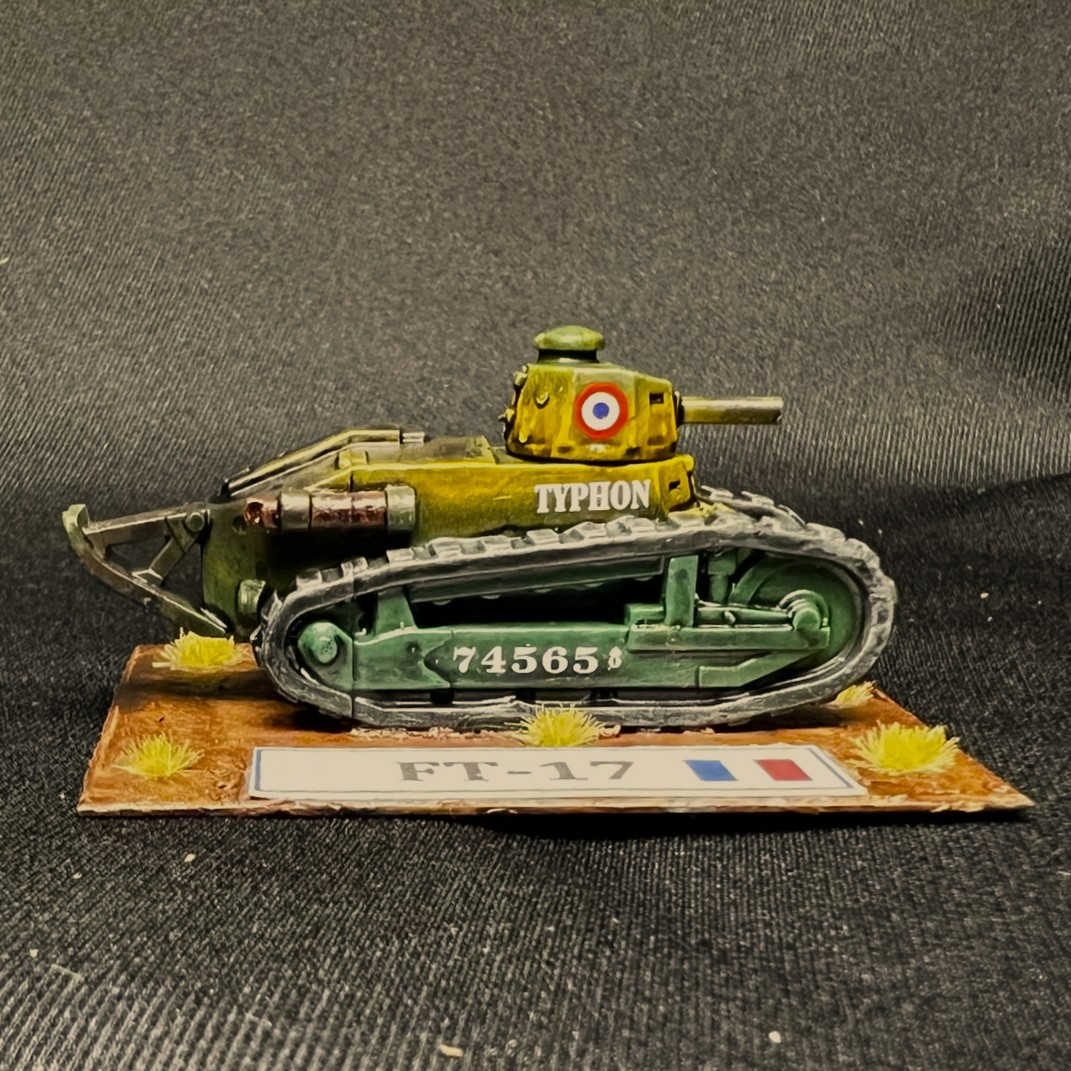
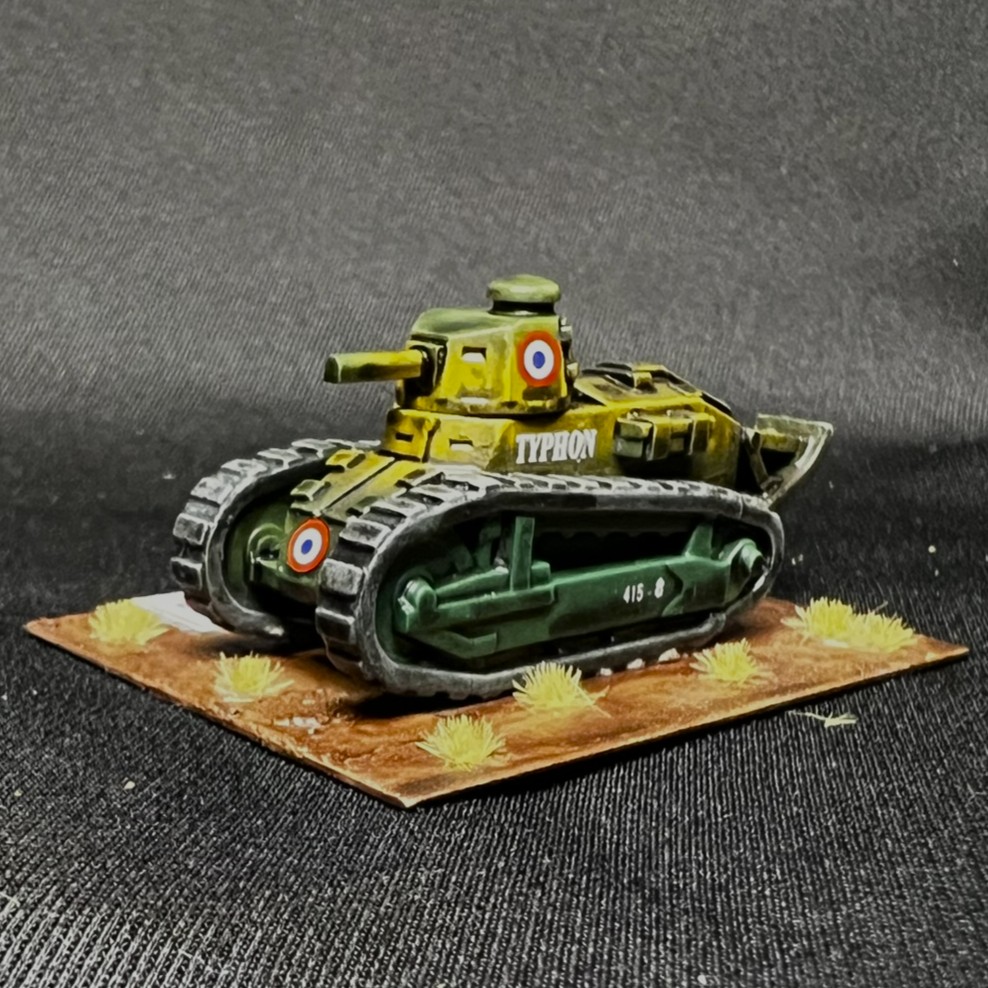
FT-17’s
“REIMS”
“MARECHAL FOCH”
“MARECHAL PETAIN”
“TYPHON”
“TOMBOUCTOU”
Group Shots
Below are all my FT-17’s, including the Peter Pig model on the front right. It has no name – but it does have mud!
Another view of the opposite side of the tanks – the Peter Pig model is on the bottom right here as well.
With terrible armor – yet the same 37mm gun as many other Vichy French AFV’s – these antique FT-17’s did indeed engage the US in battle in November 1942.
I do want to dedicate this post to my good friend Leif, who adores the FT-17 more than anyone else I know. When we play, it’s an easy choice as to which side he wants. He also helps me immensely at conventions – so this post is for you!
To all of you, thanks for looking! I will have share more Vichy vehicles soon. I eventually painted up 31 Vichy – and so far I’ve covered just 12 of them (6 FT-17’s, 3 White-Laffly AMD 80’s, and 3 Schneider AMC P16’s). More to come as I catch up. And there of course will be US vehicles. As always, if you want, I’d love to hear any feedback – feel free to let me know your thoughts in the comments section.
For all of my posts on WWII games and projects – there is a consolidated list of posts and their links located here.
Next up – Hotchkiss 35’s, 39’s, and Renault 35’s. Until my next post!
Eventually I do get these in games!
MATERIALS USED
PAINTS, INKS, GLAZES, SHADES, WASHES, PIGMENTS AND FLOCKING USED ON THESE FT-17 MODELS:
Vallejo “Flow Improver”
Green Stuff
War Games Accessories Steel Bases Number 23 (1½” x 2″)
































































 Mark A. Morin