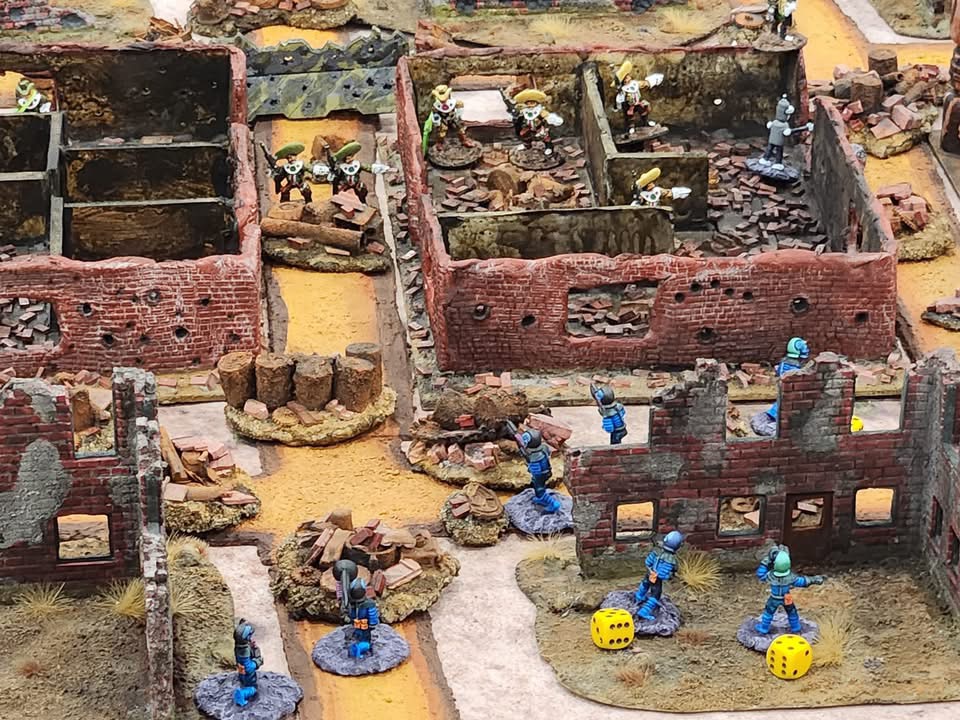
Creating Realistic Ruined Buildings and Wreckage for Wargaming

Followers of this blog have seen several posts showing my “rusty” preparations. I have been getting ready for my numerous games at 2026 tabletop wargaming conventions. That preparation involves painting up figures and terrain for scenarios that involve a good amount of ruins and wreckage.

In a previous post, I shared how I built transmission towers and rusty walls for a Wars of OzzTM game involving Professor Nitpik’s Industrial City (the Robotic Sanctum). I ran that game at Cold Wars and will share more about that convention shortly. The theme for Cold Wars this year was “The Wild West”, so I also had planned to run a game involving Space Cowboys (technically Archive Texican Space Rangers” from Star Rovers).

I don’t run western games, but I could cobble together a retro sci-fi game using Buck Surdu’s Combat Patrol:WWIITM gaming system (with my modifications). In my game Archive “Space Cowboys”, and uplifted kangaroos  (“Space ‘Roos” ) combat blue-skinned “Retrovians” (from War Games Supply Dump). Both armies are searching for hidden ancient robots in the apocalyptic ruins of a long-dead civilization on a newly-colonized world called Dust.

To really make the ancient ruined industrial panorama that I wanted, I needed more buildings and structures than just my transmission towers, rusty walls, rusty generators and ruined chemical plant. I also wanted a lot of wreckage strewn about as terrain.

To those ends, I ended up making two ruined factory buildings, two industrial structures, and 61 scatter bases of industrial wreckage. These were all built at the same time. This enabled me to work around issues like drying and curing times as time was short. Oh yeah, and we had a few snow storms here in Massachusetts along the way that ate up some hobby time (not helpful at all).

I wanted to share my project and all its components here with you. As these were simultaneous efforts, you will see multiple project stages here. You may notice that I used a lot of repurposed bits of metal and plastic and Juweela products. The lists will be at the end of this post as is my habit. My concept was to achieve a Stalingrad-like look.

For the two buildings, I converted an iPad 16 box top and bottom. I used Apoxie Sculpt, steel washers, sand, multiple pieces of plastic, desiccant cylinders, and a lot of Juweela items to make the 61 scatter bases. And for two flat industrial structures, I reused two pieces of packing materials to repurpose them as flat rusted structures.
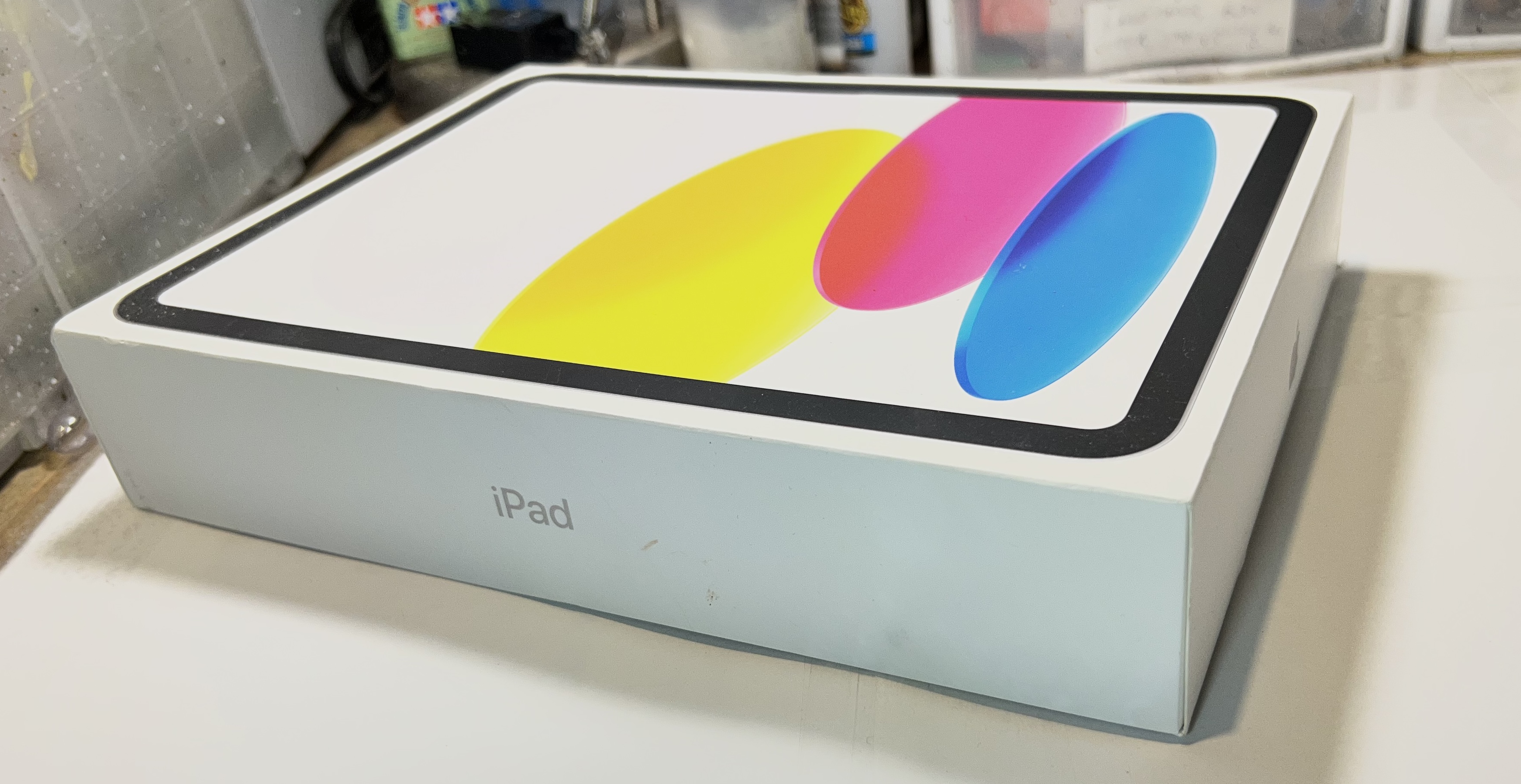
I started out with this iPad 16 box. I would use the top and bottom of this. It is plastic and cardboard.

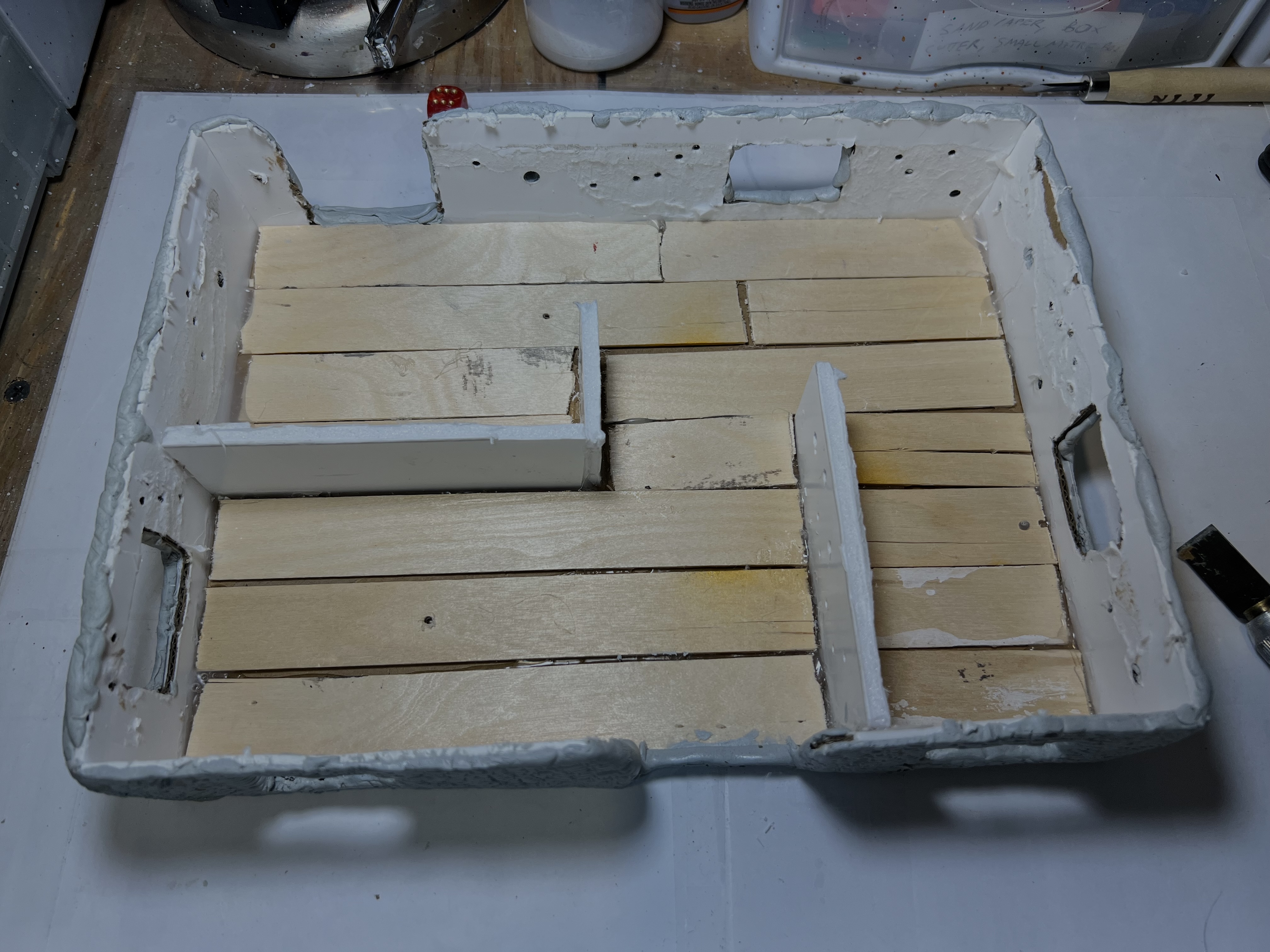
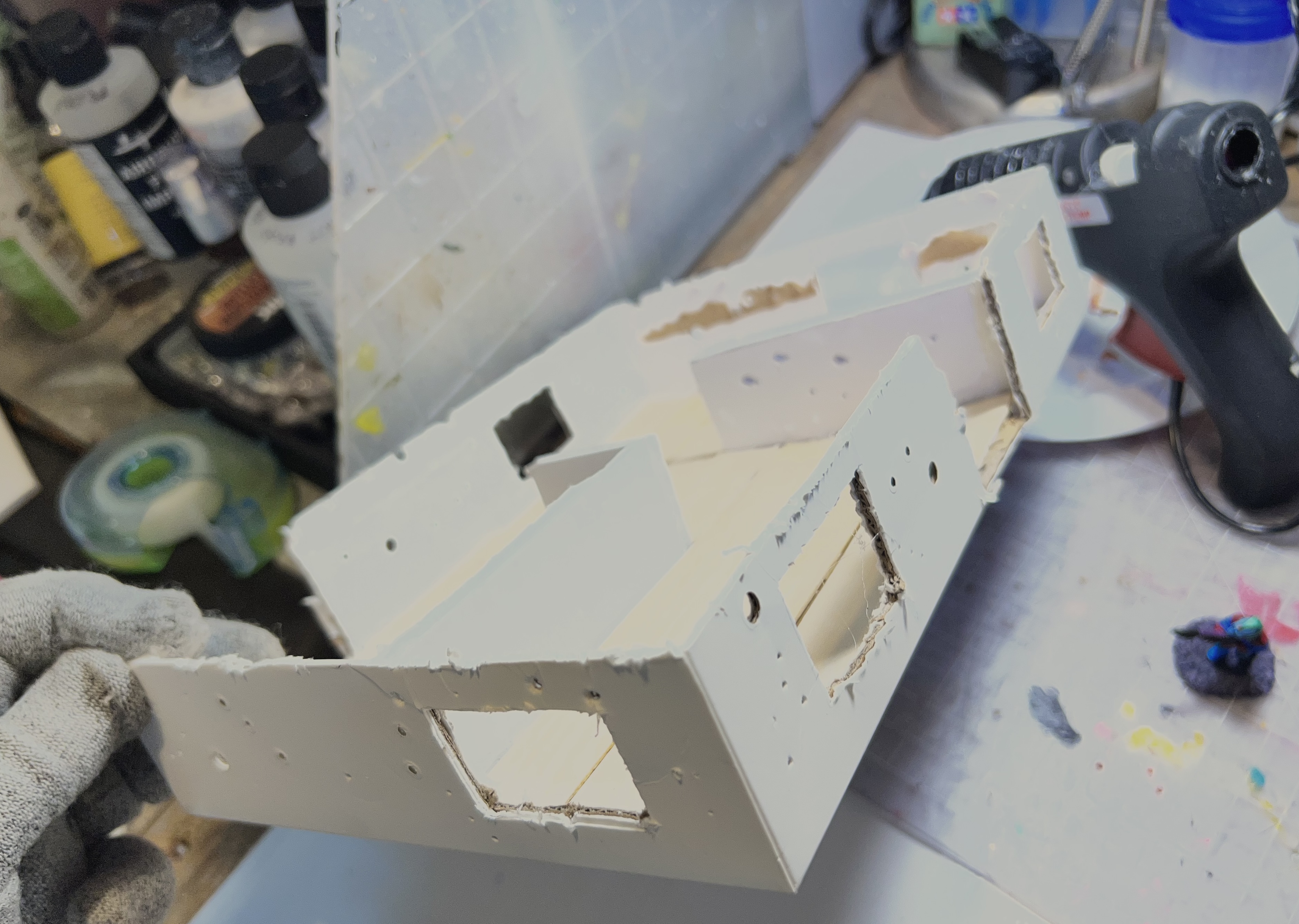
I sawed out windows and doors on both box pieces and made each a bit differently in terms of architectural arrangement. I then hot-glued foam board to make rooms. For flooring, I broke up old popsicle sticks. These I had used previously to mount figures for painting on other projects. Lastly, I drilled out holes in the walls to simulate old bullet holes.
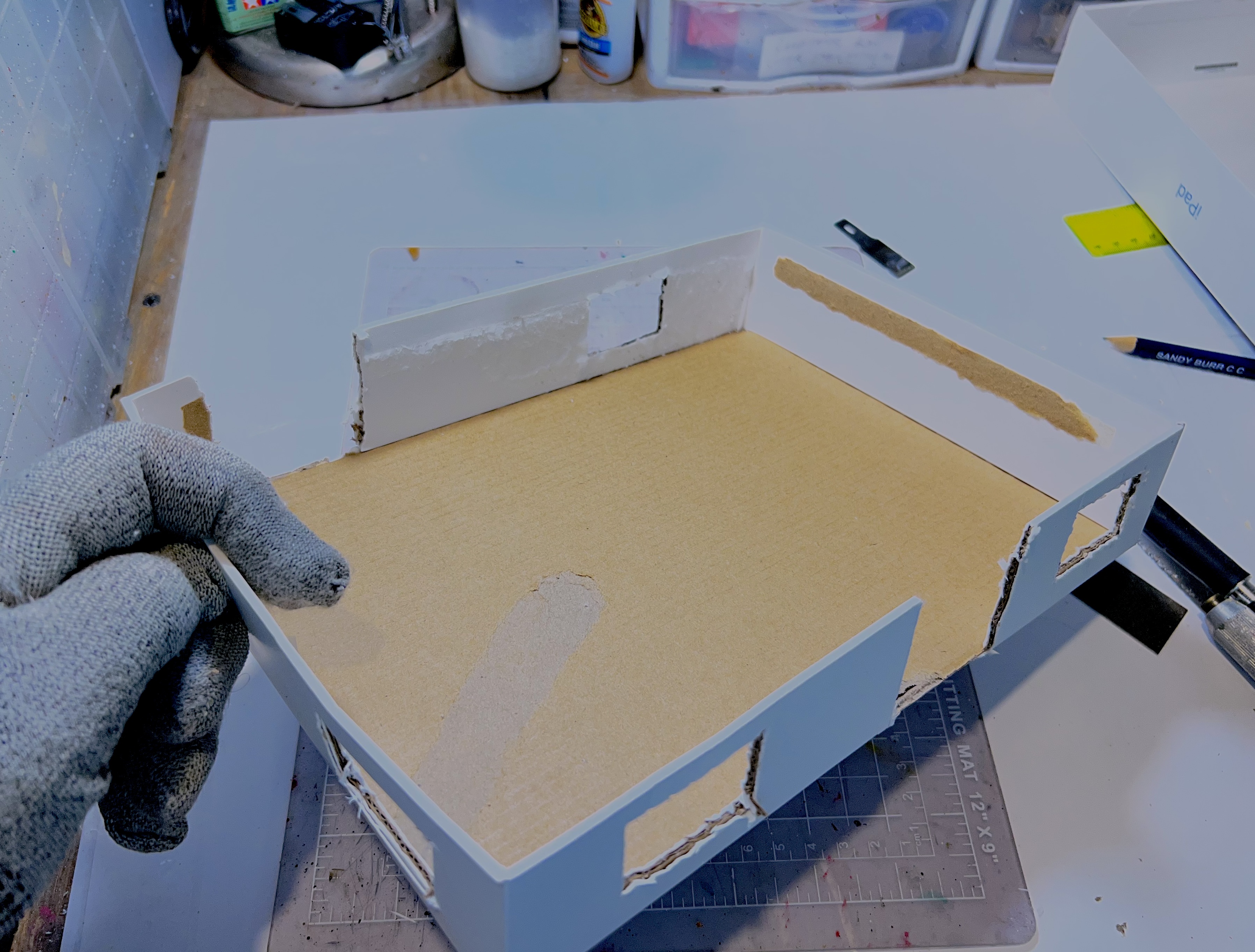
Cutting out the windows and doors on the first building.
Adding the walls, bullet holes, and flooring.

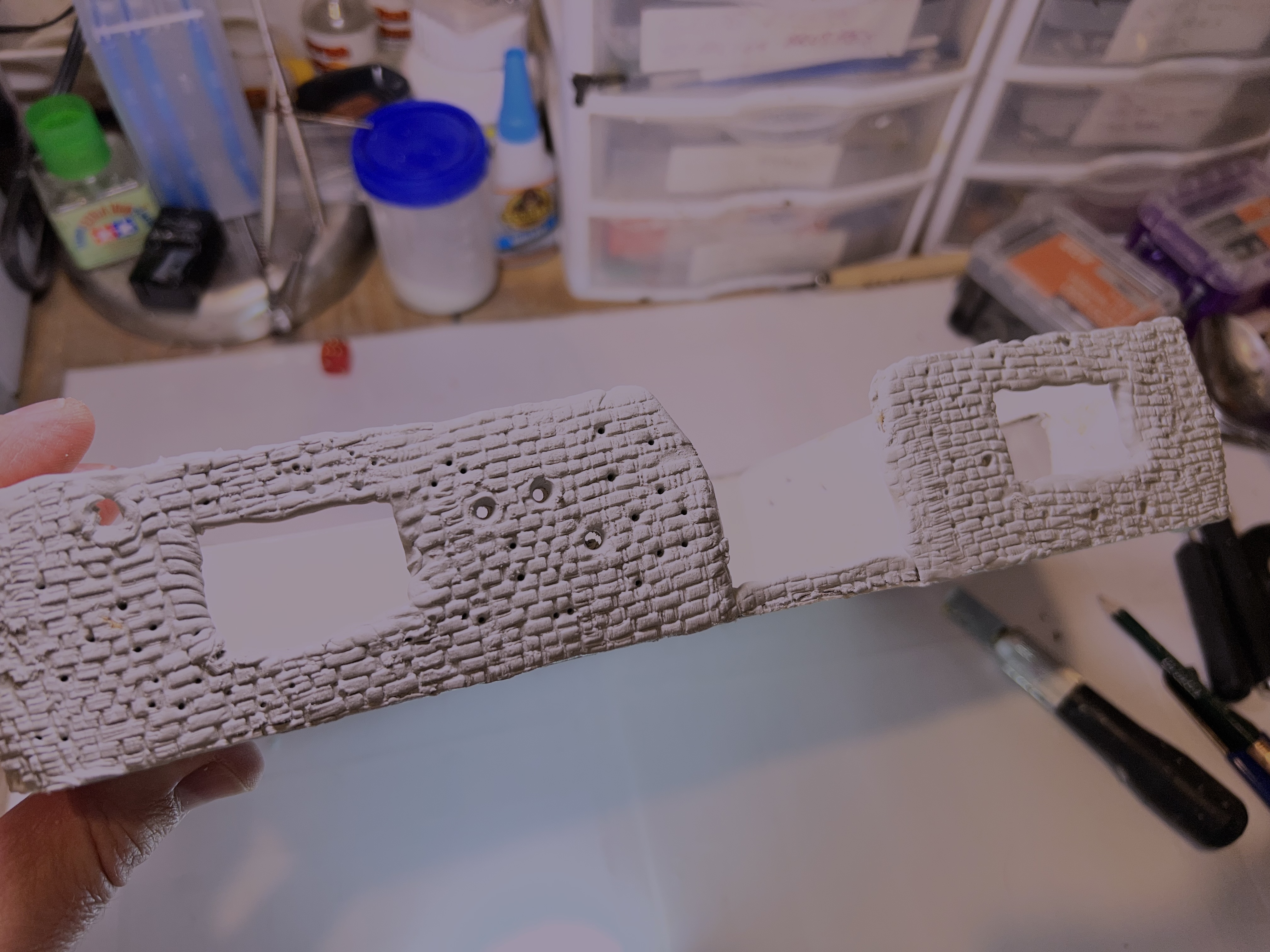
Then it was on to sculpting the outside walls. I did each building separately from here on so as to handle both curing times and to learn as I went as to best practices. Apoxie Sculpt and a Green Stuff World brick roller worked well.
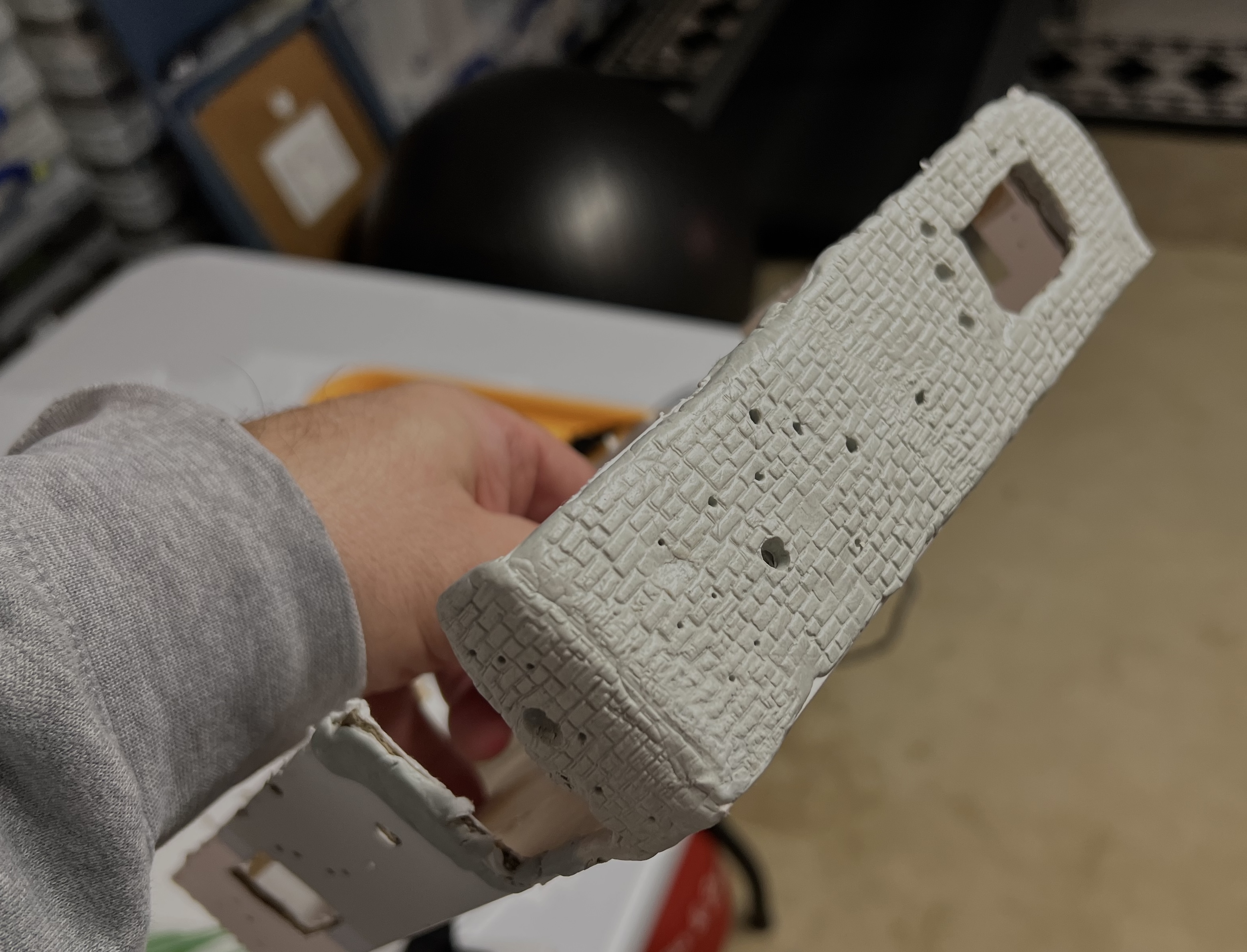
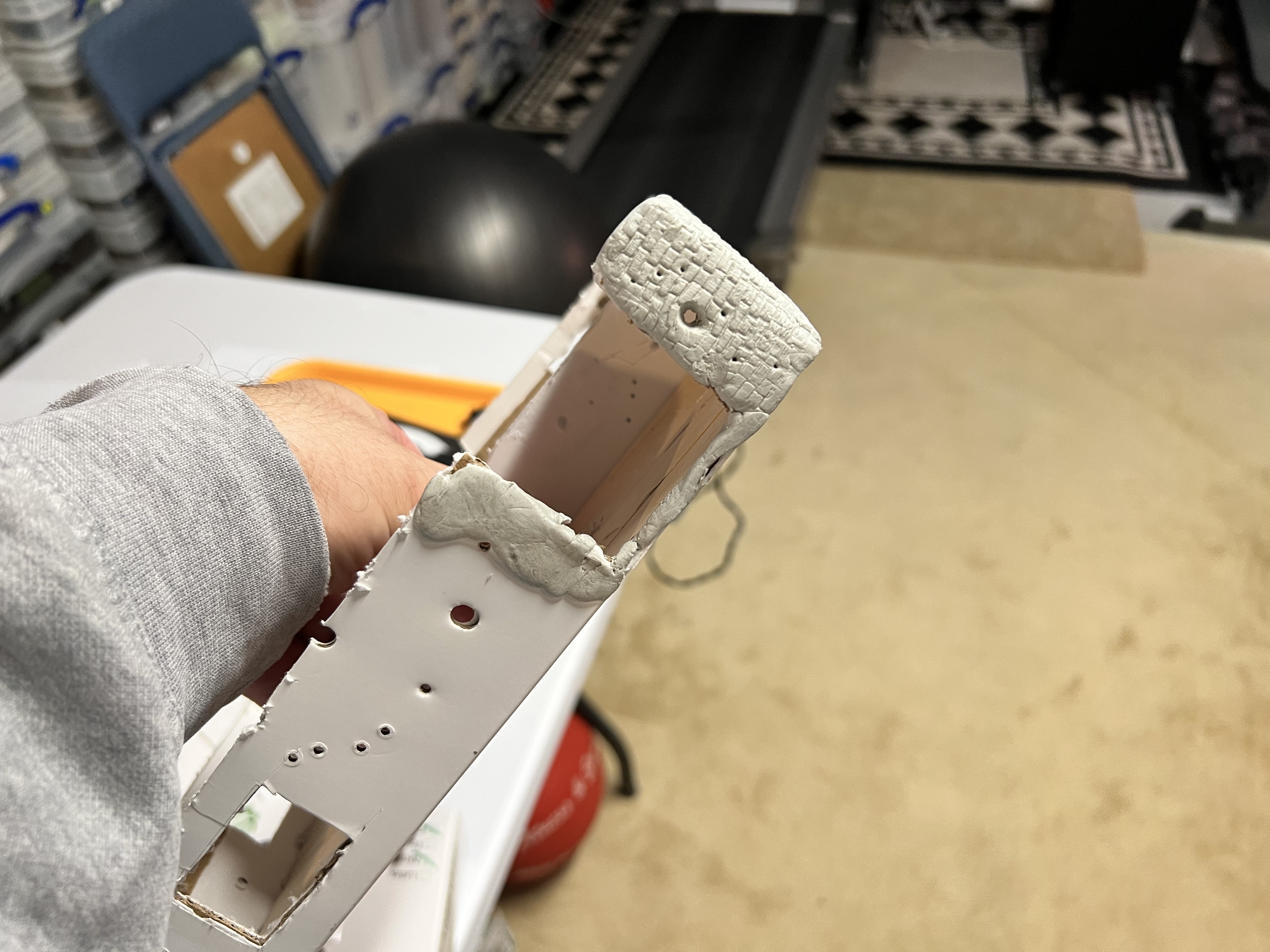
Sculpting the walls. I used an awl to create and shape shell and bullet impacts on the outside.
Using the windows as gripping spots made the sculpting easier. I did need to then wait for curing.

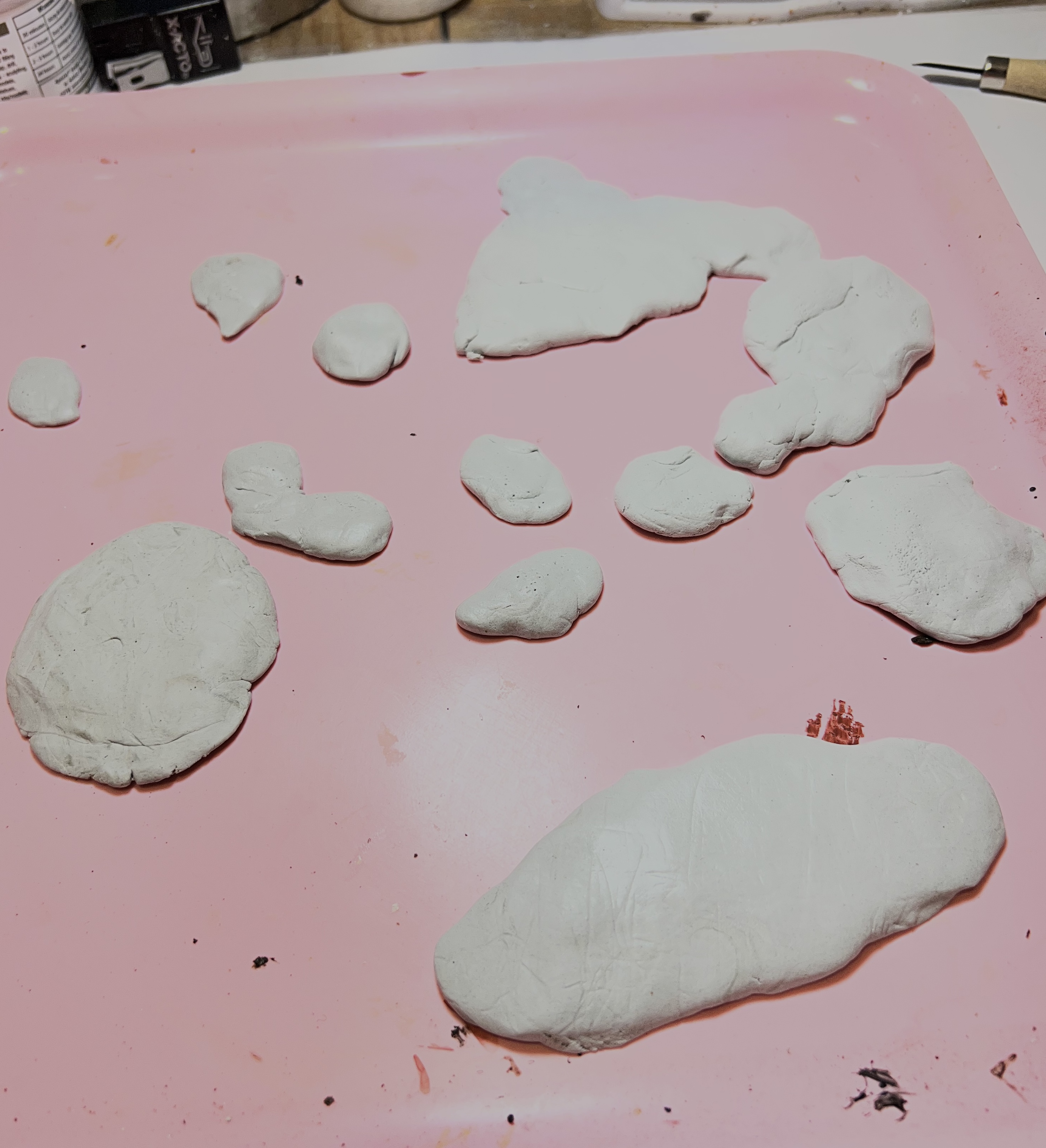
While the walls cured, I worked on the wreckage bases – also using Apoxie Sculpt. I made the bases differently in terms of both size and shape. It helped to use one or more steel washers underneath the base sculpts. Using different sizes helped to make the shapes varied.
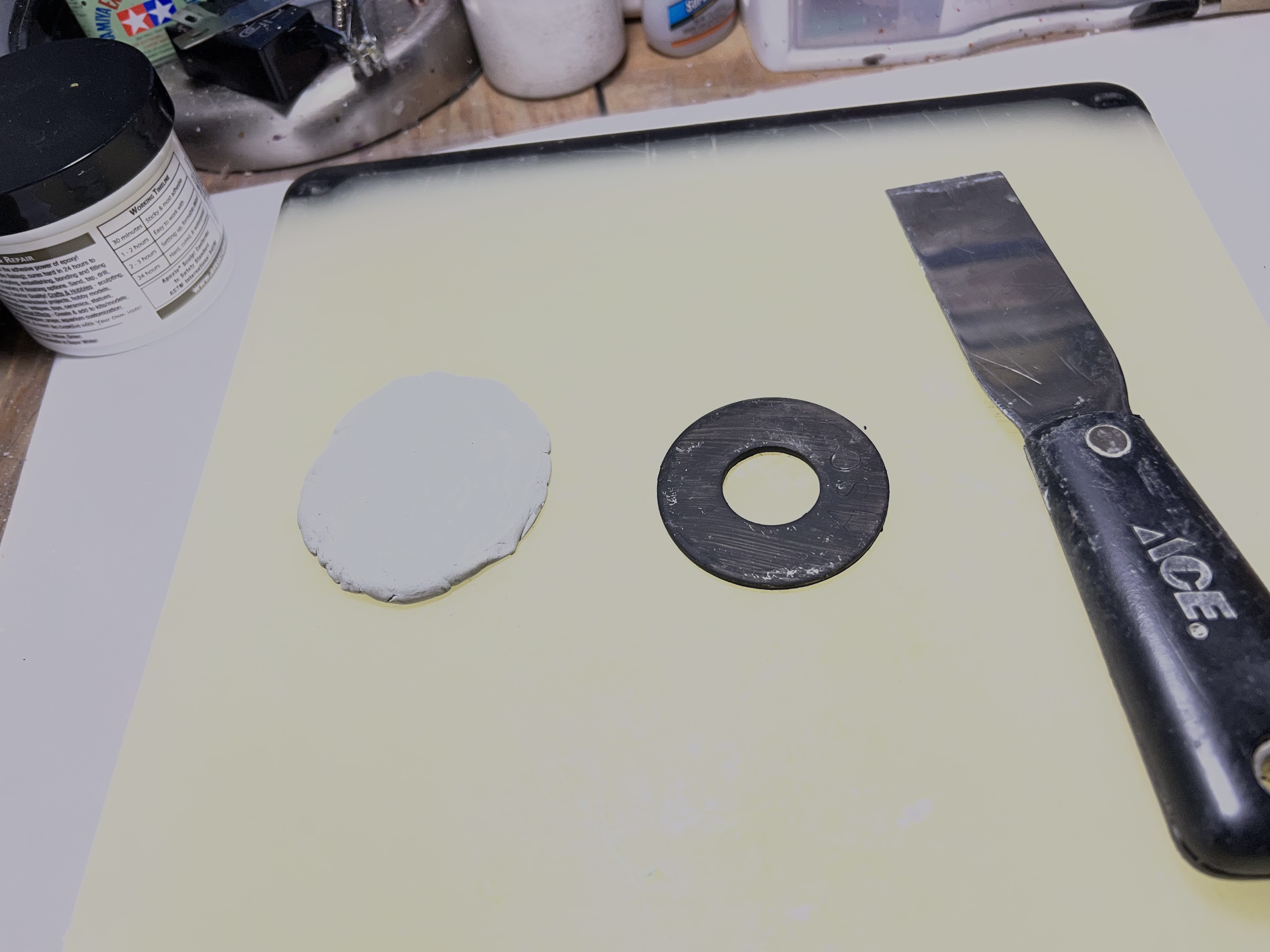
The biggest washer that I used and a base covered with Apoxie Sculpt.
Examples of the other sizes and shapes – all with steel washers underneath.

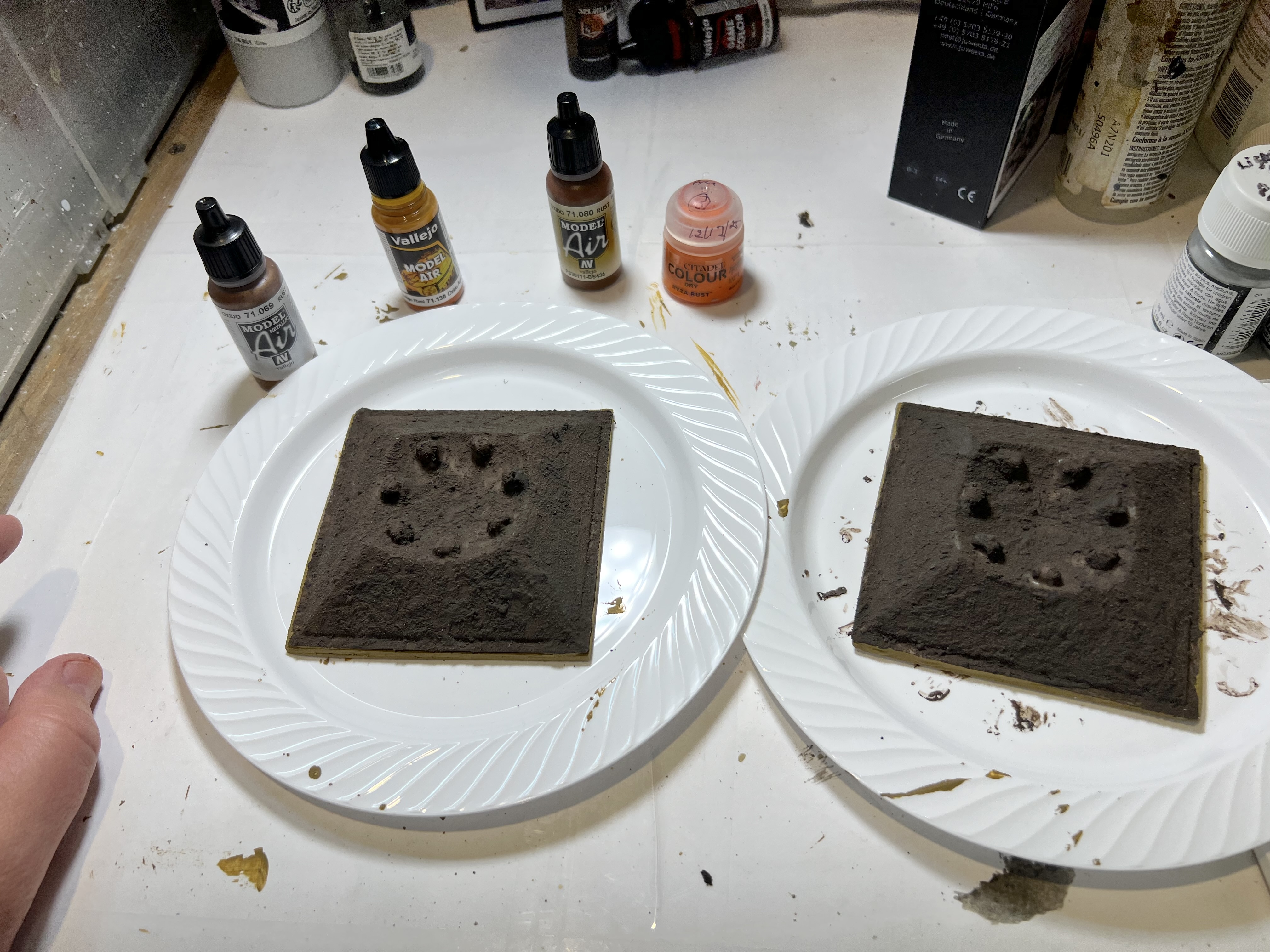
As the corrosion texture paint takes time to dry as well, I started adding that to various pieces of debris that I had saved up. I like to use a cheap old brush that could serve no other purpose – especially as it usually destroys it. The corrosion paint needed to dry and then got a second application.
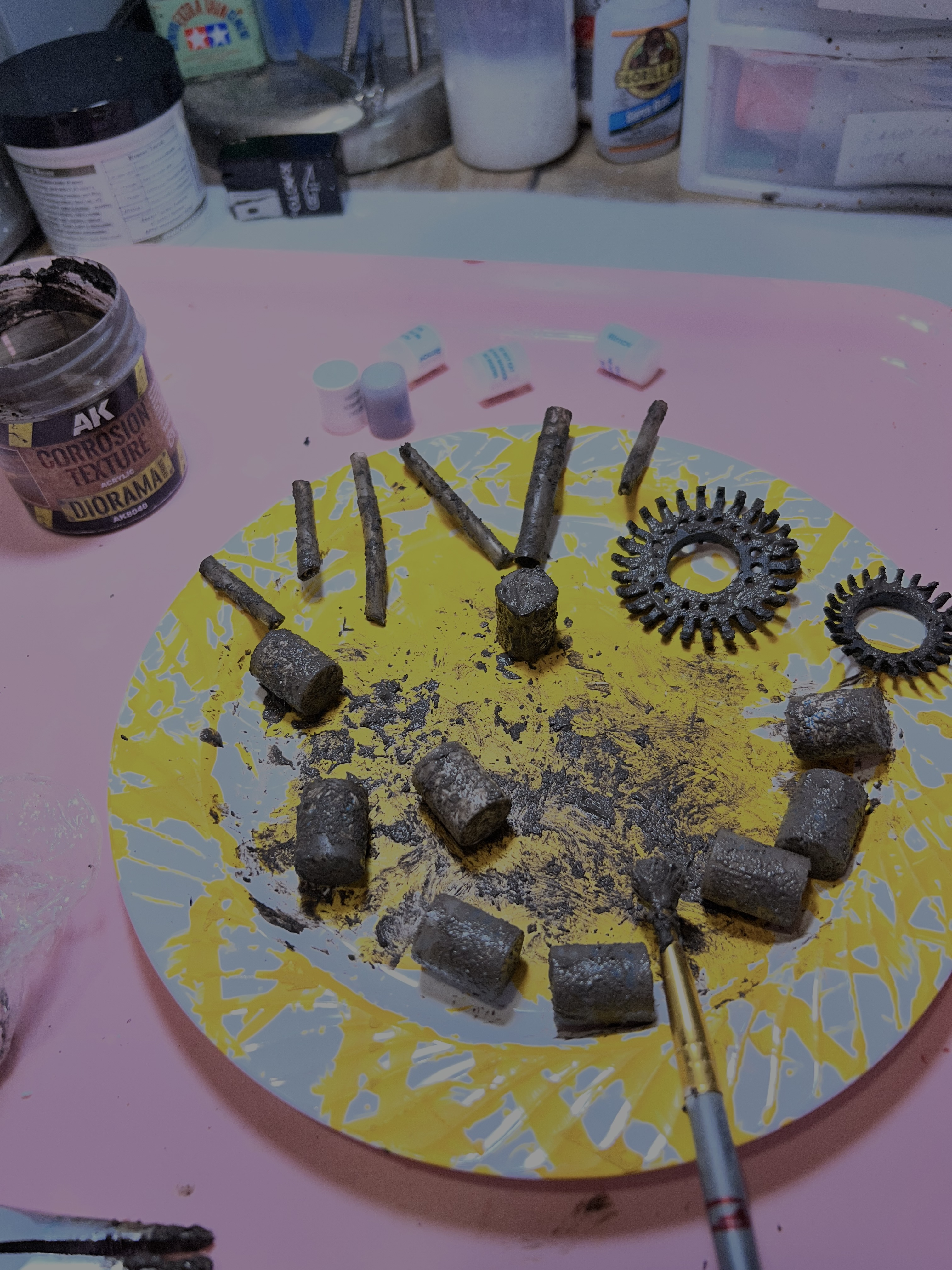
Using the AK Corrosion Texture paint. Here I am using it on desiccant cylinders (from pill bottles), crushed plastic straw sections, and rubber inserts from a drain plug replacement.

After a day, the Apoxie Sculpt on the first building had cured. But I wanted there to be a small outside rim to it that could hold wreckage and brick debris. While a sheet of polystyrene was gluing to its bottom, I worked on the second building.
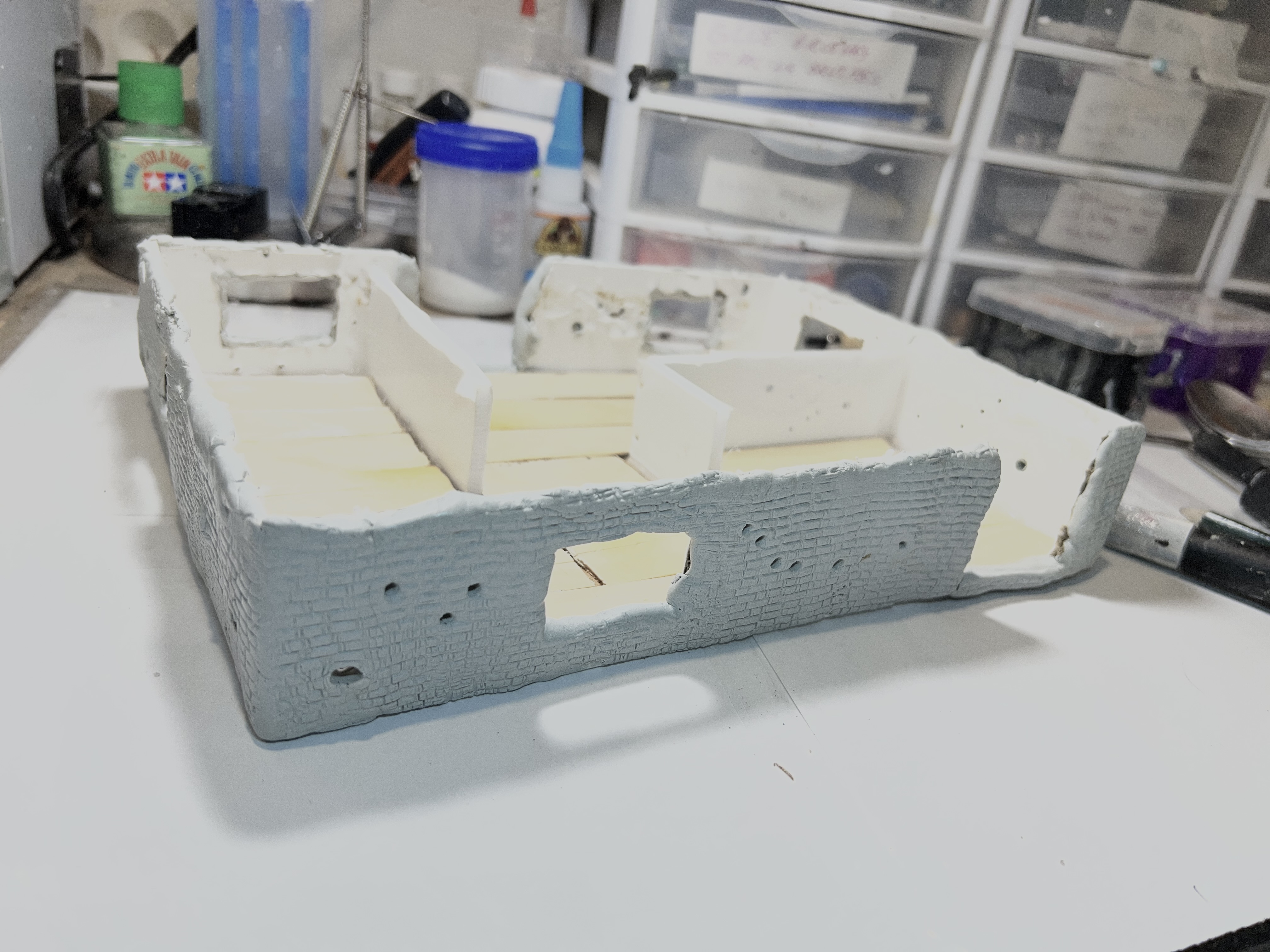
First building cured.
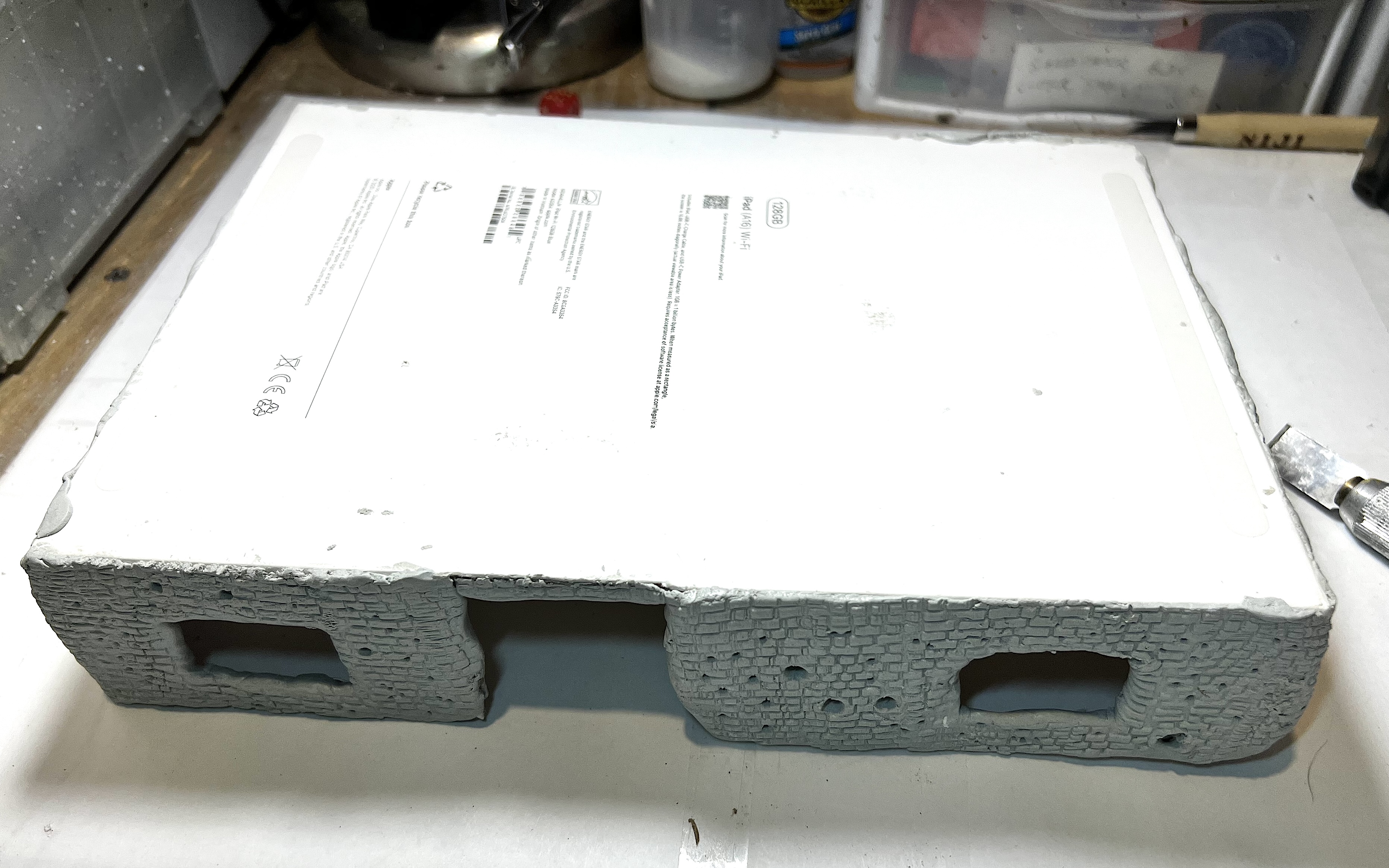
Bottom view – I needed more here underneath…but before that I finished the second building’s outside.
Second building outside sculpting…
….and second building flooring installation.

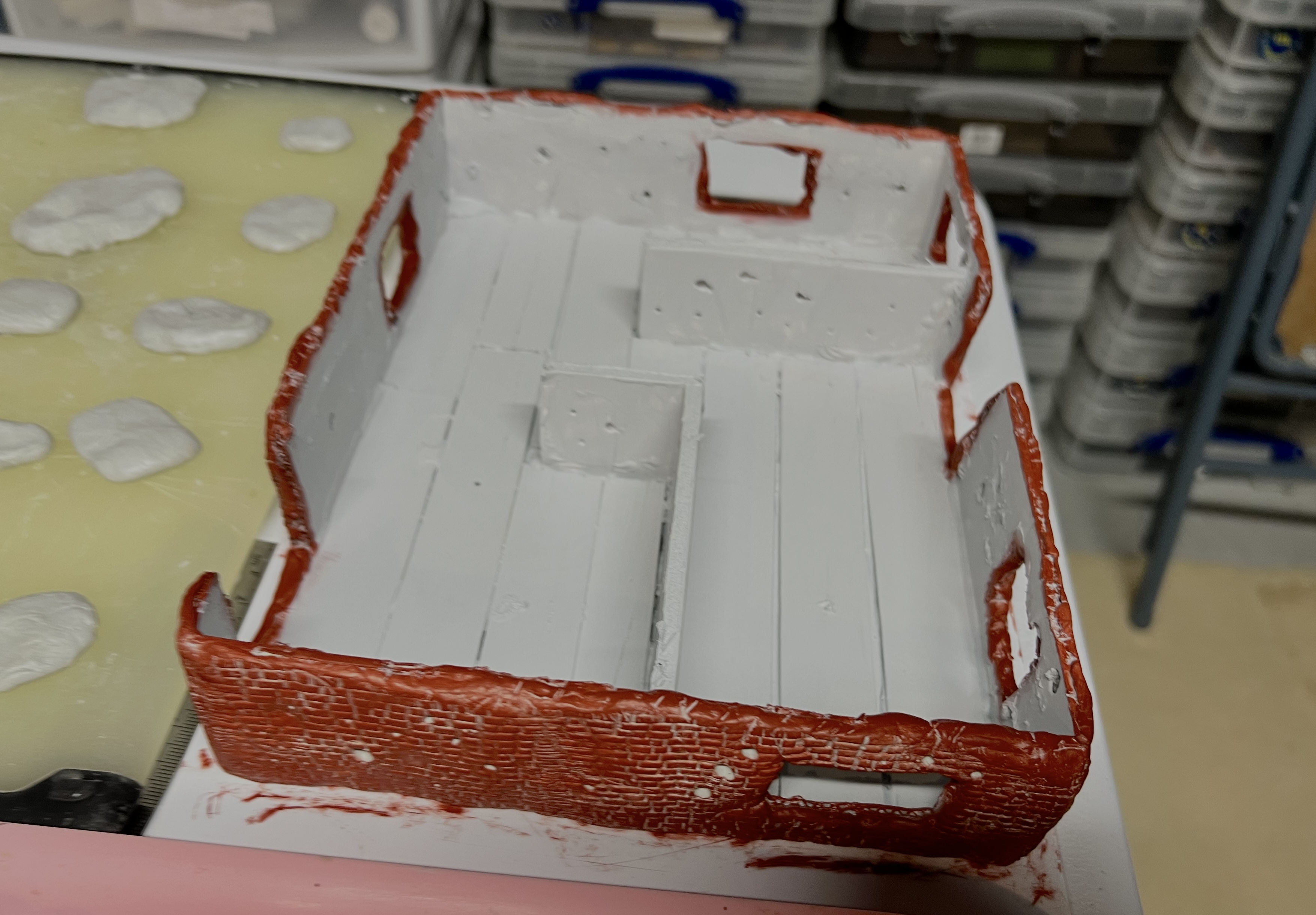
As the first building had cured, I started to paint it. Then I was able to glue a polystyrene base to building number 2.
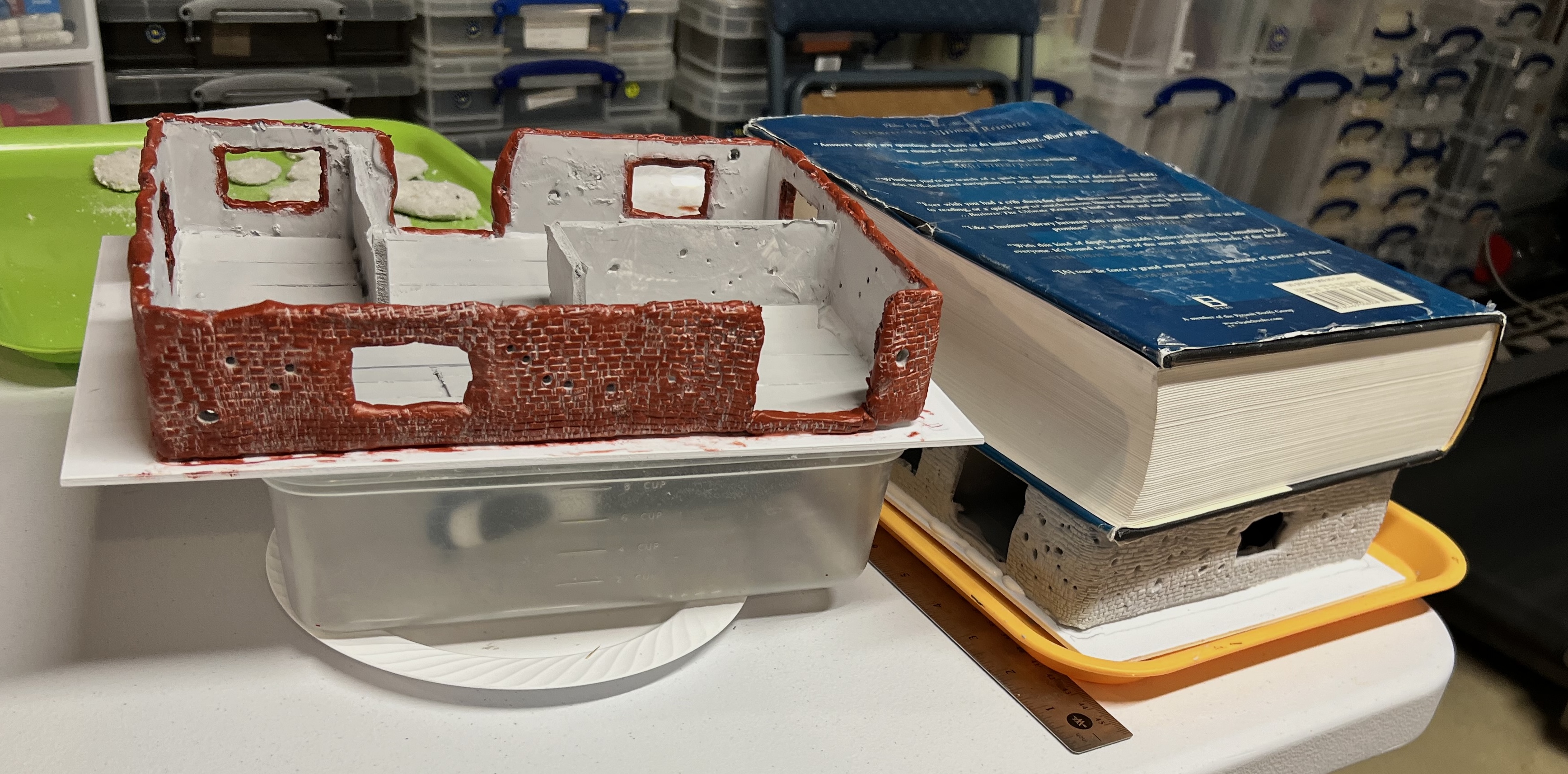
Building number one with early paint work, and building number two being glued to the PS sheet under a heavy textbook.

As I was again dealing with drying and curing times, I went back to work on the wreckage bases. I used up some white sand on the Apoxie Sculpt bases and applied with PVA. Once that had dried, I added as much wreckage as I could to each.
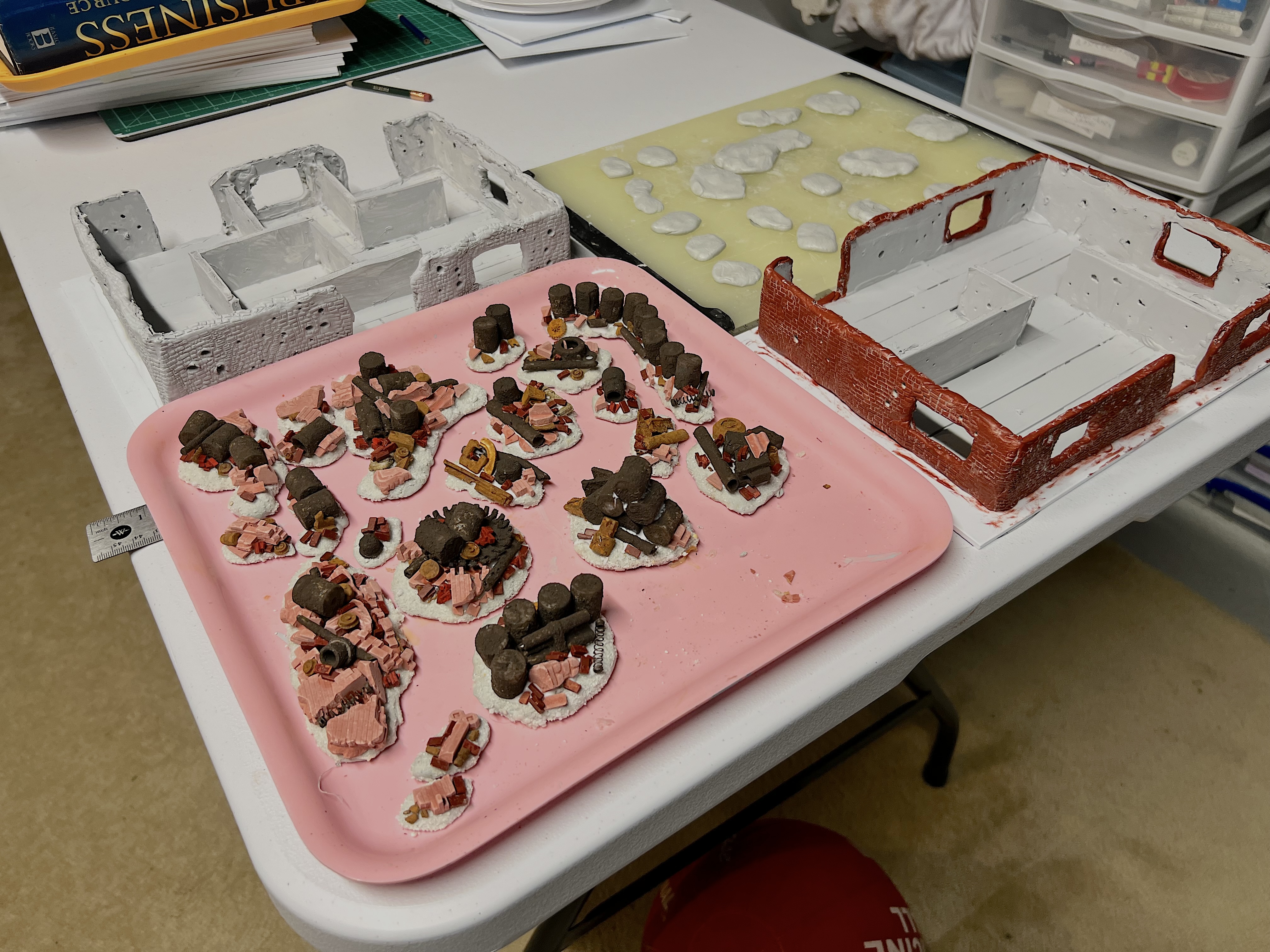
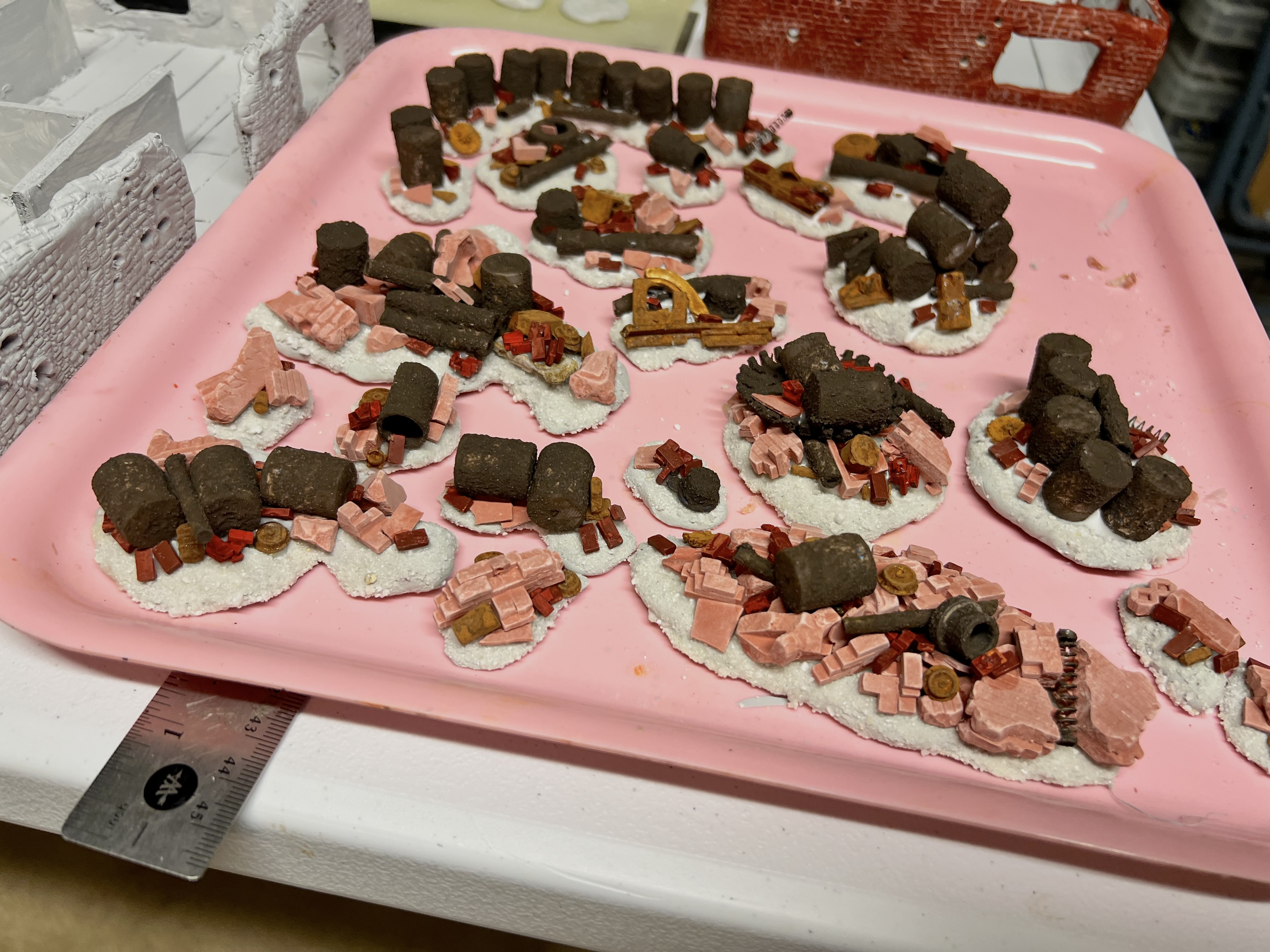
Wreckage bases – I started with the largest. The two buildings are shown in progress as are the next batch of sculpted bases curing.
Close up shot of the larger wreckage bases in progress. Glue must dry…
Close up of building one with insides primed.

At this point, I added the flat clear plastic packing material to two square pieces of polystyrene by clamping and gluing them in preparation for corrosion texture. Then it was back to the wreckage bases. I had run out of white sand, so the next batch of wreckage bases got a PVA/grey sand application. As I used a lot pigments later, this made zero difference. At the same time, I also dirtied up the interior building walls and flooring using a sponge and various dark washes. The rim outside the buildings got a sandy texture paint covering.
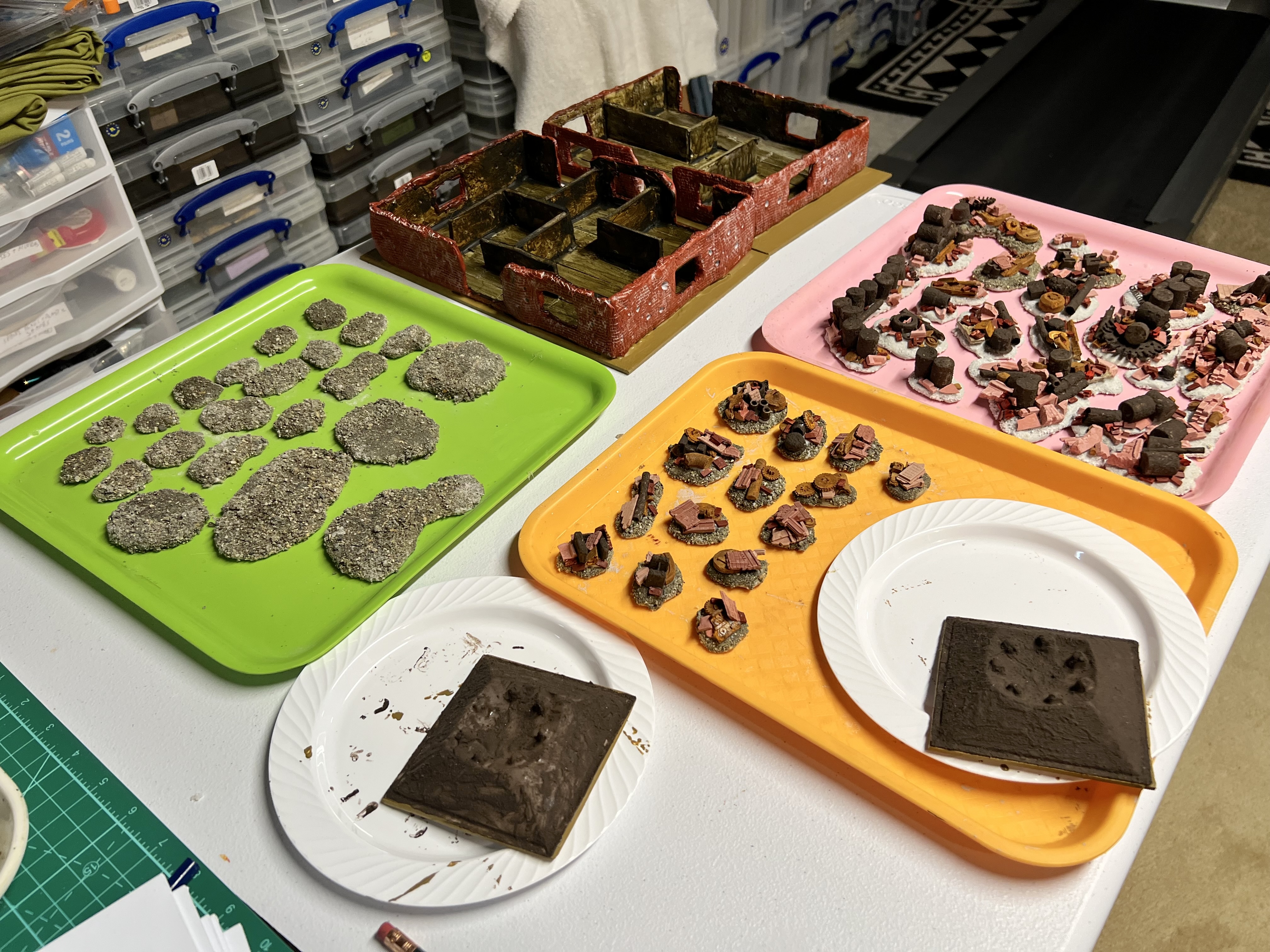
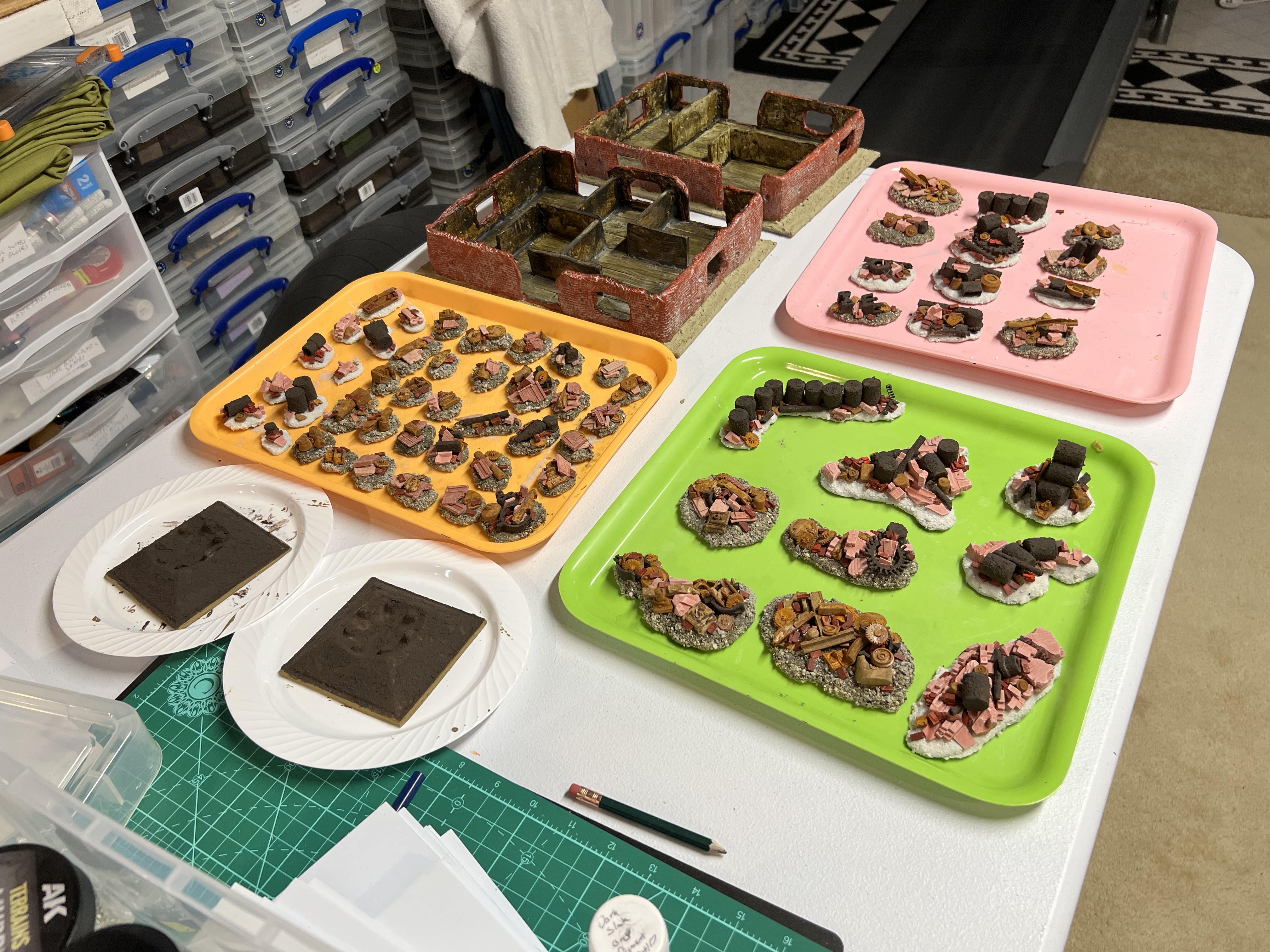
The dark sand drying on the next wreckage bases, the flat structures with first application of corrosion texture, other bases in progress, and the buildings in the back.
A second coat of corrosion paint has been applied to the flat structures here. I also sorted the wreckage bases by size before adding pigments.
The flat structures and some other rusty paints I would add before augmenting with pigments.

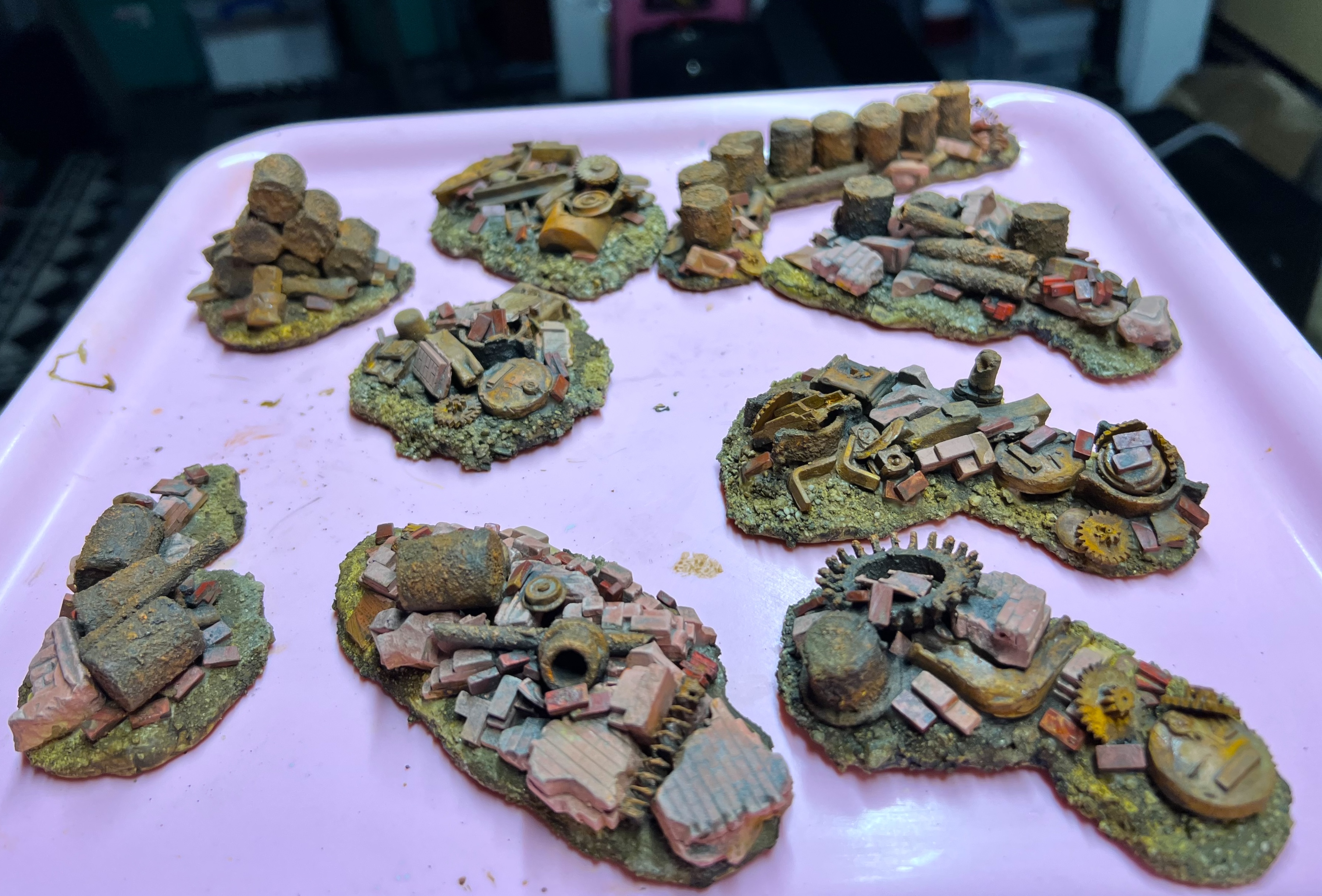
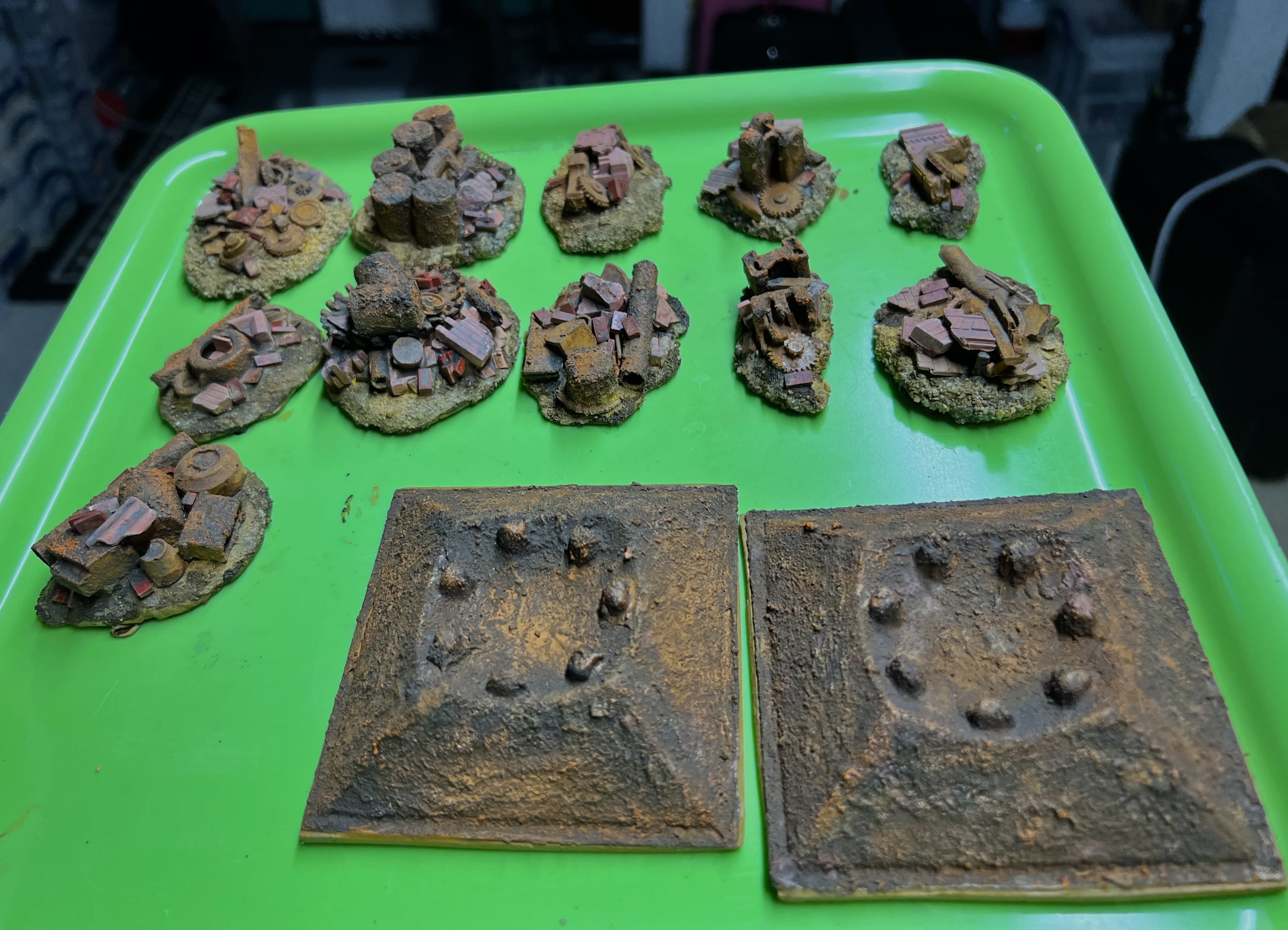
Below you can see the wreckage bases after I added pigments to them. I fixed the pigments with Vallejo Thinner applied with a spray from a lens cleaning bottle.
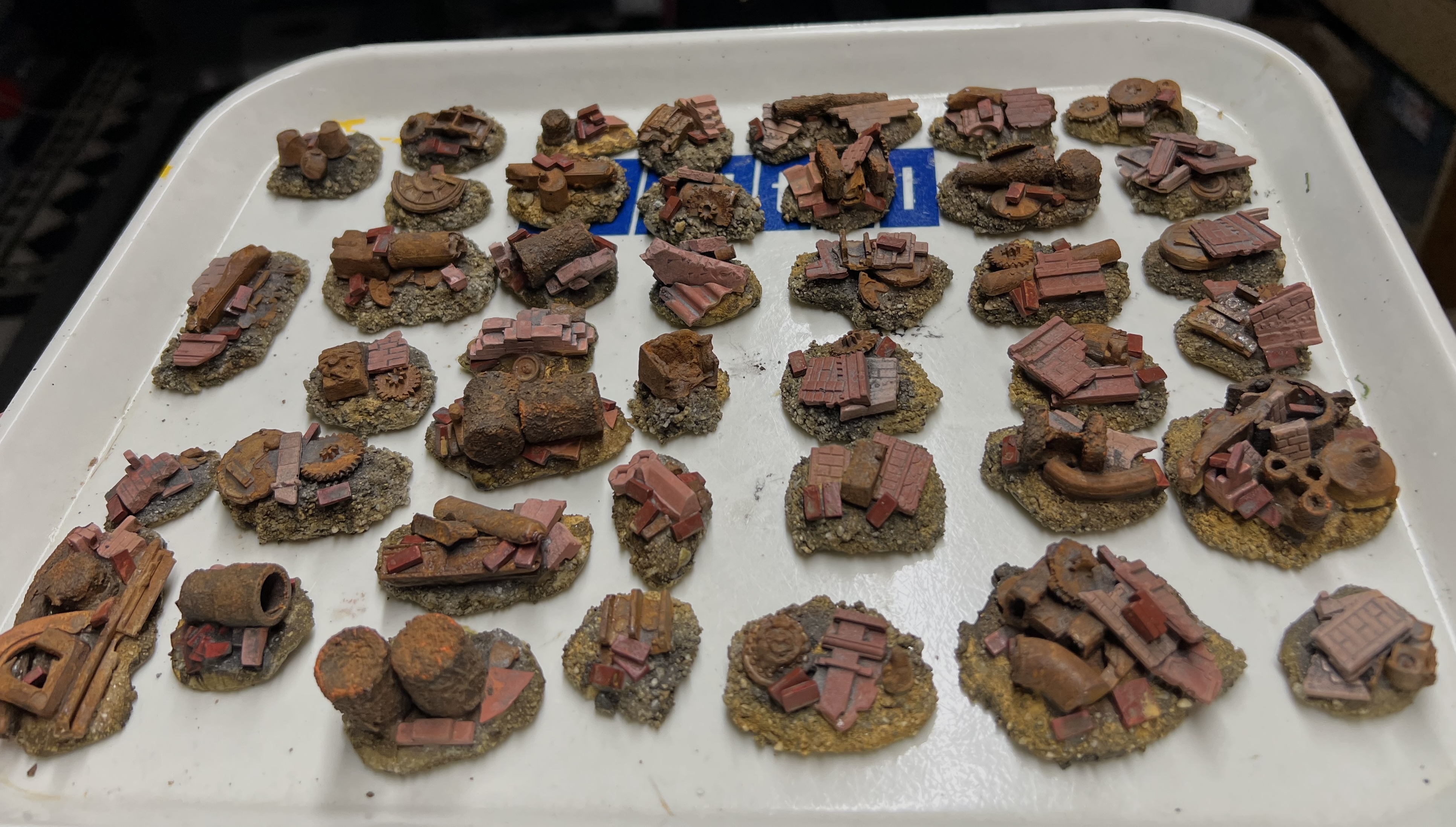
Smaller bases done!
Medium-sized bases and flat industrial structures done!
Largest wreckage bases done!

Next, I added rusty industrial wreckage and scattered bricks to the buildings’ interiors.
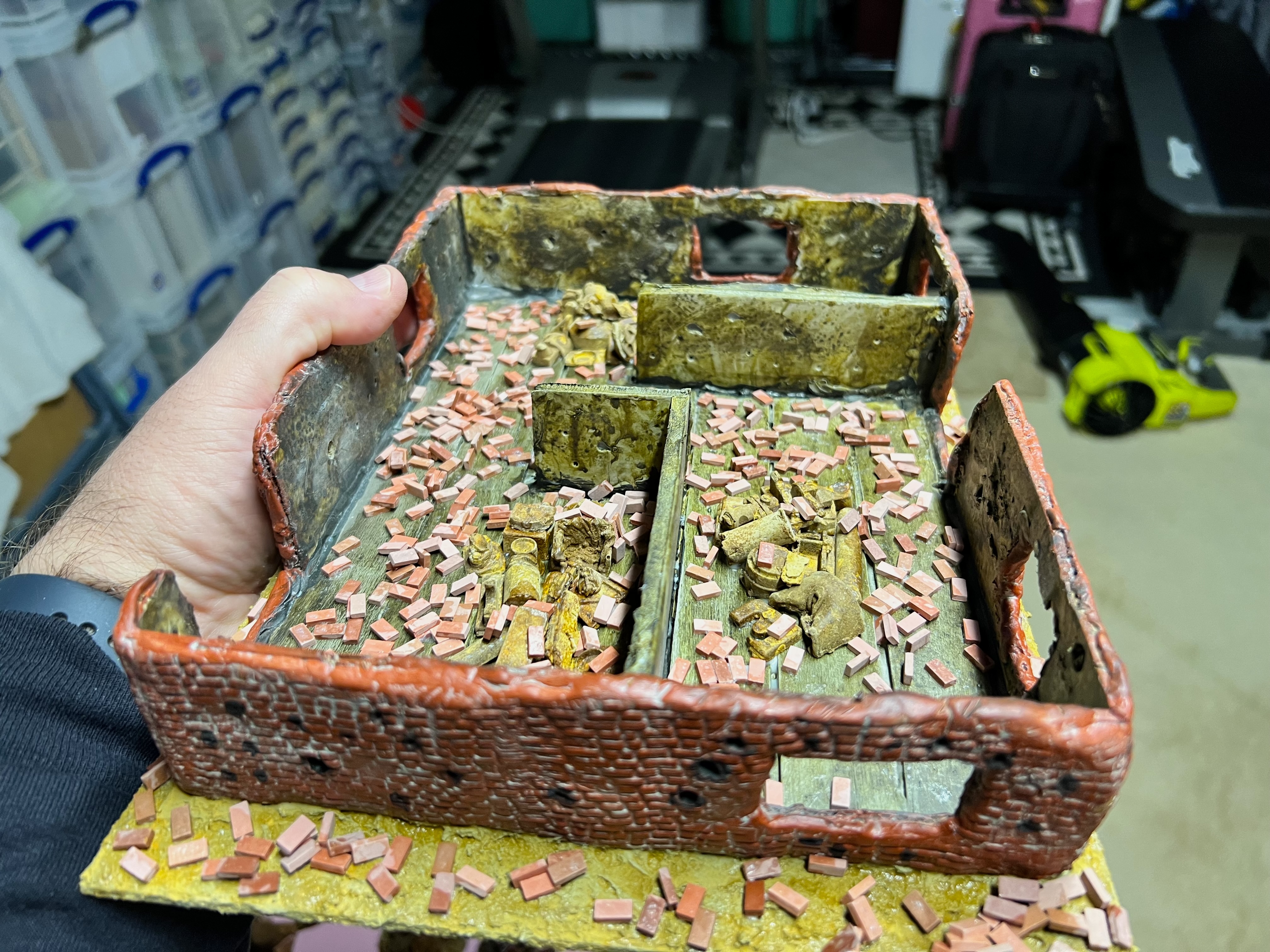
After adding industrial wreckage and bricks to building 1…
…and building 2.

Clearly, pigments were needed at this point to make the bricks and wreckage look older and dirtier. More pigments and dark washes to the rescue!
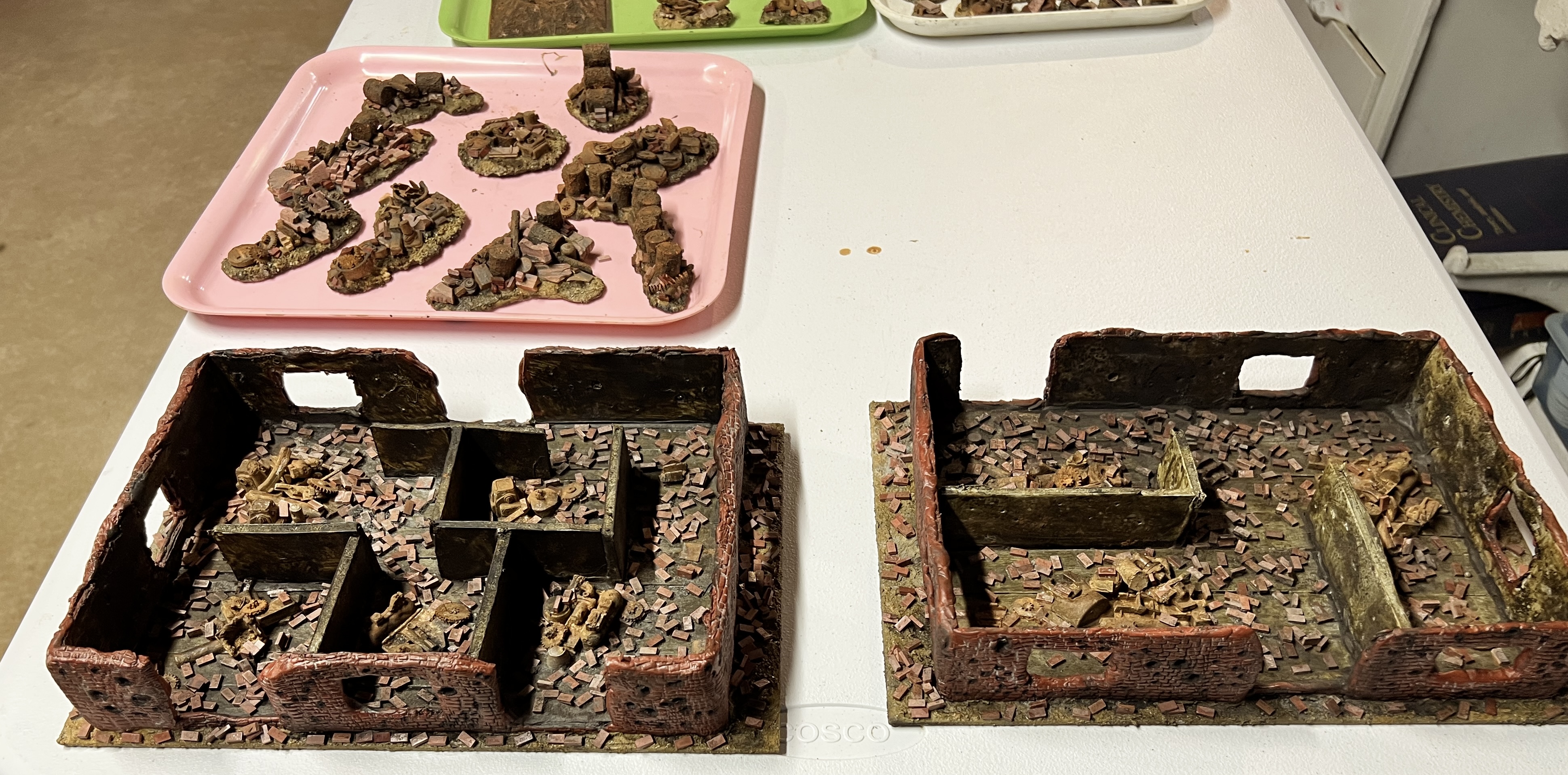
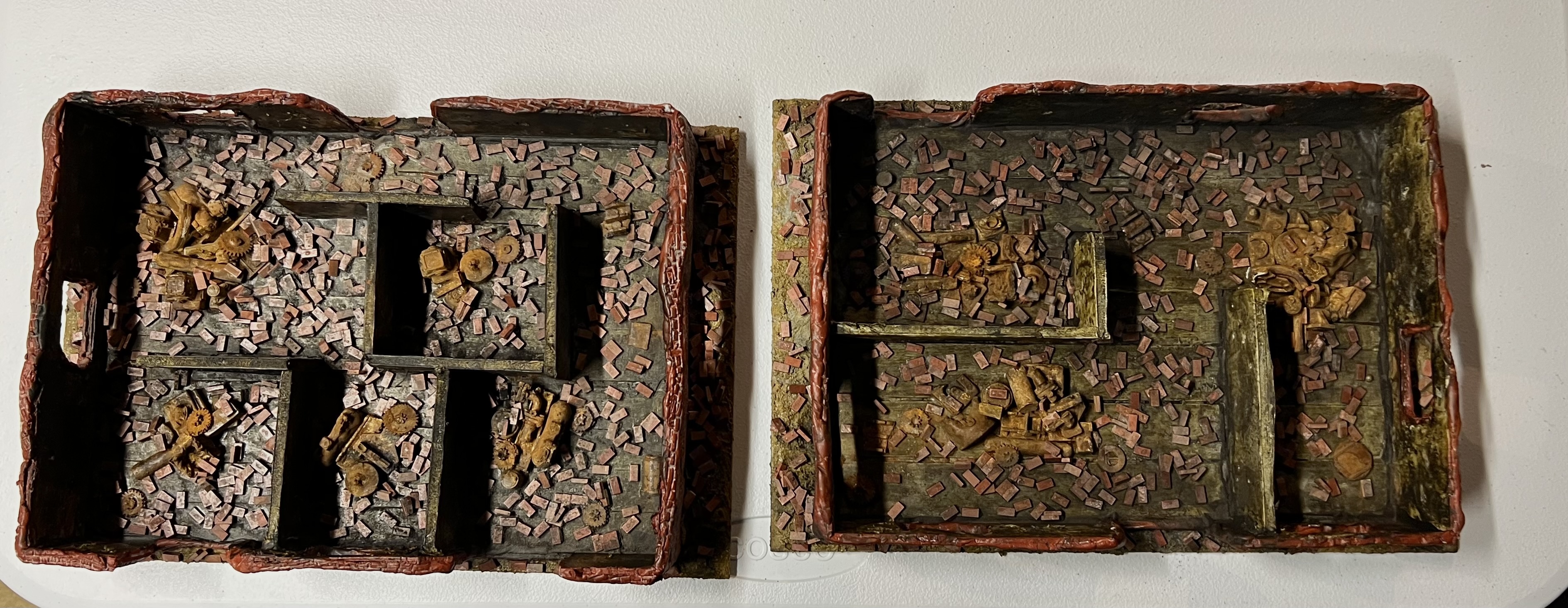
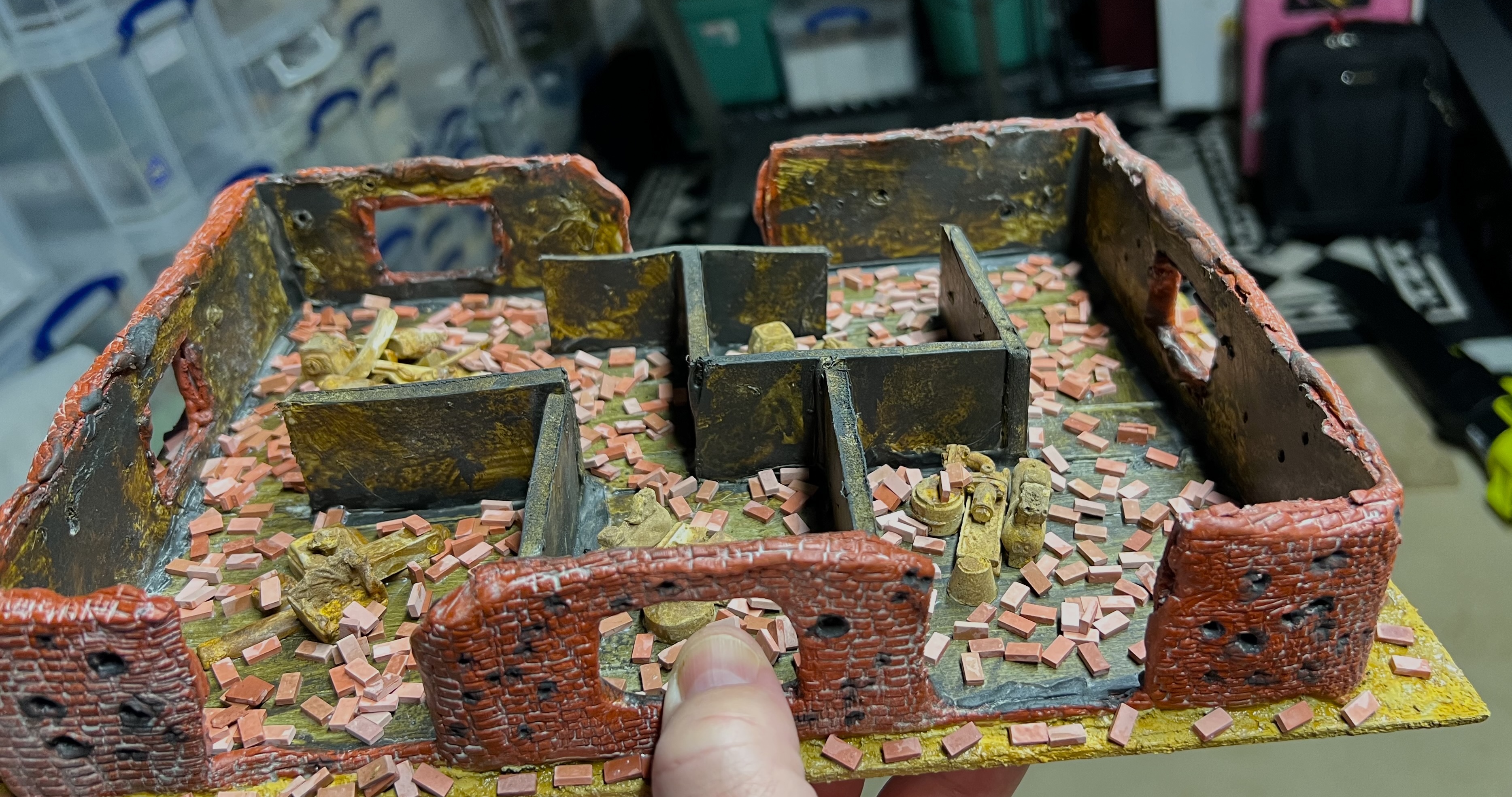
The buildings after adding the pigments and washes to dirty and rust up everything.
Top view of both buildings as completed.

I was now ready to mock up the tabletop with everything! But first, the flyer for the game – which I finished before this project:
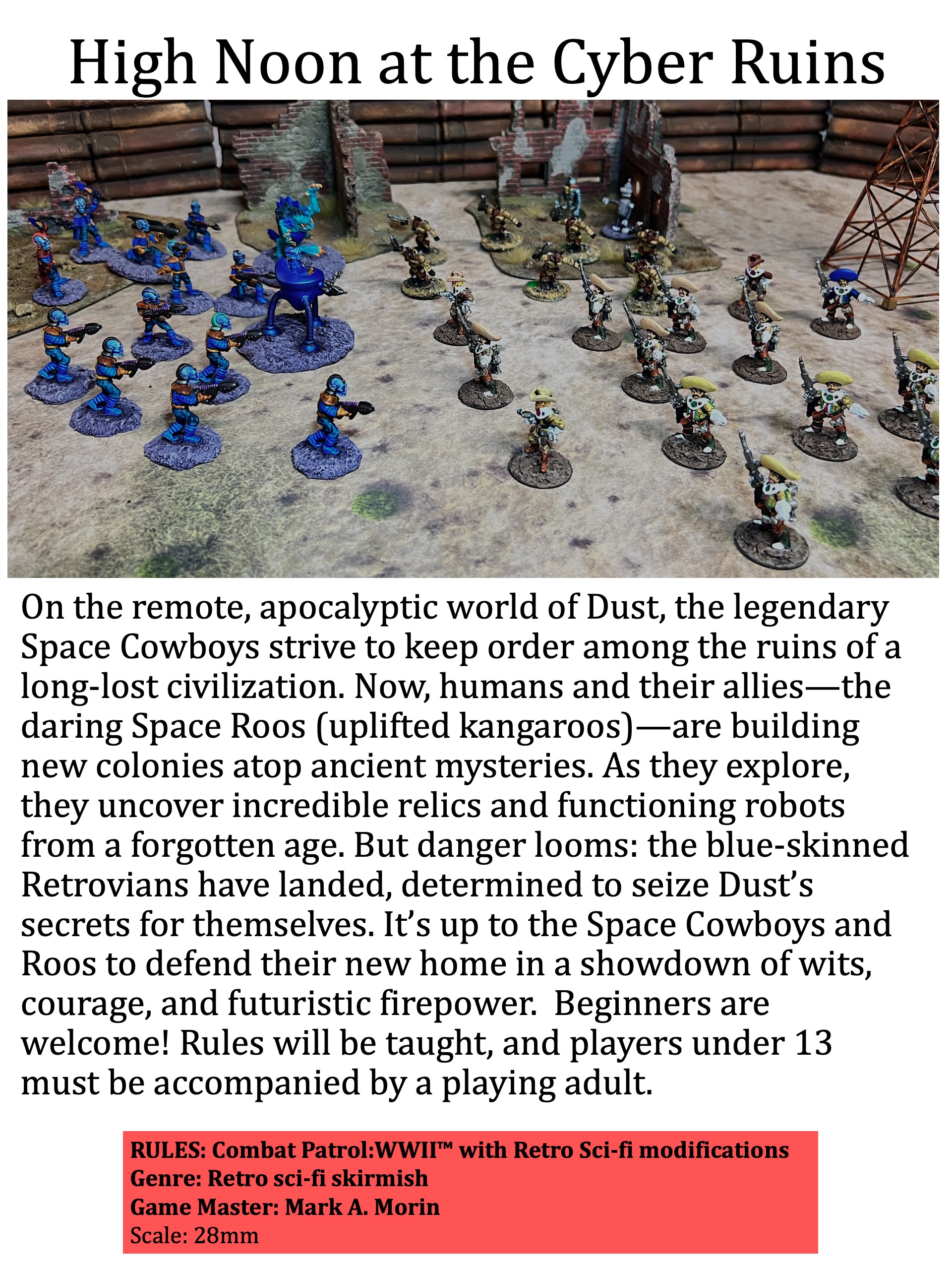
Game flyer.

The wreckage (all 61 pieces and the buildings really helped complete my vision. There are 24 possible search locations for the 4 ancient robots, known only to the GM. The four ancient robots I used were: “Folder Bot 3000” (aka Bender) from Armorcast Terraform Terrain Ltd.’s “Robot Townies” collection; and “RT22” from old Archive miniatures Star Rovers line circa 1977; and two Archive Miniatures Robot Cooks also circa 1977 (also Star Rovers).
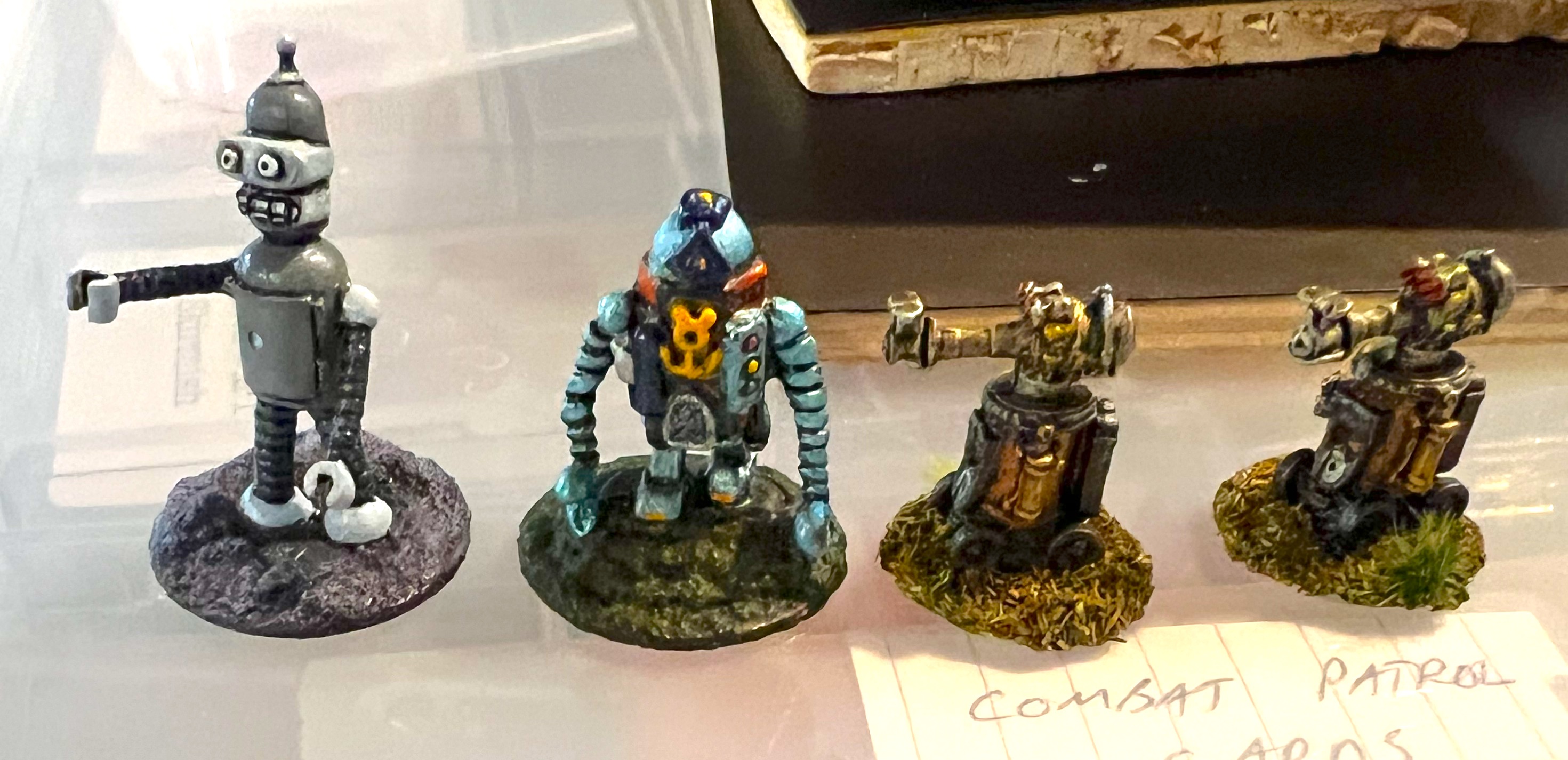
The four ancient robots! Folder Bot 3000, RT22, and the two Robot Cooks.

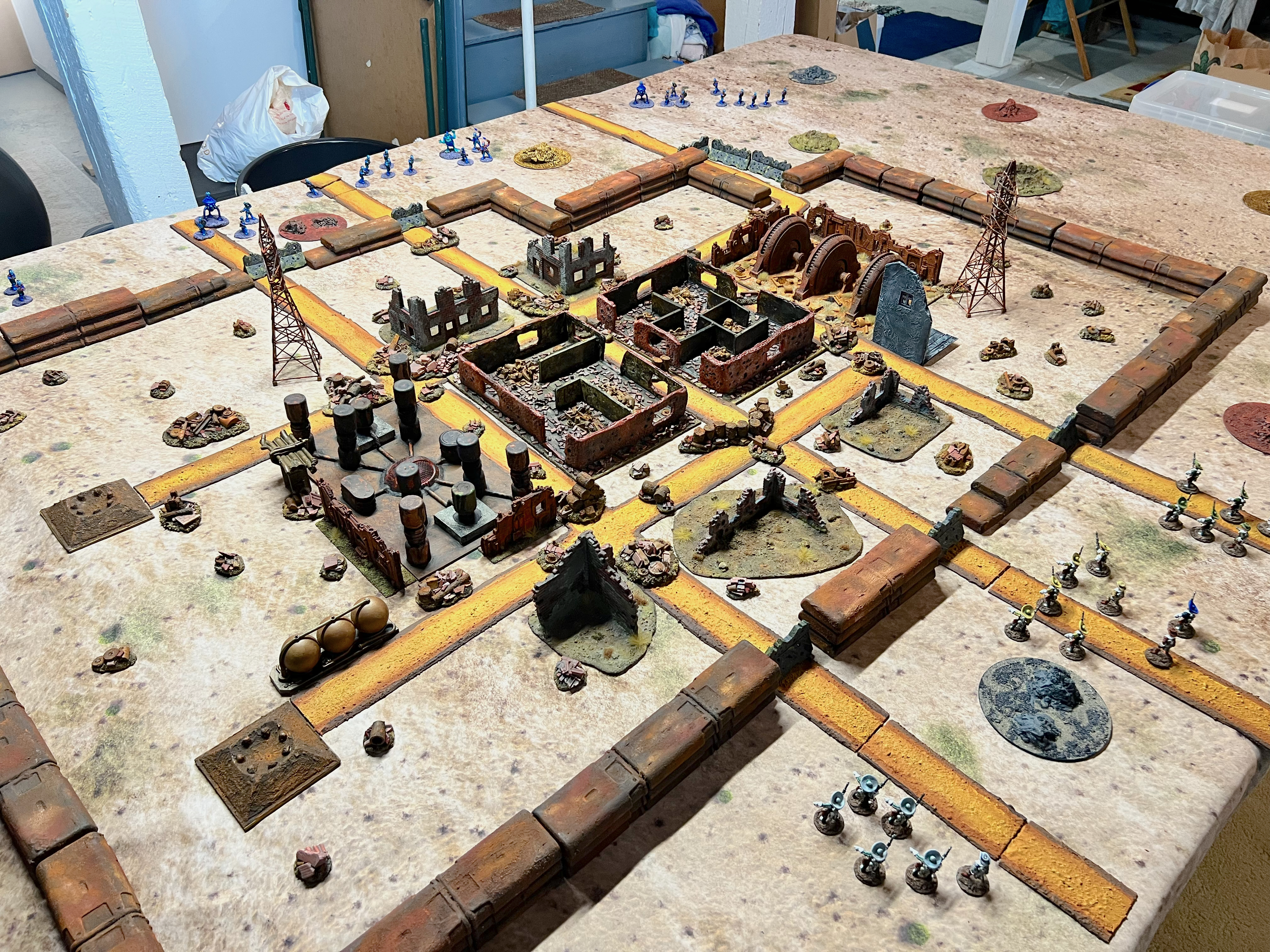
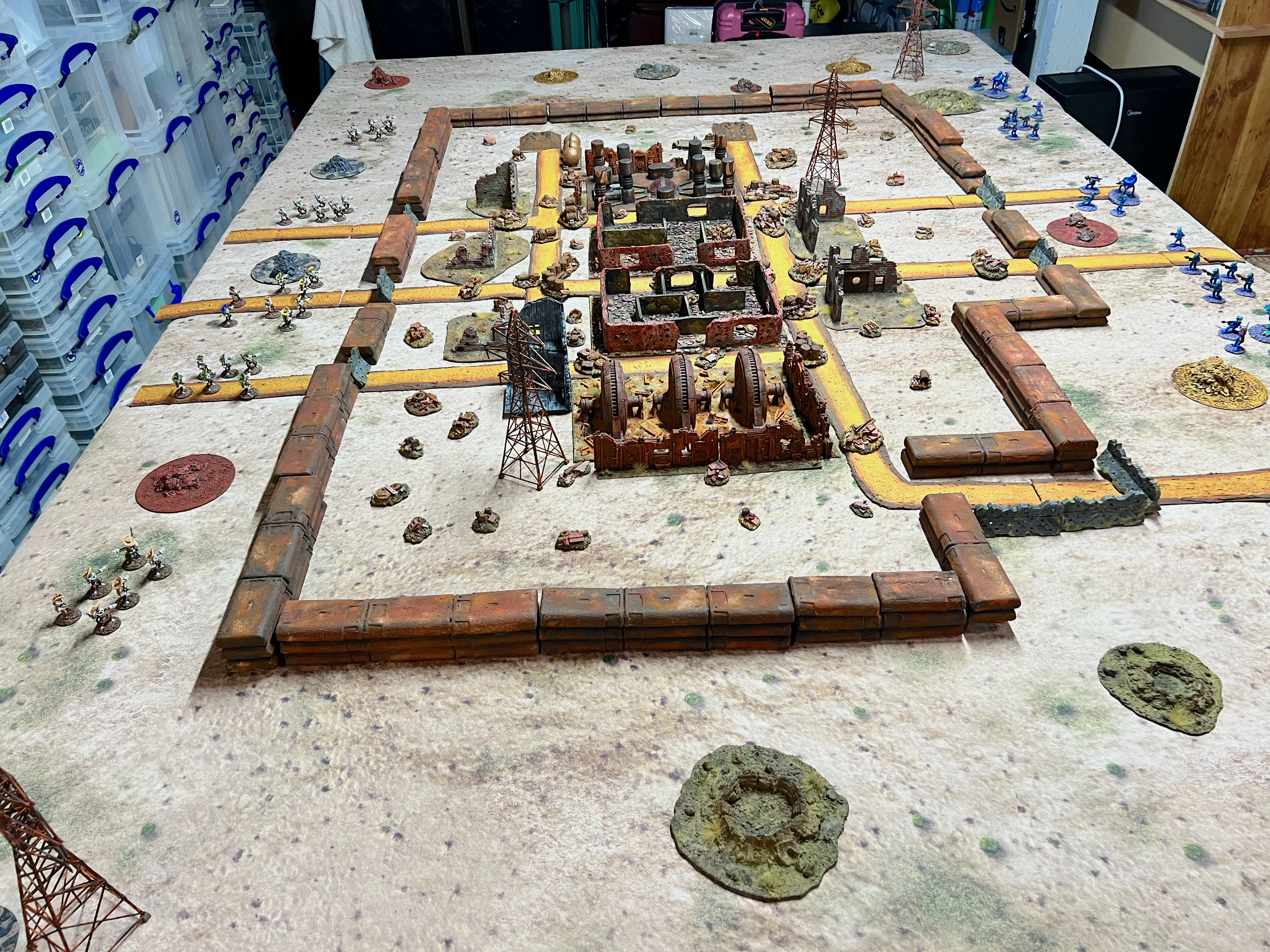
I randomly select the locations for the four robots (see numbers on the map below). My playtest worked well, and here are some shots of the mock-up tabletop.
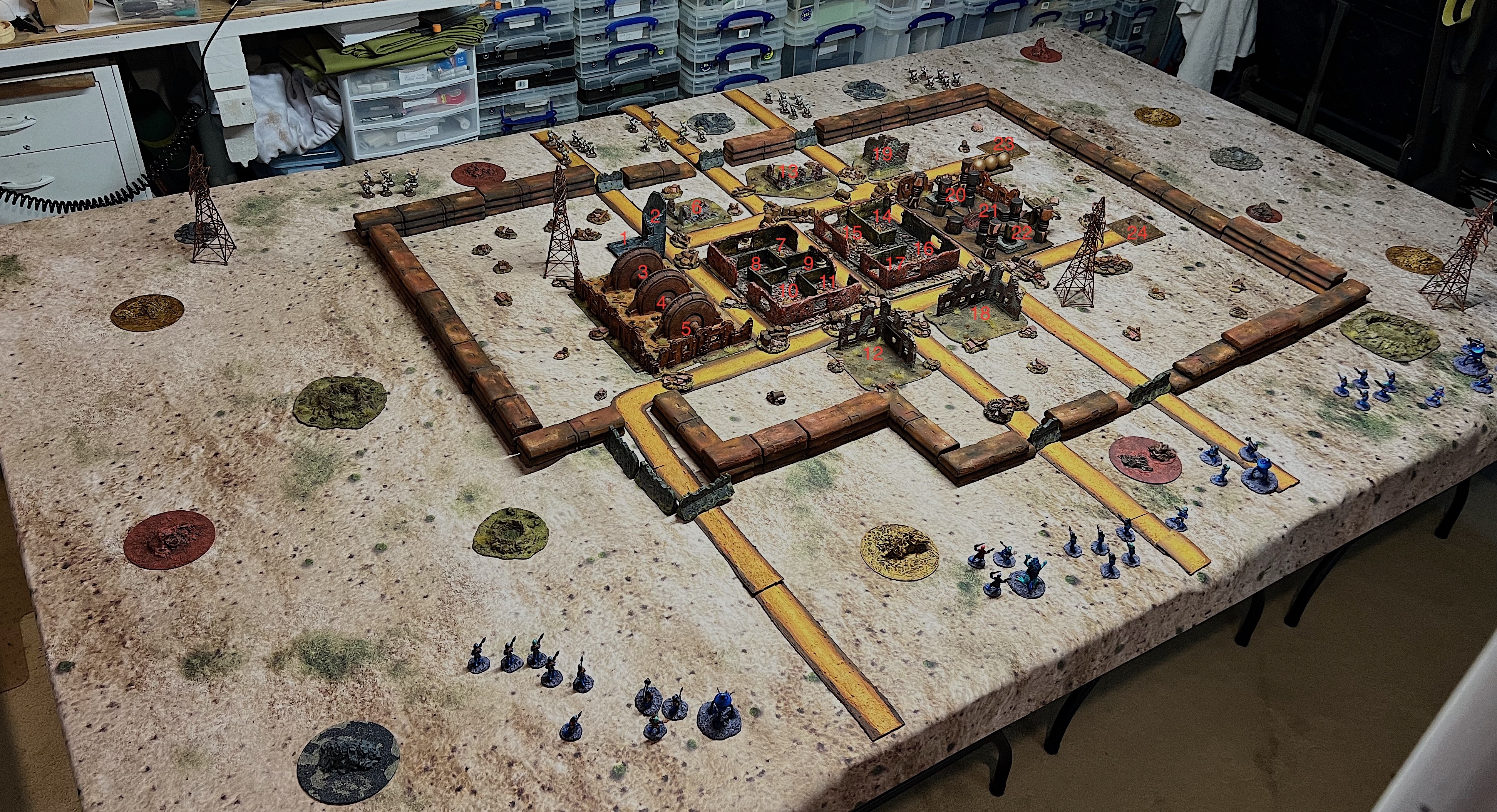
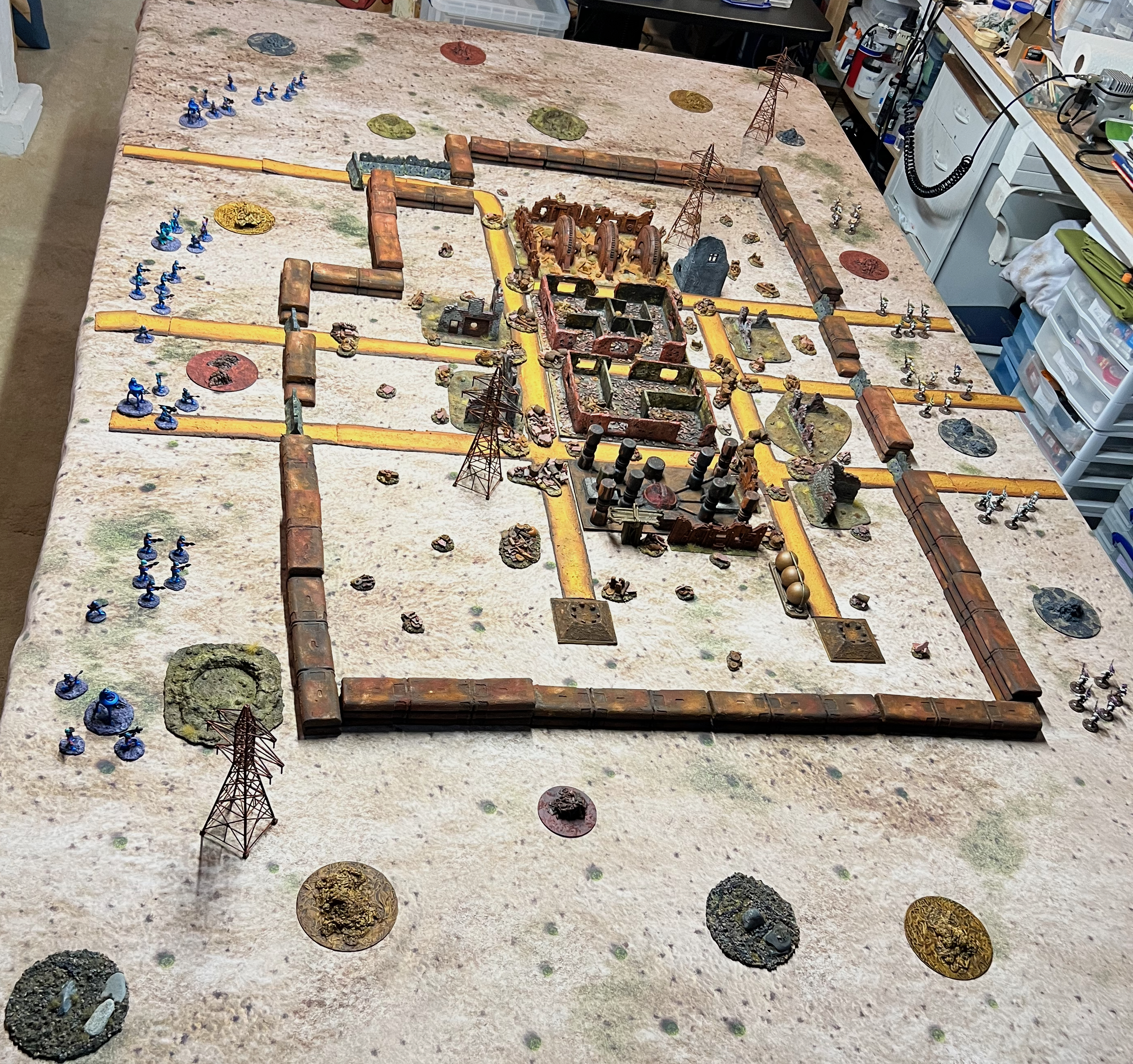
The mock up of the tabletop for the game. The Retrovians three squads and command group are in the forefront. The Space Cowboys are at the opposite side.
A side view.
View from the Space Cowboy’s side.
Generator side view.

I did not use all of the wreckage in the mock-up. I will share a Cold Wars post soon. However, as a preview here are a couple of shots of the game set up at Cold Wars in all its glory:
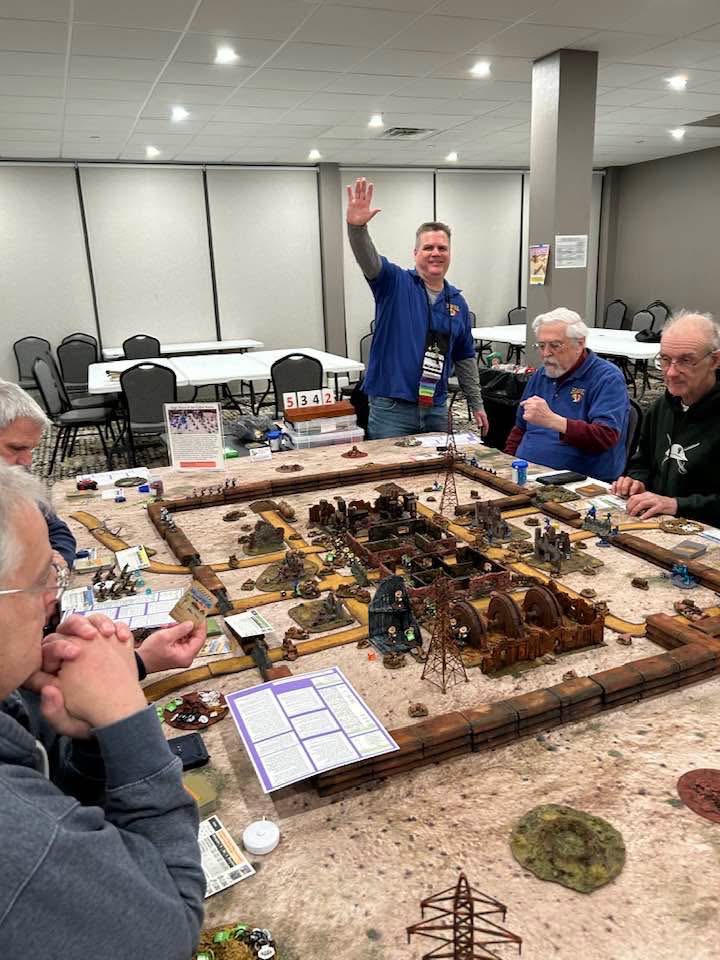
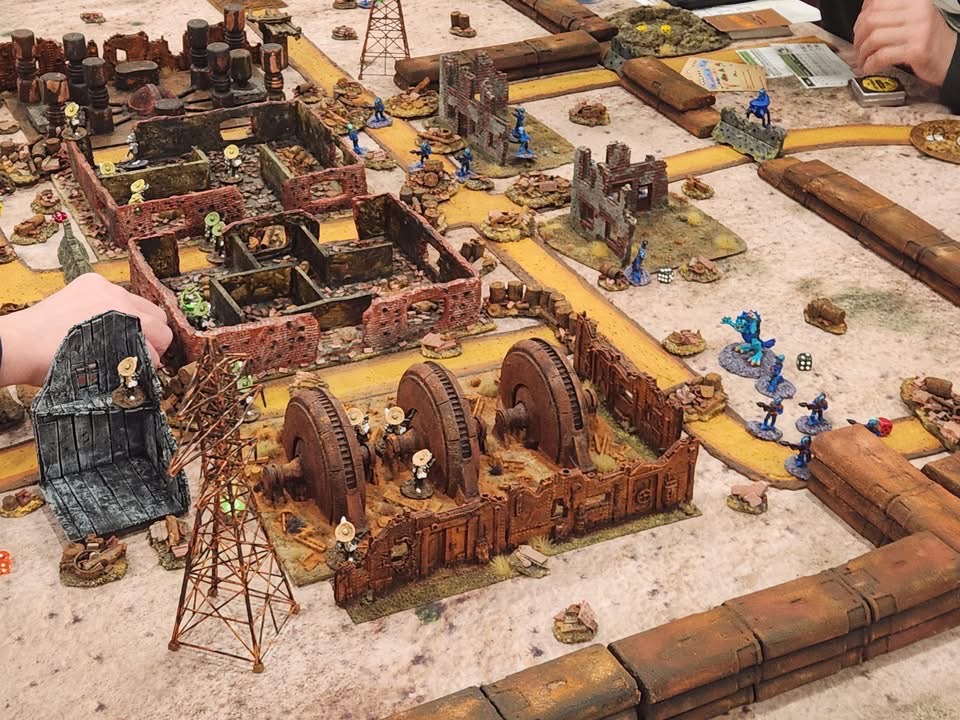
Photo of the game in progress at Cold Wars with me as the GM. (photo courtesy of Ken Howe).
Space Cowboys and Retrovians start searching for the robots.
The shoot out starts – while one robot has been found in the upper right. This was Bender, and he was not happy to be found and attacked and killed a Space Cowboy.

More about Cold Wars soon in a future post.

I hope you enjoyed reading this and seeing my rusty panorama come to life – on the tabletop anyways. If this WIP post helps you in any way, that is great! I am including these terrain pieces in Dave Stone’s PAINT WHAT YOU GOT 2025/2026 Challenge as these were completed in early February. For now, that’s it, until next time!
329 miles to Lancaster, PA and Cold Wars!

The materials are listed below as a reference for me (and you maybe).

For all of my previous posts on terrain projects, please see this page. For all of my previous posts on sci-fi projects, please see this page…for any of my previous posts on scratch-building, see this page.

PAINTS, INKS, GLAZES, SHADES, WASHES, PIGMENTS, FLOCKING, GLUES AND MORE THAT I USED ON THE TWO RUINED BUILDINGS:

  1. iPad 16 Box (top and bottom)
  2. Hot glue
  3. Foam Board
  4. Toothpicks
  5. Popsicle sticks
  6. Apoxie sculpt
  7. Vallejo Surface Primer “Grey”
  8. SIBE AUTOMATION “White Polystyrene 8″ X 12″ X 1/8″ Plastic Sheet”
  9. PVA
  10. Huge Miniatures “Brick Red”
  11. MSP “Brown Liner”
  12. Vallejo Game Color “Sepia” (wash/shade)
  13. Vallejo Wash FX “Dark Grey” (wash/shade)
  14. Liquitex “Burnt Umber” (ink)
  15. Secret Weapon Washes “Sewer Water”
  16. Vallejo Thinner
  17. Vallejo Surface Primer “German Green Brown”
  18. Vallejo “Light Slate Grey” (pigment)
  19. AK “Dry Ground” (texture)
  20. Vallejo “Carbon Black” (pigment)
  21. Juweela Metal Scrap Rusty Industry (23336)
  22. Juweela Debris Assortment (23316)
  23. Juweela Debris Brick Red (23315)
  24. Juweela Debris Assortment (23315)
  25. Juweela Bricks (23034)
  26. Juweela Metal Scrap Rusty Gear Wheels (23317)
  27. Army Painter “Red Tone” (wash)
  28. Secret Weapon Washes “Red Black” (wash)
  29. Secret Weapon Washes “Ruby” (wash)
  30. P3 “Red Ink” (ink)
  31. Vallejo Game Air “Red Terracotta”

PAINTS, INKS, GLAZES, SHADES, WASHES, PIGMENTS, FLOCKING, GLUES AND MORE THAT I USED ON THE 61 WRECKAGE BASES/PILES:

  1. Play sand
  2. Apoxie sculpt
  3. PVA
  4. Various scrap plastic pieces
  5. Cylindrical desiccant holders
  6. Rubber sink stopper rim
  7. Juweela Metal Scrap Rusty Industry (23336)
  8. Juweela Debris Assortment (23316)
  9. Juweela Debris Brick Red (23315)
  10. Juweela Debris Assortment (23315)
  11. Juweela Bricks (23034)
  12. Juweela Metal Scrap Rusty Gear Wheels (23317)
  13. AK “Corrosion Texture” (texture)
  14. Vallejo Model Air “Rust” (71.080)
  15. Vallejo Model Air “Rust” (71.080)
  16. Vallejo Model Air “Rust” (71.069)
  17. Vallejo Model Air “Orange Rust”
  18. Citadel “Ryza Rust” (dry)
  19. Vallejo “Old Rust” (pigment)
  20. Vallejo “Pigment Binder”
  21. Vallejo Thinner
  22. Vallejo “Dark Slate Grey” (pigment)
  23. Vallejo “Dark Yellow Ochre” (pigment)
  24. Vallejo Game Color “Sepia” (wash/shade)
  25. Secret Weapon Washes “Sewer Water”
  26. Army Painter “Red Tone” (wash)
  27. Secret Weapon Washes “Red Black” (wash)
  28. Secret Weapon Washes “Ruby” (wash)
  29. P3 “Red Ink” (ink)
  30. Vallejo Game Air “Red Terracotta”

PAINTS, INKS, GLAZES, SHADES, WASHES, PIGMENTS, FLOCKING, GLUES AND MORE THAT I USED ON THE 2 FLAT INDUSTRIAL STRUCTURES:

  1. SIBE AUTOMATION “White Polystyrene 8″ X 12″ X 1/8″ Plastic Sheet”
  2. Plastic packing material from a forgotten source!
  3. PVA
  4. AK “Corrosion Texture” (texture)
  5. Vallejo Surface Primer “German Green Brown”
  6. Vallejo Model Air “Rust” (71.080)
  7. Vallejo Model Air “Rust” (71.069)
  8. Vallejo Model Air “Orange Rust”
  9. Citadel “Ryza Rust” (dry)
  10. Vallejo “Old Rust” (pigment)
  11. Vallejo “Pigment Binder”
  12. Vallejo Thinner
  13. Vallejo “Dark Yellow Ochre” (pigment)
Crafting Rusty Walls and Transmission Towers for Retro Sci-Fi and Wars of Ozz Gaming Adventures

Imagine an industrial cityscape – an apocalyptic one. One that shows that “something really terrible happened here”. Now add 300 years to it and an arid desolate climate with a lot of rust. Lastly, add mystery – “what am I looking at?”, and you are here.

These were the thoughts that I had last month as I prepared to create and build components for such a wasteland ruin. As my 2026 “convention season” was nearing, I needed to build terrain for my tabletop games. For games of Wars of OzzTM, my goal was to build terrain pieces for Professor Nitpik’s Industrial City (aka the Robotic Sanctum). I also wanted to get back into some retro sci-fi games using Buck Surdu’s Combat Patrol:WWIITM gaming system (with my modifications). One of the games I envisioned for that would be using Archive “Space Cowboys”, my converted “Space ‘Roos” defending against an invasion of blue-skinned “Retrovians”. Click those links to learn more about those forces – and more about them in a future post. For now, I needed more rust than just my rusty generators and my ruined chemical plant.

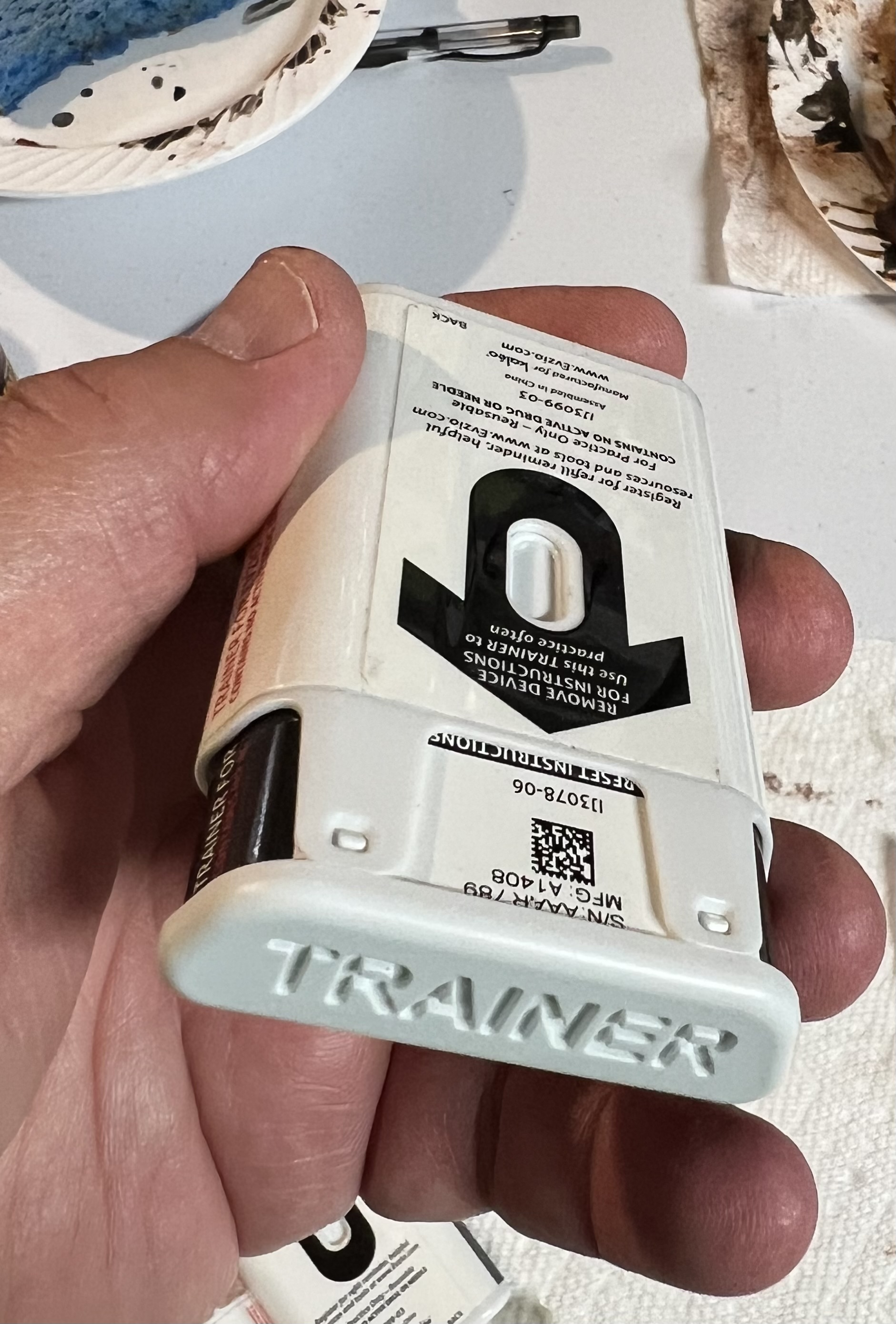
I’ve been retired now since 2019. I got laid off of my last job when the company I was working for pulled the product line off the market. Never found a replacement gig. Back to the product I was selling – it was a pharmaceutical autoinjector device. We had dozens of electronic trainer devices we handed out to potential customers. These trainers acted like the real thing except without any needles or drug inside. After the layoff happened, I had a bunch of them, and was told by my former employer to just throw them away. They had a unique shape, like a cross between a card deck and a tapered brick. The outer layer was plastic, with a label glued on to it. I was running retro sci-fi games, and thought these would be good for making walls. I saved them, and they waited to fulfill their destiny until December 2025!

An example of the trainer.

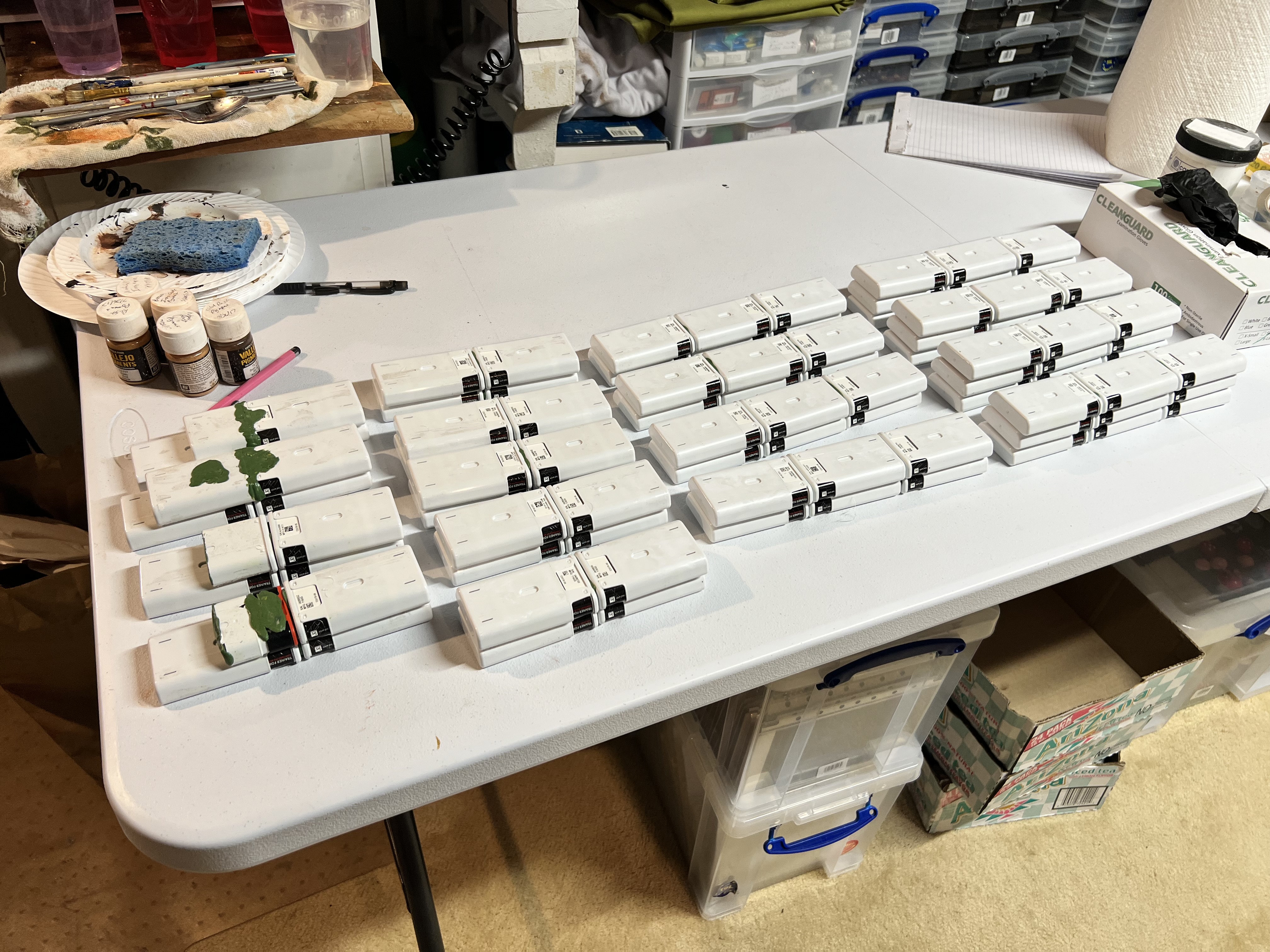
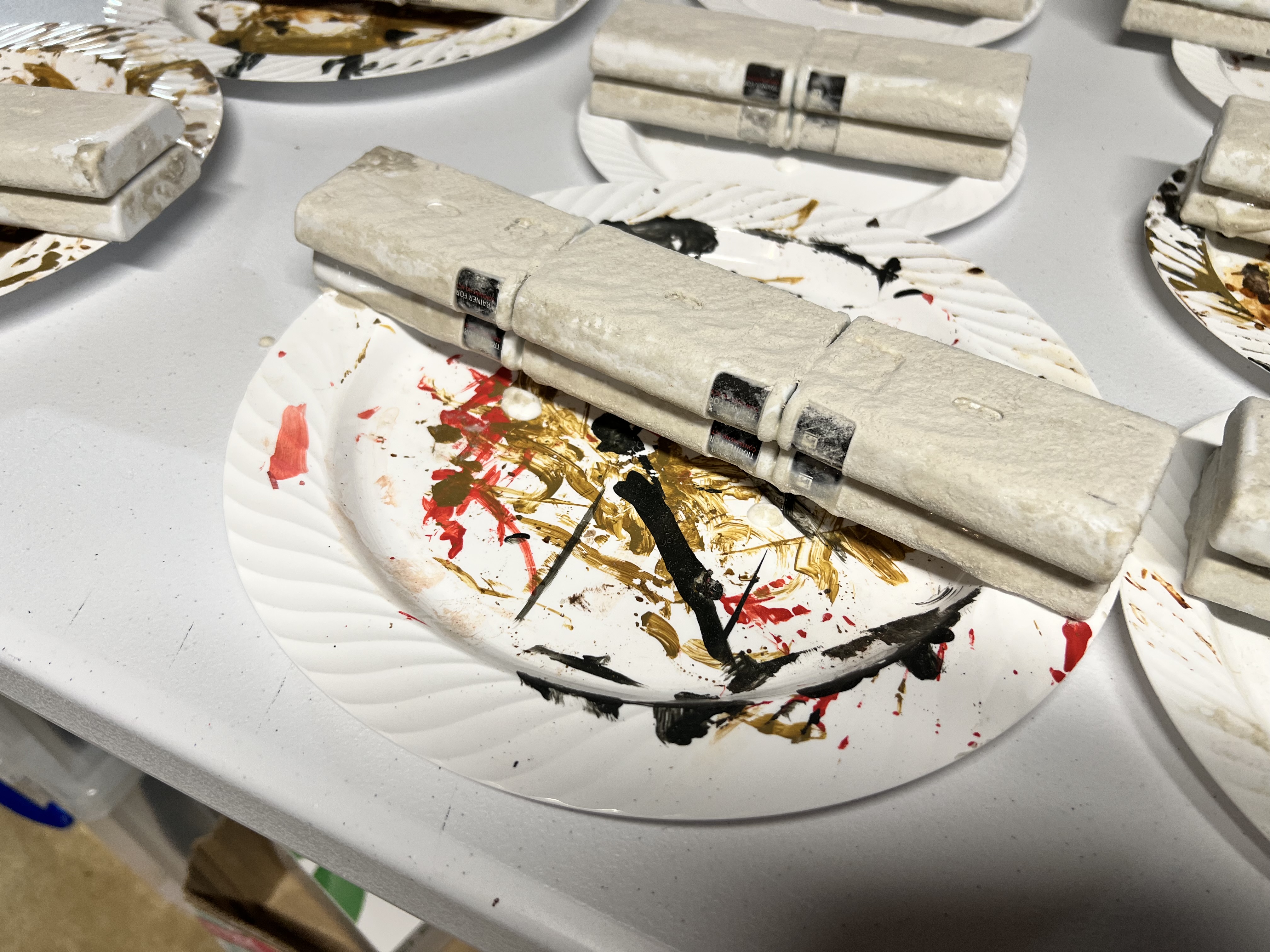
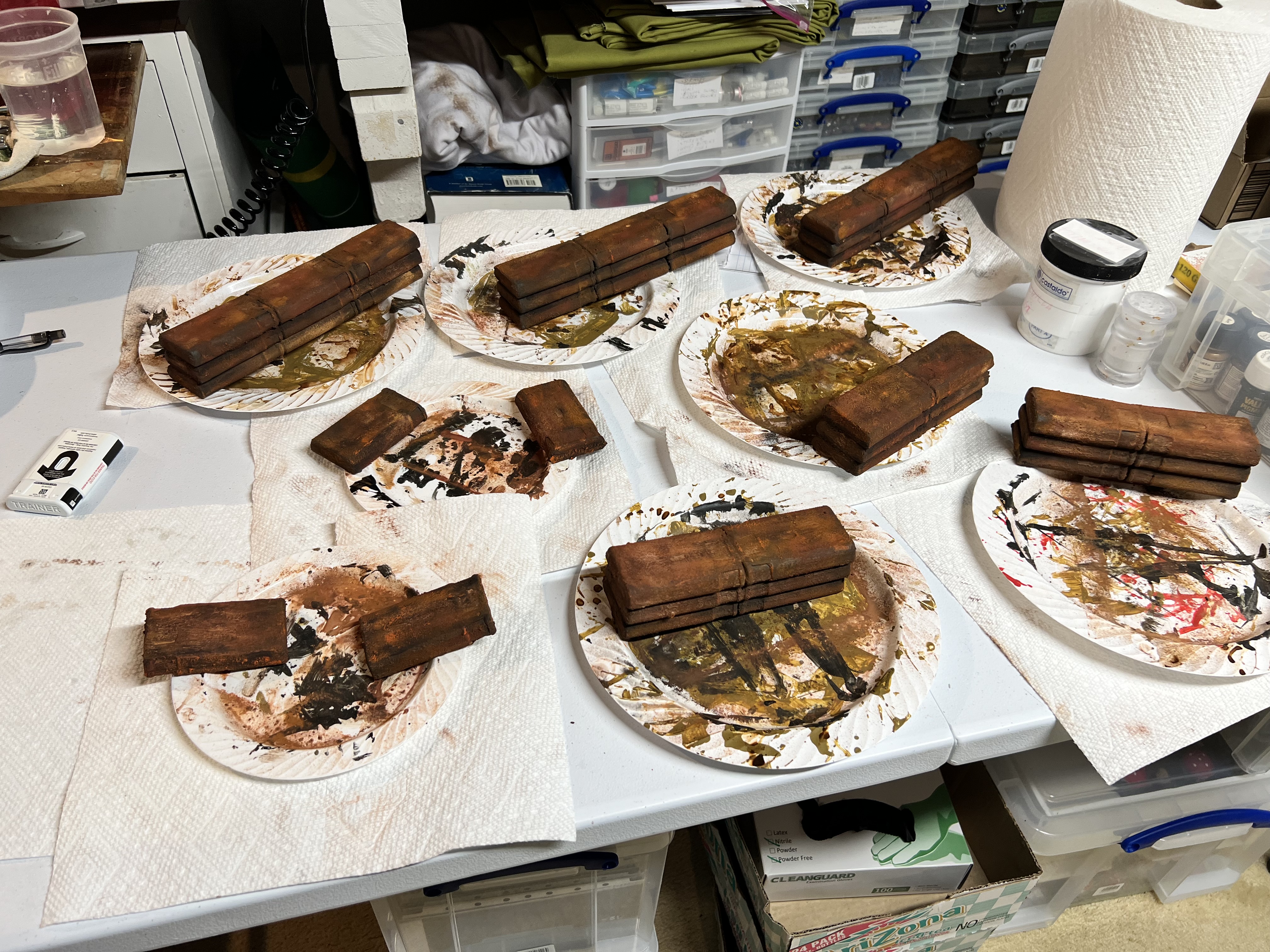
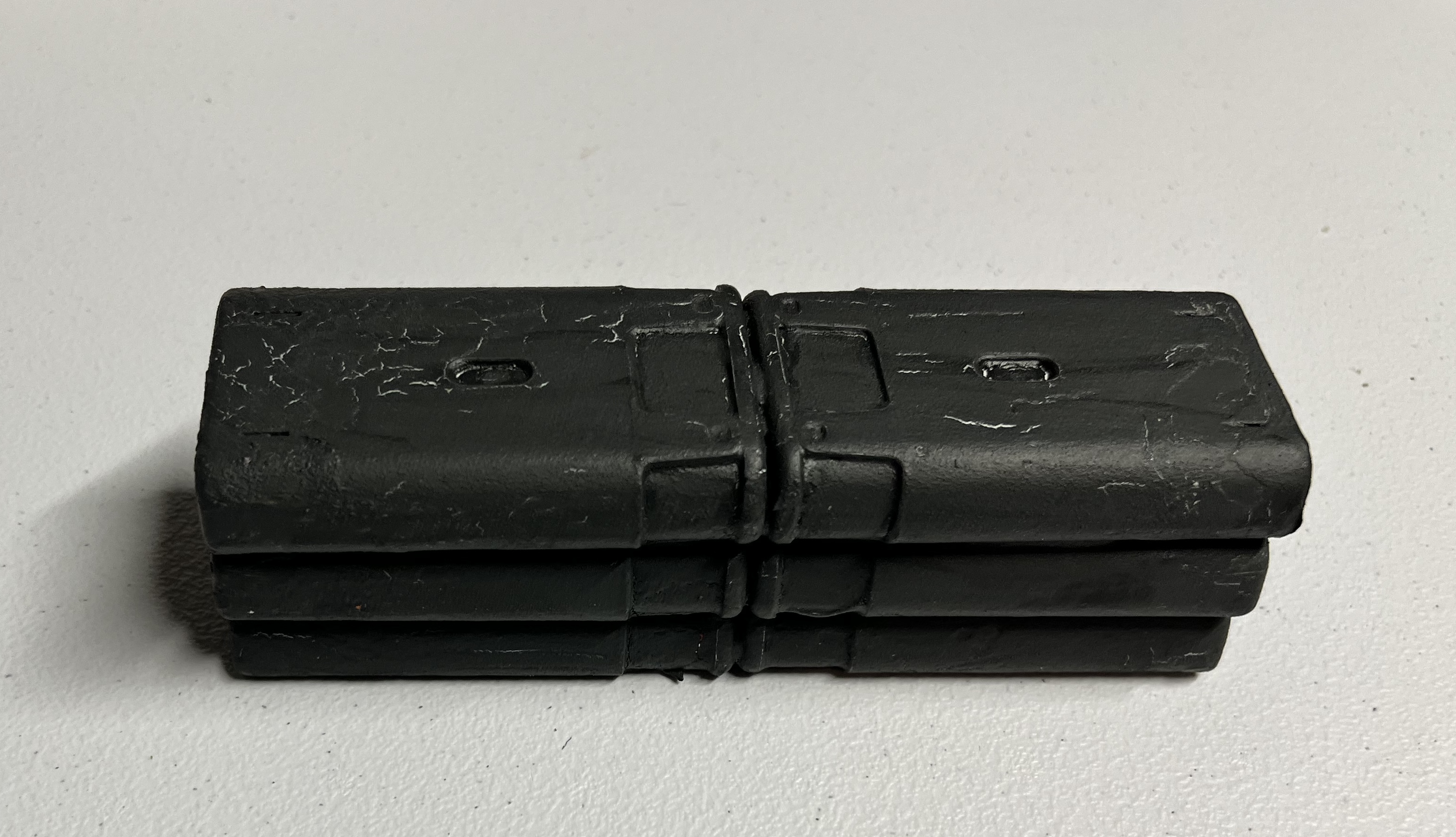
To make sure what I wanted to do would work (and to learn from any errors), I went with a prototype. I used an Exacto blade to remove the outer label. Then, I sanded the exterior to make it rough. To attach multiple units together, green stuff was the solution. After that hardened, I coated the outside of the attached trainers with PVA – followed by a dusting of chinchilla dust on the glue. When that combination had hardened, I primed the combinations with black primer.

First prototype primed.

From this point, I used corrosion texture paint(let that harden), then used a number of rusting paints and pigments. I really liked the results and moved on to making two large batches of different combinations.

Walls after labels removed and sanded.
PVA and chinchilla dust application.
Corrosion texture paint applied and drying.
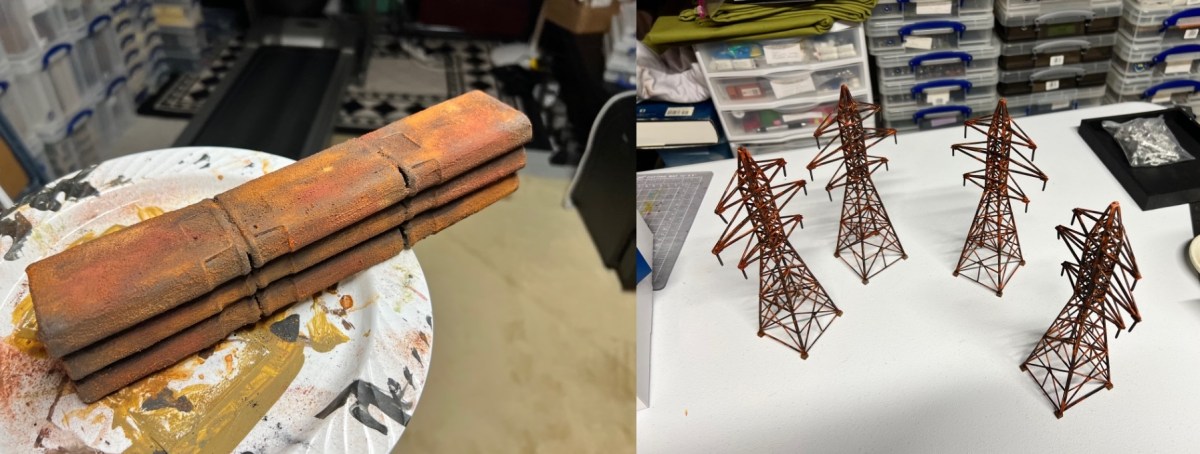
First half-batch of walls after being rusted up.
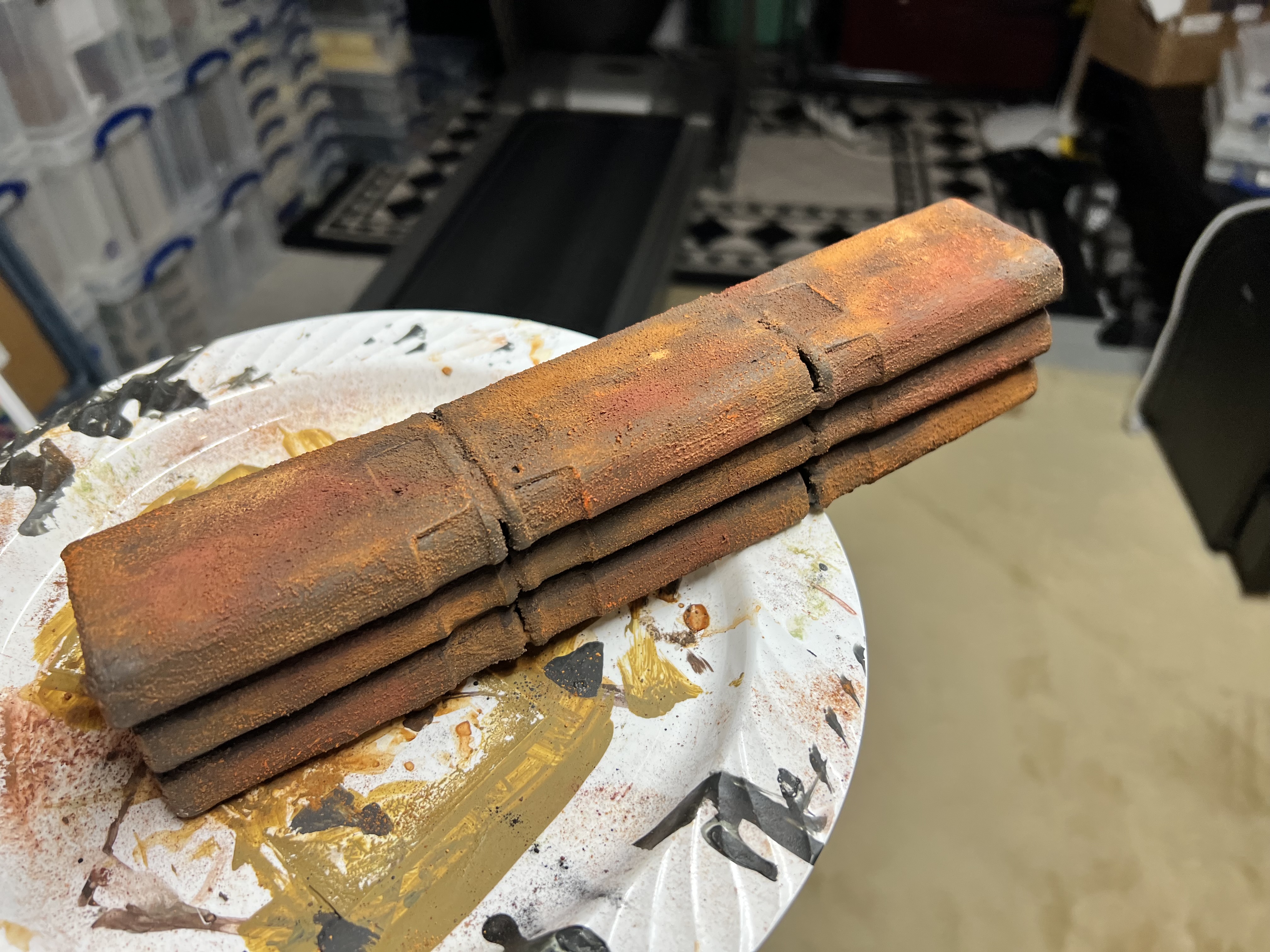
Close up shot of a 3×3 combination.
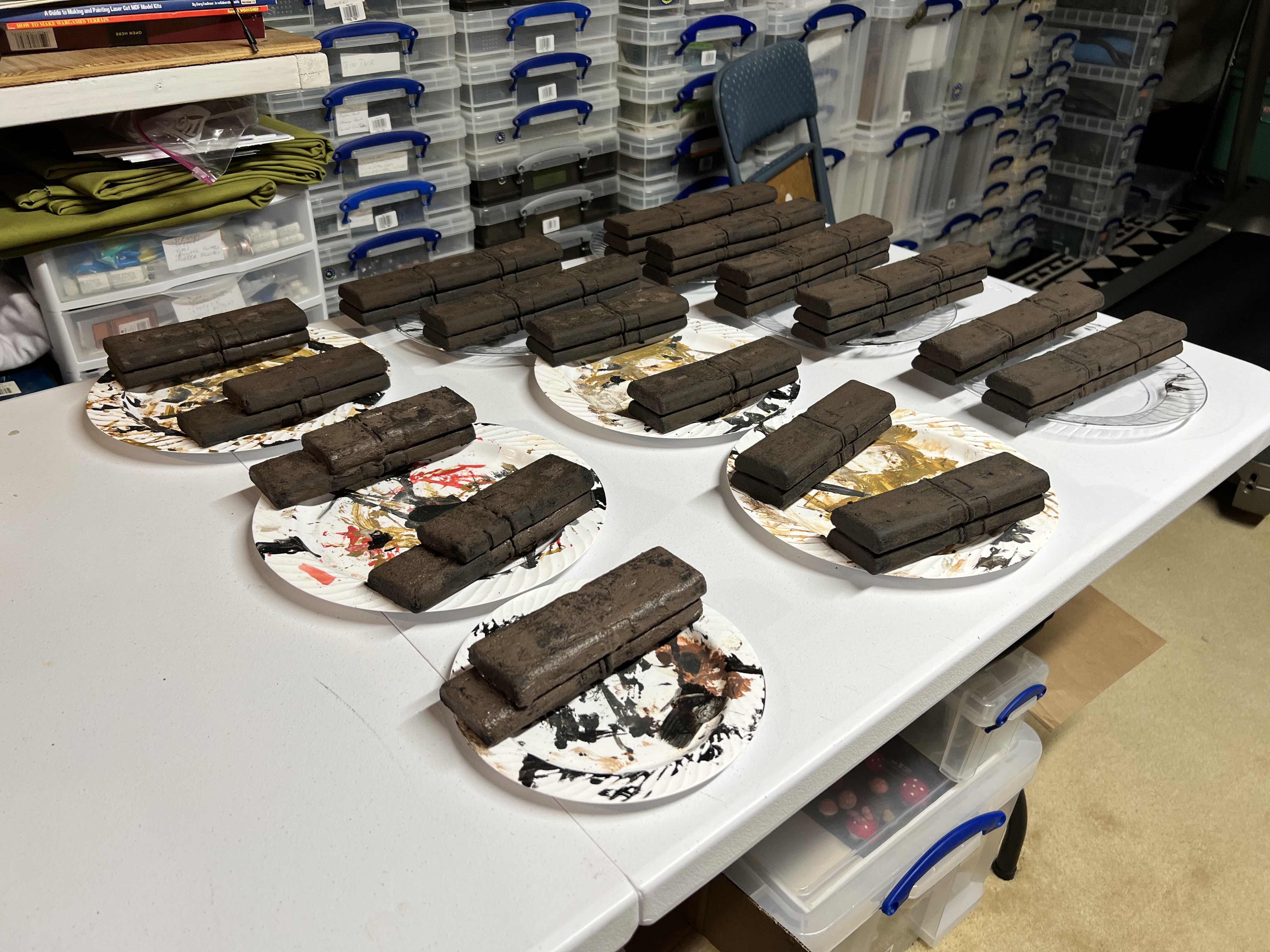
Second half batch done.

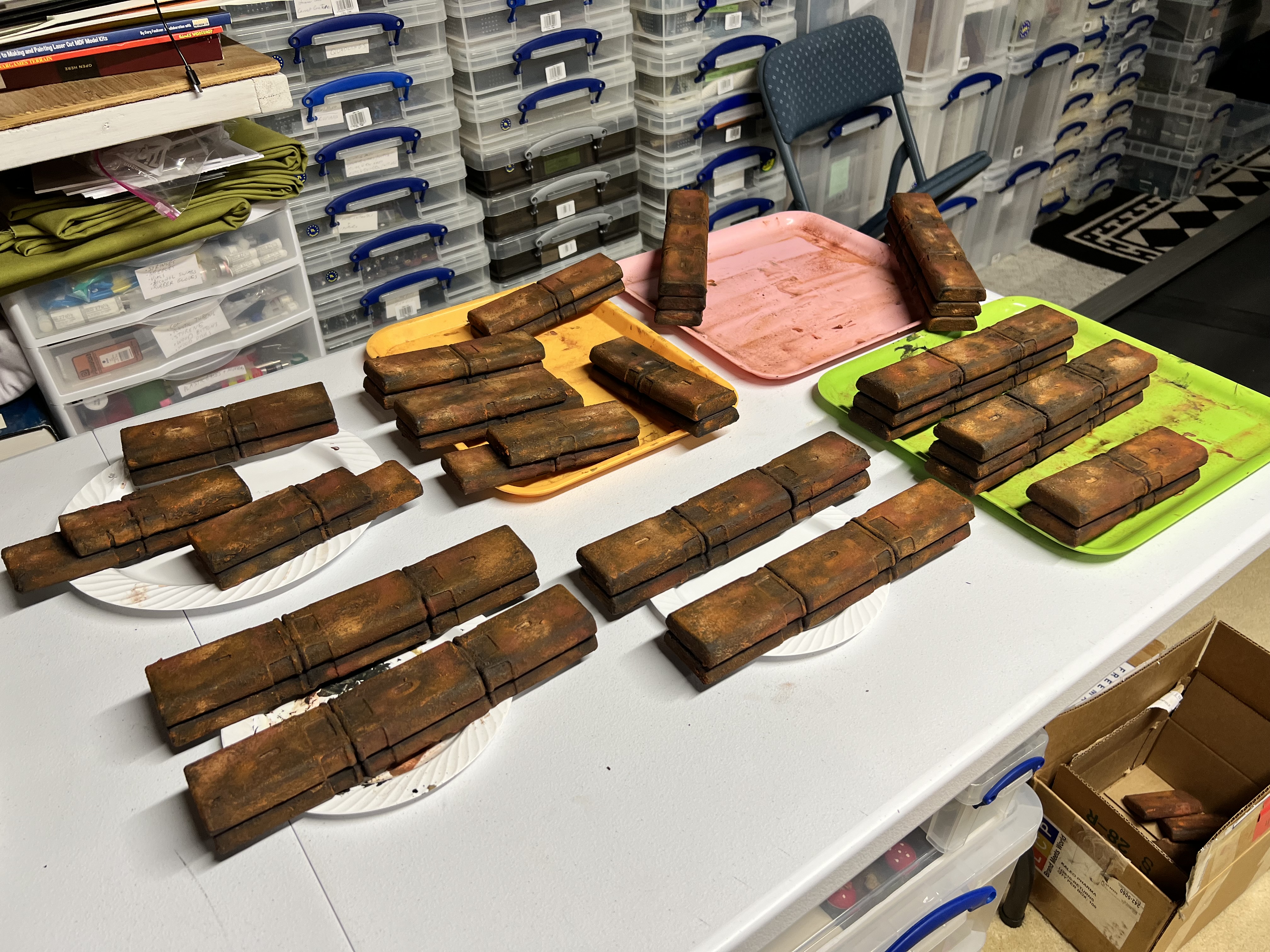
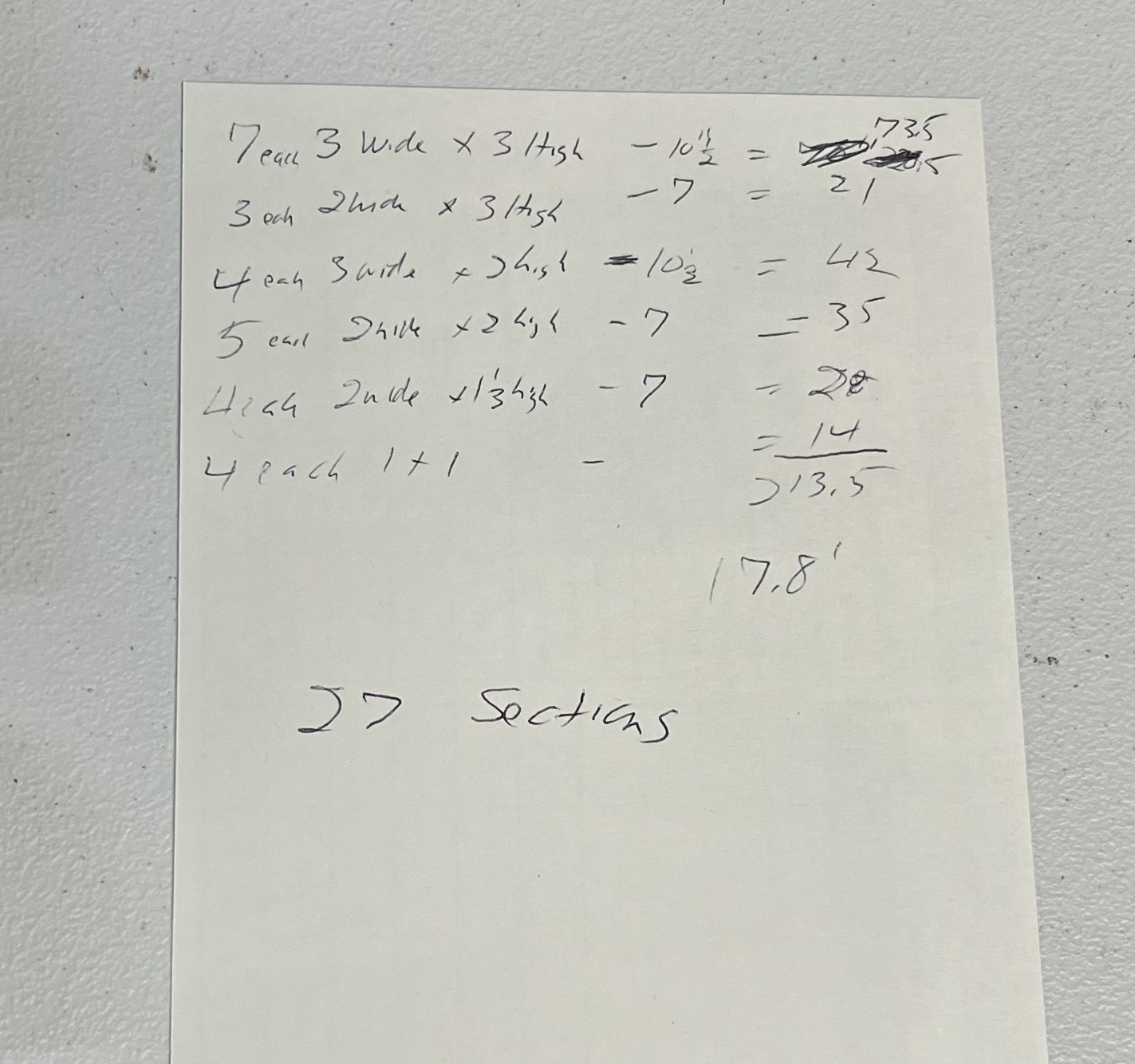
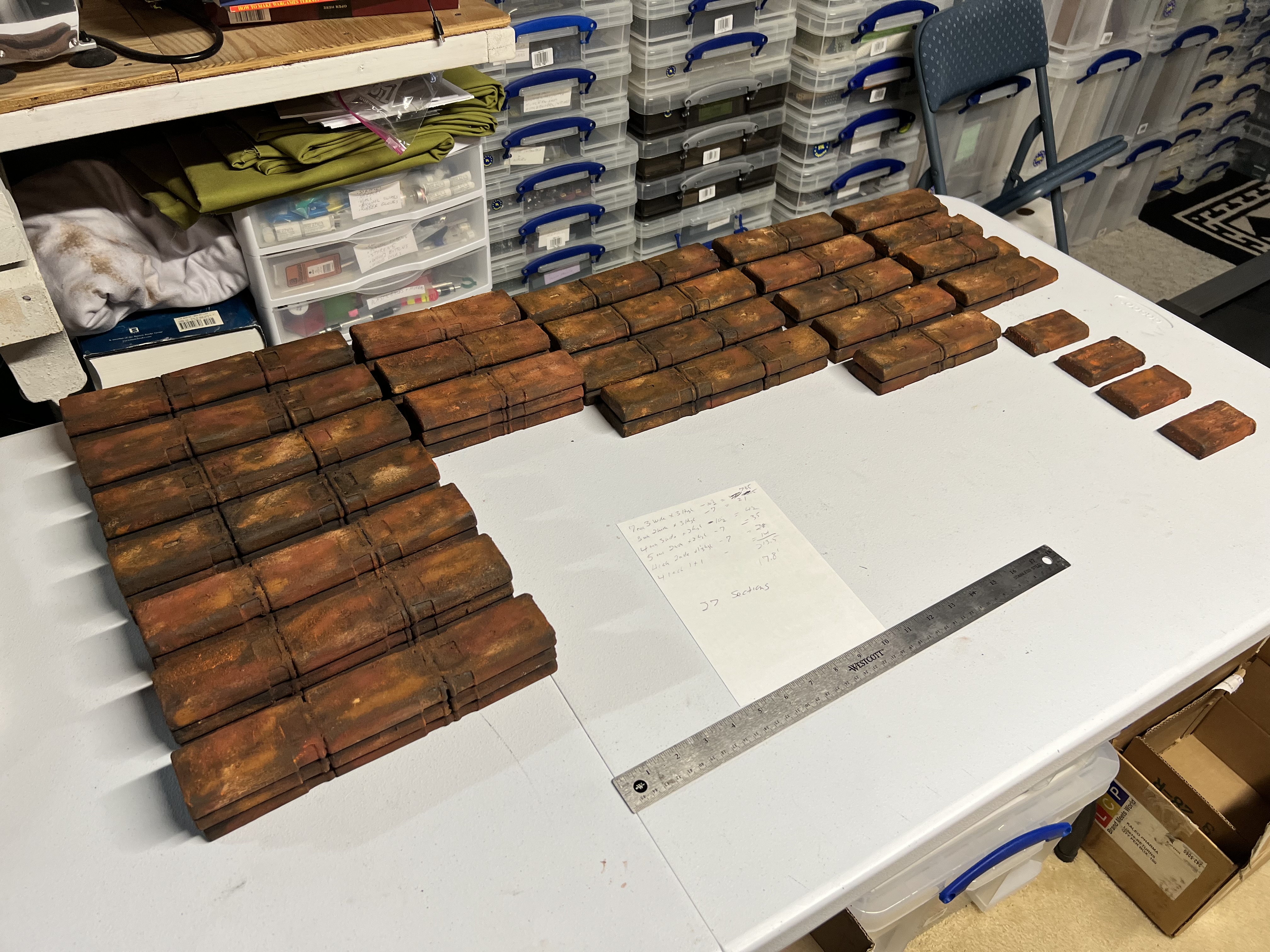
I ended up with 27 sections = a total of 17.8′ worth of rusty wall.

And here they are in total finished up mid-December.:

27 sections of rusty walls!

With the walls done, it was time to get some verticality for the tabletop. And get them done BEFORE Christmas.

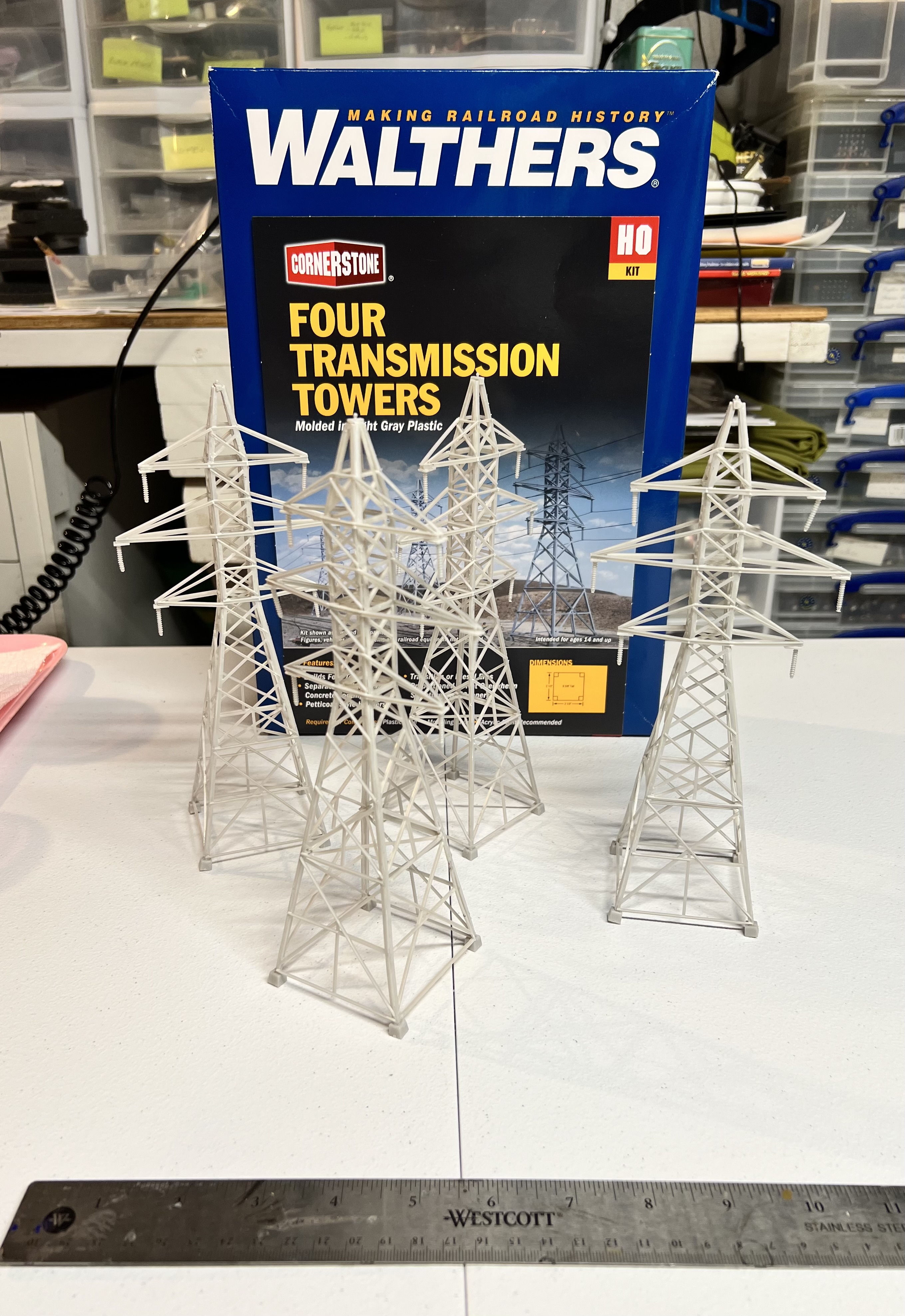
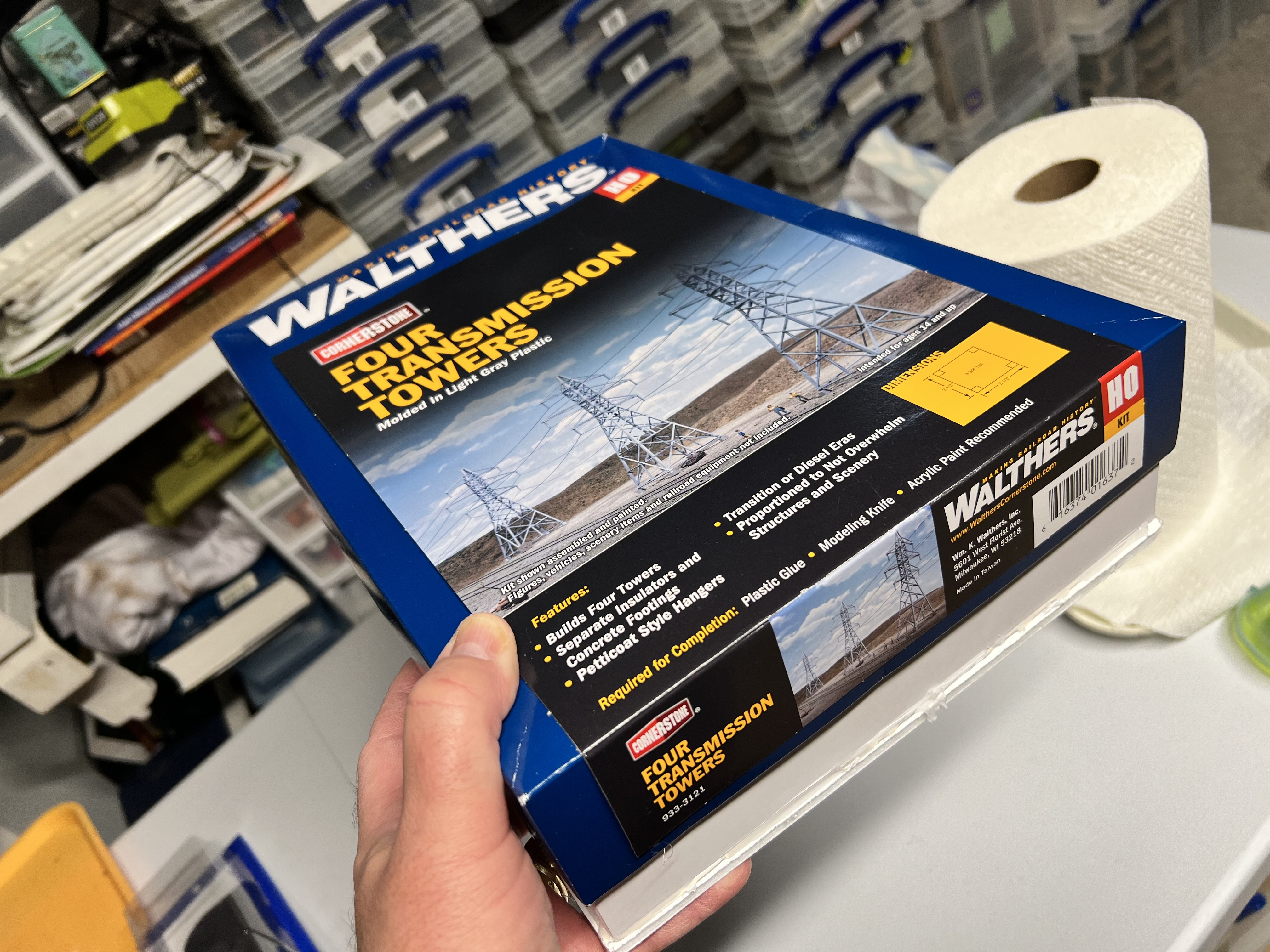
I thought transmission towers – rusty ones – would be great in that role. I found a railroad terrain kit on eBay. It was HO scale. It would go well with the other pieces of rusty fun. These were “Walther’s Cornerstone Four Transmission Towers”.

The transmission towers kit.

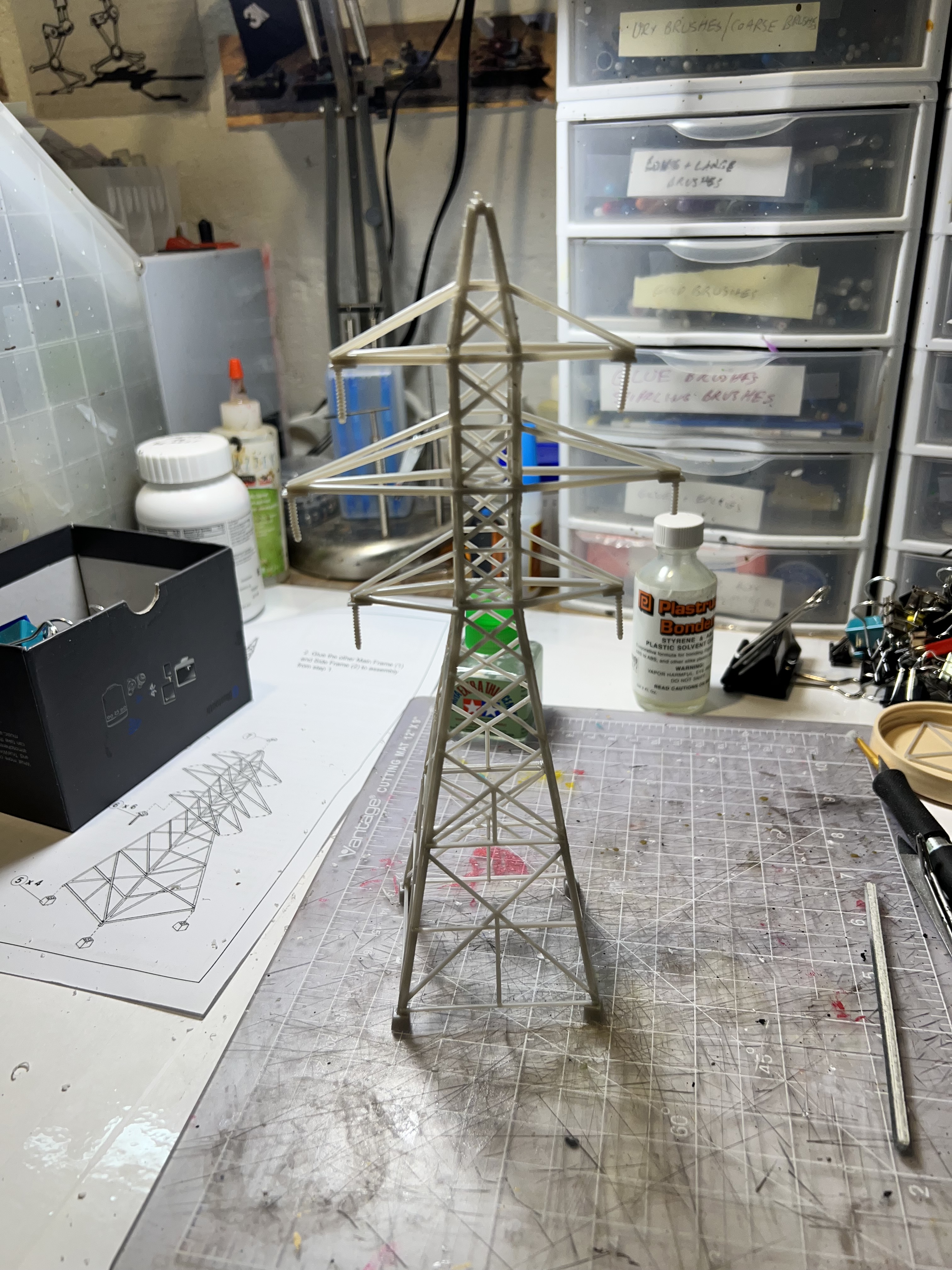
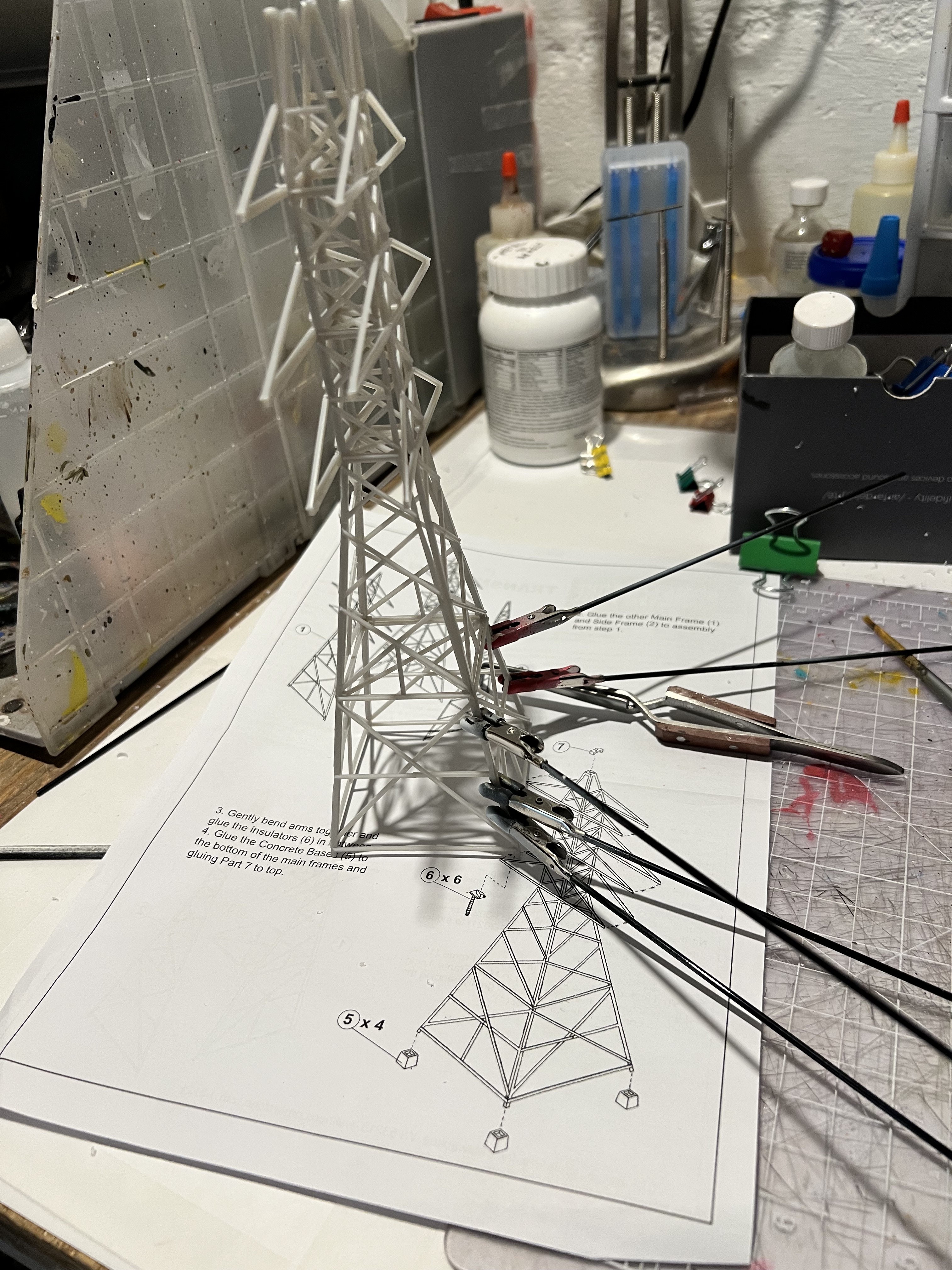
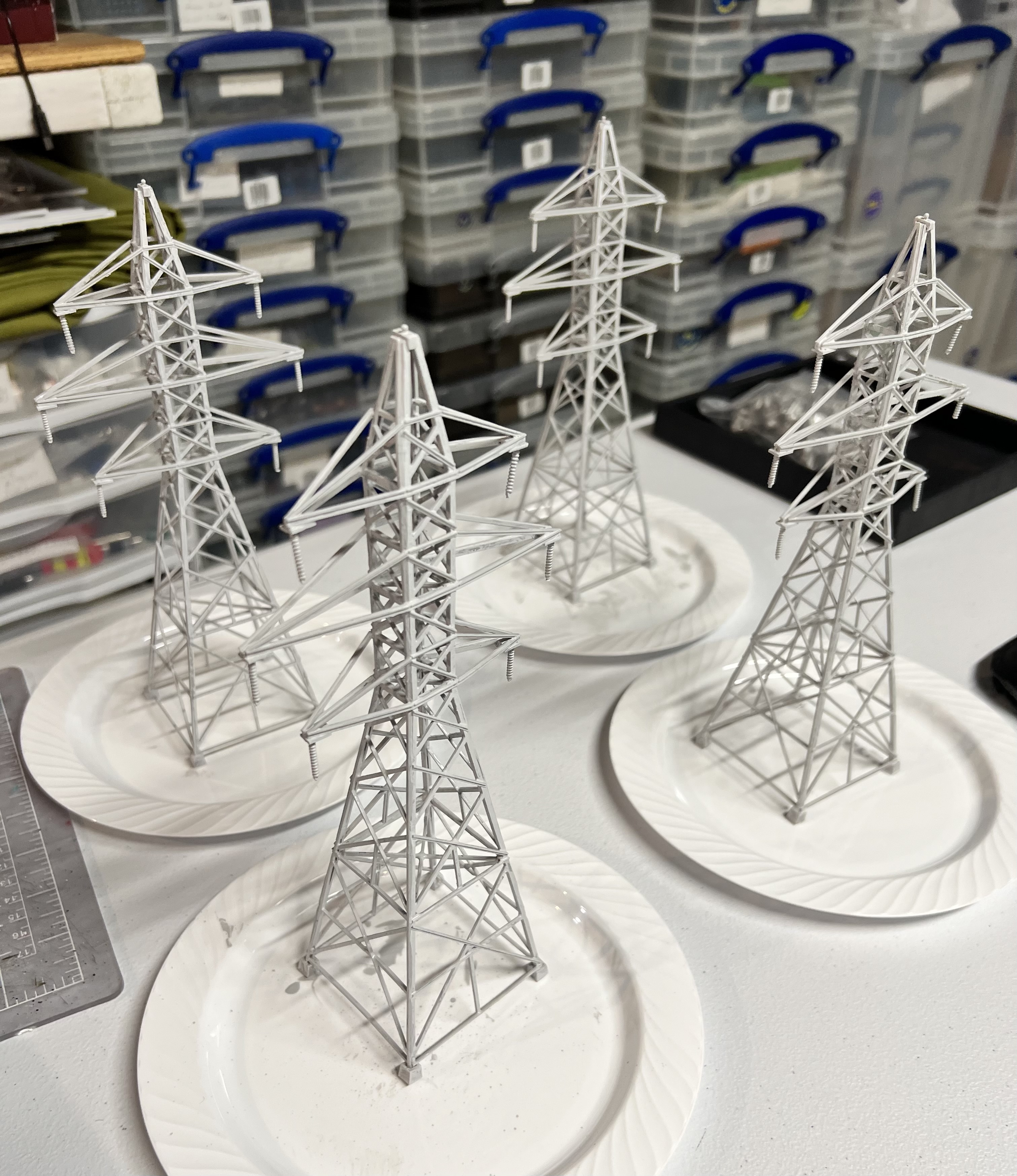
Assembly was a bit fiddly but manageable. It was not immediately clear to me which sides were front or back – but by the fourth iteration I got it down. Luckily, plastic cement covers any mistakes in assemble. I did find using rubber-shoed alligator clips to hold sections together while the cement set to be VERY helpful.

The first assembly went smoothly…
…the second was off (again figuring out which side went where was a bit confusing). Alligator clips to the rescue!
All four assembled.
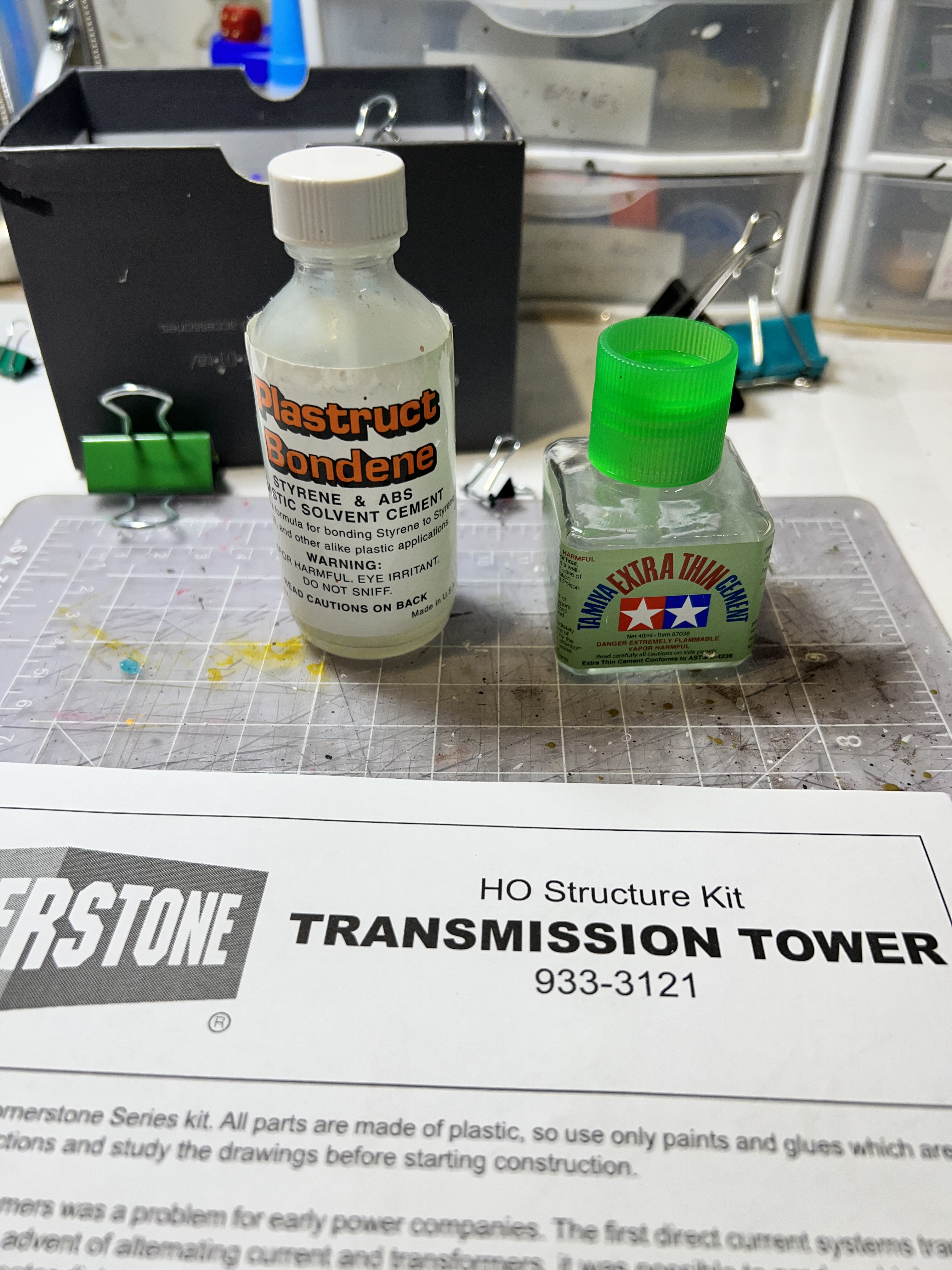
The cements I used.
The towers primed in grey.

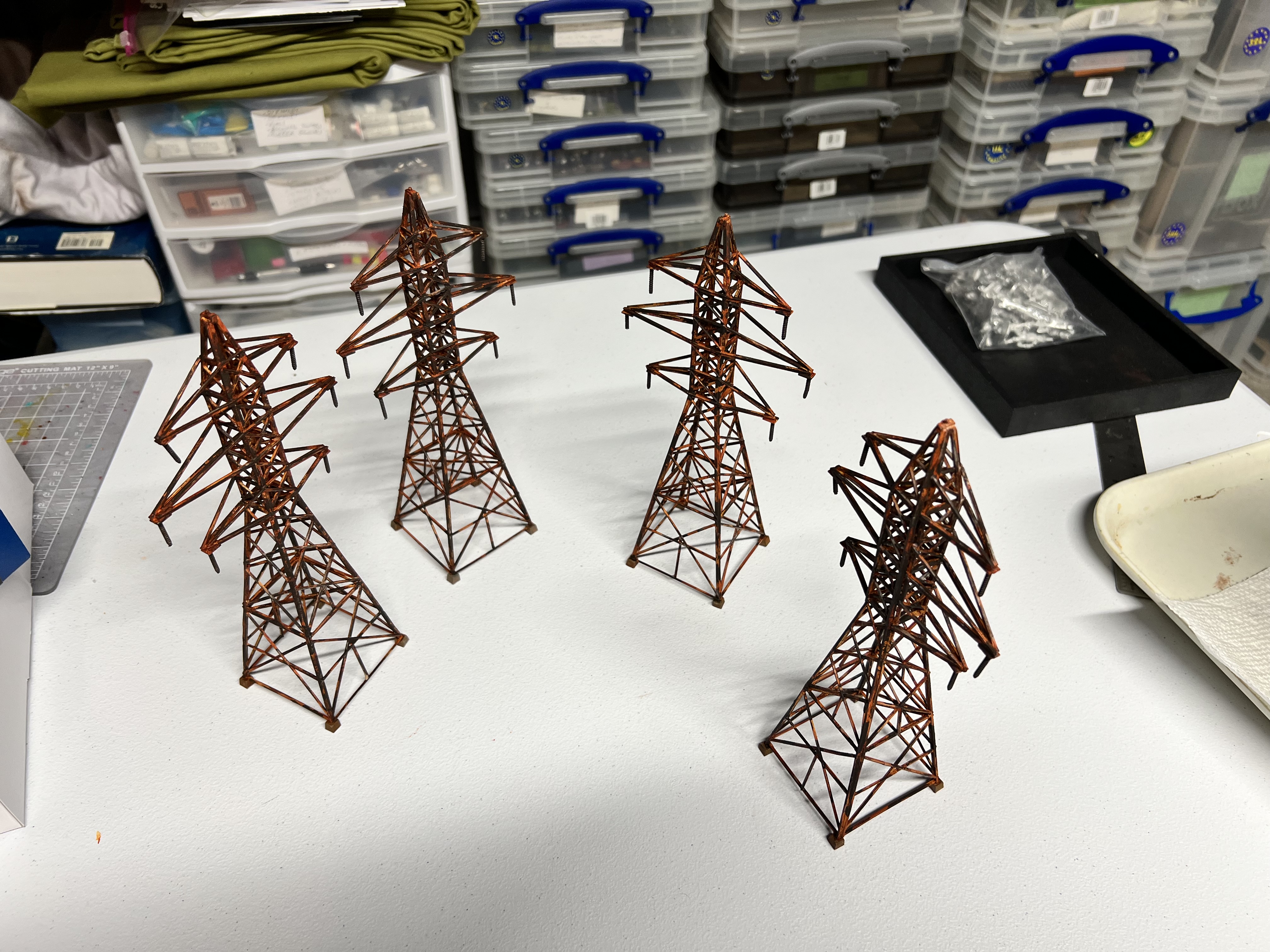
Rusting them up was similar to the walls – basically minus the use of the corrosion texture paint. The lists of what I used for these and the walls will be listed at the end of this post.

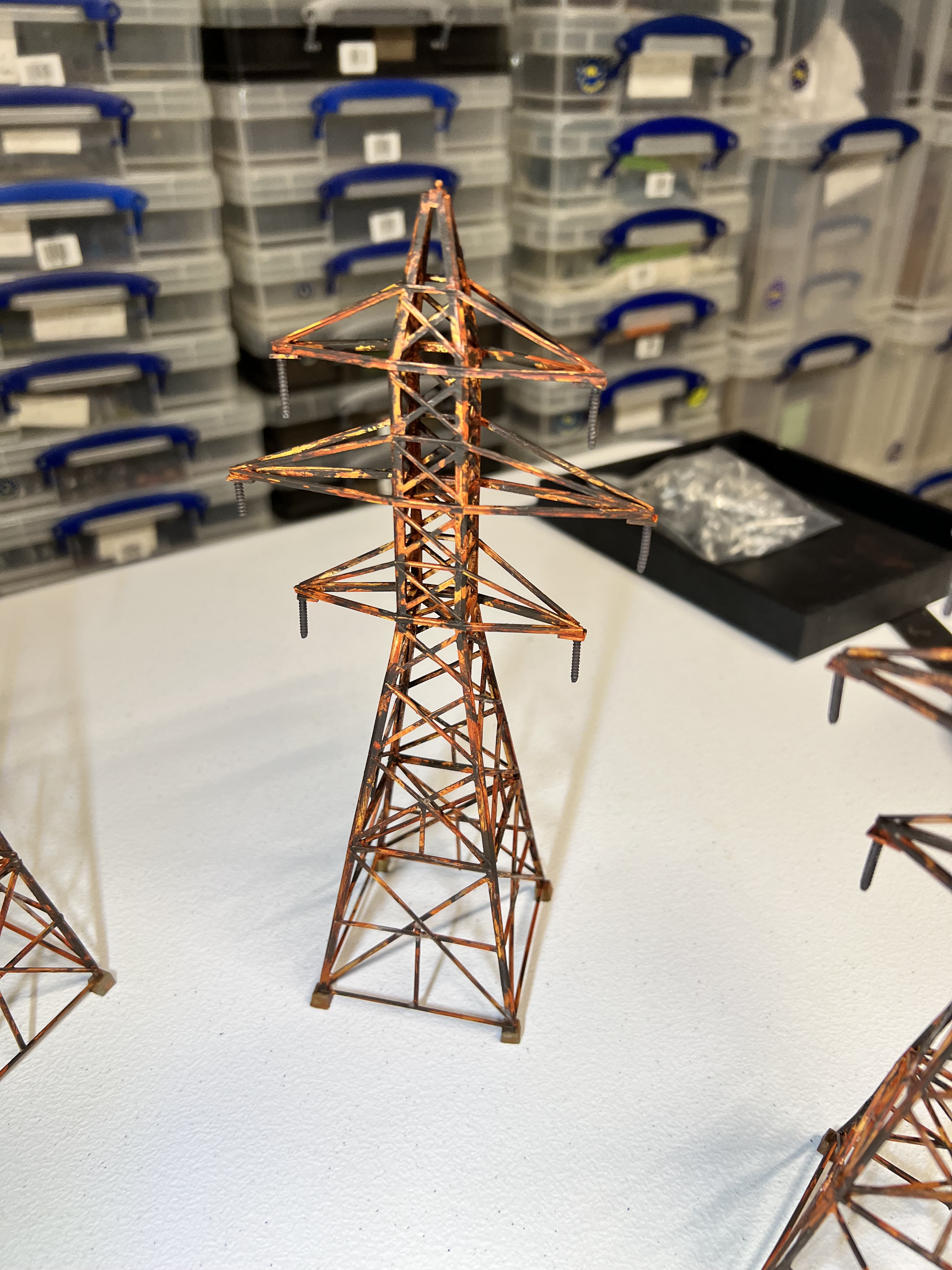
Rusted up!
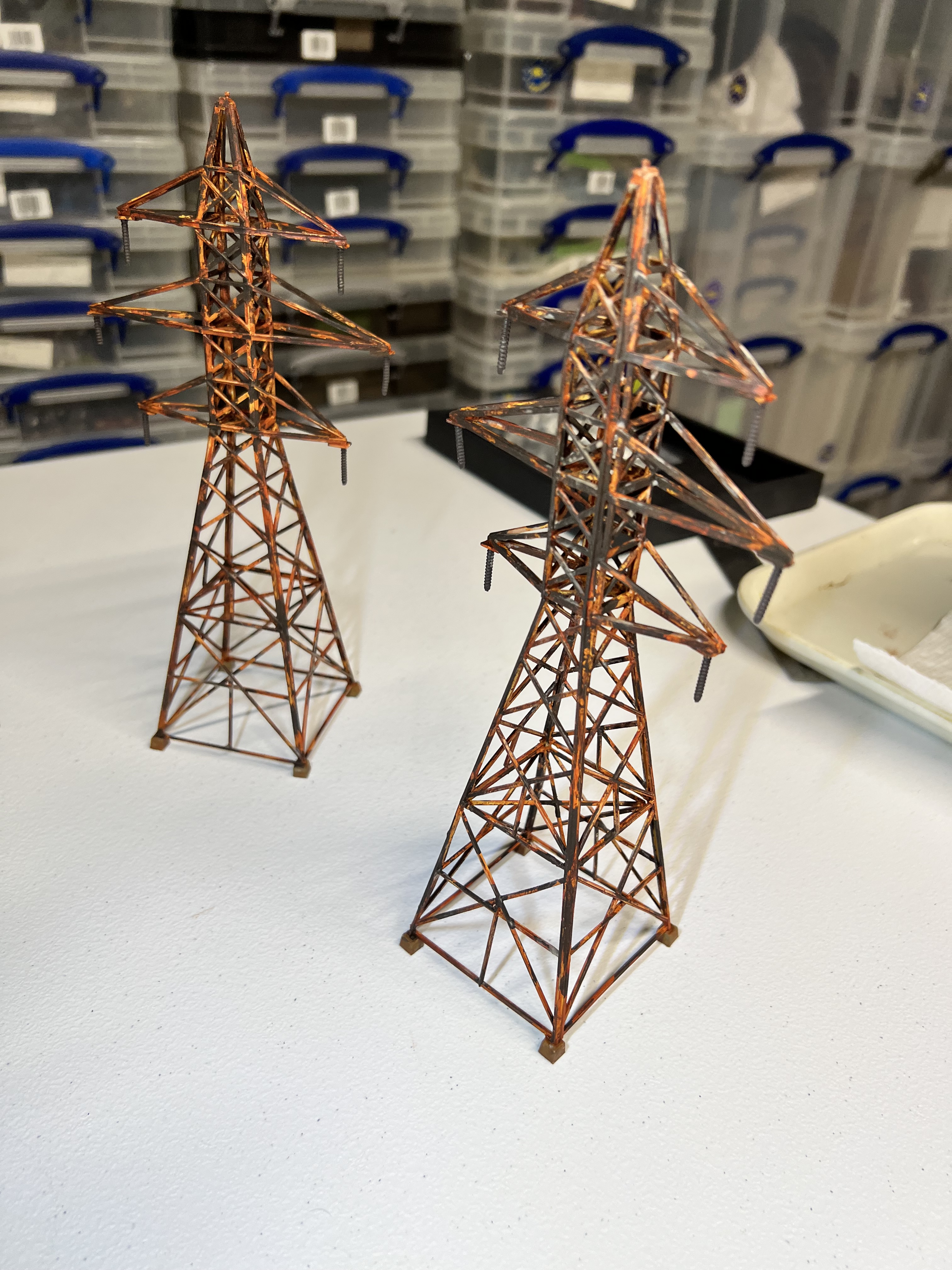
Close up shot of two.
View of one from a slightly different angle.

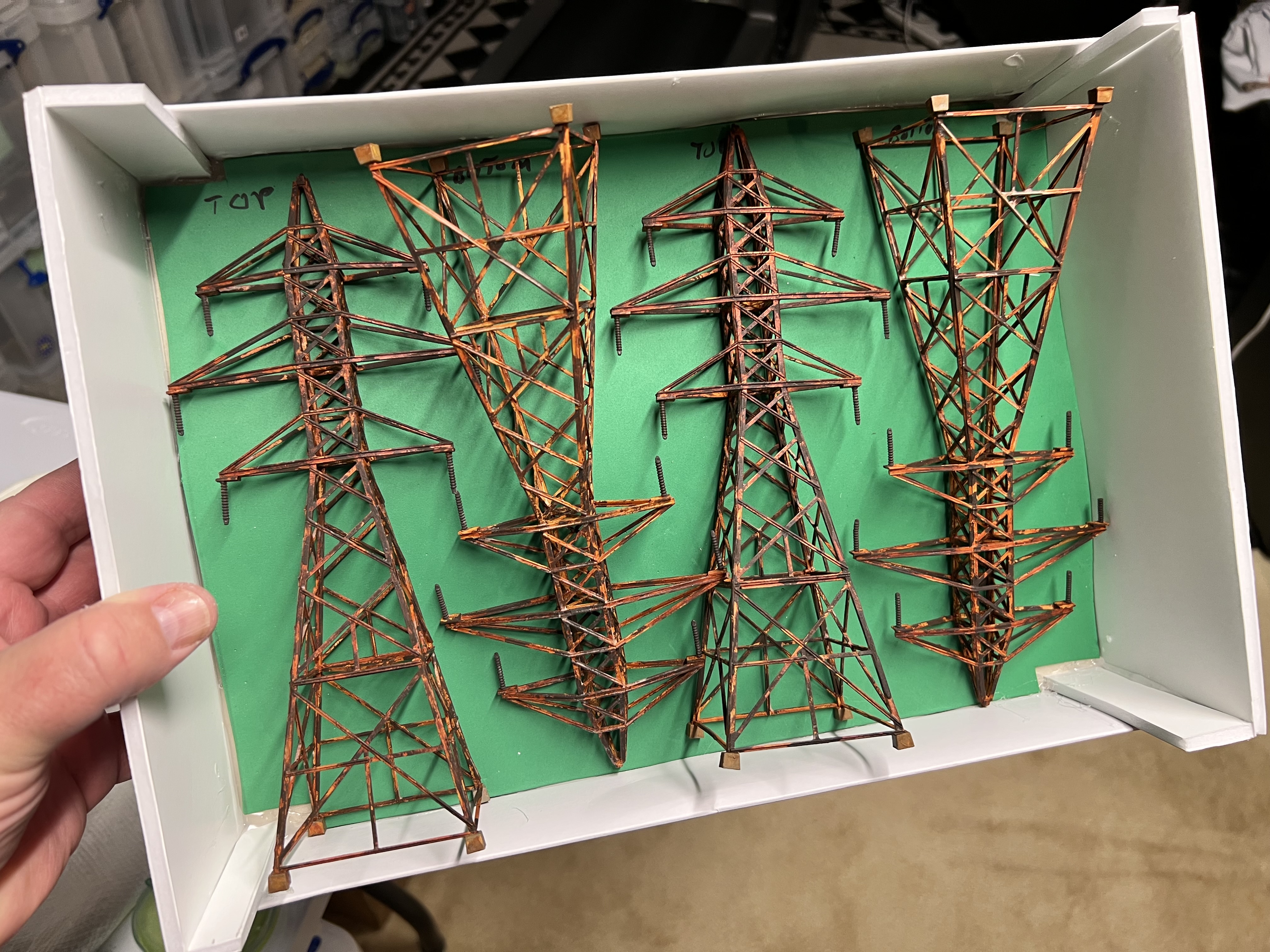
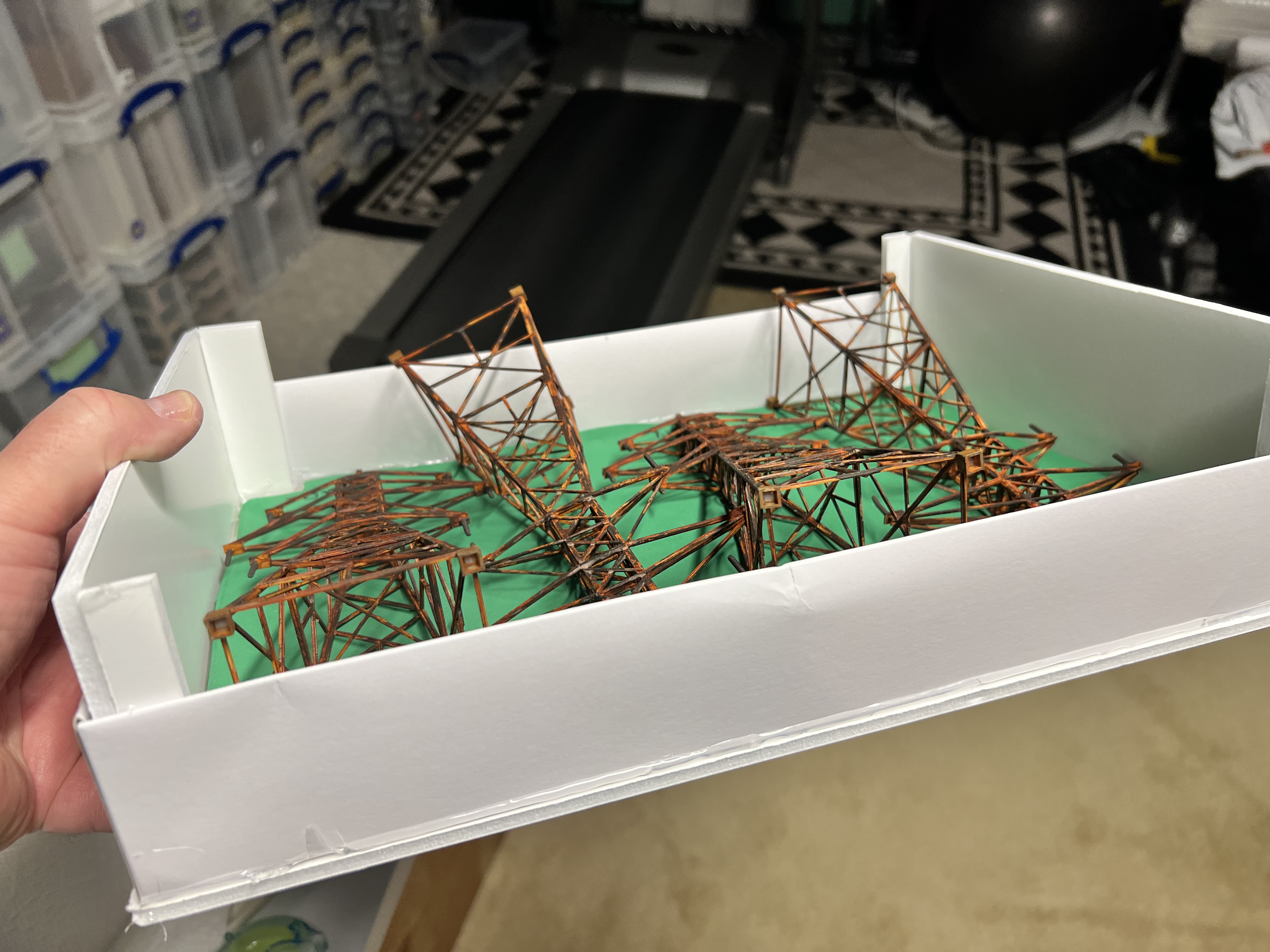
As you can see these are just plastic models and vulnerable to damage in transport! Unlike the walls, which went into a cardboard wine bottle box with some foam padding between levels, these needed a sturdy solution. They required something strong. I decided to modify the original box to accommodate the greater height needed when the models were lying down. I used more foam padding on the box bottom, and foam board to extend and strengthen the box as you see below:

Top view of the original box modifications with a sheet of green foam padding on the bottom. The sides and corners were reinforced by adding foam board set with hot glue on the insides.
Side view – here you see the added height with the foam board.
The original box top fit like a glove – and is significantly stronger than its original configuration.

That’s about it for this rusty old post. I hope it inspired you to rust up some stuff yourself!

As I teased, I will be sharing how these fit into both of the tabletop set ups for 2026. I’ll also be sharing some of the new 2026 units of mechanical tin men that will find these structures as part of their apocalyptic homes. Until next time.

For all of my previous posts on terrain projects, please see this page. For all of my previous posts on sci-fi projects, please see this page…for any of my previous posts on Wars of Ozz, see this page.

PAINTS, INKS, GLAZES, SHADES, WASHES, PIGMENTS, FLOCKING, GLUES AND MORE THAT I USED ON THE RUSTY WALLS PIECES:

  1. Old autoinjector trainers
  2. Green stuff
  3. Chinchilla dust
  4. PVA Glue
  5. Vallejo Surface Primer “Grey”
  6. AK “Corrosion Texture”
  7. Citadel “Typhus Corrosion” (Technical)
  8. Citadel “Ryza Rust” (Dry)
  9. Vallejo “Old Rust” (pigment)
  10. Vallejo “Brown Iron Oxide” (pigment)
  11. Vallejo “Natural Iron Oxide” (pigment)
  12. Vallejo Model Air “Rust 73.117” (pigment)
  13. Vallejo Model Air “New Rust 73.118” (pigment)
  14. Vallejo Thinner
  15. Vallejo Model Color “Dark Rust”
  16. Vallejo “Natural Umber” (pigment)

PAINTS, INKS, GLAZES, SHADES, WASHES, PIGMENTS, FLOCKING, GLUES AND MORE THAT I USED ON THE RUSTY TRANSMISSION TOWER MODELS:

  1. Walther’s Cornerstone Four Transmission Towers (HO Scale)
  2. Tamiya “Extra Thin Cement”
  3. Plastruct Bondene “Styrene & ABS Plastic Solvent Cement”
  4. Alligator clips
  5. Vallejo Thinner
  6. Vallejo Surface Primer “Grey”
  7. Citadel “Ryza Rust” (Dry)
  8. Vallejo “Old Rust” (pigment)
  9. Vallejo Mecha Weathering “Light Rust Wash” (wash)
  10. Vallejo Mecha Weathering “Dark Rust Wash” (wash)
  11. Vallejo Mecha Weathering “Rust Texture Matt”
  12. Vallejo Model Color “Camouflage Black Brown”
  13. Vallejo Model Air” Concrete”
  14. Vallejo Mecha Varnish “Matte Varnish”
Man of TIN blog two

Toy Soldiers, Gaming, ImagiNations

Gisby's Gaming Blog

Miniatures gaming projects, products, and reviews

Carrion Crow's Buffet

Narrative Wargaming, Fiction and General Musings on the Universe

Despatches from Fort Syllabub

An account of fictional adventures on the North West Frontier - and other times and places, real or imagined

Man of Tin blog

Toy soldiers, gaming, Imagi-Nations

Zauberwurfs Blog

Ein Blog über Tabletop und Miniature Wargames.

Frank Tank Rants

musings of a fat old bloke on tanks and wargames

Dragons of Lancasm

Games, miniatures, painting, books and more games

Tiny Painted Heroes

The Adventures of a lifelong Tabletop Gamer, Game Design hobbyist, and full-time Software Engineer

Steve's Paint Brush

Grimdark model making and mini painting

Wargamesculptors Blog

Life, Golf, Miniatures, & Other Distractions

Dead Dick's Tavern and Temporary Lodging

Life, Golf, Miniatures, & Other Distractions

Guru Pig - the gaming Guru

Guru's thoughts on wargaming, life, and the universe!

Wisely lead... without a head!

History, Miniatures and Wargaming

Kuribo's Painting

Fallout Wasteland Warfare, Warhammer, and Hellboy Painting, Terrain, Dioramas, and Battle Reports

Don't Give Greg Ideas

Seriously, just don't

War Across the Ages, and other dark horrors

A discussion of miniatures collecting, painting and gaming.

Classic Warhammer 40K

Painting diary focused on Warhammer 40K 2nd ed., 5th ed. WHFB, related GW games, and miscellaneous whimsy

Colonel Mustard

WW2 Modelling in 1/72 Scale

Bogenwald

Random painting and terrain making.

Pat's 1:72 Military Diorama's

Scale diorama tips and ideas

Arcade Dreams

Building the Arcade Dream

P.B.Eye-Candy

Phil's 20th century wargame pages

SP's Projects Blog

A futile fight against entropy or 'Every man should have a hobby'? Either way it is a blog on tabletop wargames, board games and megagames

30mmdave

Wargaming Plausible reality?

The Imperfect Modeller

Miniature Figure Painting and Diorama Modelling

Double Down Dice

Painting miniatures and rolling dice!

Just Needs Varnish!

My ongoing wargames projects!

miniaturepopcorns

Sculpting some worlds

Despertaferres

Wargaming with the ability of a dull nine year old

Dawn of the Lead

Miniature wargaming and the occasional zombie

Rantings from under the Wargames table

Wargames, Figures, Sculpting and Converting Miniatures

Simple as War

Miniatures & Terrains

Buck's Blog

Life, Golf, Miniatures, & Other Distractions

IRO aka Imperial Rebel Ork

- I model - therefore I am -