

The city of Tenochtitlan, the capital of the Aztec Empire, rose out of Lake Texcoco on an island. This island was connected to the mainland by a series of causeways. Reclaiming land from a water body usually involves building up a surface of large stones on its bottom. These would build up into a dry surface, and would usually be supported and protected by revetments. In the case of my Aztec cityscape, the pavements’ sides that I made of MDF had nothing on the edges (except paint) next to the waterline – and I thought that needed a bit of work.
Speaking of work and the pavements, if you are new to this 5-part series on my Aztec cityscape build, you can view the previous two parts by clicking on these links:
- Building an Aztec Cityscape – Part 1: Causeways, Lifting Piers, and Removable Bridge Sections
- Building an Aztec Cityscape – Part 2: Pavements
This post will cover the revetments that I made for the cityscape, as well as some HO scale lily pad and cattail bases that I added as eye candy (and possible obscuration of gaps and even MDF warpage). As before, I will similarly share my WIP photos as well as my lessons learned.
Readers of this blog know that I like a plan before building anything. I needed to figure out how many revetments to build – as I may or may not use all of my causeways or even my pavement tiles. Also, I had to figure out the sizes of inner corners versus outer corners (since they are differently sized up against the pavement tiles – so you just need to measure the side against the tiles).

I ended up following the same type of build and painting scheme as I did for the causeways – after all they had to match too aesthetically. As far as quantity, I ended up deciding to build 48 on 1/2″ strips of balsa. The breakout from the plan above came out to be:
- 6″ sections (10)
- 5″ sections (10)
- 4″ sections (10)
- 2″ sections (4)
- 1″ sections (2)
- External 1″ x 1″ corners (8)
- Internal 1″ x 1″ corners (4)
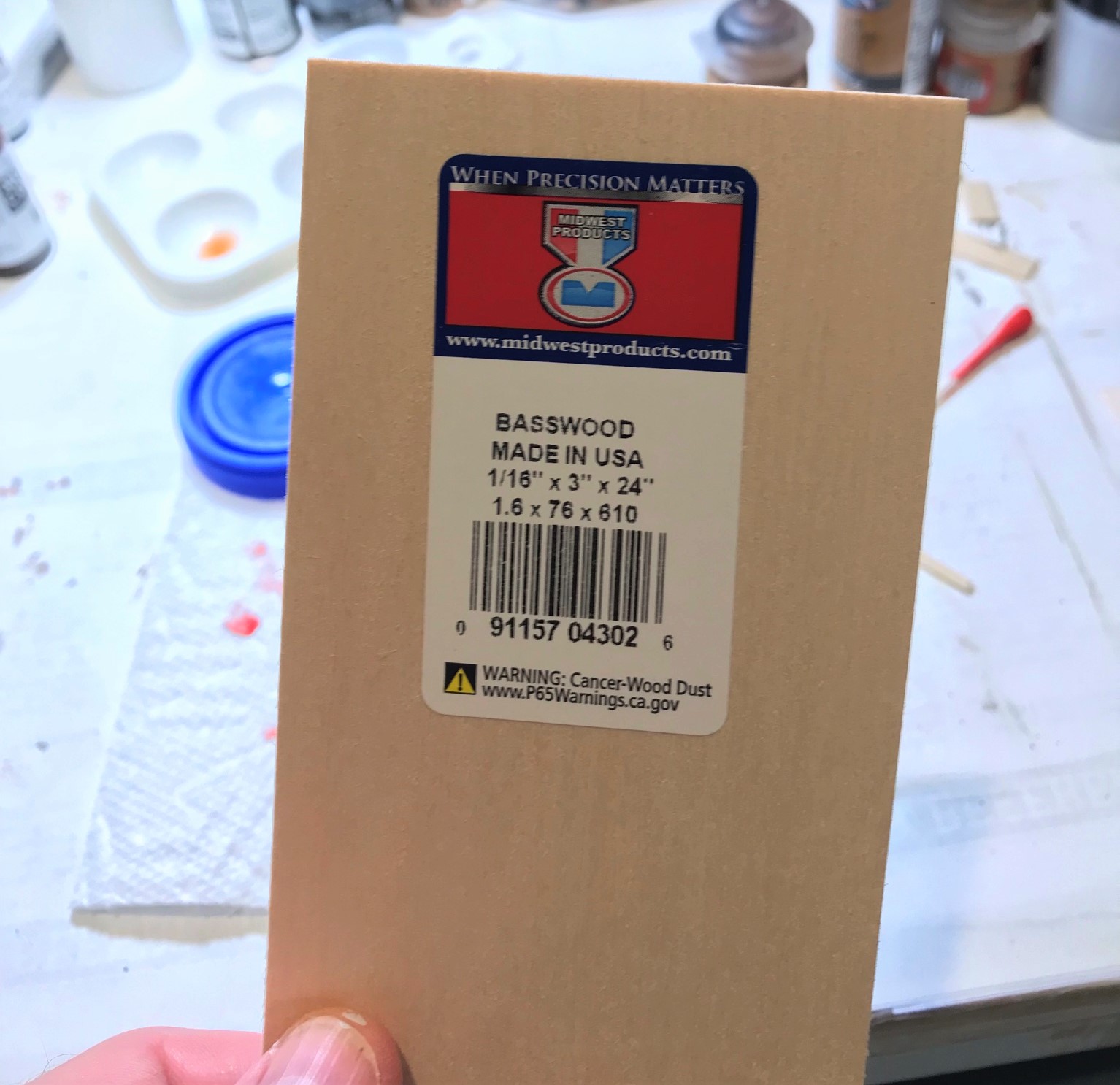
I made templates from 3′ x 5″ cards and used them to size and cut up some basswood (balsa like but stronger and denser) into the strips for gluing the rocks.
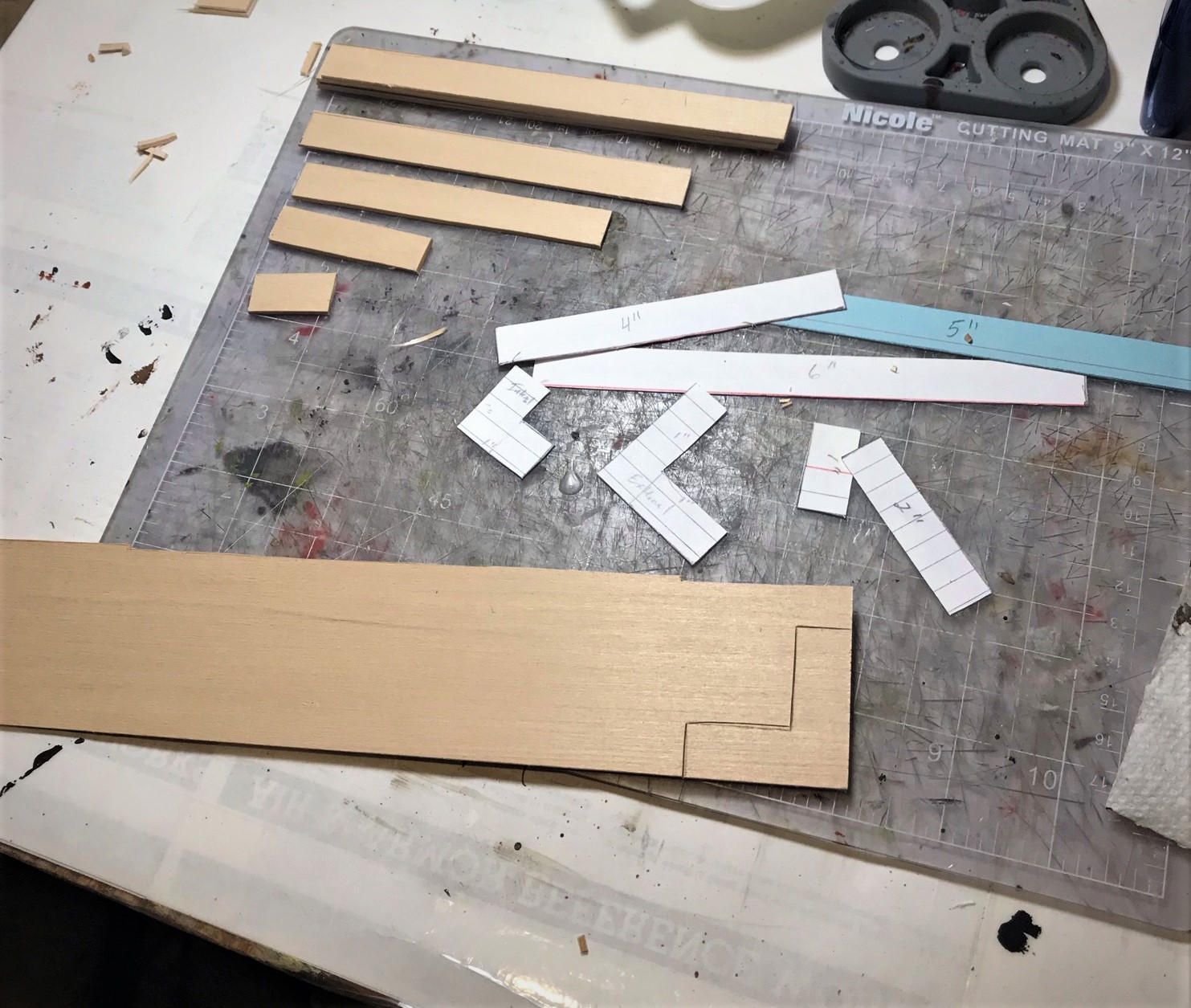
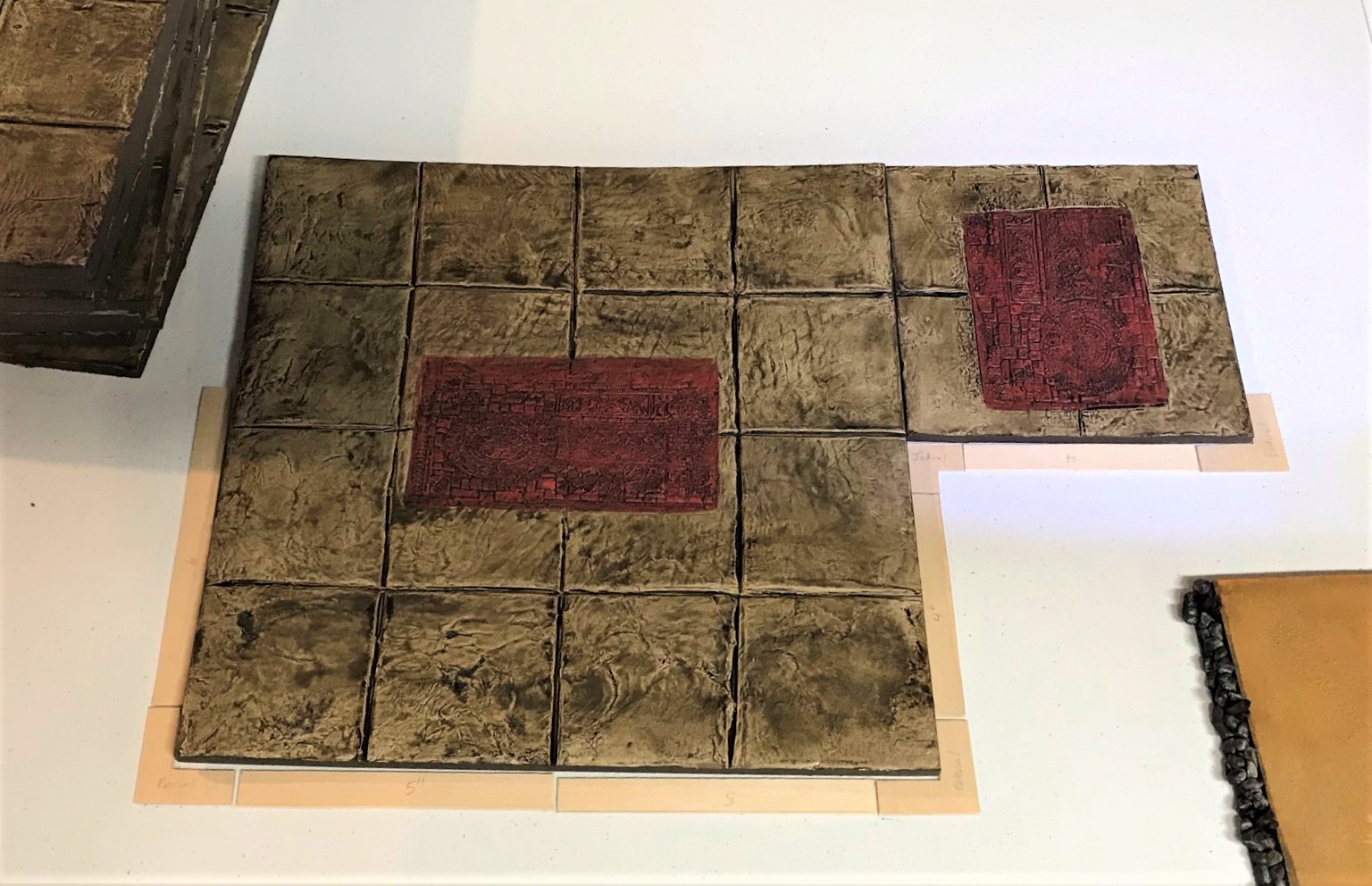
Once the bass wood pieces were all cut, the gluing began, similar to the process I used on the causeways. Each pebble had to be glued one at a time in 2-3 courses of different sizes – while letting each course dry before moving on to the next one. In terms of pebbles, I estimate that for the 184 linear inches that I put about 10-15 pebbles per inch. That means for the revetments alone I glued an estimated 1,840 – 2,760 pebbles/rocks!! Add in the six two-sided foot-long causeways, and that makes an estimated 4,720 – 7,080 pebbles that I glued down. Ok, now I know why these took so long!


After all had dried, it was on to painting the two-tone colors, and adding slime and shade to the rocks.


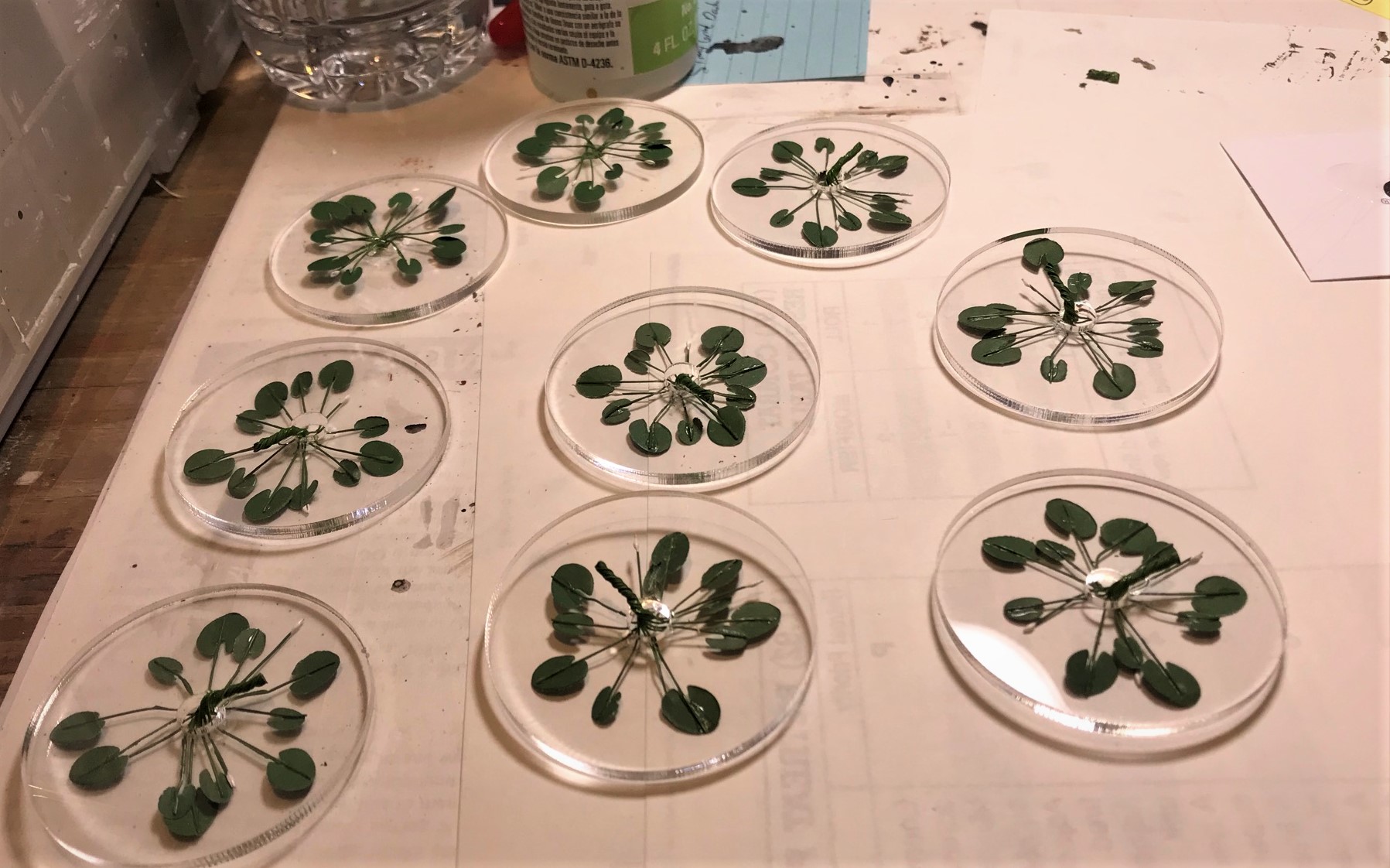
Next, I made some lily pads and cattails on some acrylic bases. These were HO scale from JTT Scenics that I got on Amazon. The link for the lily pads is here and the link for the cattails is here. I wanted to be able to further differentiate the lake and to have some verticality of structure along the waterline – such as you see in the picture below.

I bought some 2″ clear acrylic bases years ago (2017), and had some in storage. I thought they would work well for the lily pads. They come with removable protective paper over them so that they had no scratches.
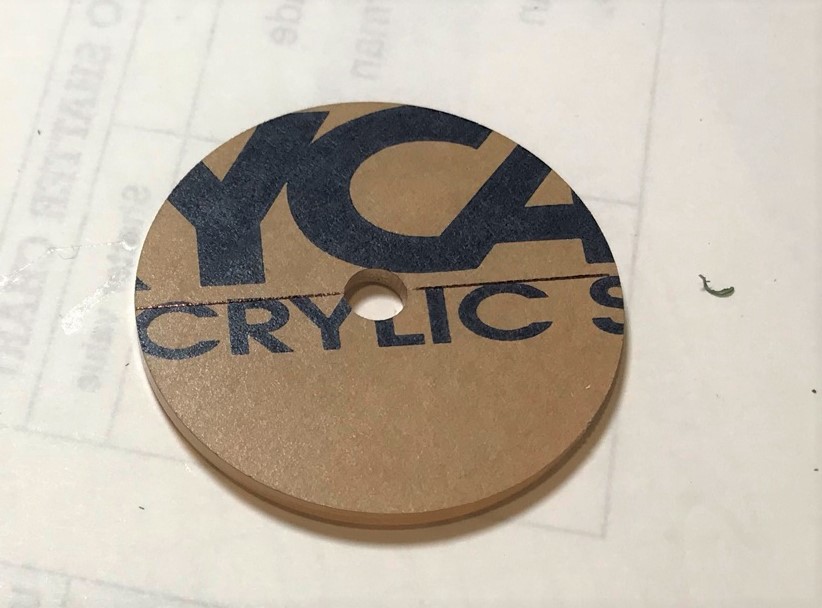

The cattails bases were basically half-moons I cut away (removing the center hole) with my scroll saw. Then I drilled holes to put 4 in each base. I used the Vallejo “Transparent Water” Environmental Effect in a similar way as the lily pads, and after I cut the cattail wires I placed the excess on the base as cattails that had fallen over.

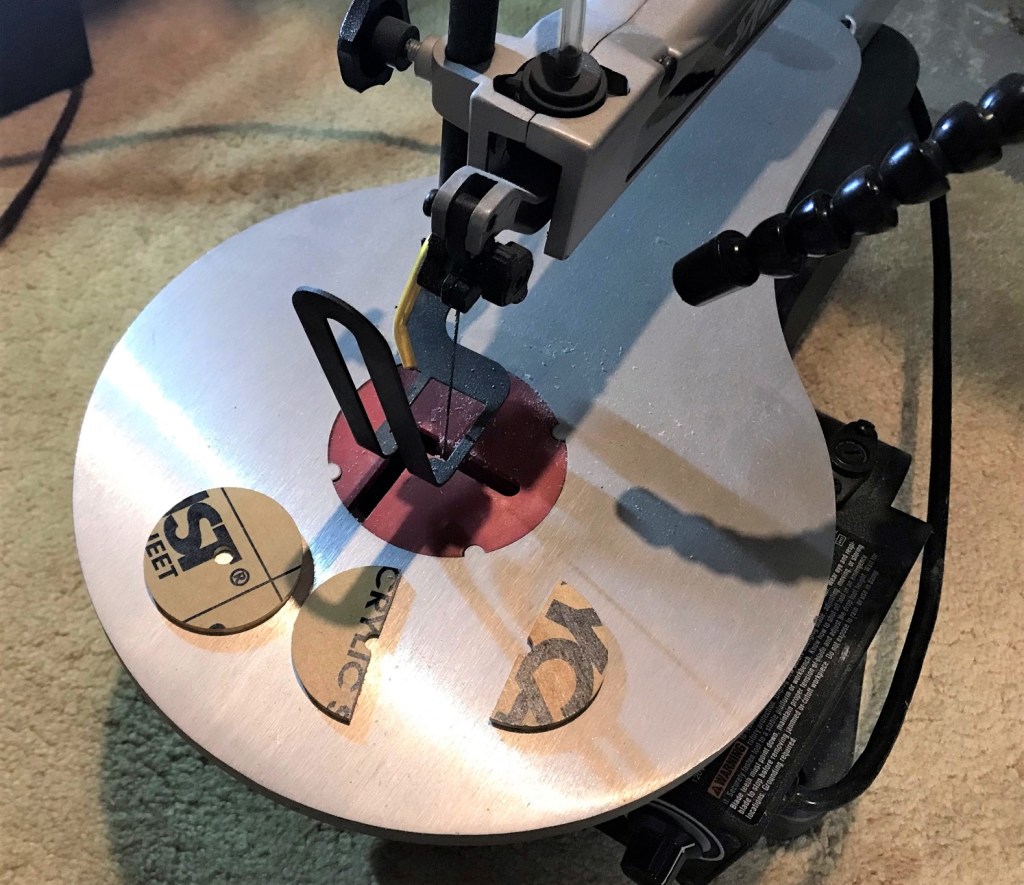
Cutting the discs 
Randomly drilling the discs 
Very clear acrylic even after drilling.


Now, let’s see how they look on the gaming mat!

The revetments help fix the gap – here before… 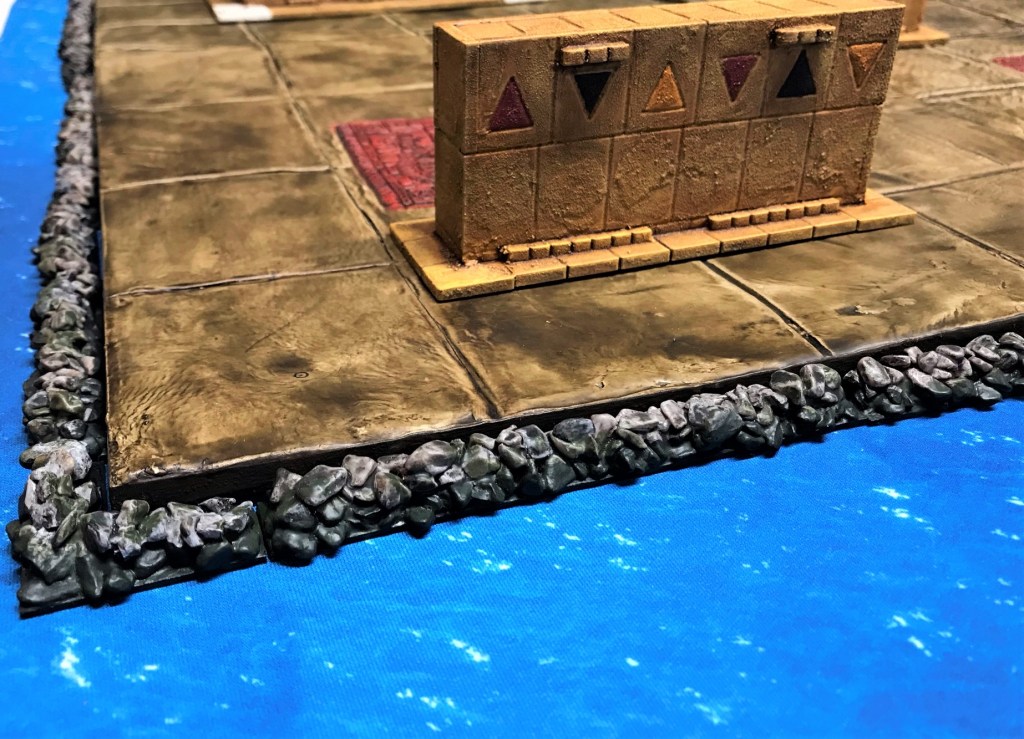
…and after placement.


My goal with these was to create a visual distraction form the MDF edges. I think that they work fine – and of course you can let me know in the comments section if I am off-base (really, you can) or how you might have proceeded differently. Again, I tried meet the Aztec criteria of symmetry.
Once again, these all more of my entries into Dave’s Season of Scenery Challenge!
Thanks so much for looking – I hope it was helpful or at least interesting!
My next post will cover Cortes’ War Wagons that he employed with his troops in their breakout/ escape from Tenochtitlan during La Noche Triste.
For all of my previous posts on games, units, and other projects for my 16th Century Spanish Conquest supplement for Feudal Patrol™ – “Civilizations Collide” – please see this page.
PAINTS, INKS, GLAZES, SHADES, WASHES, PIGMENTS, FLOCKING, GLUES AND MORE THAT I USED ON THESE TERRAIN PIECES/MODELS:
- Basswood (1/16″ x 3″ x 24″ pieces) (on revetments)
- Ashland Decorative Filler (rocks) (on revetments)
- Elmer’s PVA Glue (on revetments)
- Vallejo “Surface Primer Grey” (on revetments)
- Reaper MSP “Black Primer” (on revetments)
- Citadel “Nuln Oil” (shade) (on revetments)
- Vallejo Environment “Slime Green Dark” (on revetments)
- JTT Scenery Products HO Scale Lily pads
- Gorilla Glue
- Clear 2″ Acrylic Bases with center holes
- Vallejo Weathering Effects “Transparent Water” (on acrylic bases)
- JTT Scenery Products HO Scale Lily pads
 Mark A. Morin